Basic addition practice Addition & Subtraction Worksheets for Ages 3-6
10 filtered results
-
From - To
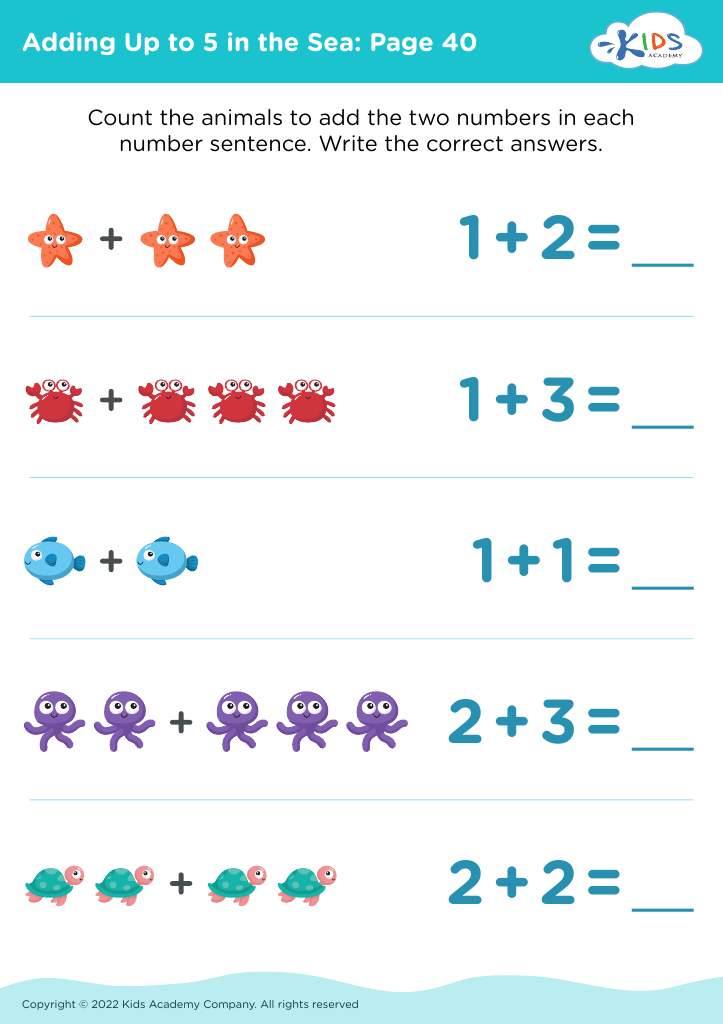
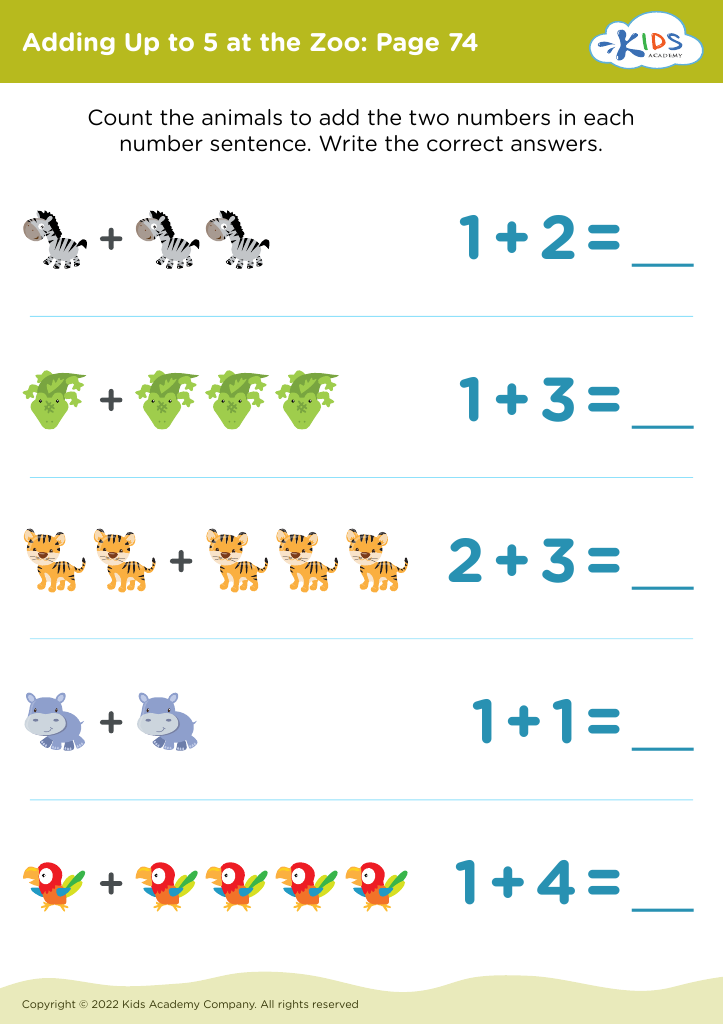
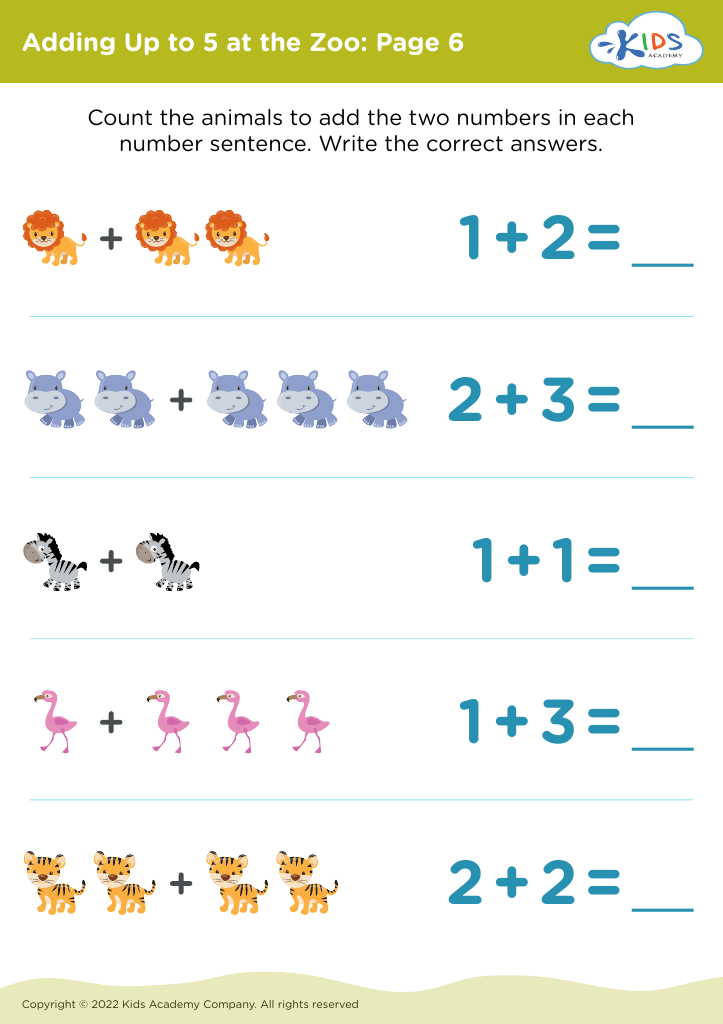
Welcome to our Basic Addition & Subtraction Worksheets for Ages 3-6! Designed to introduce young learners to essential math skills, these engaging worksheets provide a fun and interactive way to practice basic addition and subtraction. Each activity helps children grasp numerical concepts through colorful illustrations and simple exercises. Tailored for early learners, our resources promote number recognition and enhance problem-solving abilities. Parents and educators can easily print these worksheets to support hands-on learning at home or in the classroom. Start your child's math journey today and watch them build confidence in their arithmetic skills with our thoughtfully crafted practice sheets!
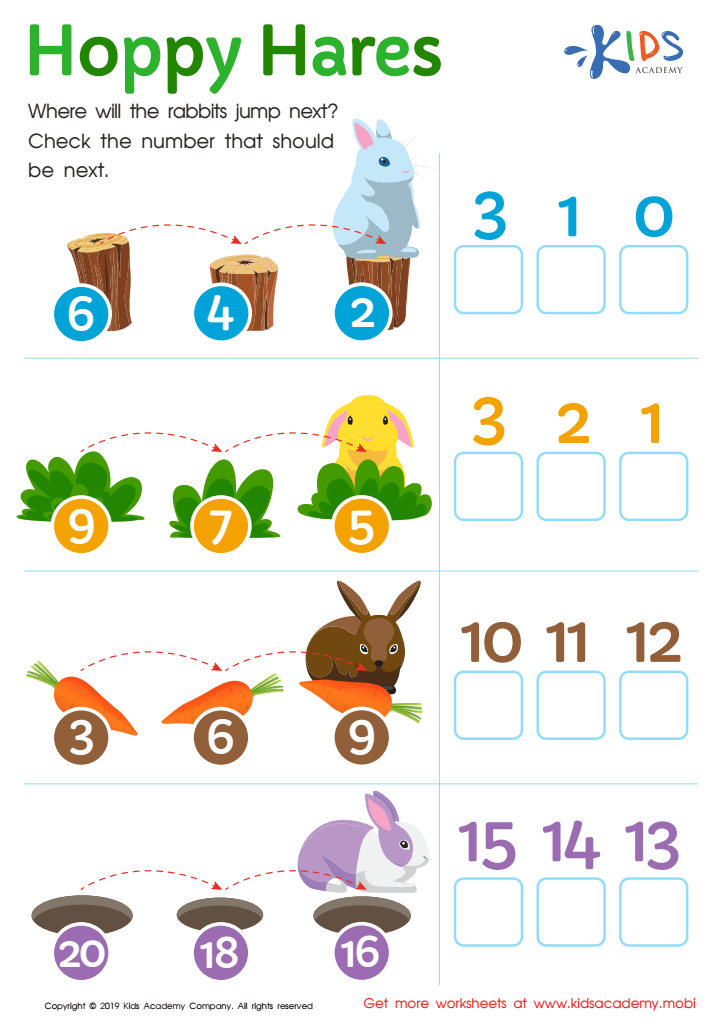
Hoppy Hares Worksheet
 Assign to My Students
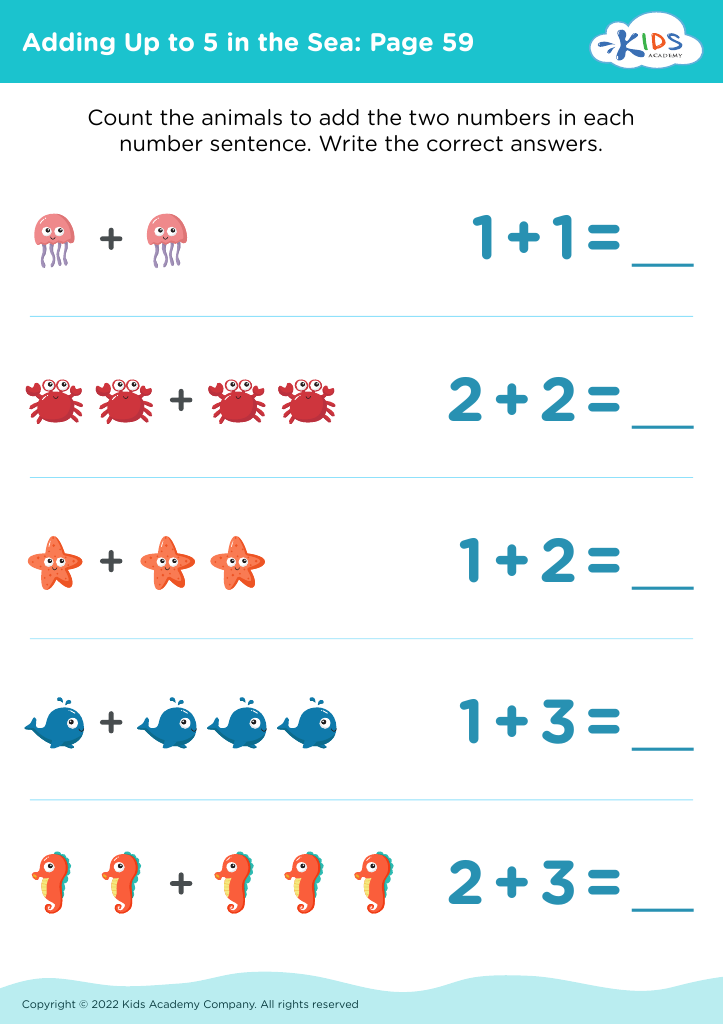
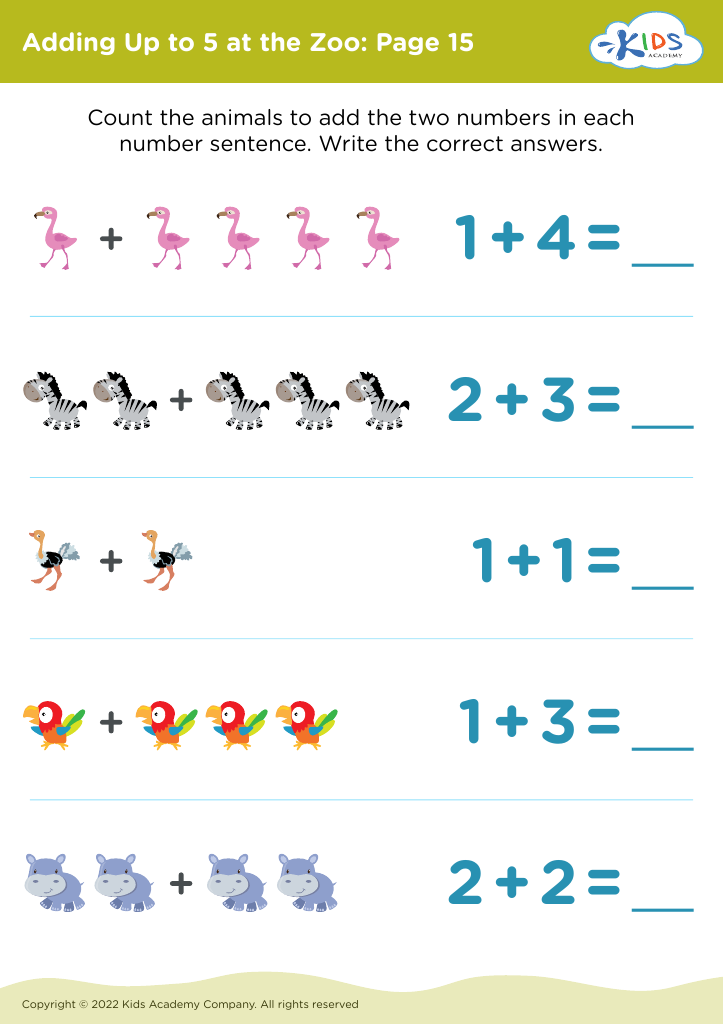
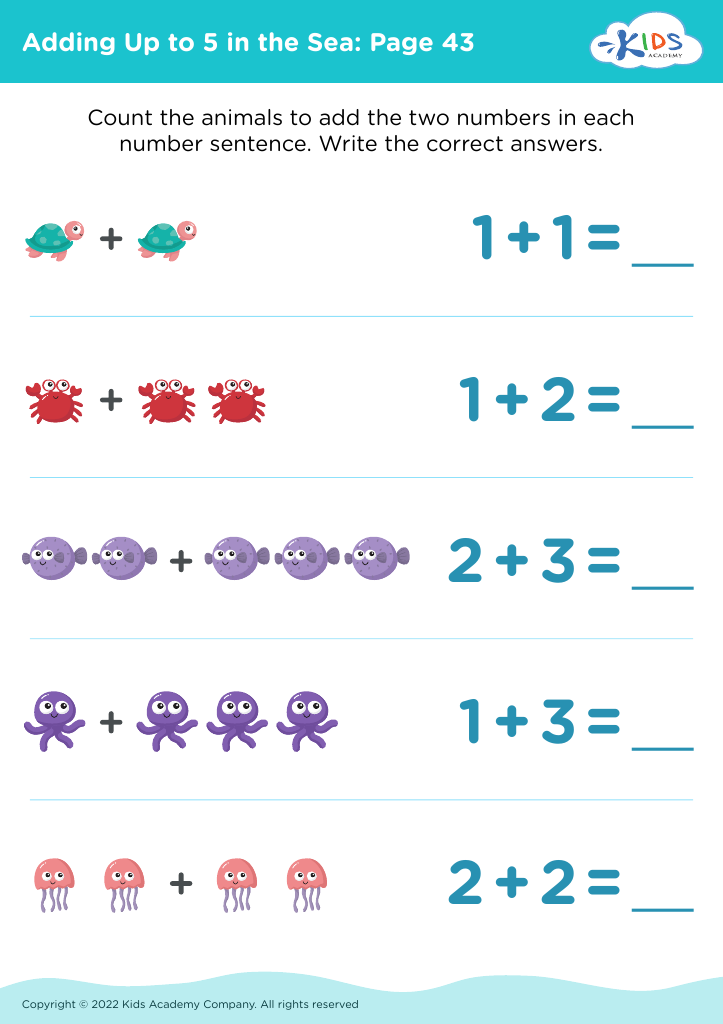
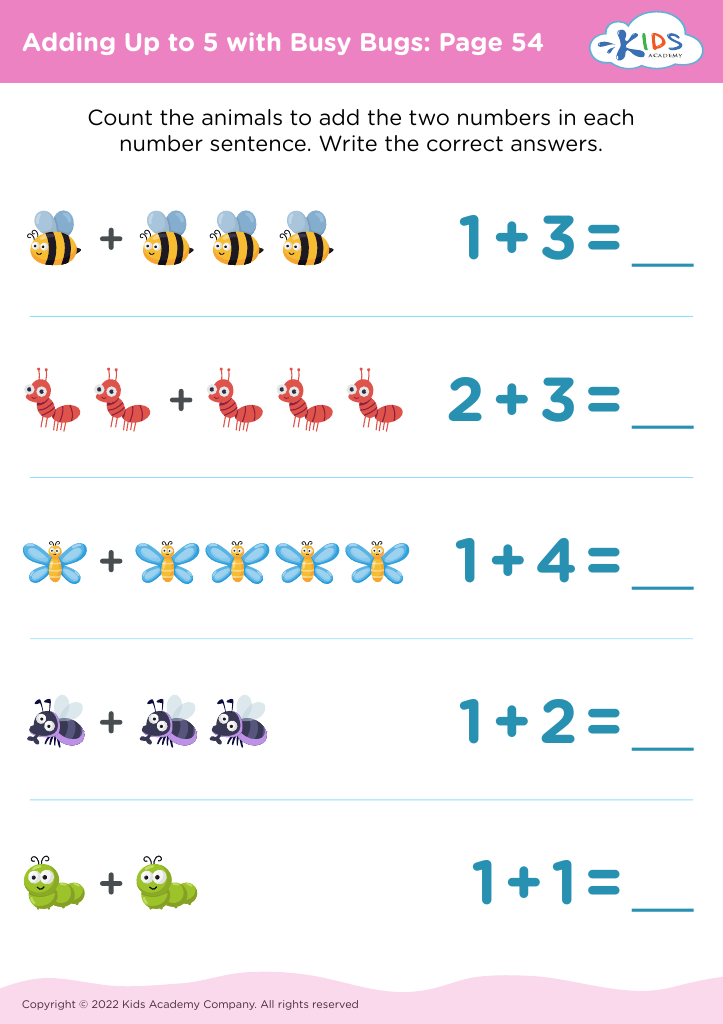
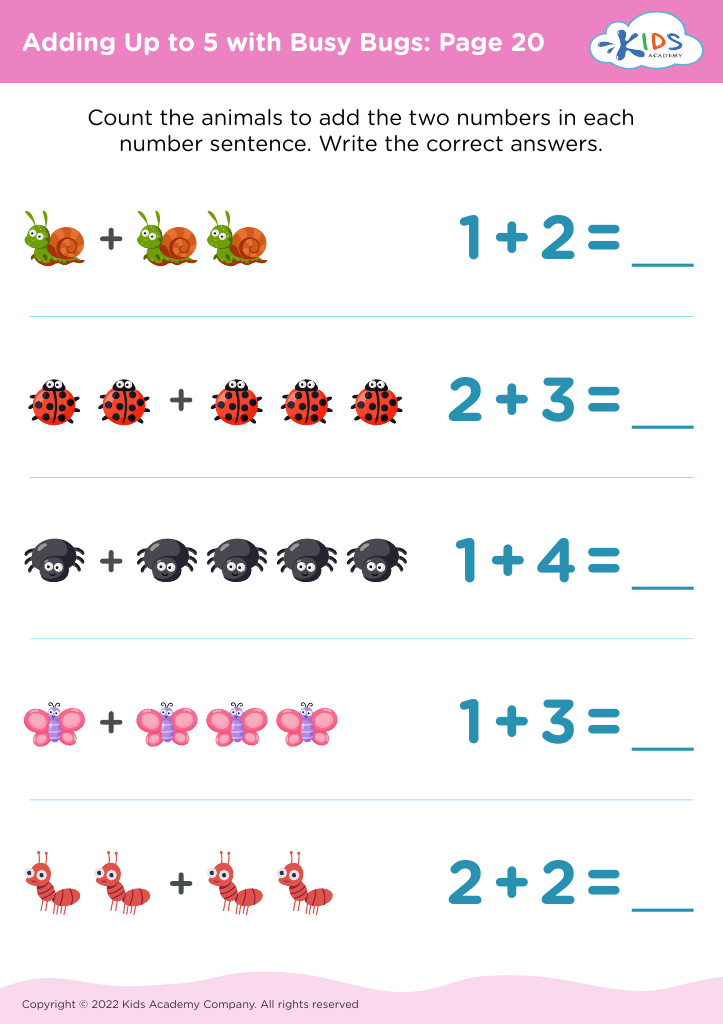
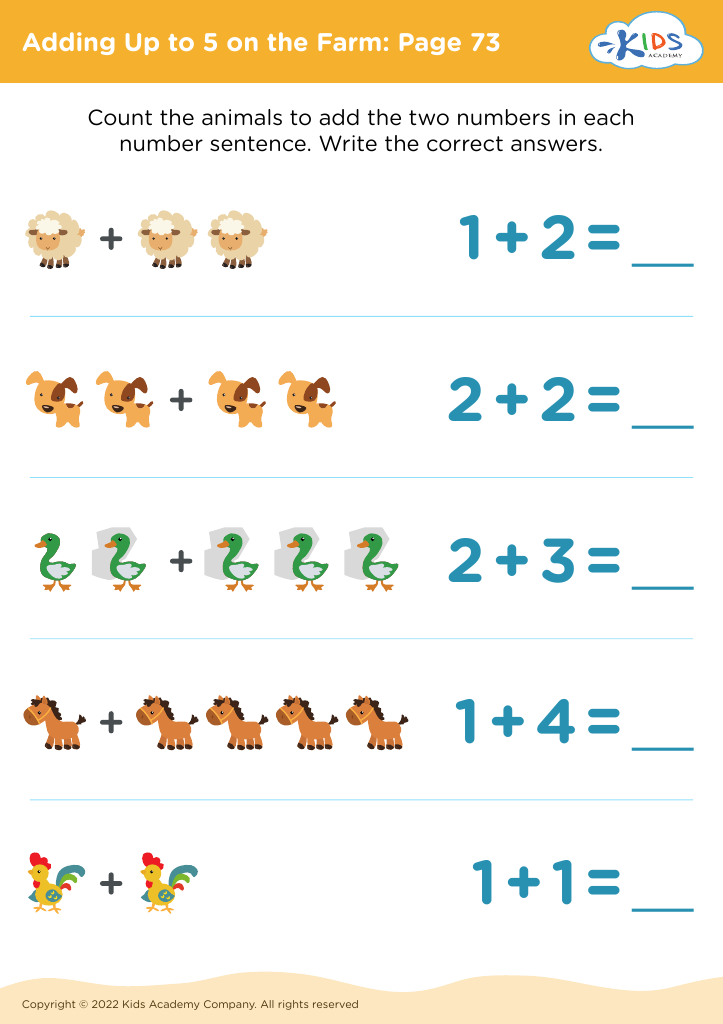








Basic addition and subtraction skills are foundational to a child's mathematical understanding and cognitive development. For children aged 3-6, engaging in early math practices fosters critical thinking and problem-solving abilities, essential skills in both academic and everyday contexts. Mastery of basic addition and subtraction allows children to explore more complex mathematical concepts as they progress in their education.
Parents and teachers should care about this early learning phase because it promotes confidence and a positive attitude towards mathematics. Children who practice these foundational skills often develop a passion for learning and a resilience to tackle future challenges. Early math experiences encourage children to recognize patterns, understand quantities, and improve their fine motor skills through hands-on activities.
Moreover, the ability to add and subtract helps children in real-world situations, such as managing money or understanding time, thus enhancing their life skills. Encouraging these practices at home or in the classroom nurtures a supportive environment, showcasing the importance of education and establishing a strong foundation for future learning. Ultimately, fostering basic addition and subtraction skills can have lasting effects on a child's academic journey and instill a belief that they can succeed in their mathematical pursuits.








