Cognitive Development Addition & Subtraction Worksheets for Ages 3-6 - Page 4
109 filtered results
-
From - To
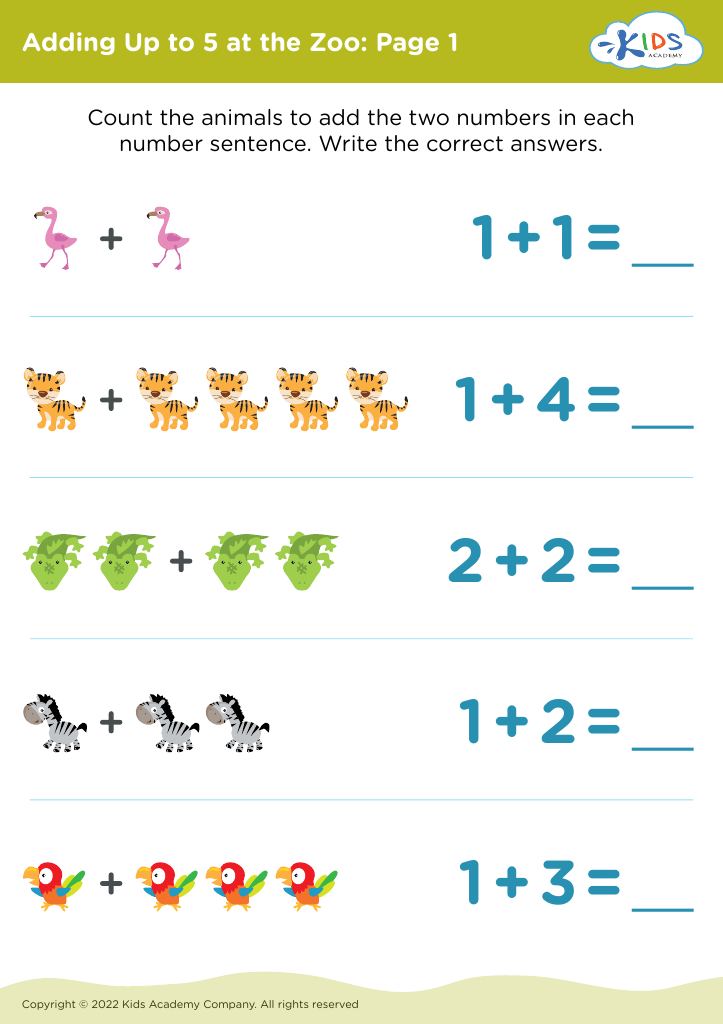
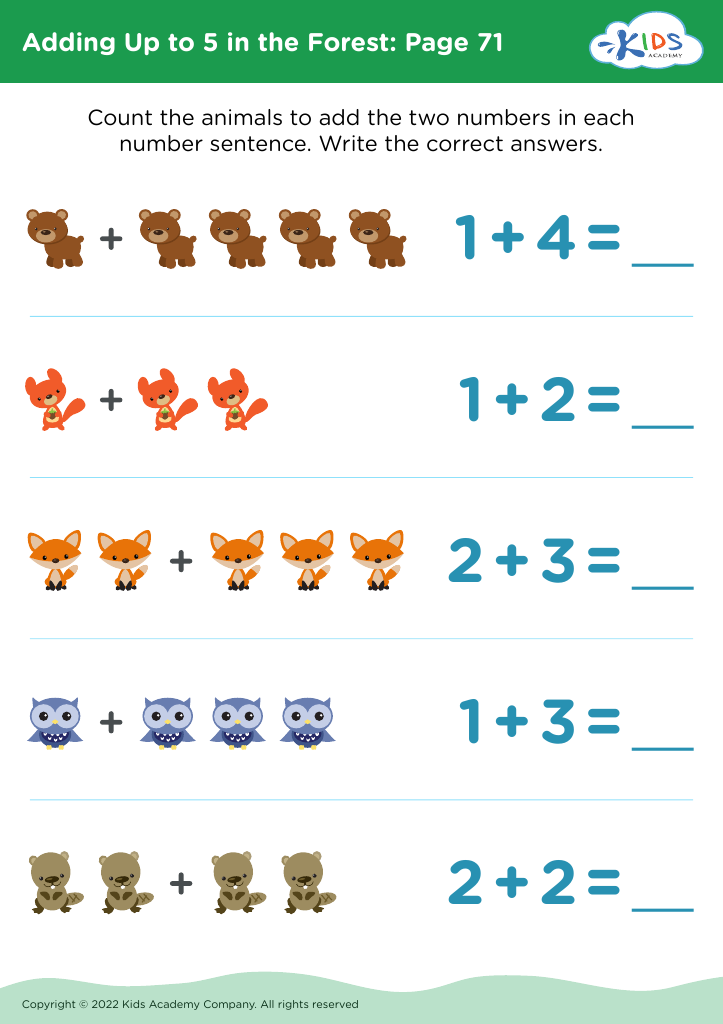
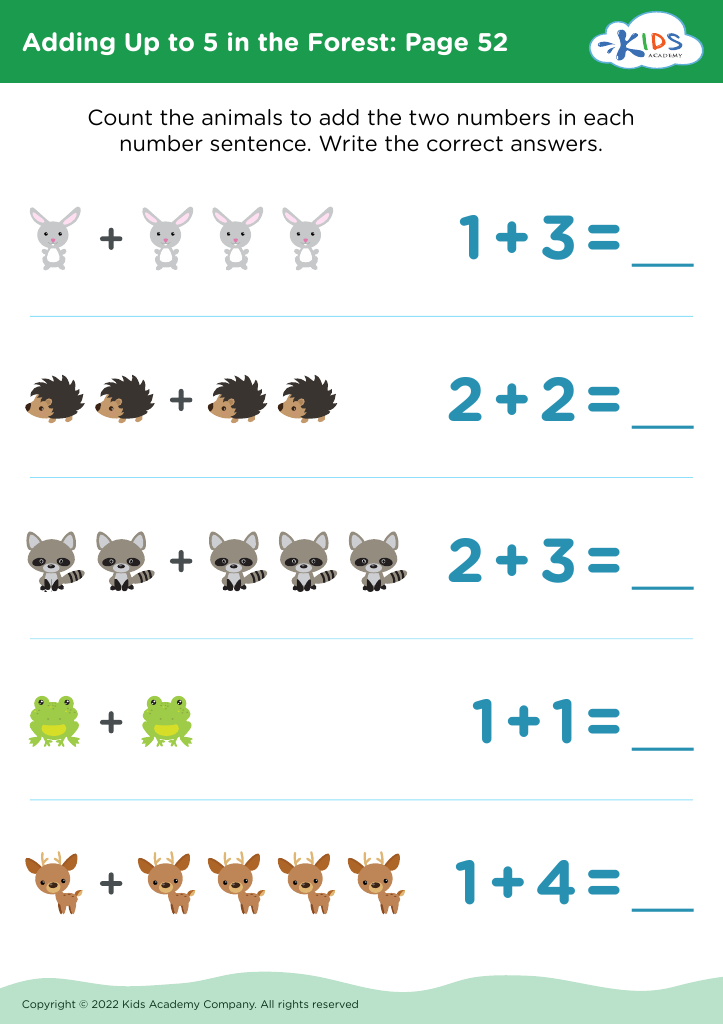
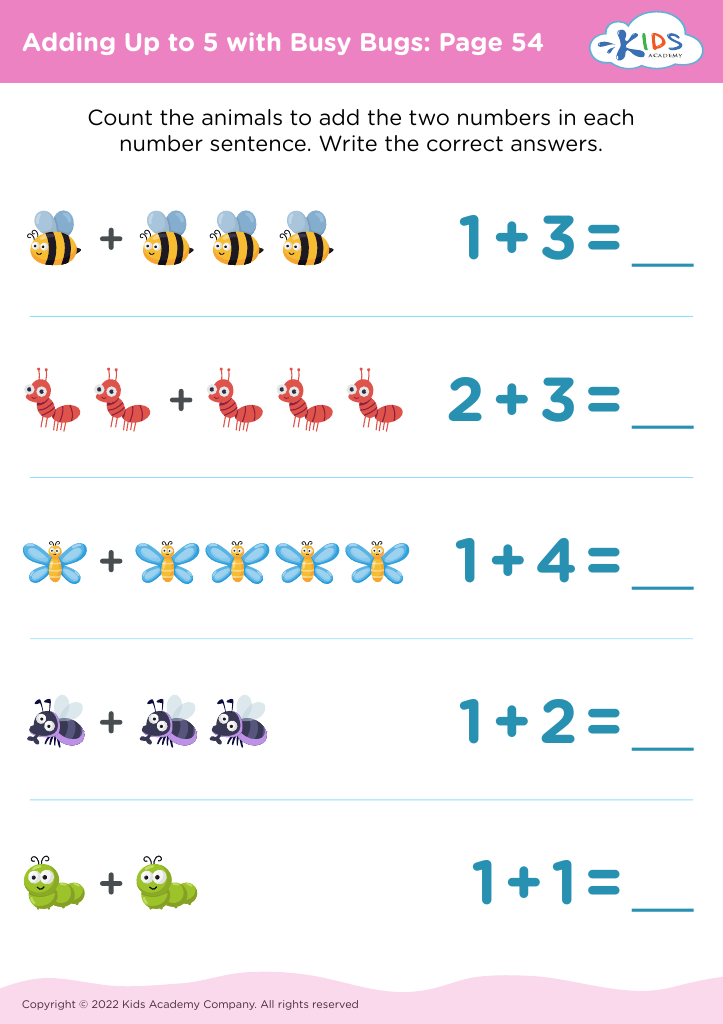
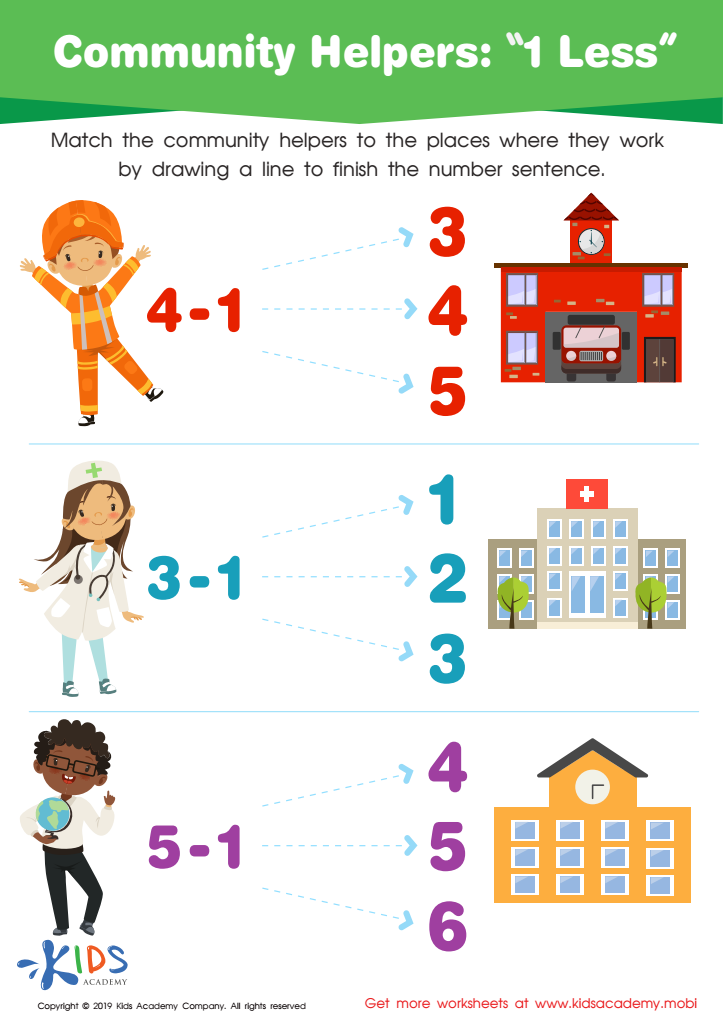
Community Helpers: 1 less Worksheet
 Assign to My Students
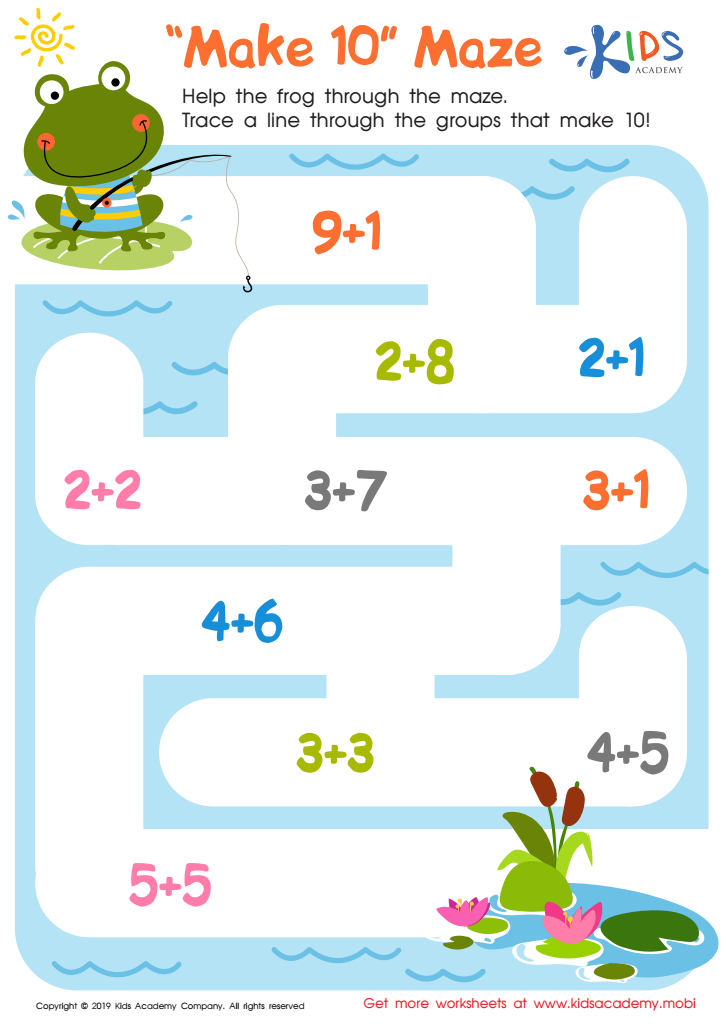
Make 10 Maze Worksheet
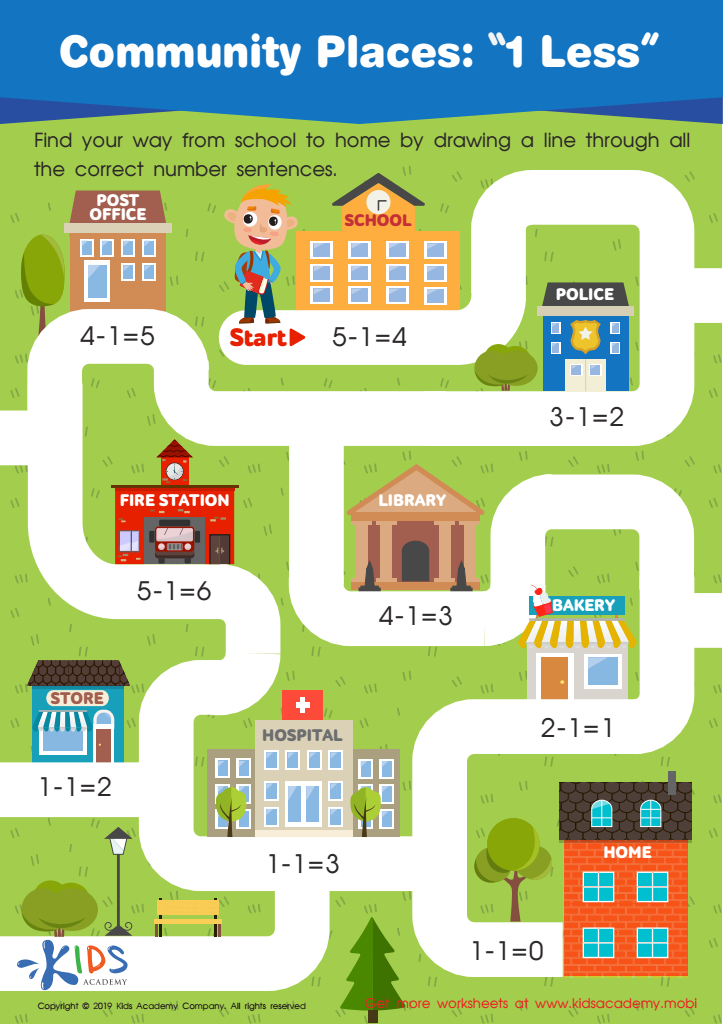
Community Places: 1 Less Worksheet








Cognitive development in early childhood is crucial, particularly for skills such as addition and subtraction. For children aged 3-6, engaging in mathematical concepts supports not only numeracy but also critical thinking, problem-solving, and logical reasoning. Parents and teachers play a vital role in fostering these abilities, laying the groundwork for future academic success.
Recognizing numbers, understanding quantities, and beginning to grasp addition and subtraction enhances a child's cognitive skills by encouraging them to think analytically. This early mathematical foundation can boost confidence and motivation, as children delight in solving problems and recognizing their own progress. Furthermore, these skills are intertwined with everyday activities—counting toys, sharing snacks, or playing games promote practical math understanding.
Moreover, early exposure to mathematics through play and interactive learning cultivates a positive attitude towards learning, setting the tone for future educational experiences. When parents and teachers prioritize cognitive development in number concepts, they nurture a child's ability to persevere through challenges and foster curiosity. This support ensures children not only excel academically but also develop managerial skills in daily life, which are crucial for lifelong learning and success. Thus, both educators and caregivers should be attentive to cognitive development in this essential early stage.








