Underwater animal identification Addition & Subtraction Worksheets for Ages 3-6
3 filtered results
-
From - To
Dive into fun with our Underwater Animal Identification Addition & Subtraction Worksheets, specially designed for children aged 3-6! These engaging activities combine the excitement of marine life with essential math skills, helping young learners practice addition and subtraction in an interactive way. Each worksheet features colorful underwater animals that capture children's imaginations, making math feel like an adventure. Teachers and parents can easily facilitate learning while enhancing their child's understanding of numbers and animal recognition. Perfect for home or classroom use, these worksheets foster early math skills and encourage a love for learning about the ocean's fascinating inhabitants!
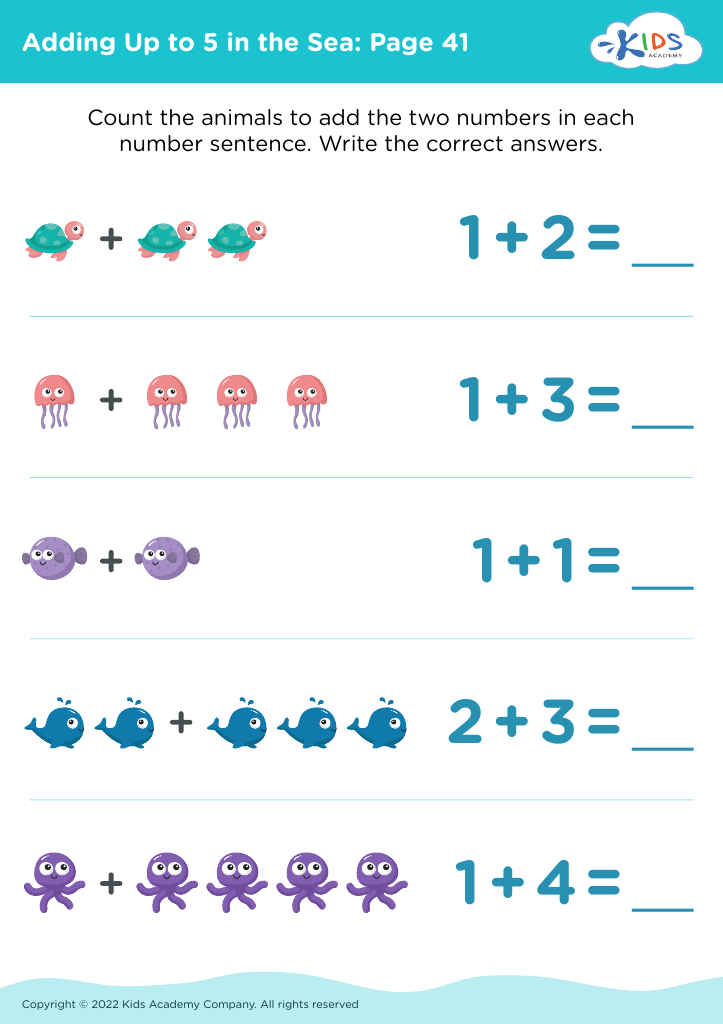
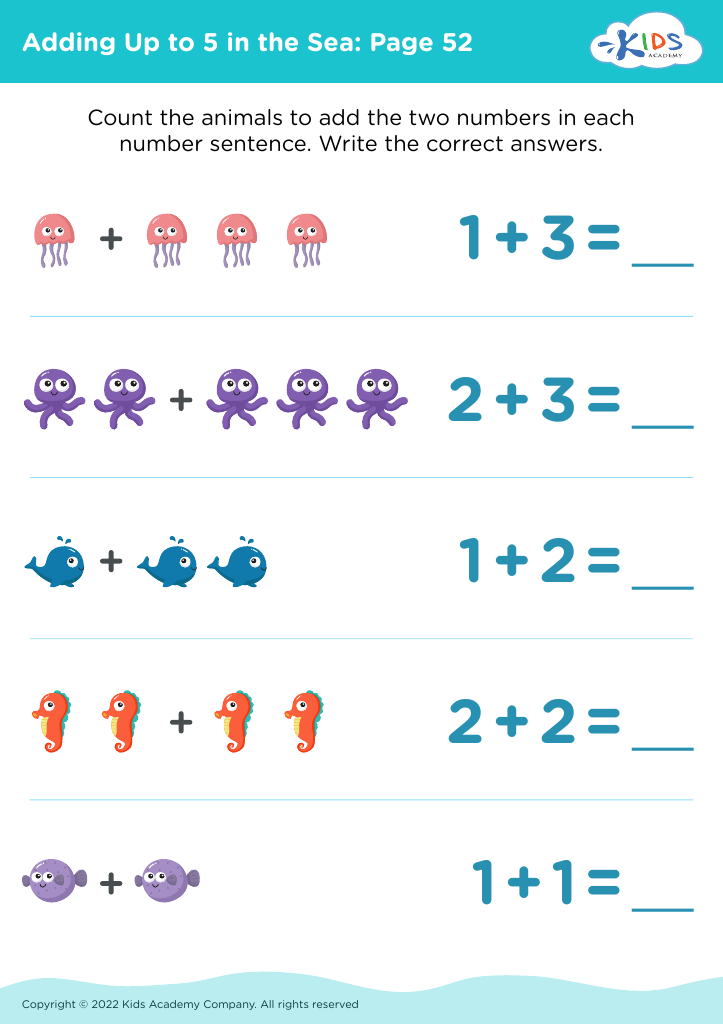
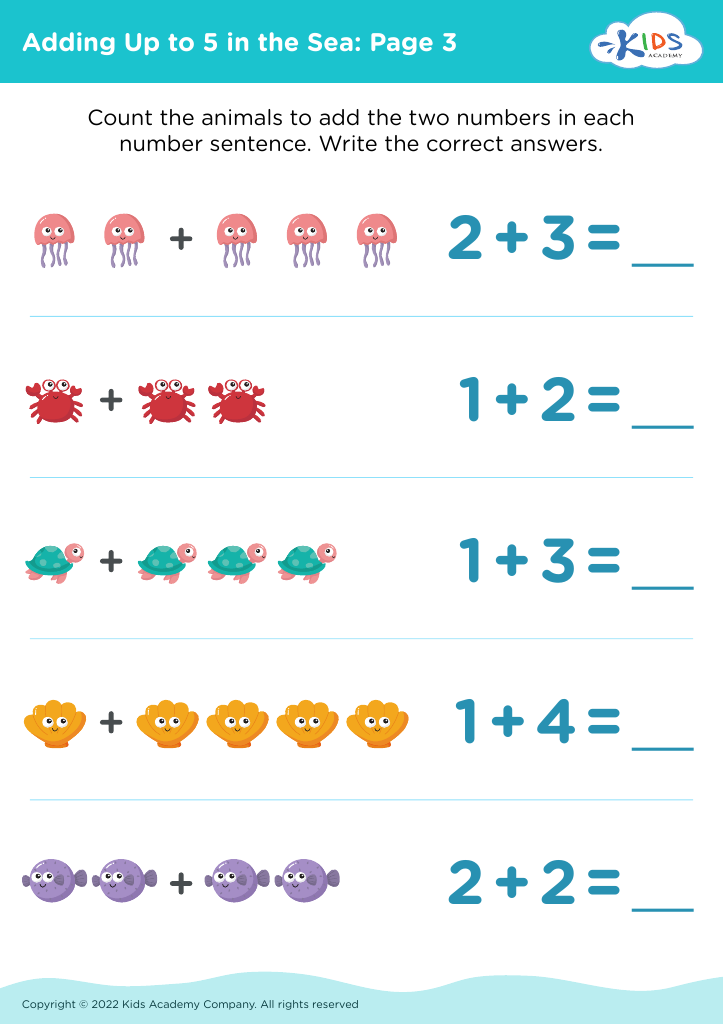








Parents and teachers should care about underwater animal identification, addition, and subtraction for children aged 3-6 because these activities provide a multifaceted approach to early learning that promotes cognitive, social, and emotional development. Understanding underwater animals introduces young learners to the wonders of marine life, fostering curiosity about the natural world. This knowledge can spark discussions about biodiversity, habitats, and conservation, thereby promoting environmental stewardship from a young age.
Additionally, integrating addition and subtraction with underwater themes enhances mathematical understanding and keeps young learners engaged. Using marine animals in mathematical problems allows children to visualize abstract concepts, making learning more relatable and enjoyable. For example, counting fish or subtracting turtles can be both fun and educational, helping children improve their numerical skills and critical thinking through hands-on activities.
Furthermore, these activities encourage collaboration and peer interaction, important components of social development at this age. Engaging in group activities centered around underwater animals can help build communication skills and foster teamwork. In summary, supporting underwater animal identification alongside foundational math concepts enriches early education, nurtures a love for learning, encourages environmental awareness, and develops essential life skills in children.








