
Visual perception Addition & Subtraction Worksheets for Ages 3-6
14 filtered results
Difficulty Level
Grade
Age
-
From - To
Subject
Activity
Standards
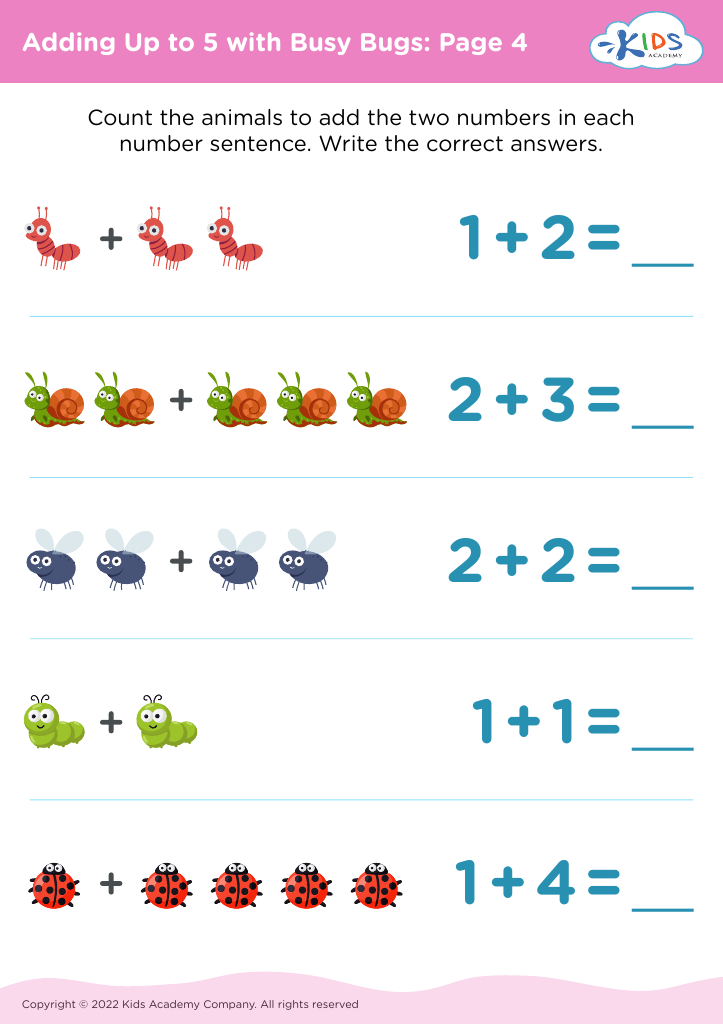
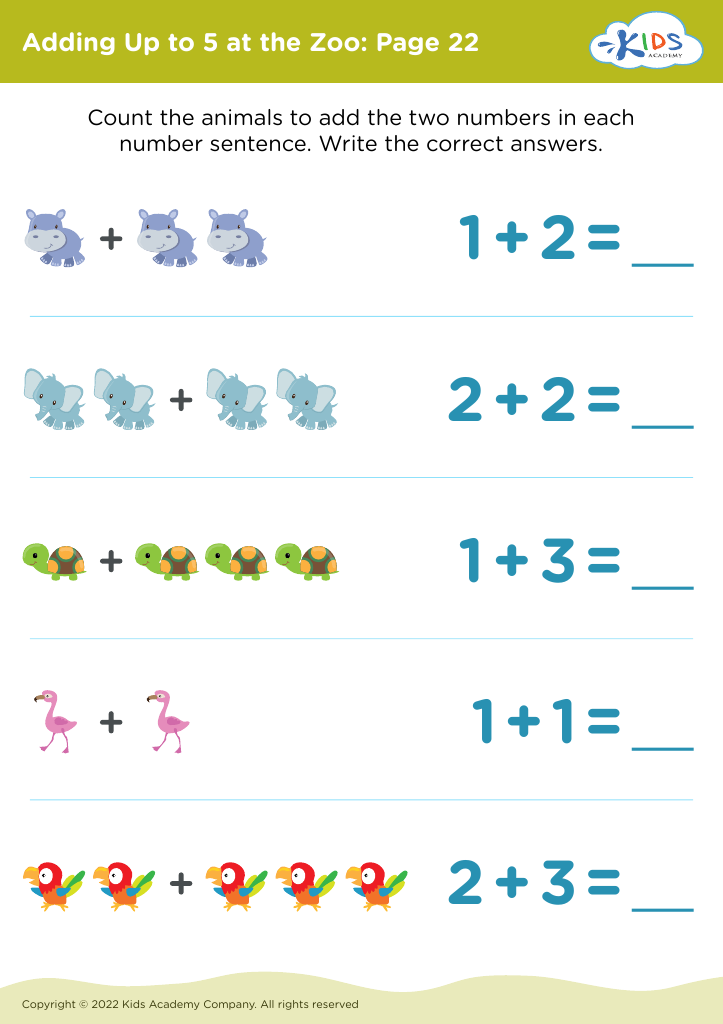
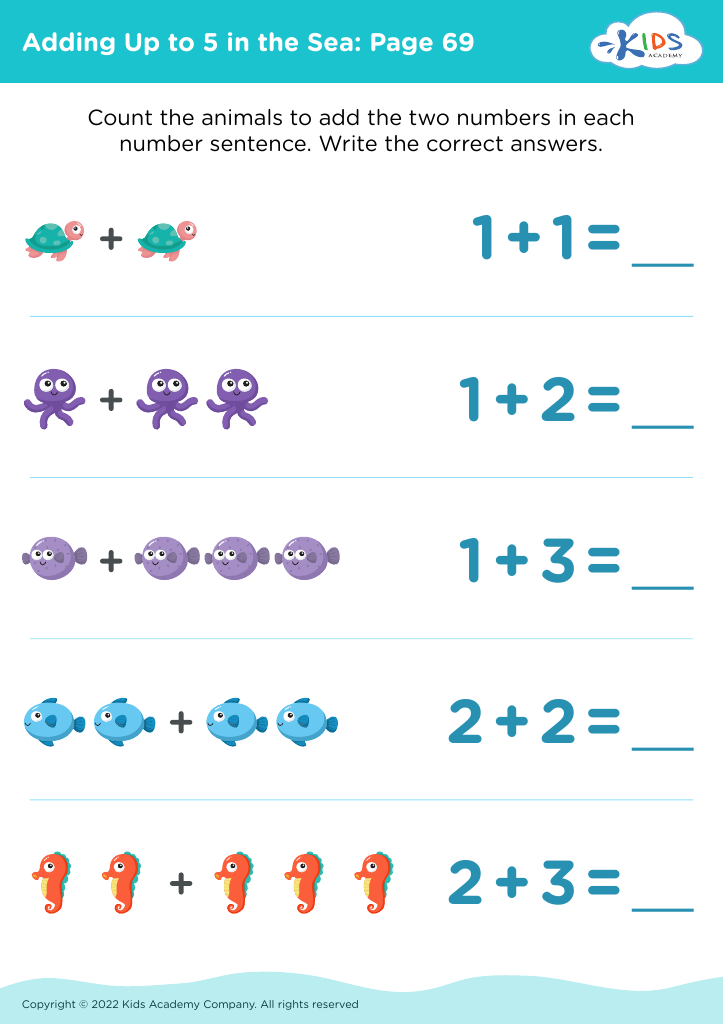
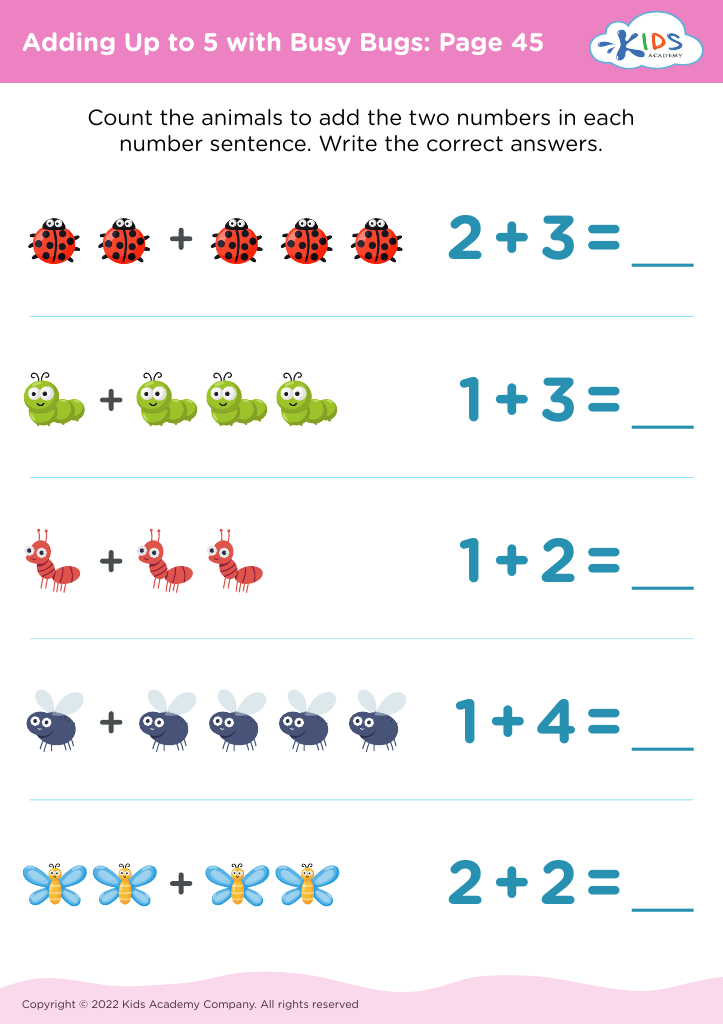
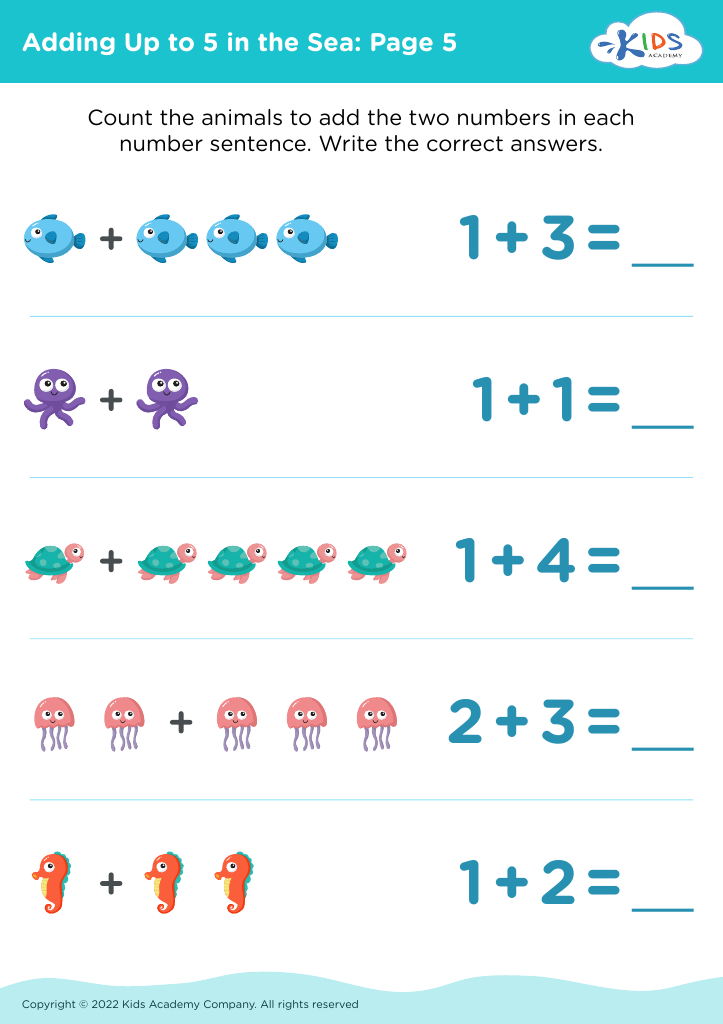
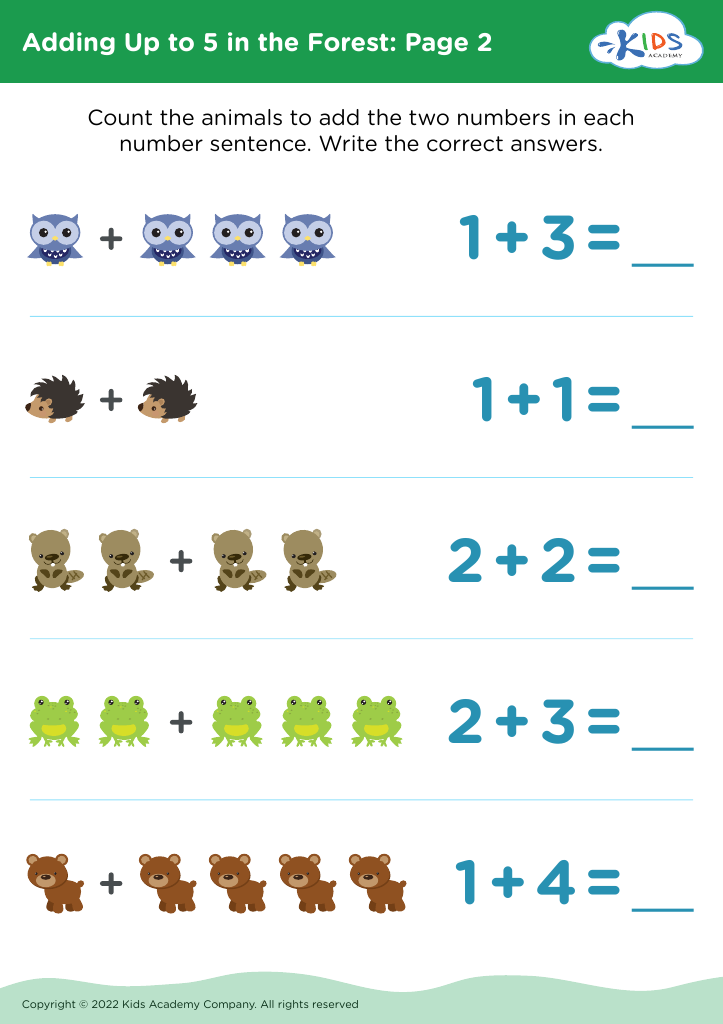
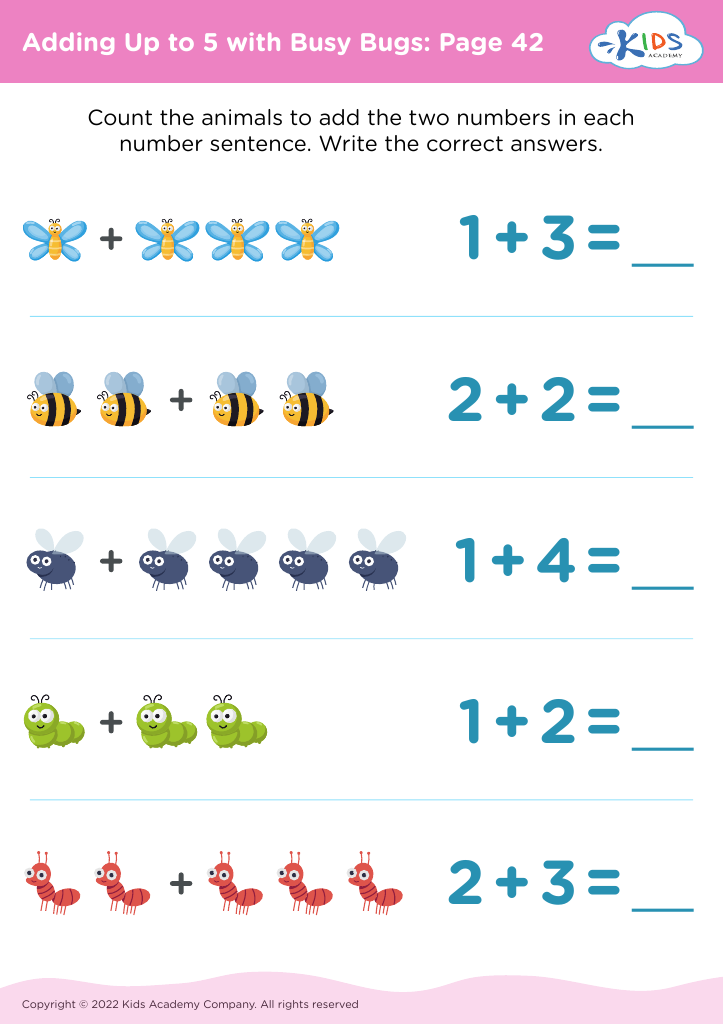
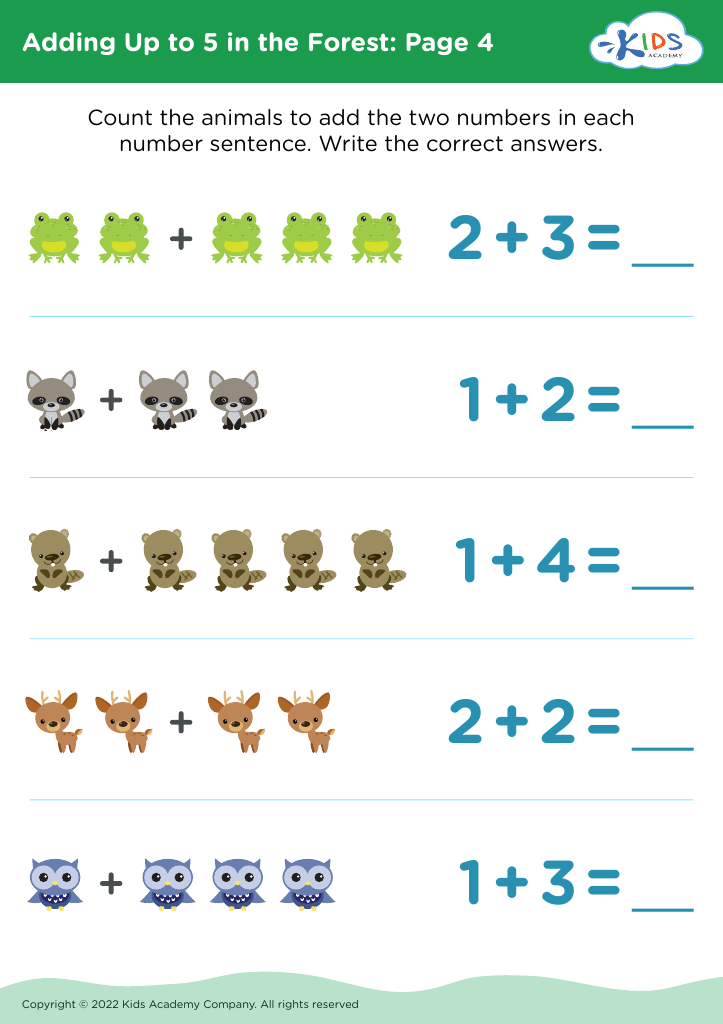
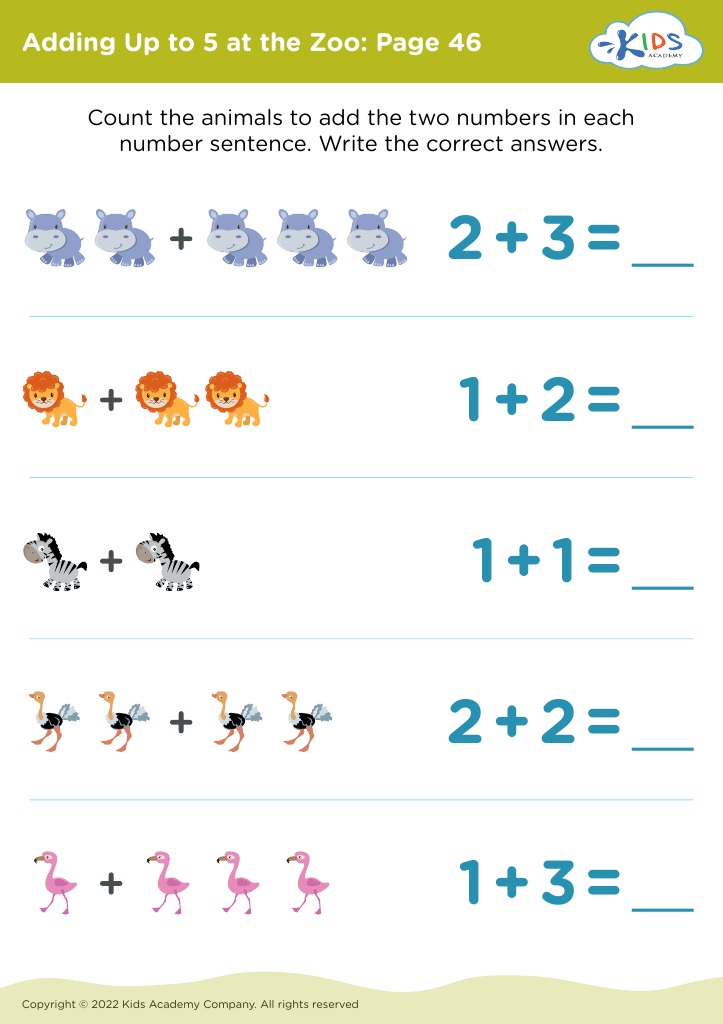
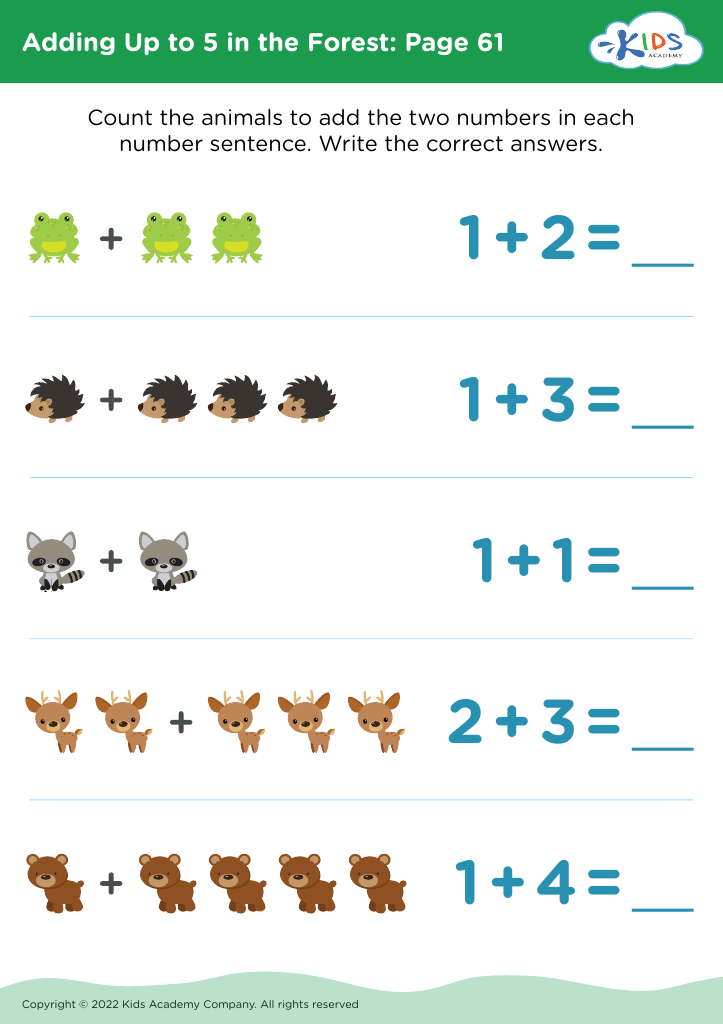
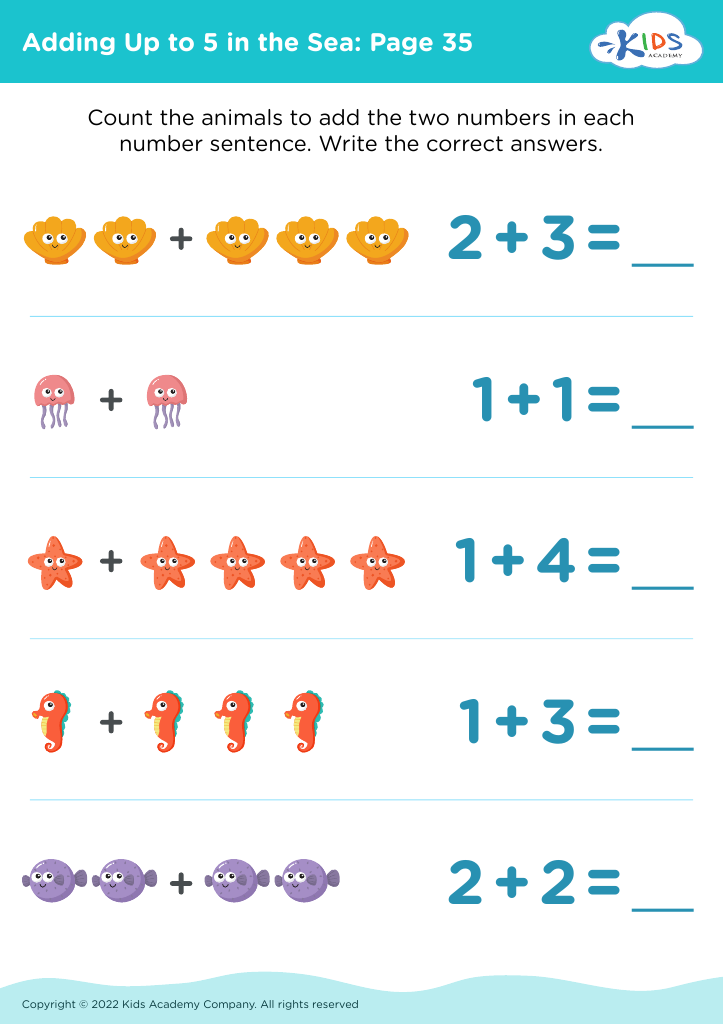
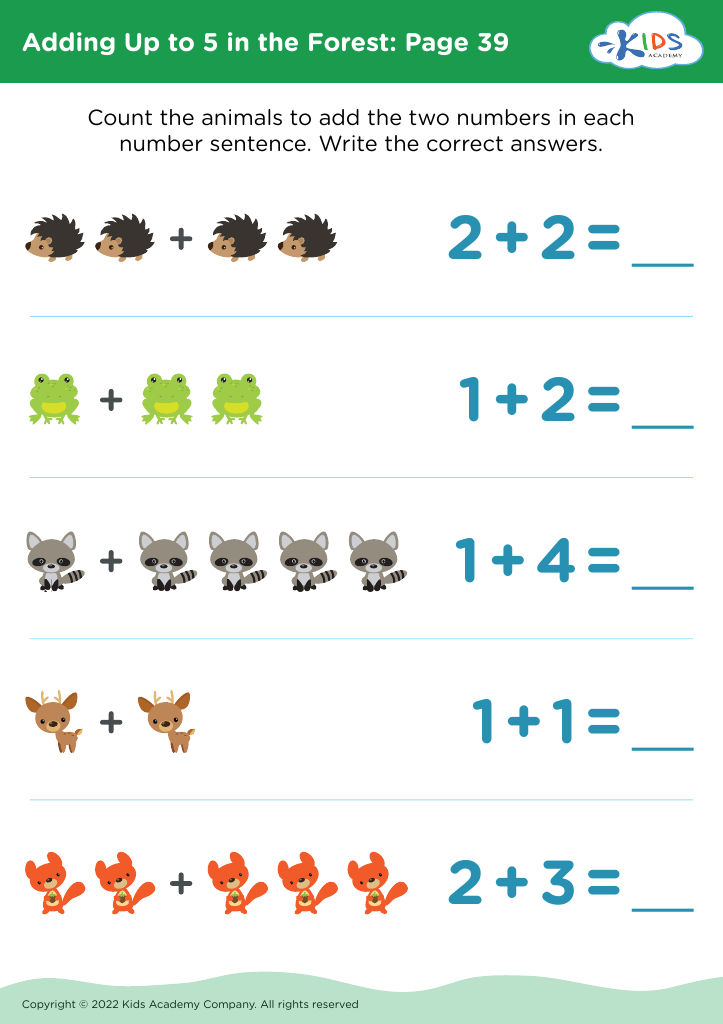
Boost your child's learning with our "Visual Perception Addition & Subtraction Worksheets" designed specifically for ages 3-6. These engaging worksheets help young learners develop essential math skills while enhancing their visual perception. Through fun illustrations and interactive exercises, kids practice recognizing numbers and simple addition and subtraction concepts. Our worksheets foster not only math proficiency but also critical thinking and problem-solving abilities. Perfect for at-home learning or classroom activities, these resources support foundational math education in an entertaining and effective way. Explore our collection today to make math exciting and help your child thrive in early mathematics!
Favorites
With answer key
Interactive
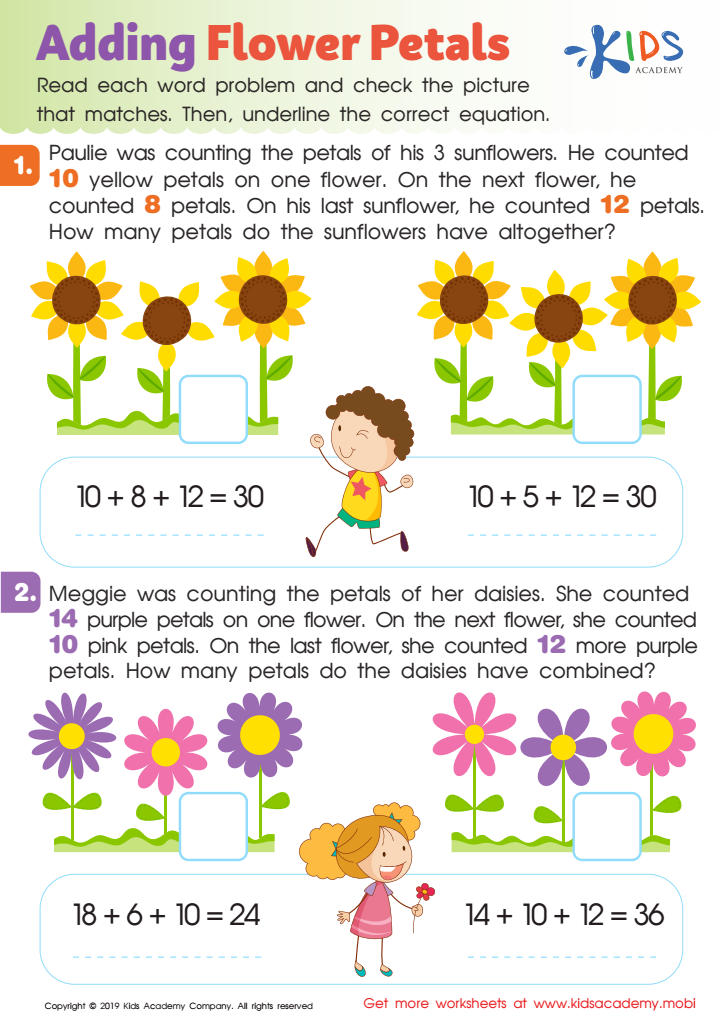
Adding Flower Petals Worksheet
This free worksheet helps little mathematicians learn to understand word problems. They'll read each one and match it to the corresponding picture. Important info is highlighted, teaching kids to look for key info when solving problems. Then they'll underline the correct number equation that matches the picture. A great way to practice problem-solving skills!
 Assign to My Students
Adding Flower Petals Worksheet
Worksheet
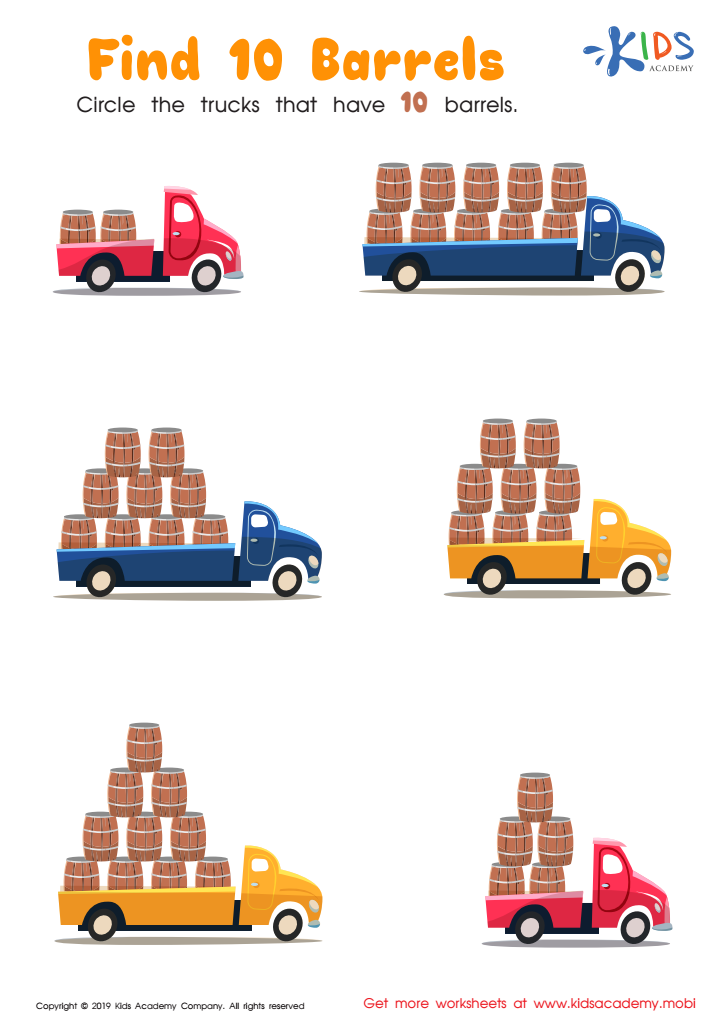
Find 10 Barrels Worksheet
Help your kids learn to count with 1, 2 and 3, then progress to tens and hundreds. Supplied with educational materials and colorful worksheets, they'll be counting as high as they can. Together, count the barrels on the trucks in the printout and encourage them to circle the ones with 10 barrels.
Find 10 Barrels Worksheet
Worksheet
Join Kids Academy for Free
Who is primarily going to use this learning content?








Visual perception is a crucial cognitive skill that enables young children to understand and interpret visual information. For educators and parents of children aged 3-6, fostering visual perception is essential, especially in foundational subjects like addition and subtraction. By developing visual perception skills, children learn to recognize, differentiate, and categorize shapes and numbers, which are vital for early math skills.
Helping children master visual perception in the context of arithmetic encourages their ability to visualize quantities and understand numerical relationships. For instance, recognizing groups of objects as a whole rather than counting each item one by one promotes quicker problem-solving techniques. This skill also sharpens critical thinking as children begin to identify patterns and make connections between numbers.
Moreover, strong visual perception aids in the development of fine motor skills, which are essential for writing and drawing — activities integral to overall literacy and expression. Engaging activities that promote visual perception, such as sorting, matching, and puzzles, can be seamlessly integrated into everyday play.
Ultimately, by focusing on visual perception, parents and teachers can provide children with a solid foundation in math, helping foster confidence and enthusiasm for learning that will serve them throughout their educational journey.








