Basic math concepts Addition Worksheets for Ages 3-6
11 filtered results
-
From - To
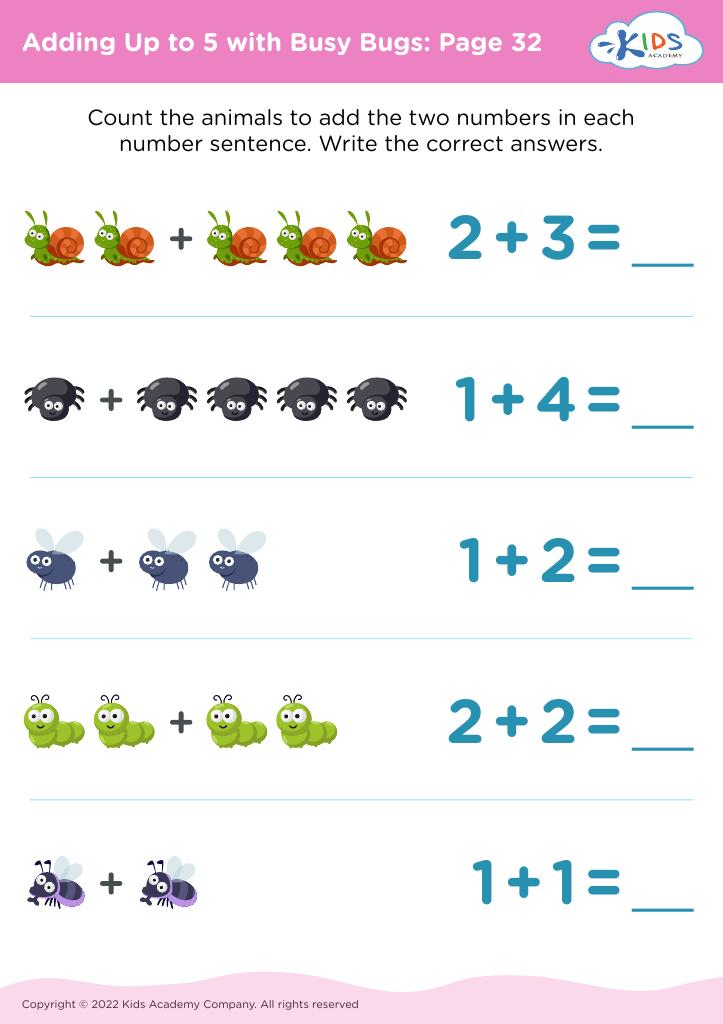
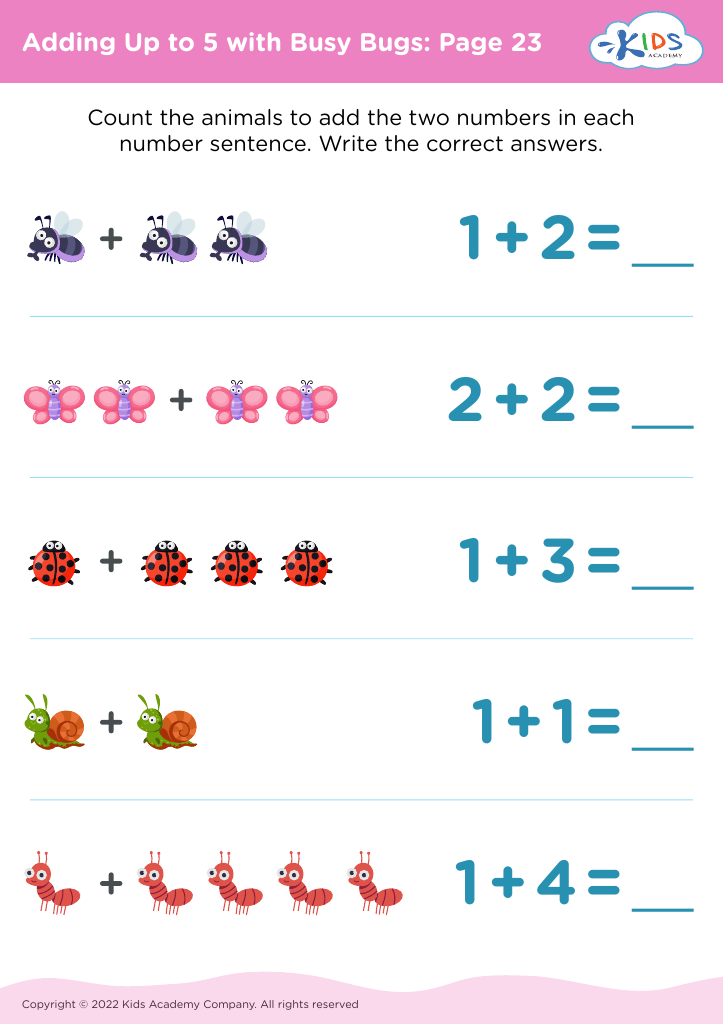
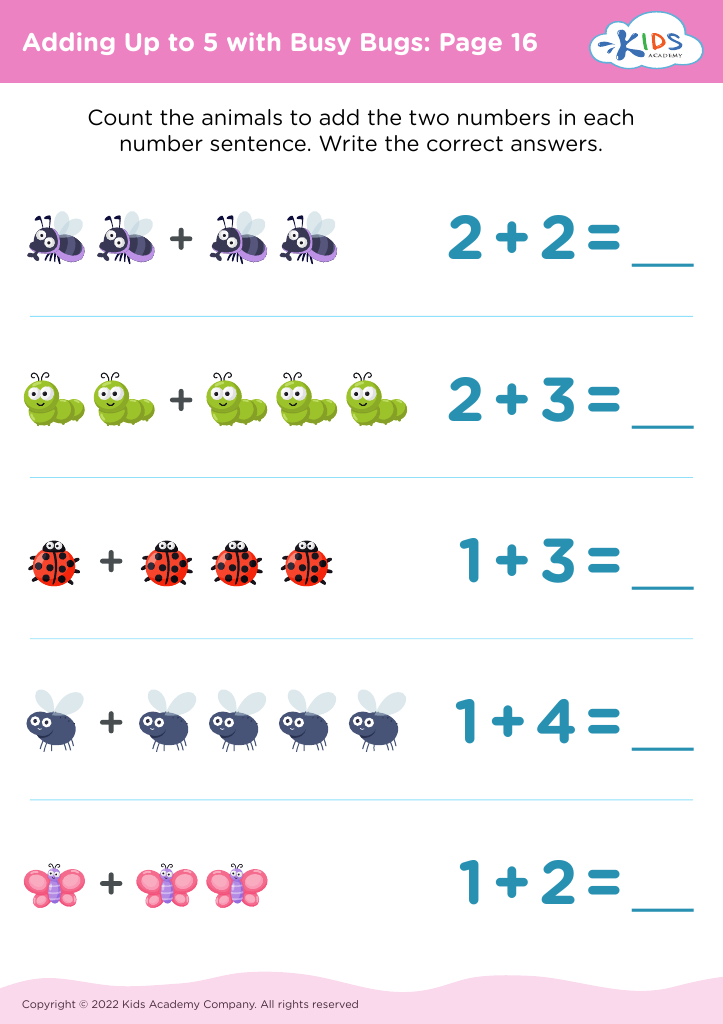
Explore our engaging Basic Math Concepts Addition Worksheets designed for ages 3 to 6! These interactive resources support early childhood learning, helping young learners develop a strong foundation in addition. Each worksheet is crafted to promote numerical understanding through fun activities that capture children's interest. From counting colorful objects to solving simple addition problems, your child will build confidence while enjoying the learning process. Perfect for at-home practice or classroom reinforcement, our worksheets enhance math skills and creative thinking in an approachable, playful manner. Guided by educational principles, these worksheets are essential tools for nurturing a love for math in your little ones!
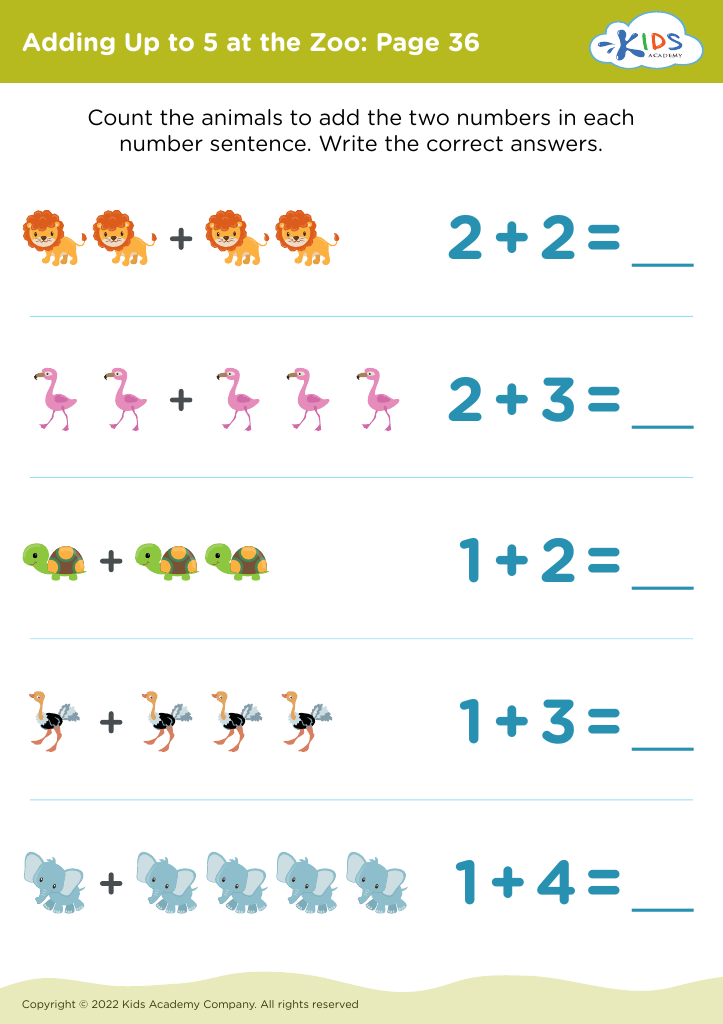
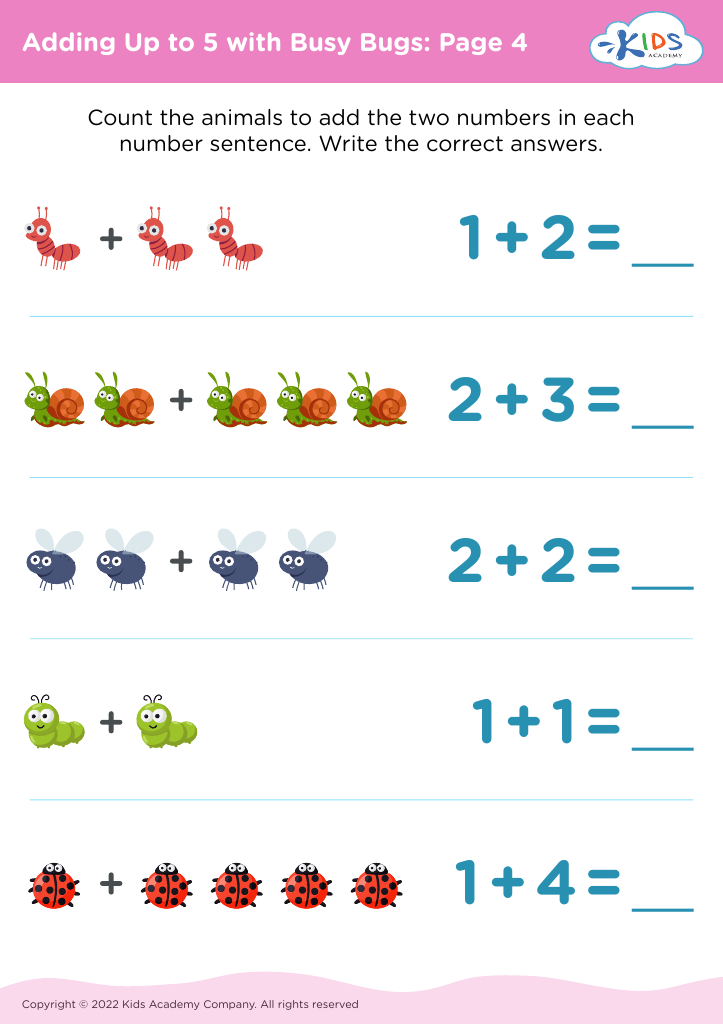
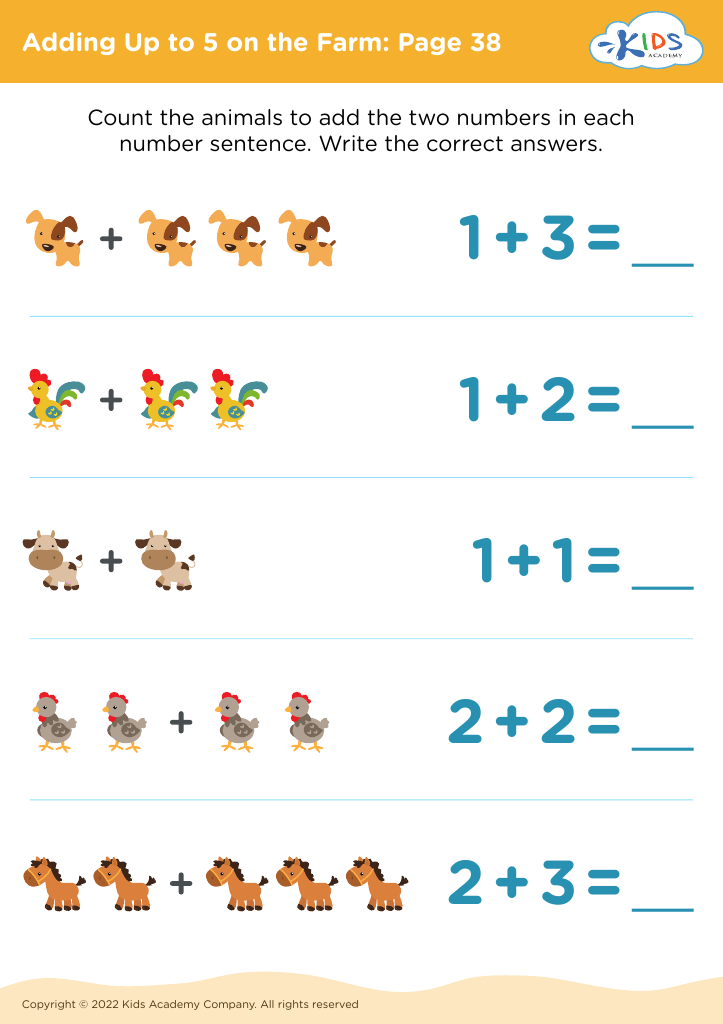
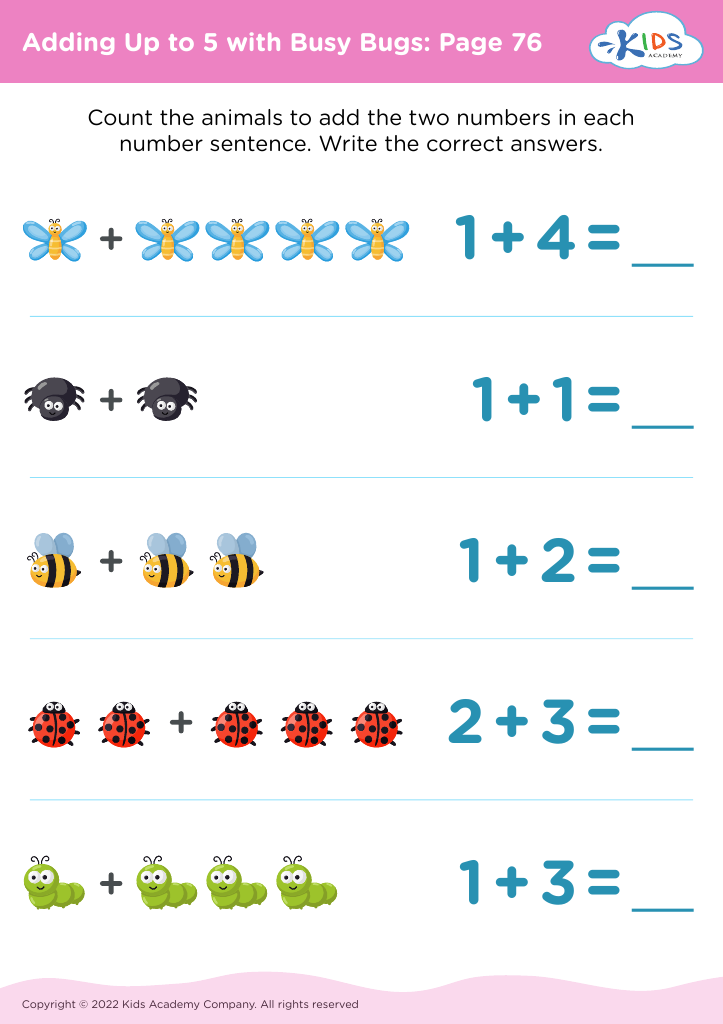
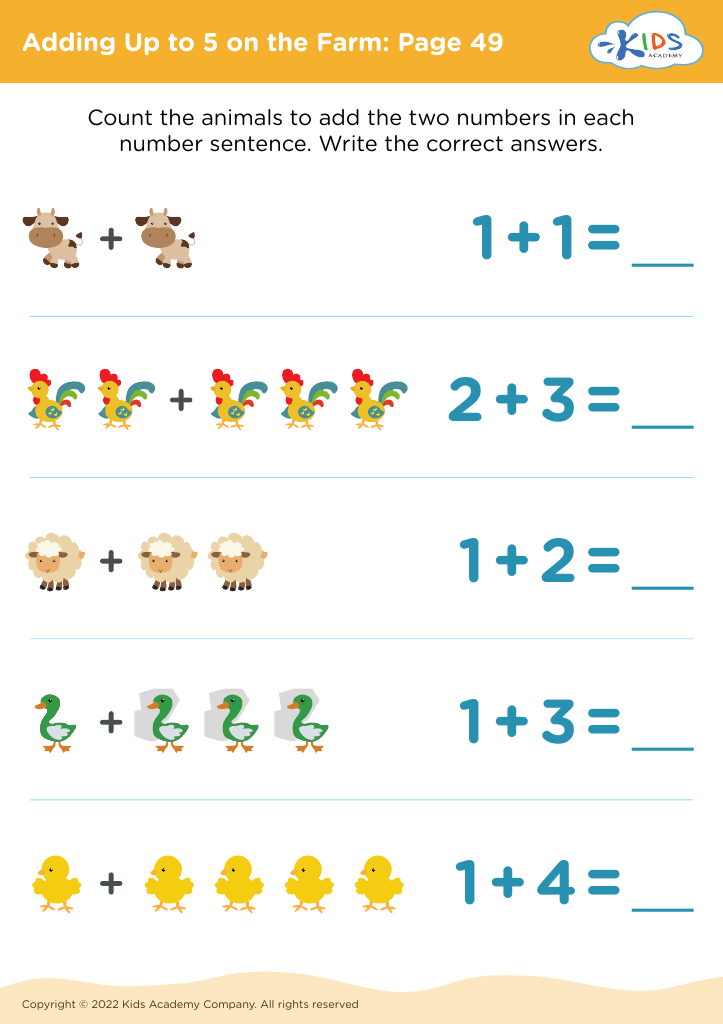
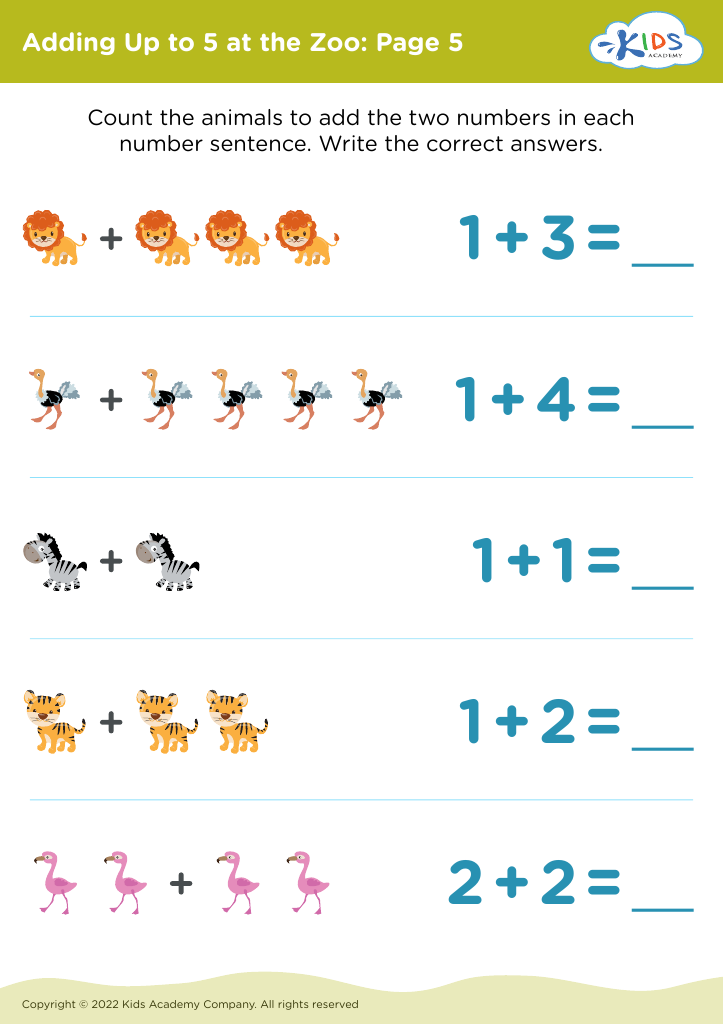
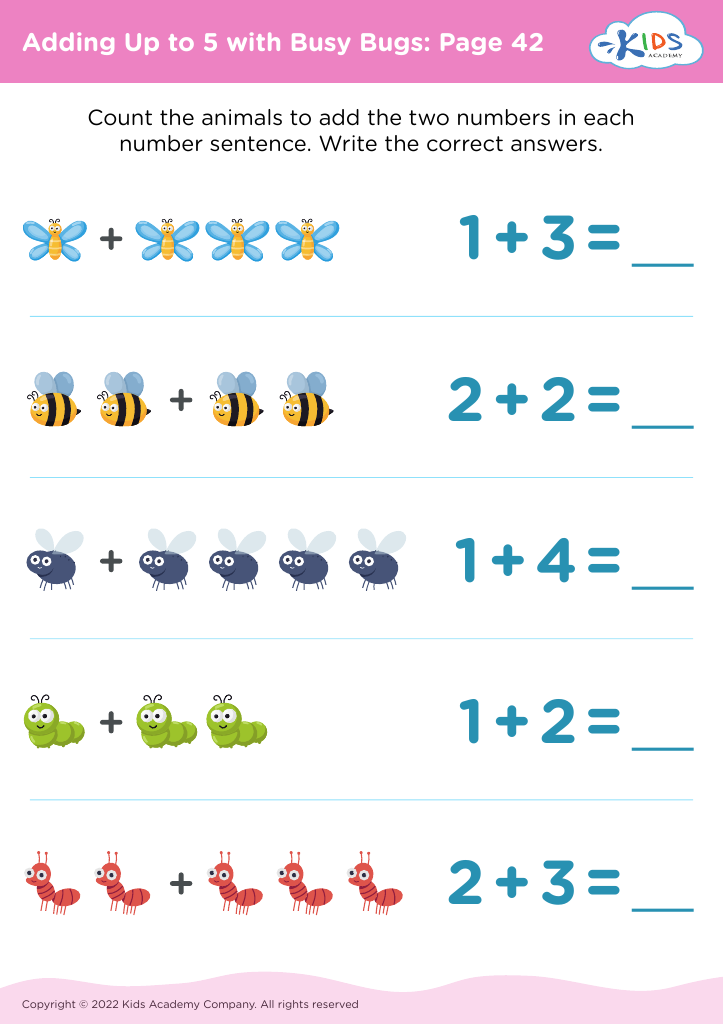
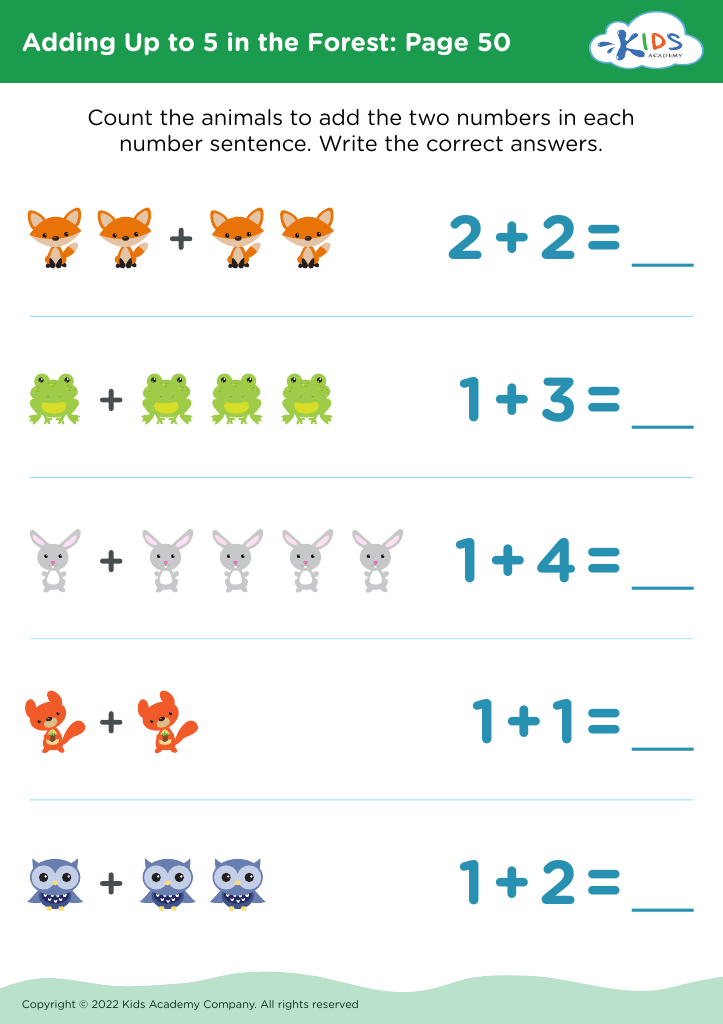








Understanding basic math concepts, particularly addition, is crucial for children aged 3 to 6, as it lays the foundation for their future learning. During this developmental stage, children actively explore their environment and begin to recognize numbers and relationships. Adding numbers introduces them to the concept of combining quantities, fostering critical thinking and problem-solving skills.
Moreover, early math understanding enhances cognitive development. When children engage in addition, they learn to associate quantity with symbols and words, which aids language development as well. Additionally, mastering basic addition promotes confidence and encourages a positive attitude toward math, reducing the anxiety many students face as they grow older.
Parents and teachers play a pivotal role as facilitators in this learning process. They can create a supportive learning environment through games, everyday activities, and interactive play, making addition enjoyable and relatable. Encouraging children to count objects, such as snacks or toys, while adding them together plays to their natural curiosity and reinforces their understanding through practical experience.
Ultimately, focusing on addition during these formative years helps build essential mathematical skills, ensuring children are well-prepared for more complex concepts in later education. Understanding these basics is not only beneficial academically but also crucial for overall cognitive and emotional development.








