Filters

35 filtered results

Clear all filters
Favorites
With answer key
Interactive

35 filtered results

Difficulty Level

Grade


Subject

    Check out this FREE Trial Lesson on Addition for age 3-6!

    Making 16

    Favorites
    With answer key
    Interactive
    • 3-6
    • Fine Motor Skills
    • Addition
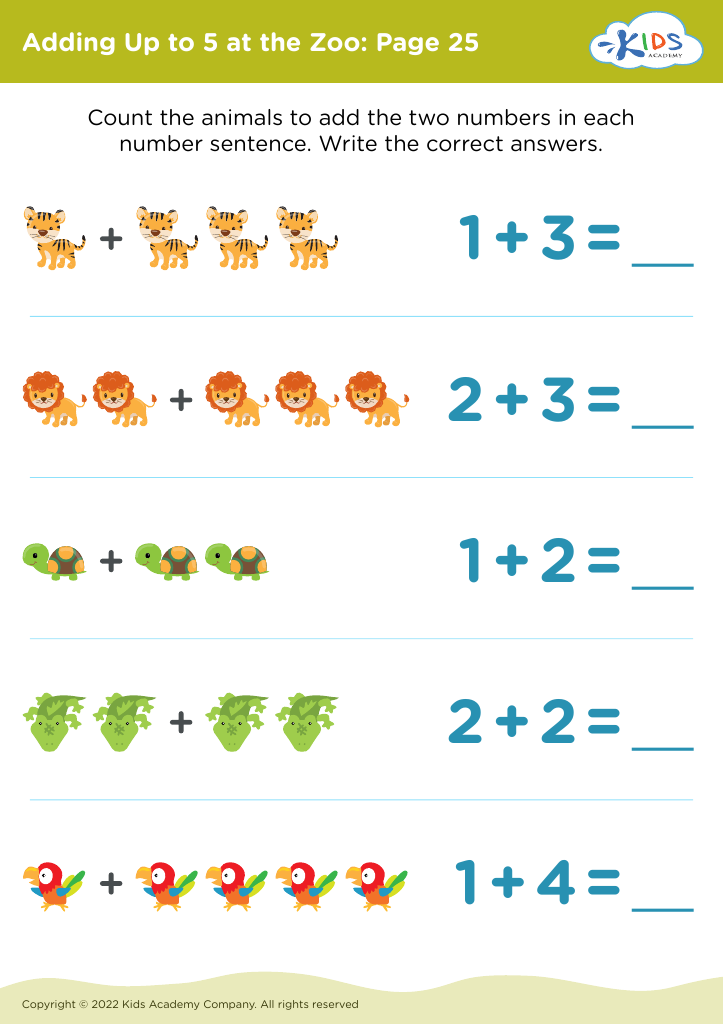
    Adding Up to 5 at the Zoo: Page 25
    Adding Up to 5 at the Zoo: Page 25
    Adding Up to 5 at the Zoo: Page 25
    Worksheet
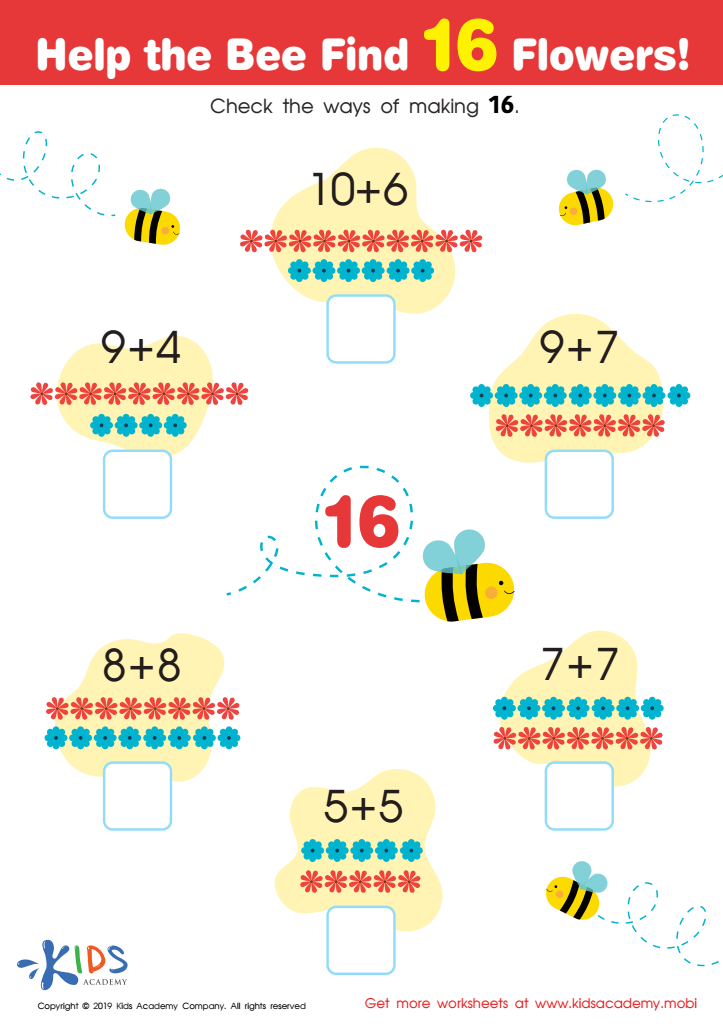
    Help the Bee Find 16 Flowers Worksheet
    Help the Bee Find 16 Flowers Worksheet

    Help the Bee Find 16 Flowers Worksheet

    Ask your students to count as high as they can. Show them that different numbers can equal the same figure with examples like 2+2=4 and 3+1=4. Ask for more examples, then help the bees find 16 flowers by checking the ways of making 16.
    Help the Bee Find 16 Flowers Worksheet
    Worksheet
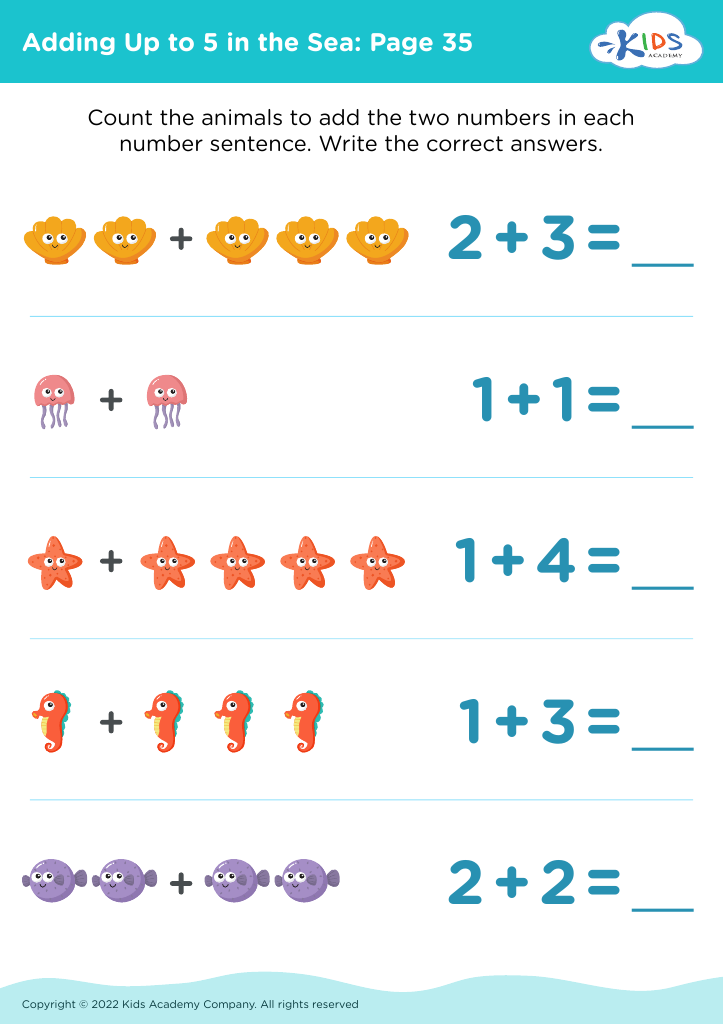
    Adding Up to 5 in the Sea: Page 35
    Adding Up to 5 in the Sea: Page 35
    Adding Up to 5 in the Sea: Page 35
    Worksheet
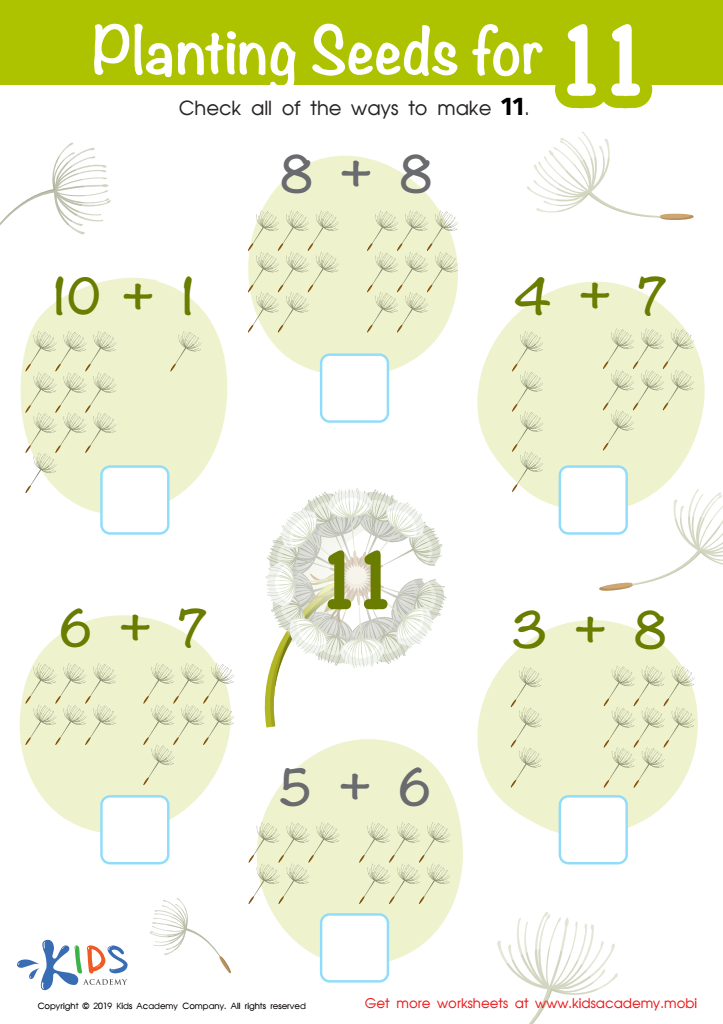
    Planting Seeds for 11 Worksheet
    Planting Seeds for 11 Worksheet

    Planting Seeds for 11 Worksheet

    Before starting, ask your students to count as high as they can. Explain that different numbers can add up to the same total. Give examples like 2+2 =4 and 3+1 =4. Ask if they can think of other examples. Then have them work through the equations in the printout and circle all that add up to 11.
    Planting Seeds for 11 Worksheet
    Worksheet
    Addition Robot Sorter Worksheet
    Addition Robot Sorter Worksheet
    Addition Robot Sorter Worksheet
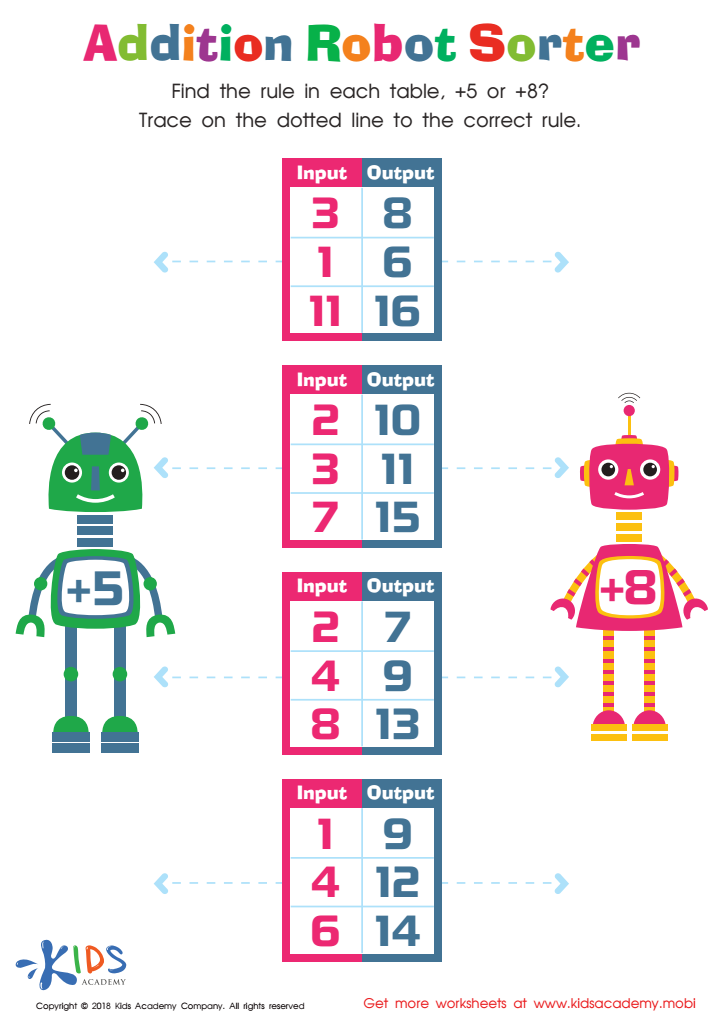
    This worksheet helps your child understand addition. Have them trace the dotted lines to the correct equations: +8 and +5. It's a great way to aid their mathematical comprehension and get them comfortable with adding equations.
    Addition Robot Sorter Worksheet
    Worksheet
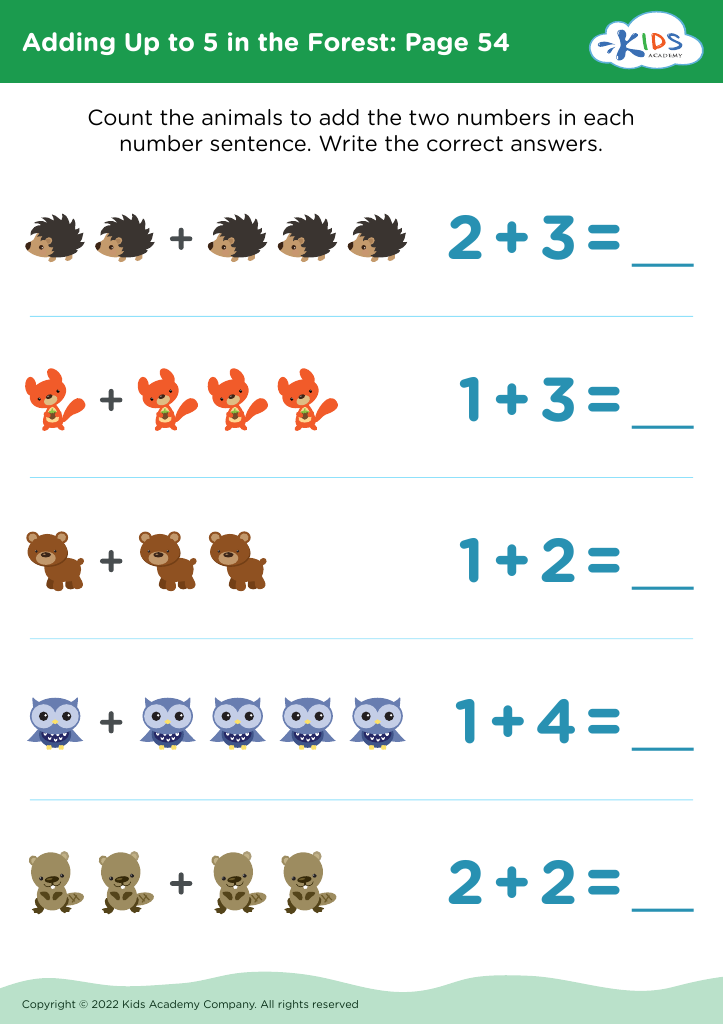
    Adding Up to 5 in the Forest: Page 54
    Adding Up to 5 in the Forest: Page 54
    Adding Up to 5 in the Forest: Page 54
    Worksheet
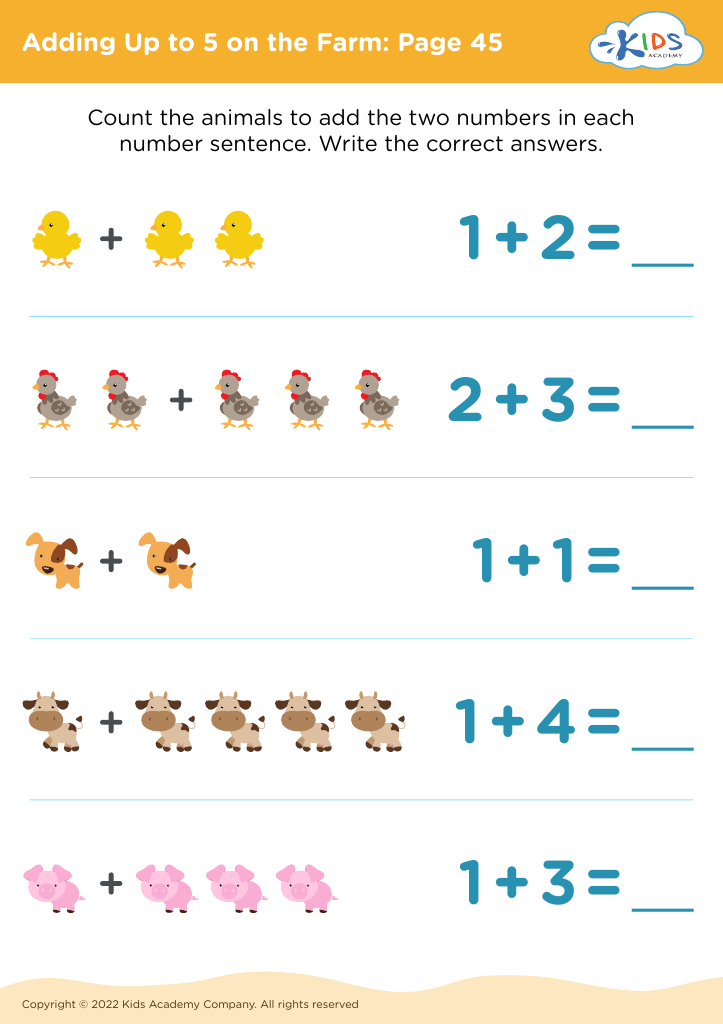
    Adding Up to 5 on the Farm: Page 45
    Adding Up to 5 on the Farm: Page 45
    Adding Up to 5 on the Farm: Page 45
    Worksheet
    Adding in the Arctic Worksheet
    Adding in the Arctic Worksheet
    Adding in the Arctic Worksheet
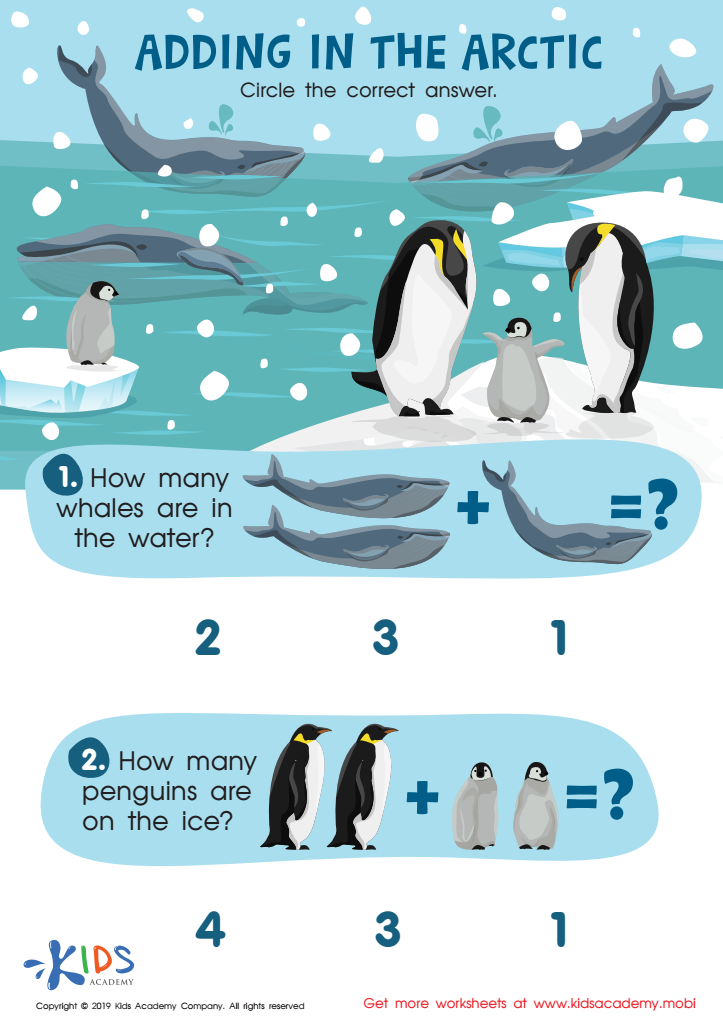
    Introduce your kids to the Arctic with this worksheet. Let them look at the pictures, teach them the name of the animals, and help them add up the correct number. Ask your kids to tell you some of the animals found there and what the weather is like. It's a fun and educational way to learn more about the Arctic.
    Adding in the Arctic Worksheet
    Worksheet
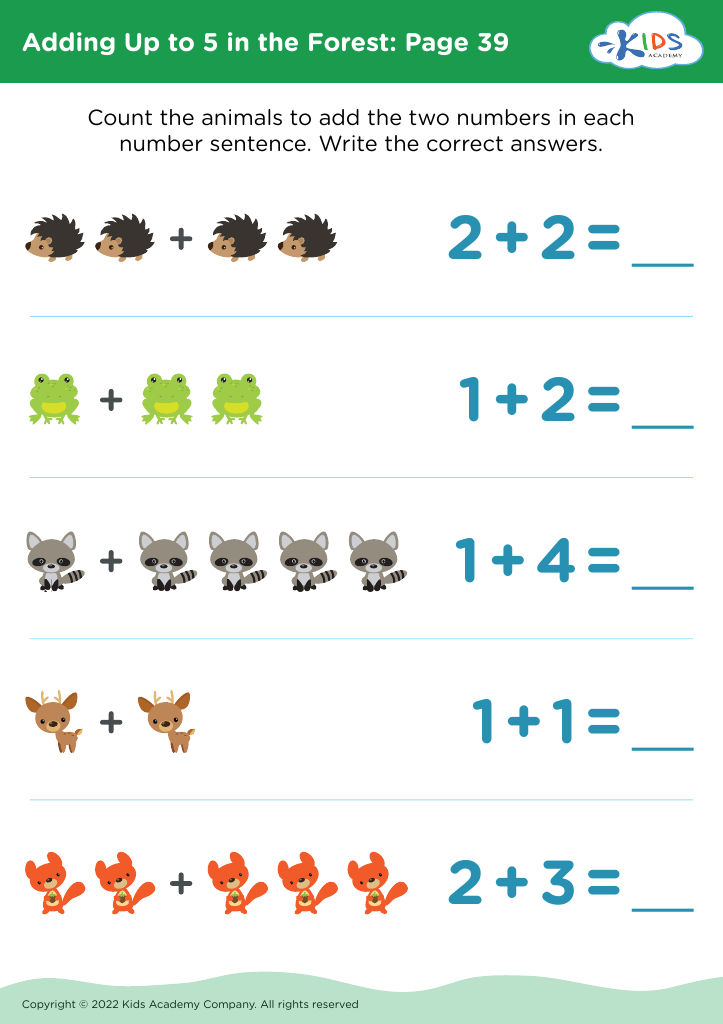
    Adding Up to 5 in the Forest: Page 39
    Adding Up to 5 in the Forest: Page 39
    Adding Up to 5 in the Forest: Page 39
    Worksheet
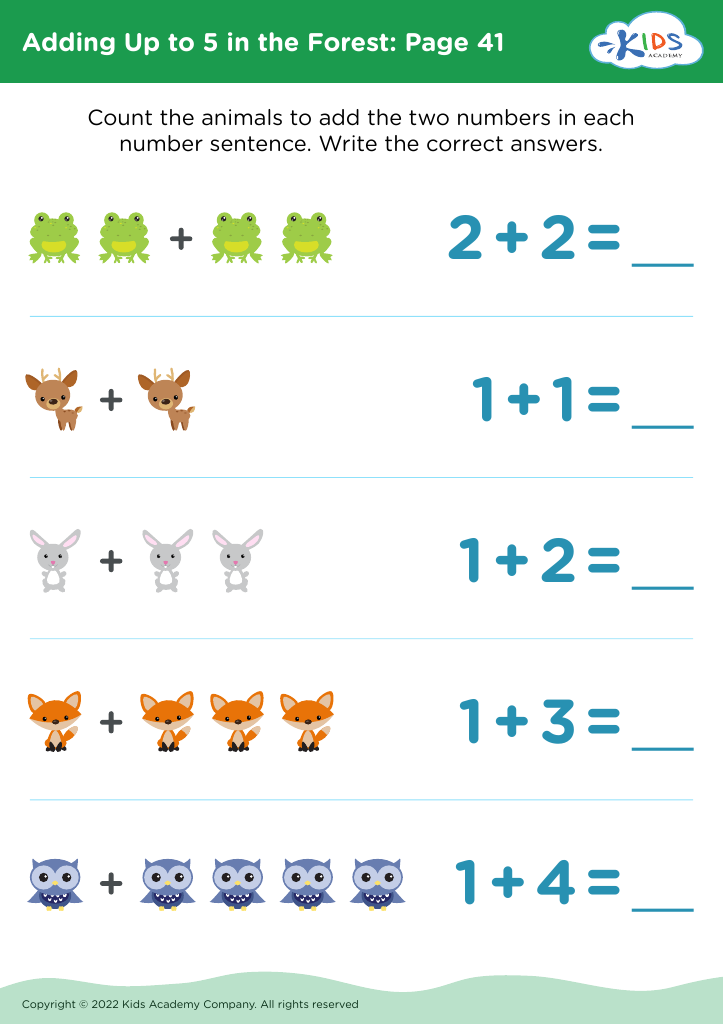
    Adding Up to 5 in the Forest: Page 41
    Adding Up to 5 in the Forest: Page 41
    Adding Up to 5 in the Forest: Page 41
    Worksheet
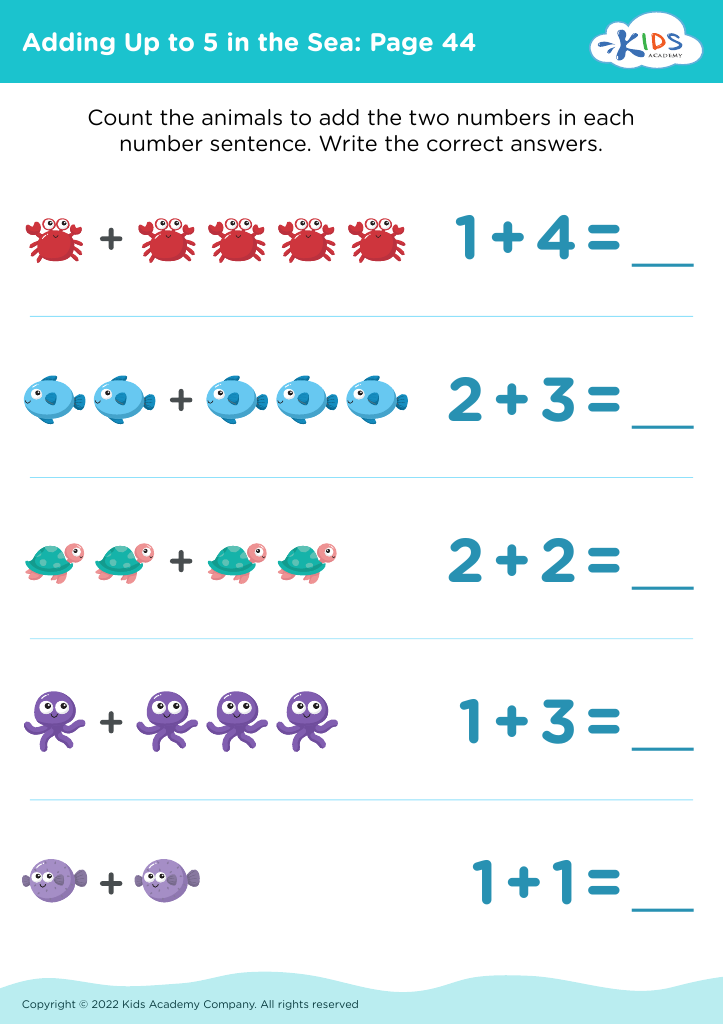
    Adding Up to 5 in the Sea: Page 44
    Adding Up to 5 in the Sea: Page 44
    Adding Up to 5 in the Sea: Page 44
    Worksheet


    Fine motor skills refer to the coordination of small muscles, particularly those in the hands and fingers, which are crucial for a child's overall development and daily functioning. Between ages 3 to 6, children's fine motor skills are rapidly developing, making this period vital for honing these abilities.

    Fine motor skills enable children to perform essential tasks such as writing, drawing, buttoning clothes, and cutting with scissors—activities fundamental to independence and self-esteem. Improved fine motor skills also facilitate academic success, as children with strong dexterity can handle classroom tasks more effectively, reducing frustration and enhancing learning. Additionally, engaging in activities that improve fine motor skills can boost cognitive development by requiring concentration, patience, and problem-solving.

    Parents and teachers should care about fine motor skills because they lay the groundwork for future academic and life skills. Activities such as playdough manipulation, beading, and puzzles promote these skills, merging fun with practicality. Encouraging such practices creates a supportive environment where children can develop the dexterity needed for everyday tasks and academic success. By fostering fine motor development early on, adults help children achieve greater competence and confidence as they grow.