Filters

387 filtered results

Clear all filters
Favorites
With answer key
Interactive

387 filtered results

Difficulty Level

Grade


Check out this FREE Trial Lesson on Addition for age 3-6!

Short and Long Vowel Sort

Favorites
With answer key
Interactive
  • 3-6
  • Number Recognition
  • Addition
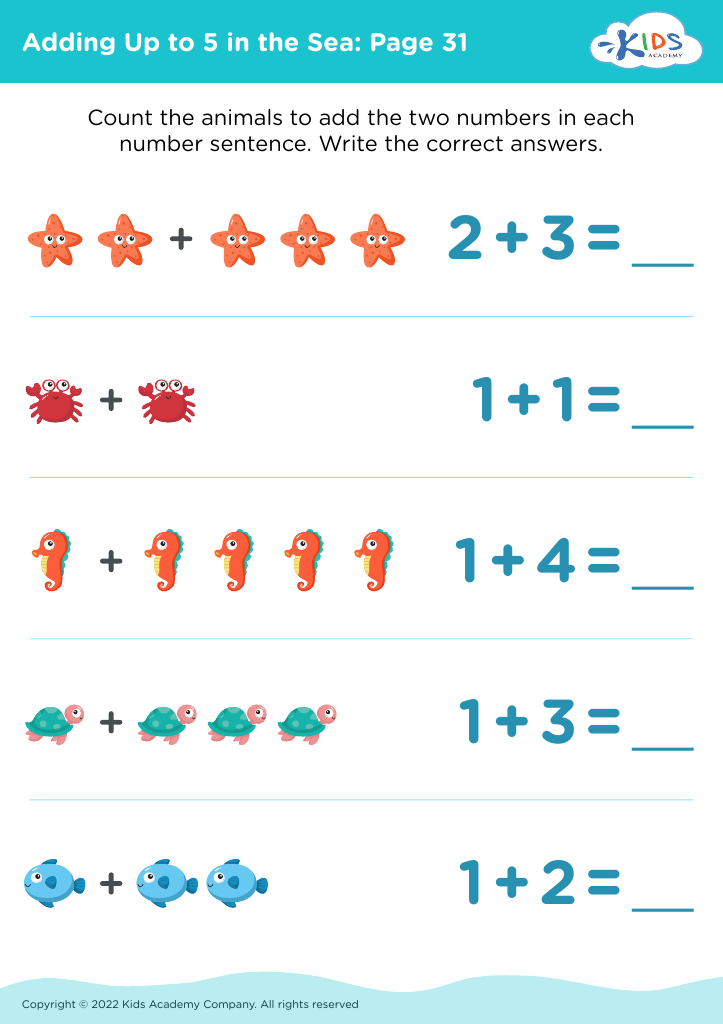
Adding Up to 5 in the Sea: Page 31
Worksheet
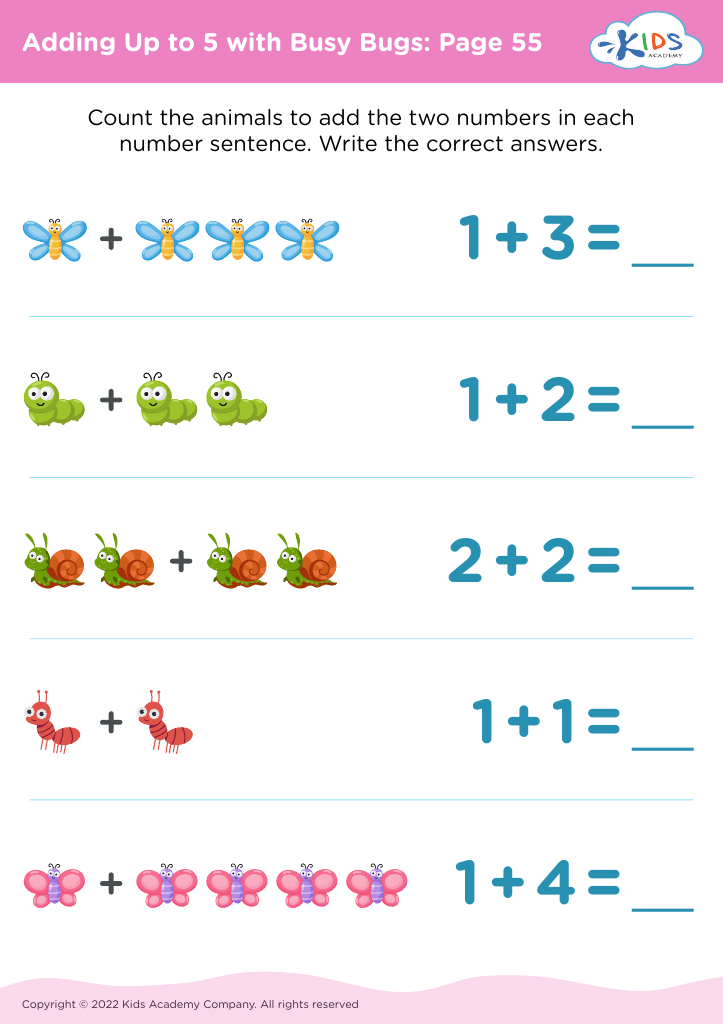
Adding Up to 5 with Busy Bugs: Page 55
Worksheet
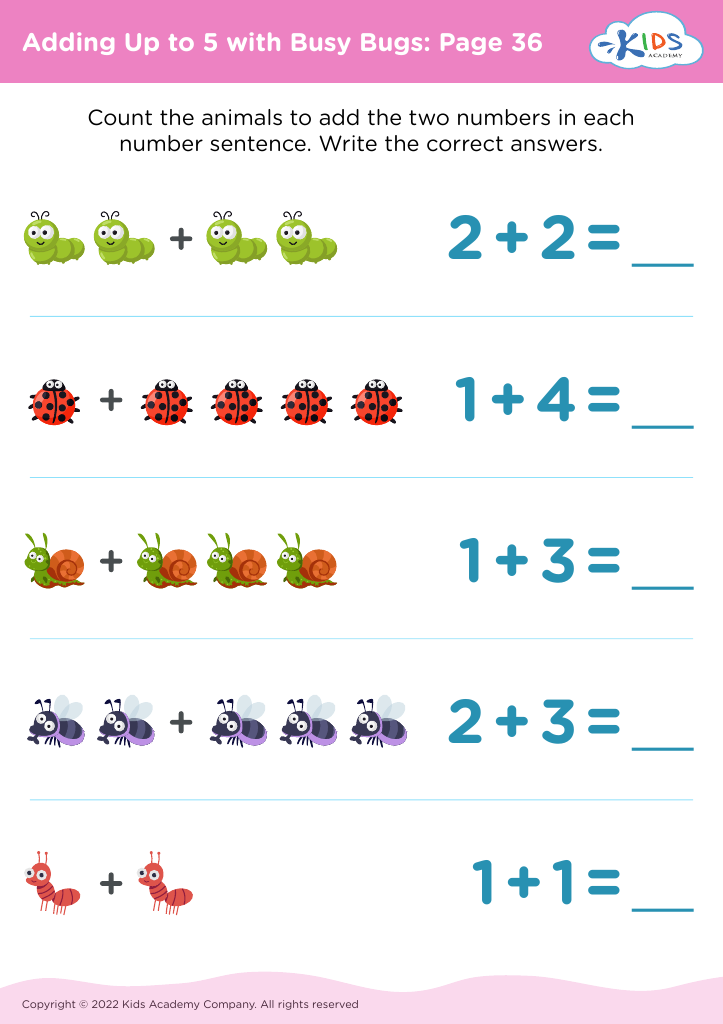
Adding Up to 5 with Busy Bugs: Page 36
Worksheet
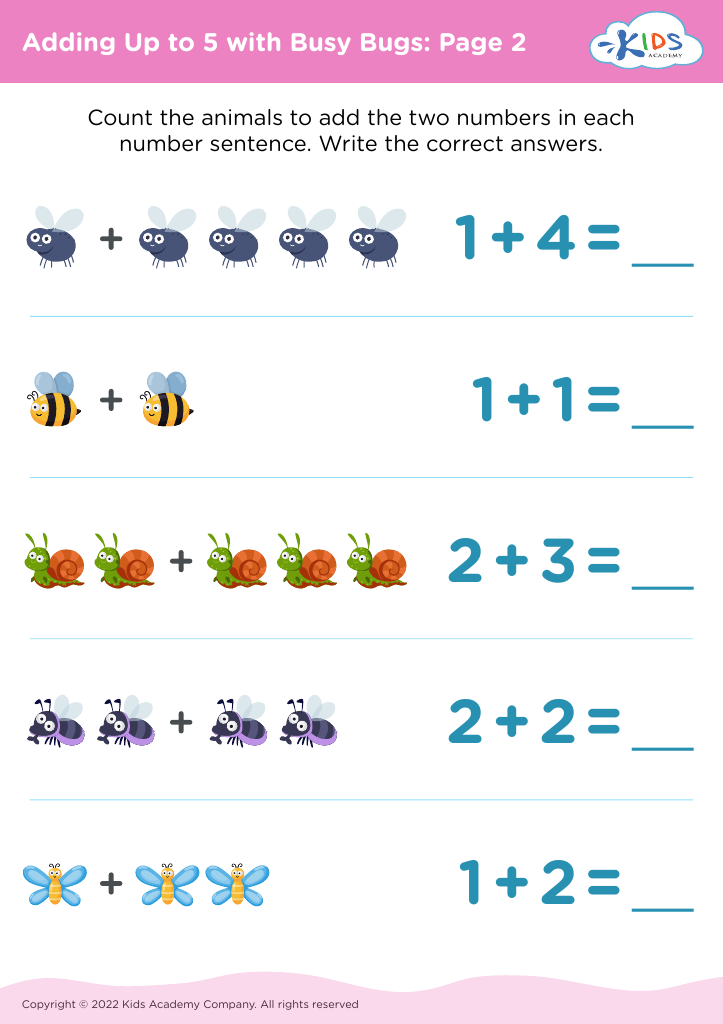
Adding Up to 5 with Busy Bugs: Page 2
Worksheet
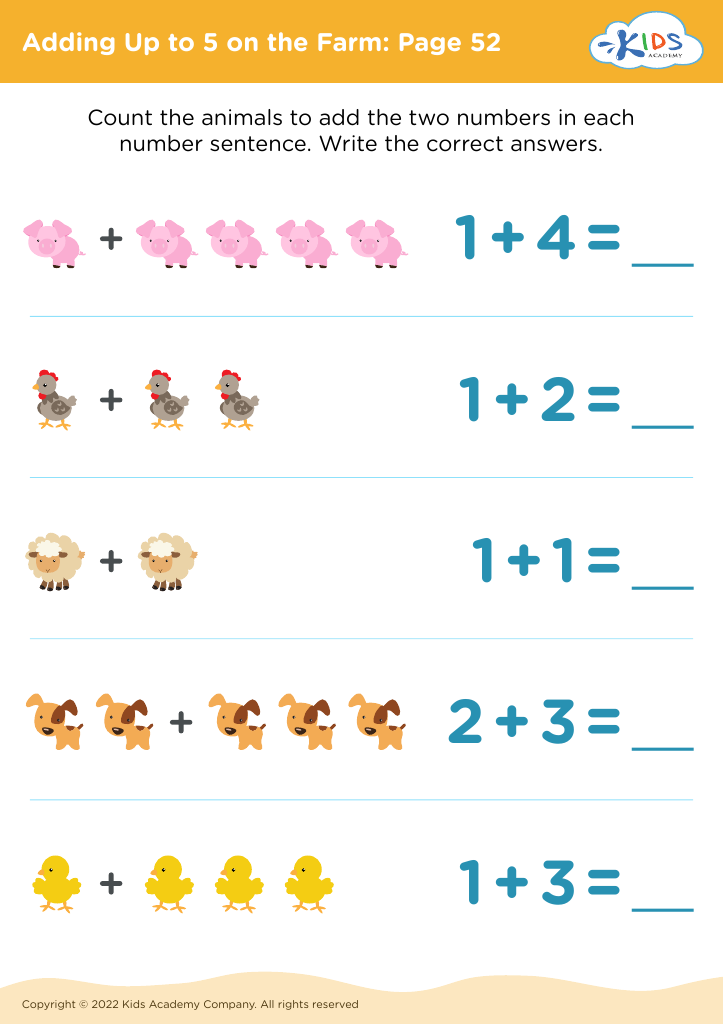
Adding Up to 5 on the Farm: Page 52
Worksheet
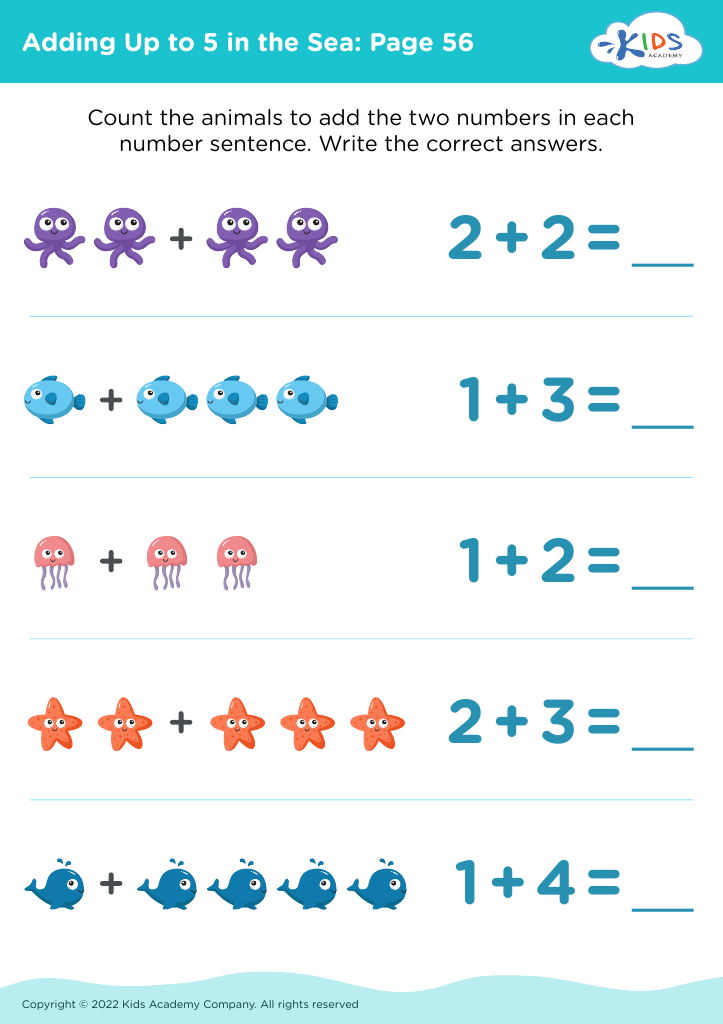
Adding Up to 5 in the Sea: Page 56
Worksheet
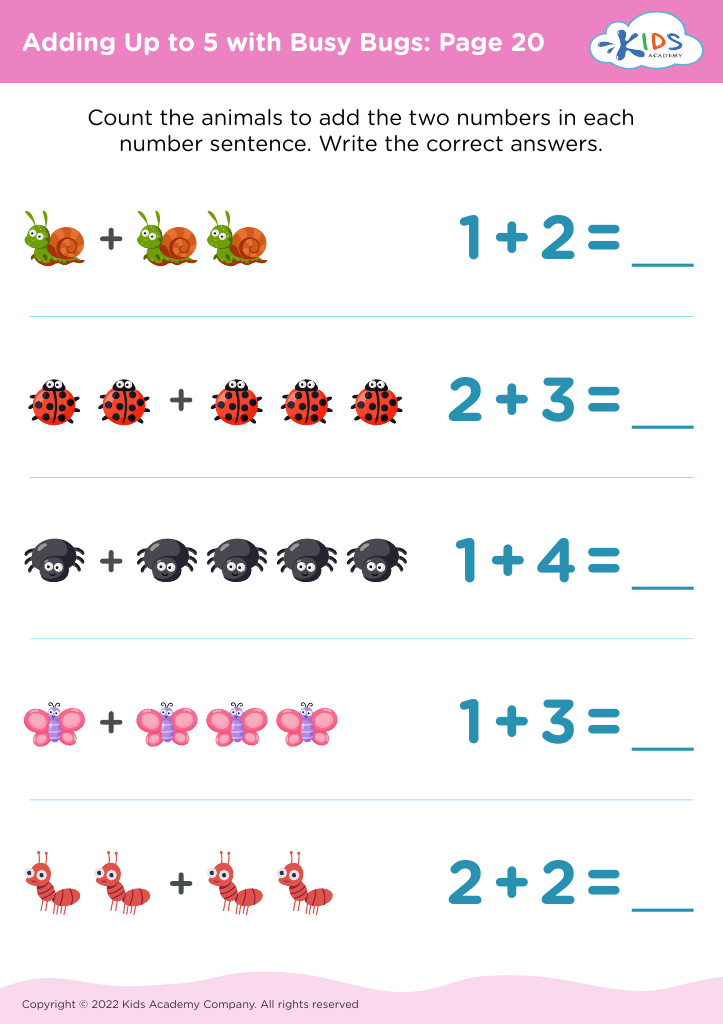
Adding Up to 5 with Busy Bugs: Page 20
Worksheet
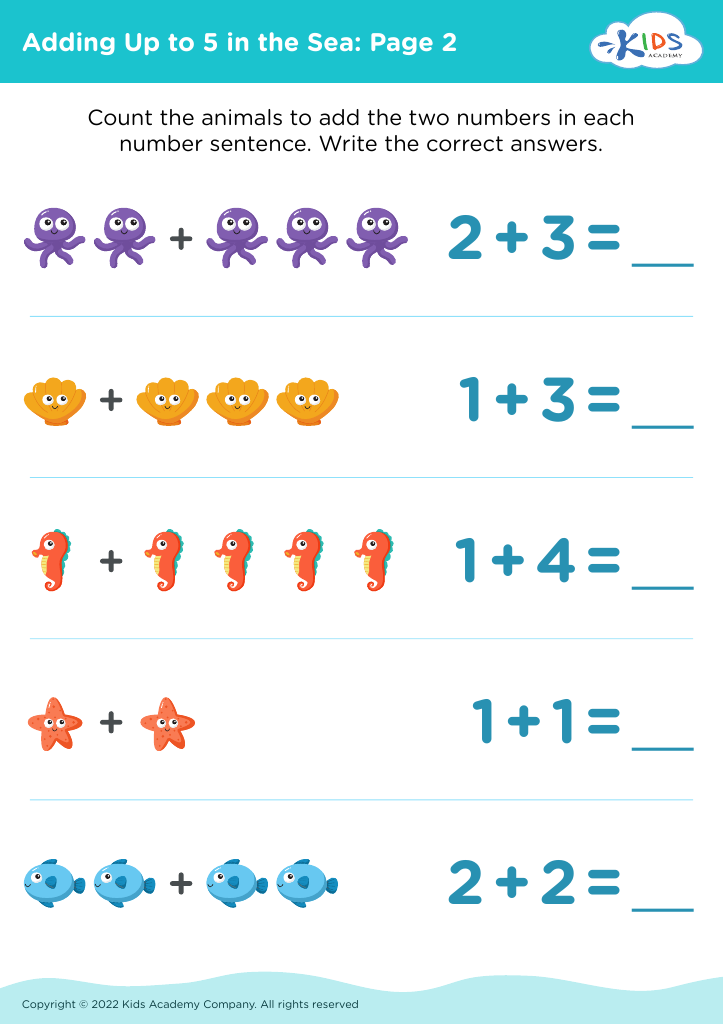
Adding Up to 5 in the Sea: Page 2

Adding Up to 5 in the Sea: Page 2

Adding Up to 5 in the Sea: Page 2
Worksheet
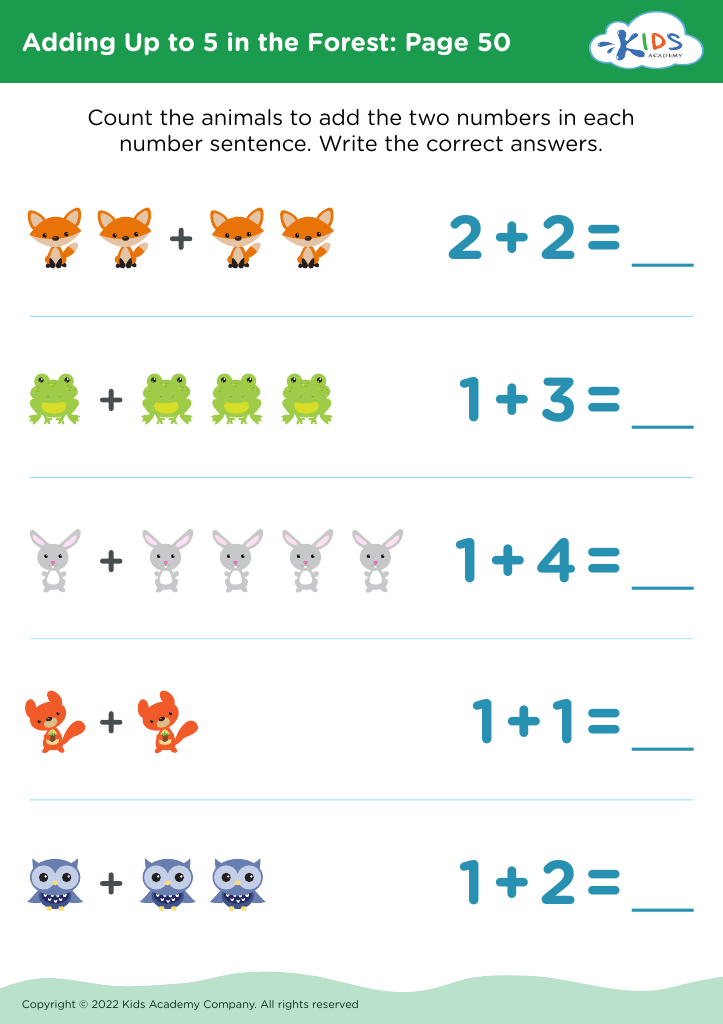
Adding Up to 5 in the Forest: Page 50
Worksheet
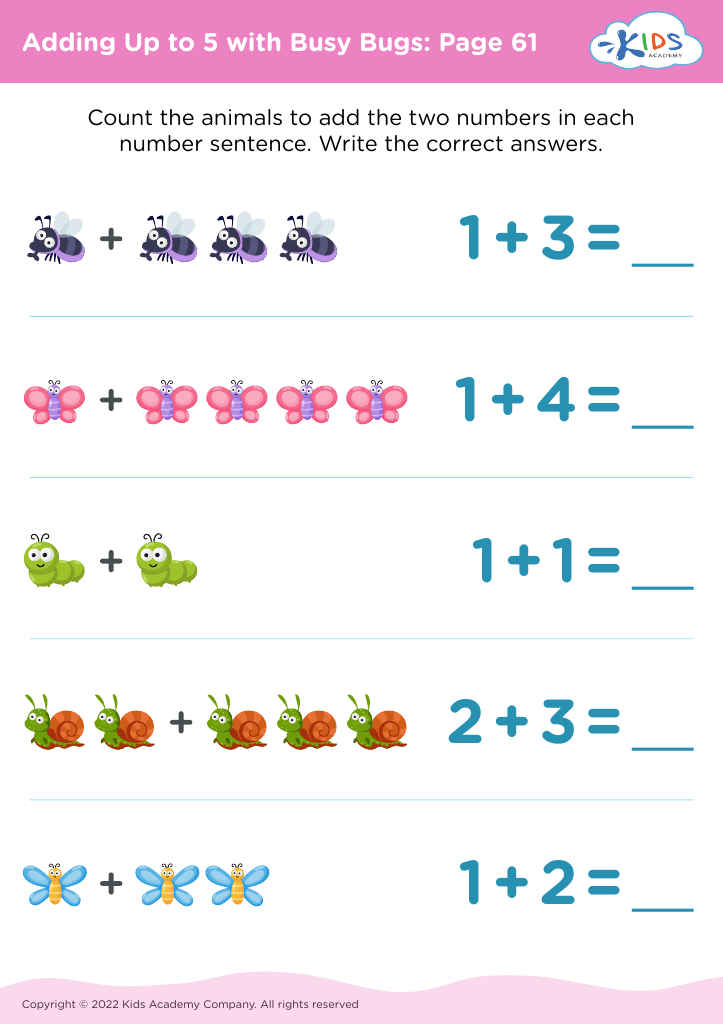
Adding Up to 5 with Busy Bugs: Page 61
Worksheet
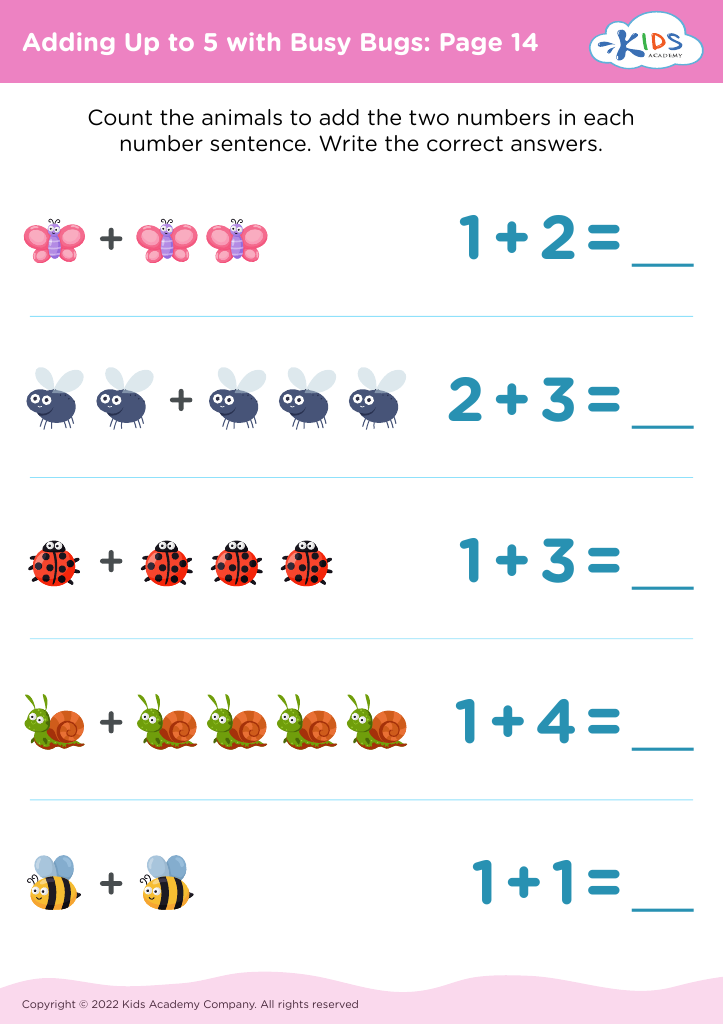
Adding Up to 5 with Busy Bugs: Page 14
Worksheet
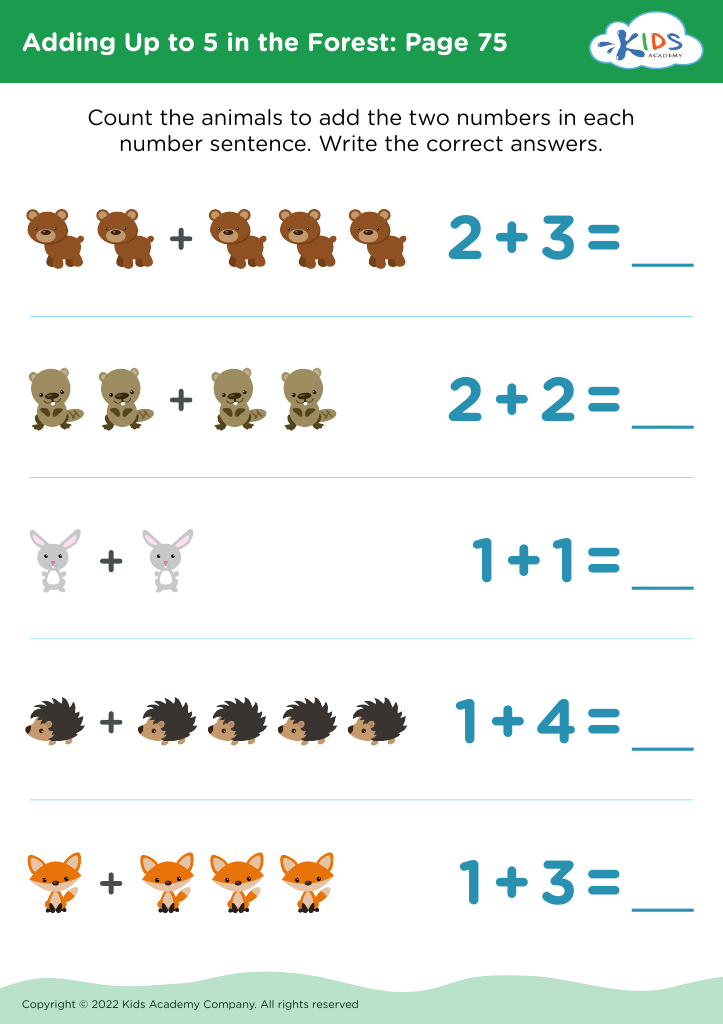
Adding Up to 5 in the Forest: Page 75
Worksheet
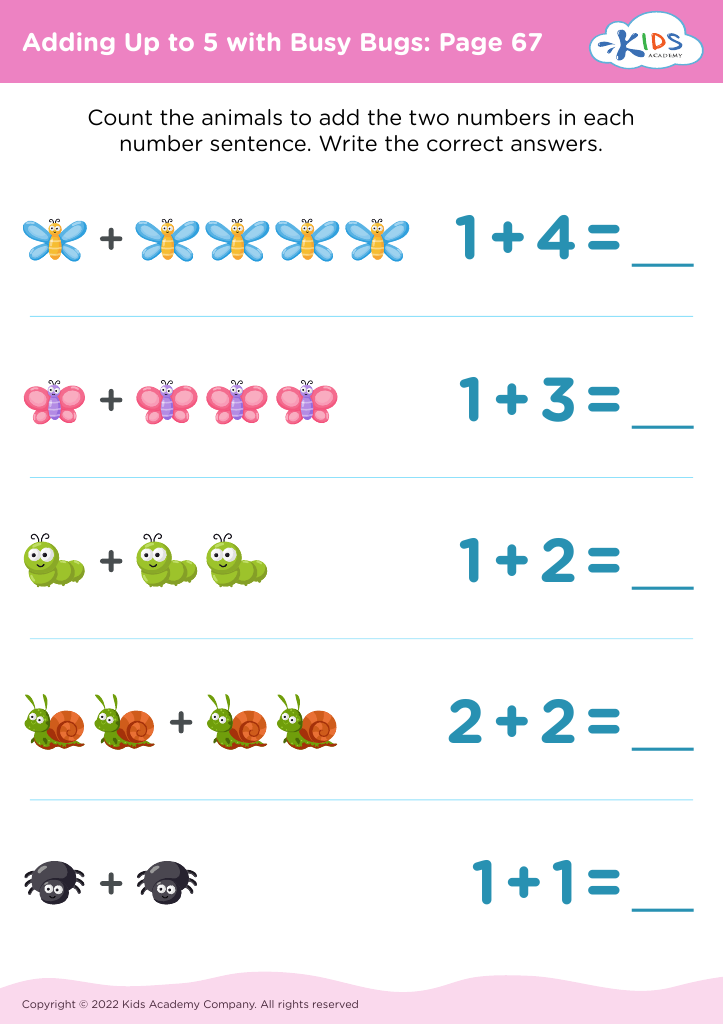
Adding Up to 5 with Busy Bugs: Page 67
Worksheet
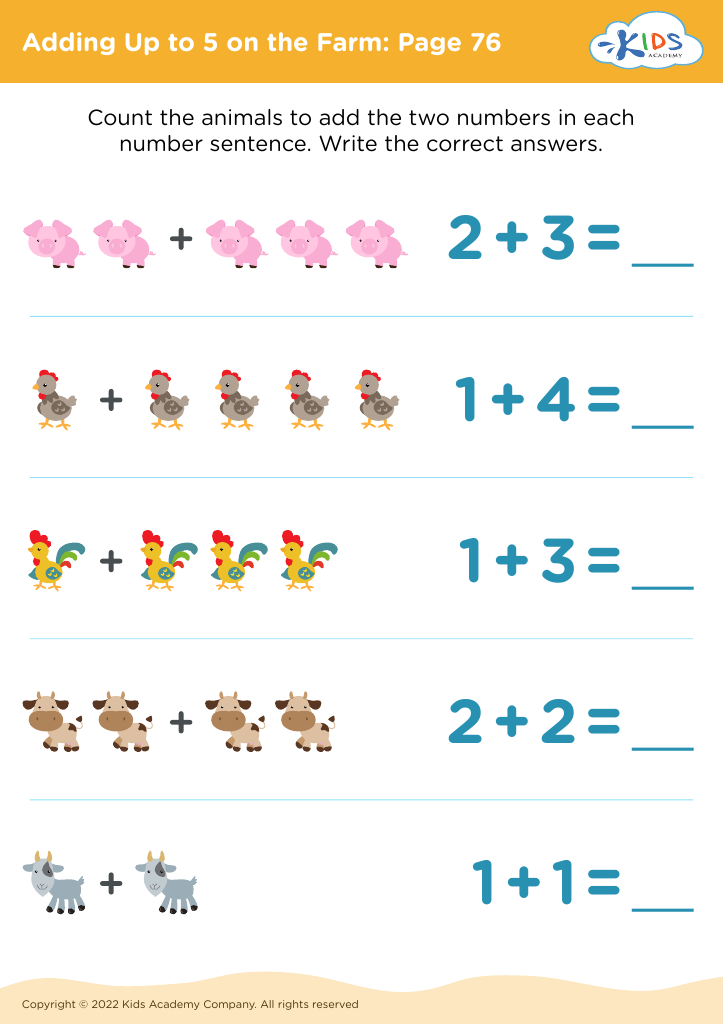
Adding Up to 5 on the Farm: Page 76
Worksheet
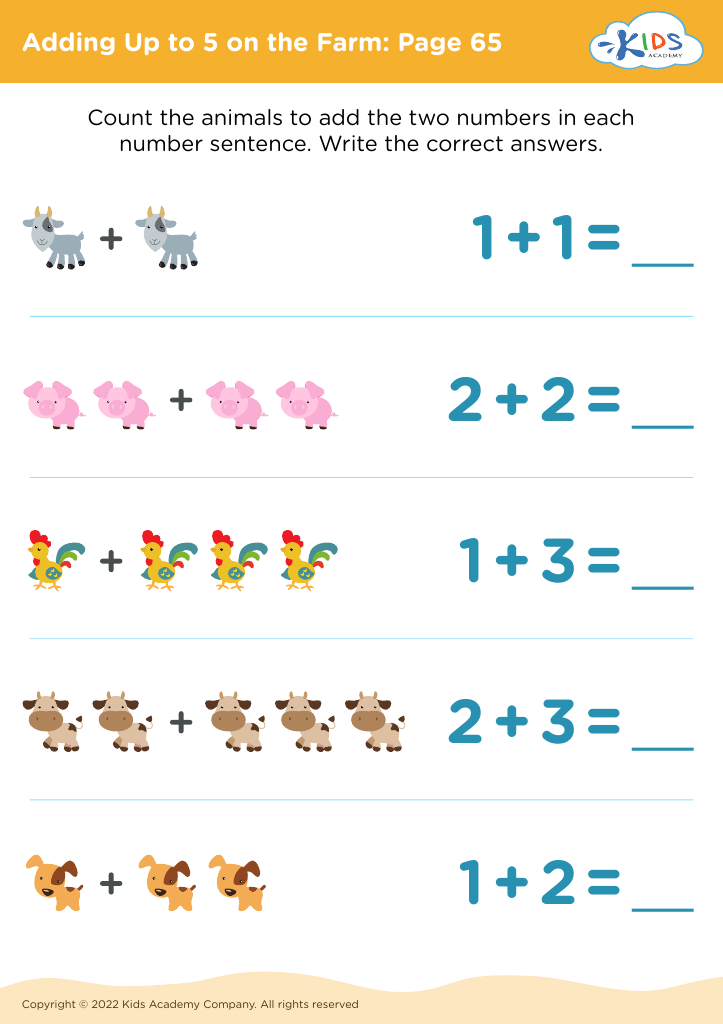
Adding Up to 5 on the Farm: Page 65
Worksheet
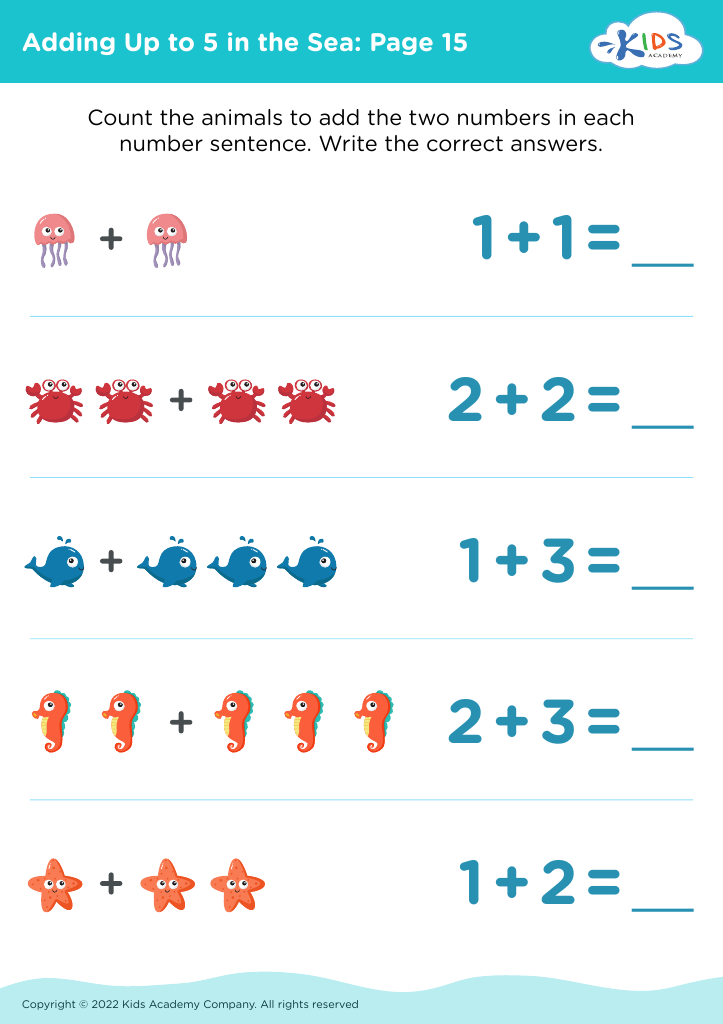
Adding Up to 5 in the Sea: Page 15
Worksheet
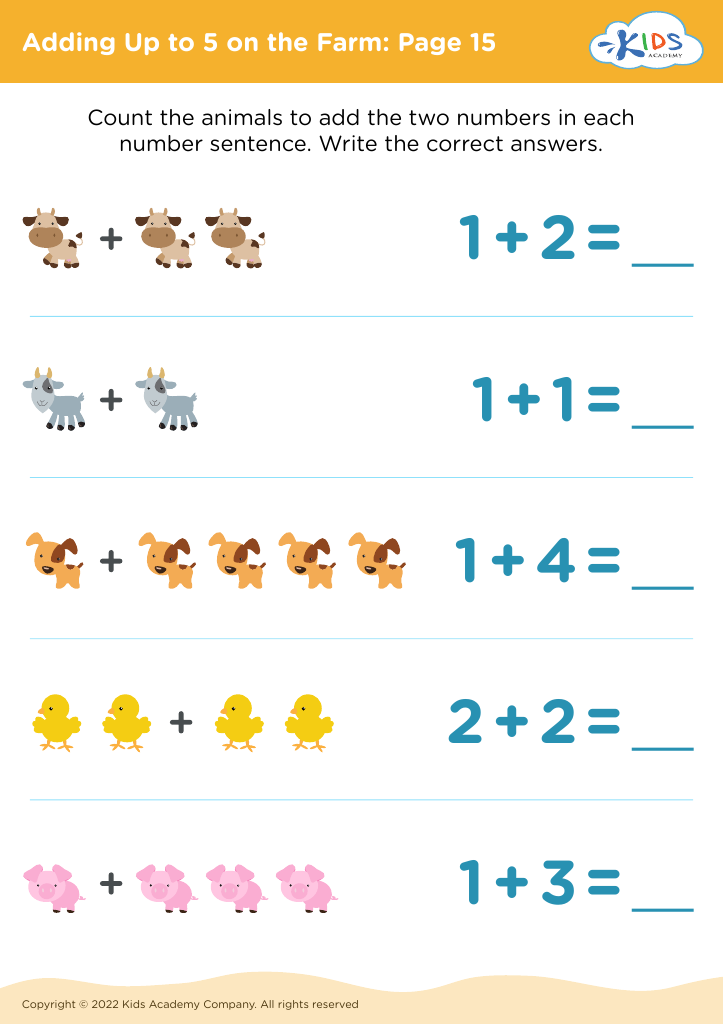
Adding Up to 5 on the Farm: Page 15
Worksheet
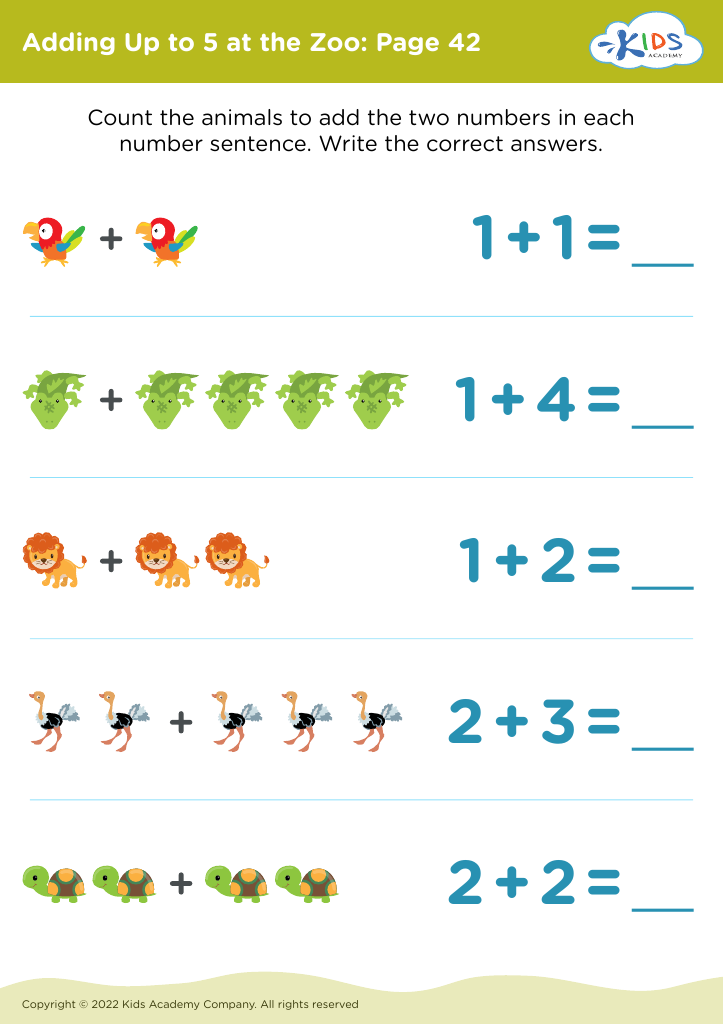
Adding Up to 5 at the Zoo: Page 42
Worksheet
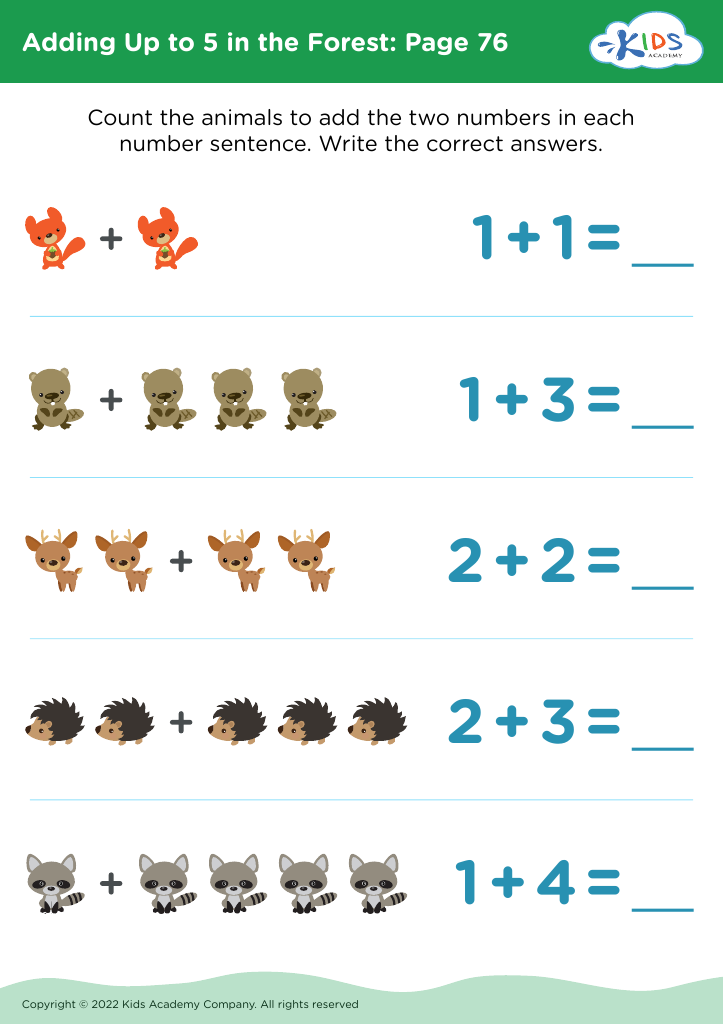
Adding Up to 5 in the Forest: Page 76
Worksheet
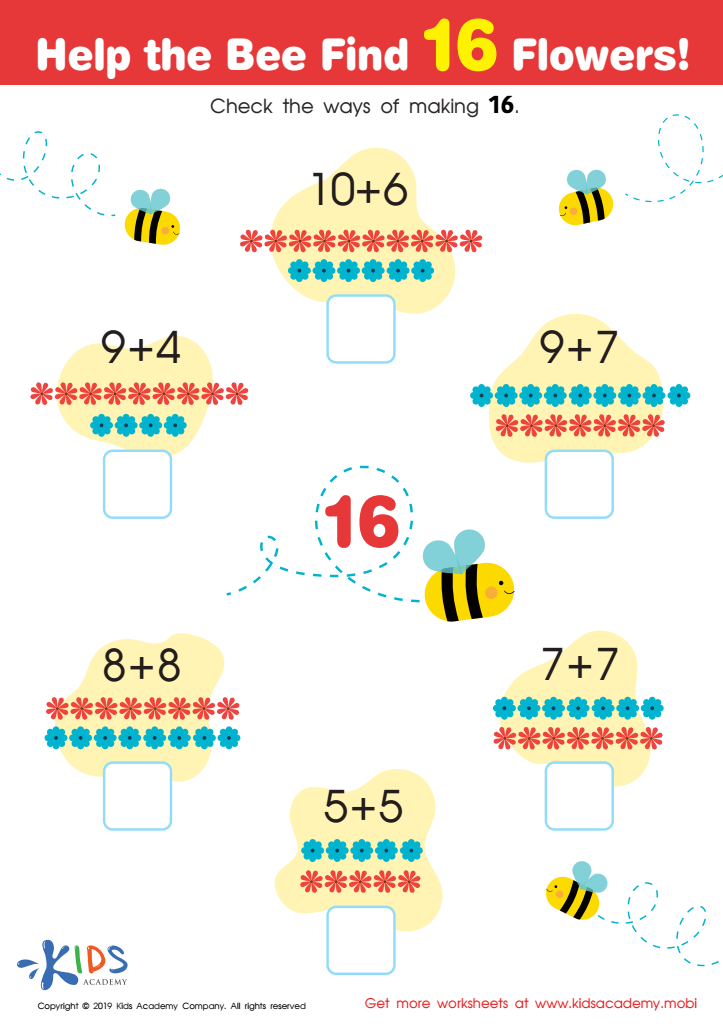
Help the Bee Find 16 Flowers Worksheet

Help the Bee Find 16 Flowers Worksheet

Ask your students to count as high as they can. Show them that different numbers can equal the same figure with examples like 2+2=4 and 3+1=4. Ask for more examples, then help the bees find 16 flowers by checking the ways of making 16.
Help the Bee Find 16 Flowers Worksheet
Worksheet
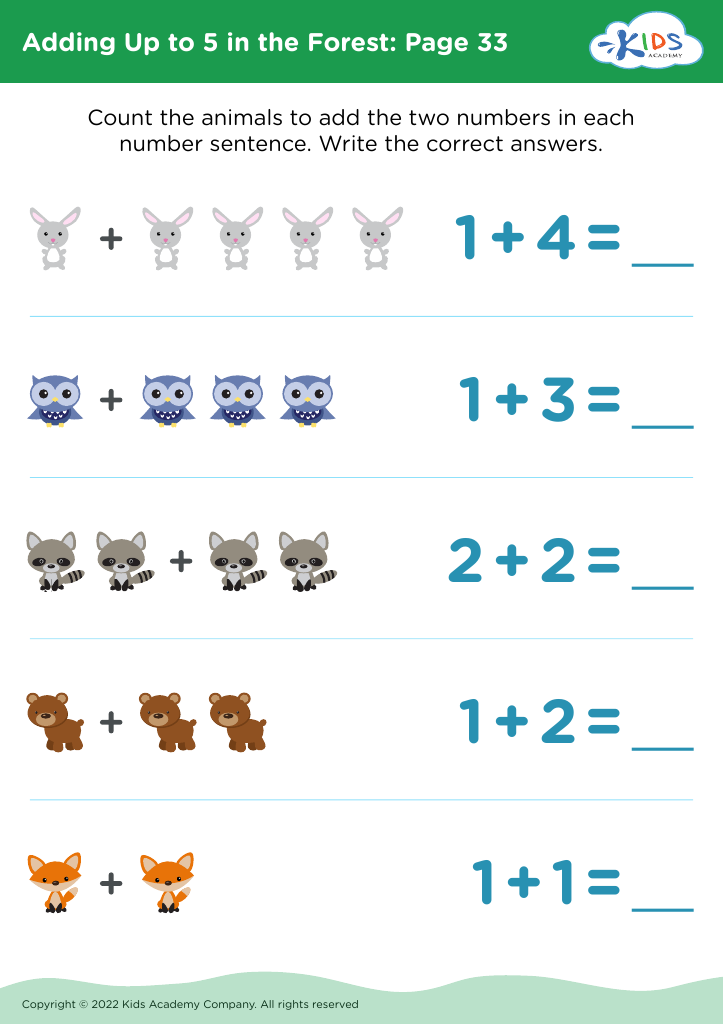
Adding Up to 5 in the Forest: Page 33
Worksheet
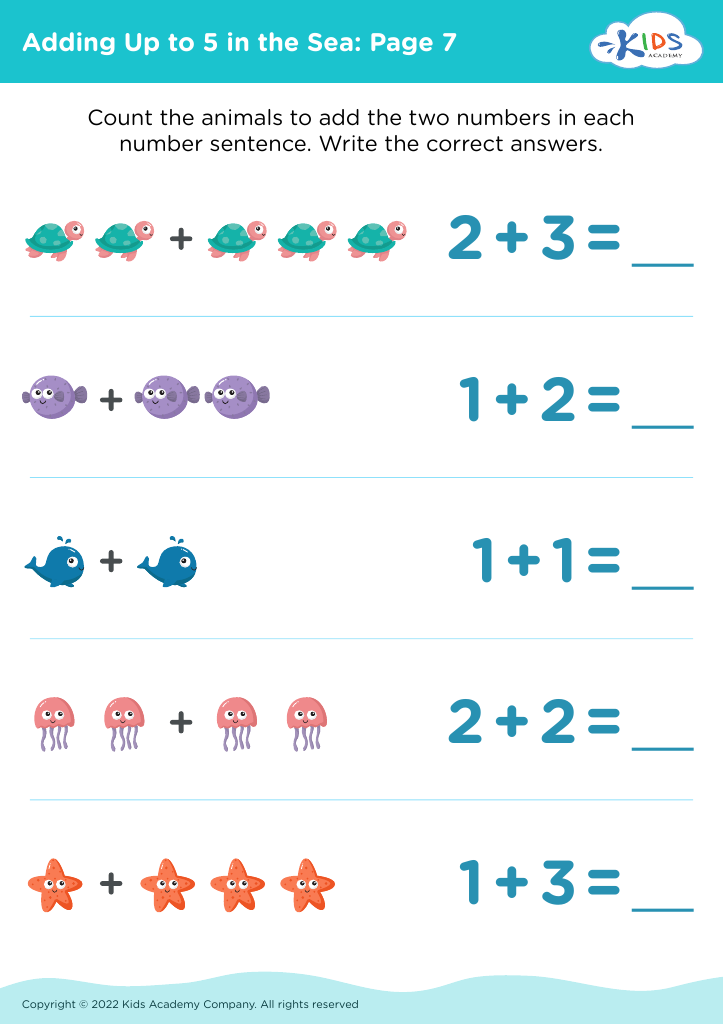
Adding Up to 5 in the Sea: Page 7

Adding Up to 5 in the Sea: Page 7

Adding Up to 5 in the Sea: Page 7
Worksheet
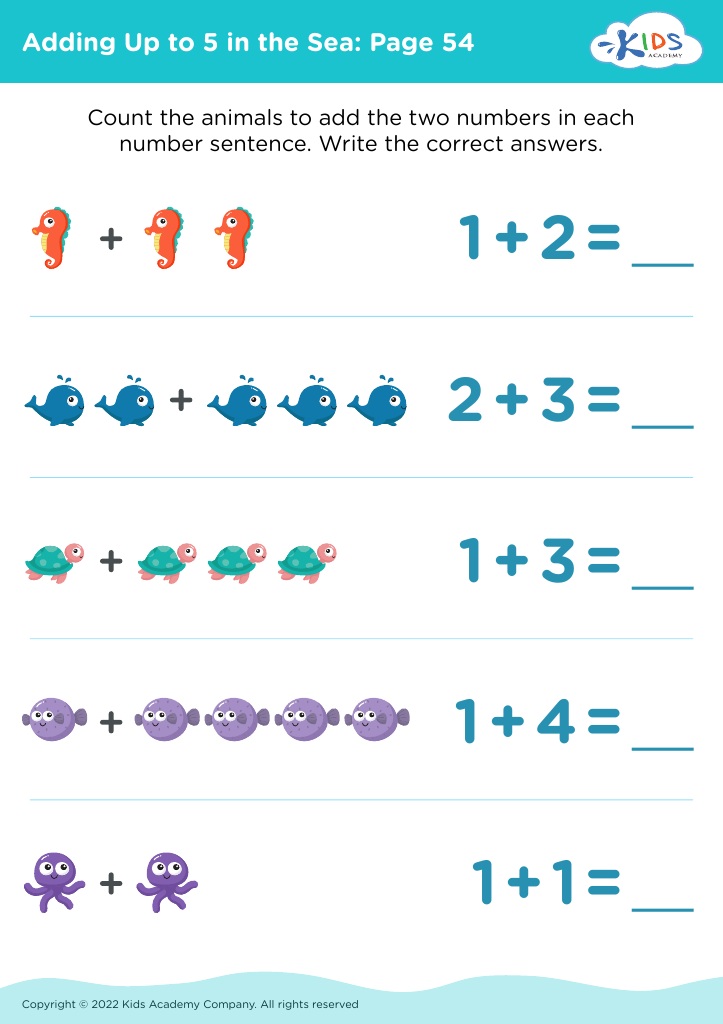
Adding Up to 5 in the Sea: Page 54
Worksheet
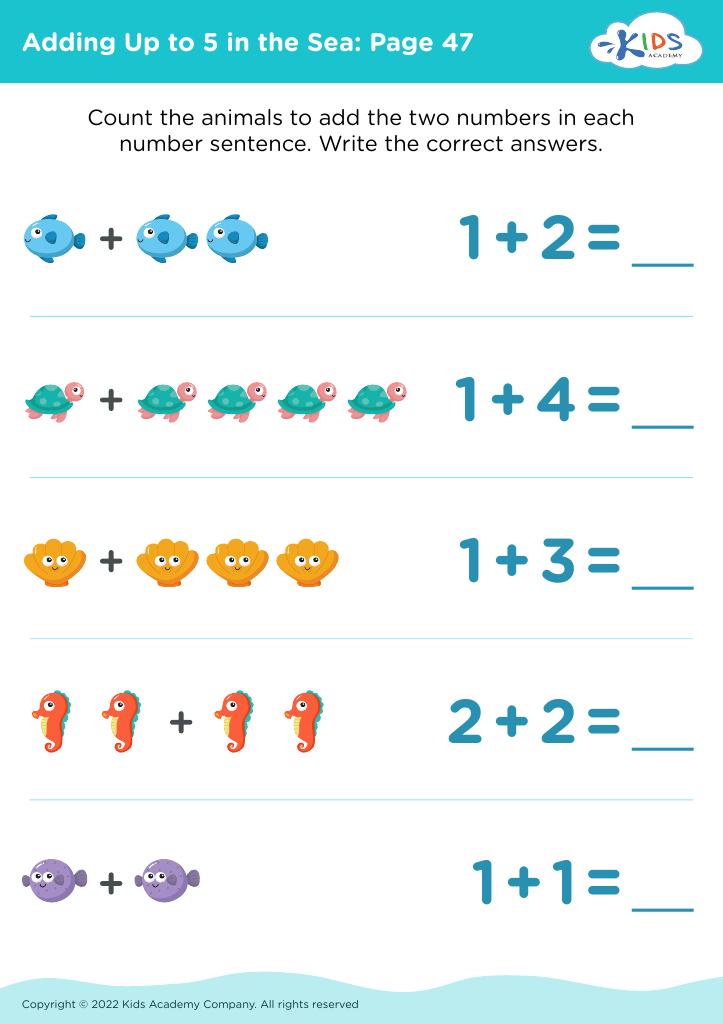
Adding Up to 5 in the Sea: Page 47
Worksheet


Number recognition and basic addition are foundational skills that play a pivotal role in a child's early mathematical development. For parents and teachers, fostering these skills in children ages 3-6 sets the stage for future academic success.

Number recognition helps children identify and understand the significance of numbers, an essential skill they will use throughout their education and daily lives. When children can recognize numbers, they become more confident when tackling early math tasks and are better prepared to engage with more complex concepts as they progress through school.

Moreover, introducing simple addition during these formative years enhances cognitive development. It promotes problem-solving skills, critical thinking, and logical reasoning. Engaging children in playful activities, such as counting objects or using interactive games, can make learning fun. This approach helps children associate positive experiences with math, reducing anxiety around the subject later in life.

Additionally, strong foundational skills in number recognition and addition can encourage ongoing interest in mathematics and related fields, promoting lifelong learning. When parents and teachers work together to support these important skills early on, they invest in a child's academic and personal growth, paving the way for success in various aspects of life.