Problem-solving practice Addition Worksheets for Ages 3-6
3 filtered results
-
From - To
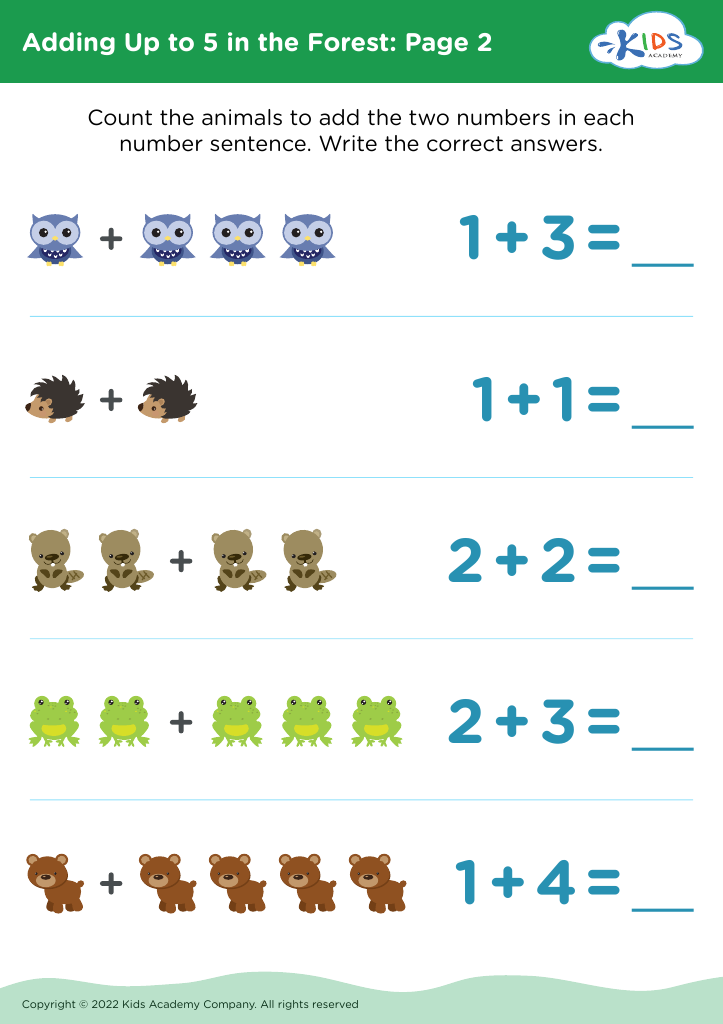
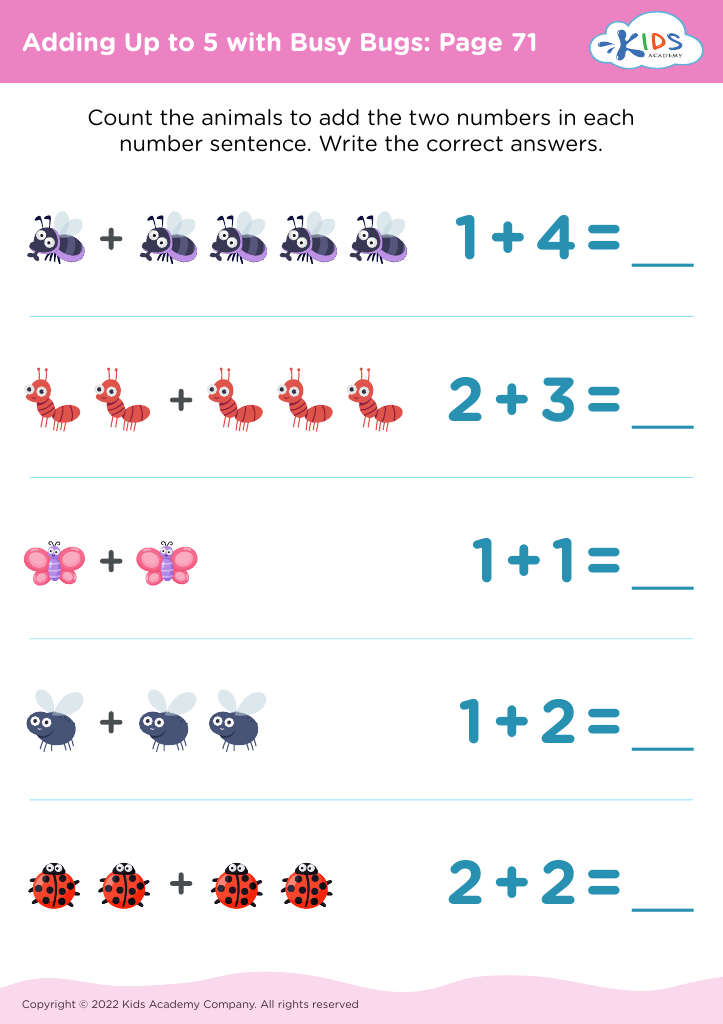
Unlock your child's potential with our problem-solving practice addition worksheets designed for ages 3-6. Available on Kids Academy, these engaging worksheets focus on enhancing early math skills through fun and interactive addition problems. Each worksheet encourages critical thinking and boosts confidence while introducing basic math concepts. Perfect for preschoolers and kindergartners, our colorful and engaging activities make learning addition feel like play. Give your child a head start in math with our expertly crafted resources that promote both learning and fun. Visit Kids Academy today and empower your little learner with essential problem-solving skills!
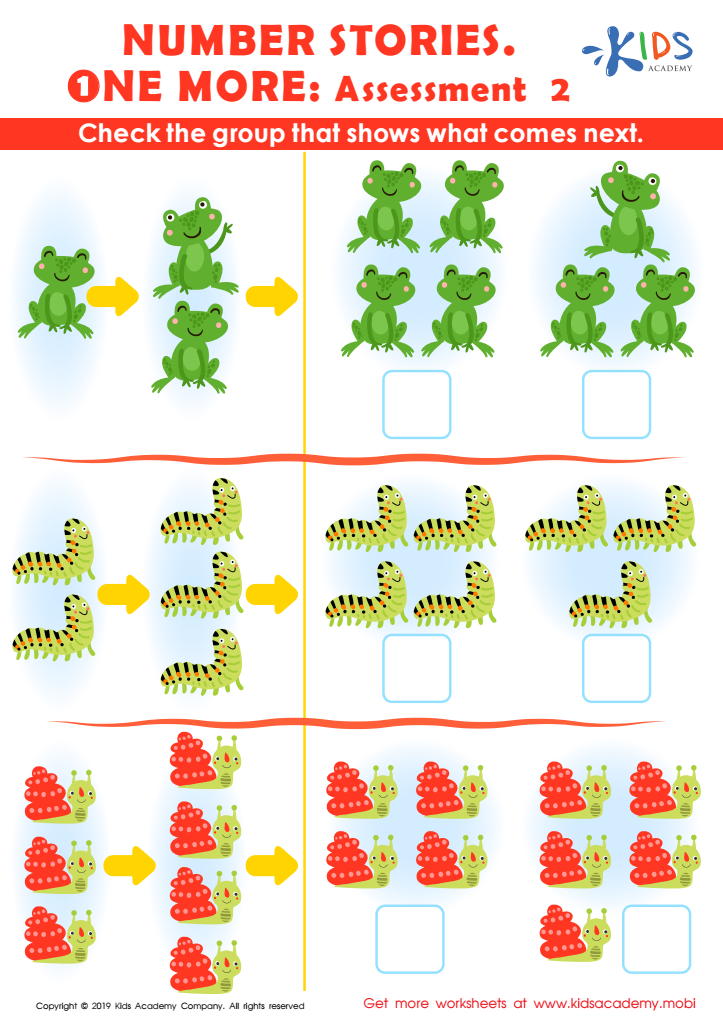
Number Stories One More – Assessment 2 Worksheet
 Assign to My Students








Problem-solving practice in addition for ages 3-6 is foundational for fostering essential cognitive and social skills that are critical in early childhood development. Introducing young children to basic addition helps cultivate their numerical understanding, setting the stage for more complex mathematics in later years. At this age, their brains are highly adaptable and capable of absorbing new information quickly, making it an ideal period for nurturing foundational math skills.
Moreover, engaging in problem-solving tasks enhances critical thinking and logic. When children tackle simple addition problems, they learn to reason, make connections, and draw conclusions. These exercises improve their ability to focus, follow instructions, and develop perseverance, which are beneficial across various areas of learning.
Problem-solving also supports social and emotional growth. Working on math activities in groups encourages them to collaborate, share ideas, and communicate effectively with peers and teachers. This fosters a positive learning environment and builds friendships and social interactions.
Additionally, early success in math can boost a child's confidence and self-esteem. Feeling competent in adding numbers at a young age can lead to a positive attitude towards learning in general and school work in particular.
In summary, problem-solving practice in addition not only builds vital mathematical and cognitive skills but also supports social, emotional, and attitude development, creating a well-rounded foundation for future academic success.








