Understanding subtraction Addition Worksheets for Ages 3-6
4 filtered results
-
From - To
Discover engaging and educational subtraction and addition worksheets designed for children ages 3-6 at Kids Academy! Our carefully crafted resources offer an interactive approach to mastering essential math skills. Each worksheet is fully illustrated, making learning fun and effective for preschoolers and kindergartners. Through step-by-step exercises, young learners will intuitively grasp the concepts of adding and subtracting. Perfect for parents and teachers, our printable worksheets ensure that math practice is both accessible and enjoyable. Build a solid foundation in arithmetic and boost your child's confidence in math with our comprehensive learning materials. Explore our collection today and watch your child thrive!
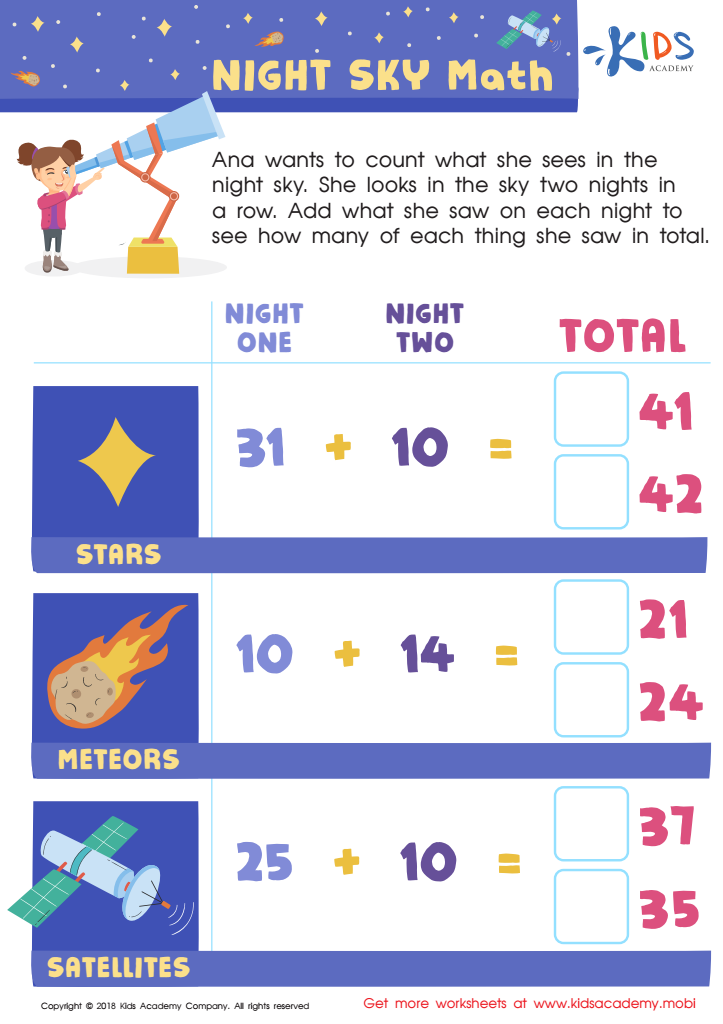
Night Sky Math Worksheet
 Assign to My Students
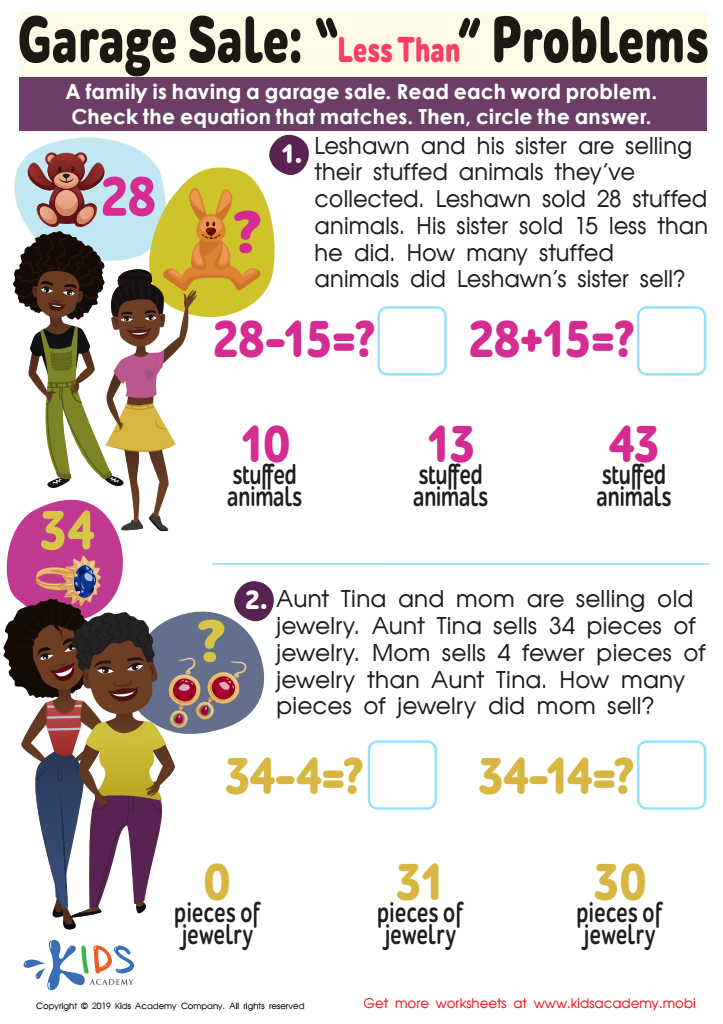
Garage Sale Less Than Worksheet
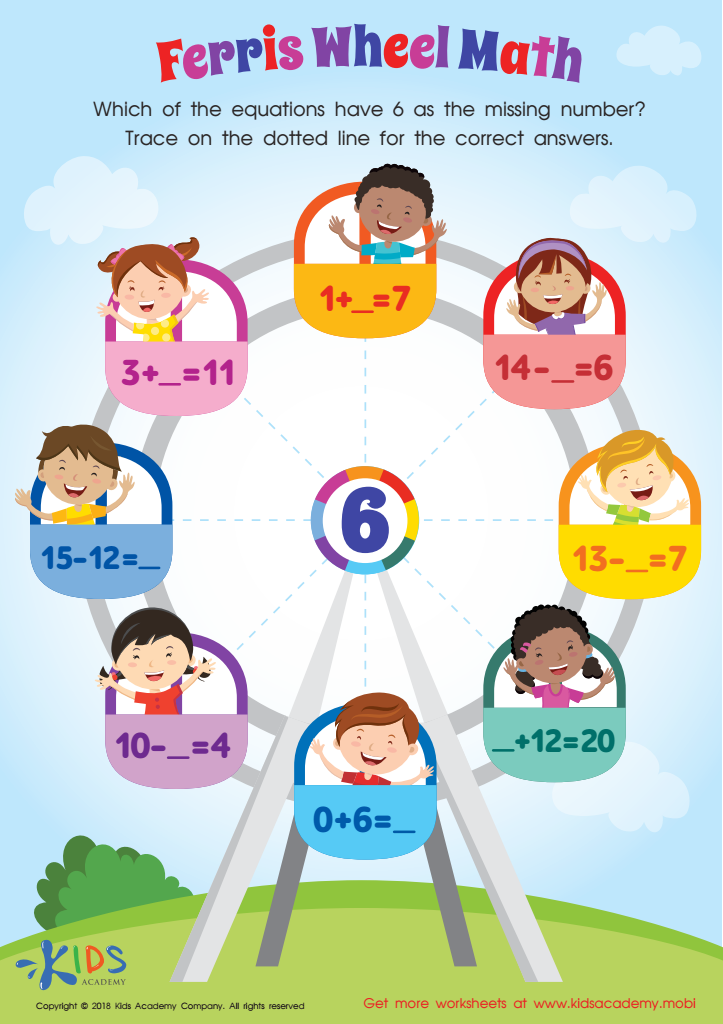
Missing Number: Ferris Wheel Math Worksheet
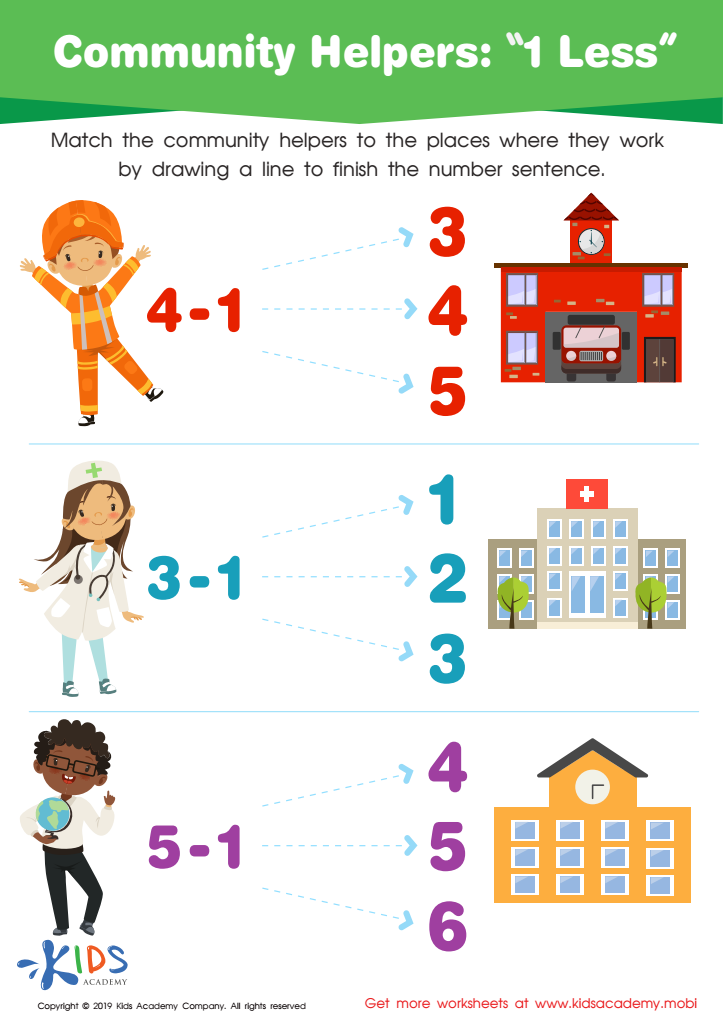
Community Helpers: 1 less Worksheet








Understanding addition and subtraction at an early age is fundamental for cognitive development in children aged 3-6. These basic math skills foster critical thinking, problem-solving abilities, and numeracy—essential building blocks for future academic success. When children grasp the concepts of adding and subtracting, they develop a sense of numbers and order, which can instill confidence and a love for learning.
Incorporating these concepts in fun and engaging ways helps children build a strong foundation for more complex mathematical operations they will encounter in later grades. It also promotes logical reasoning, allowing them to understand and manage real-world scenarios like sharing toys or dividing snacks, relevant to their daily experiences.
Moreover, early math skills are often linked to higher achievement in other academic areas. Studies show that children who enter school with a good understanding of basic math are better equipped to succeed in reading as well. These skills enhance cognitive abilities like memory and attention that are crucial for overall academic performance.
Therefore, parents and teachers should care about nurturing these skills early on to provide a well-rounded educational experience, fostering academic growth and setting the stage for a prosperous educational journey. Through play, everyday interactions, and positive reinforcement, young learners can develop a robust understanding and appreciation of math.








