Counting skills Money Worksheets for Ages 3-6
5 filtered results
-
From - To
Introduce your child to the world of counting and financial literacy with our engaging Money Worksheets, designed specifically for ages 3-6. These fun and educational worksheets help young learners grasp essential counting skills using everyday currency examples. Perfect for preschool and kindergarten, our worksheets feature colorful illustrations to keep little ones interested while they practice counting coins, matching amounts, and even simple addition. Prepare your child for future math success and practical money handling with our expertly crafted printable activities. Visit Kid’s Academy to start your child’s financial journey with our Counting Money Worksheets today!
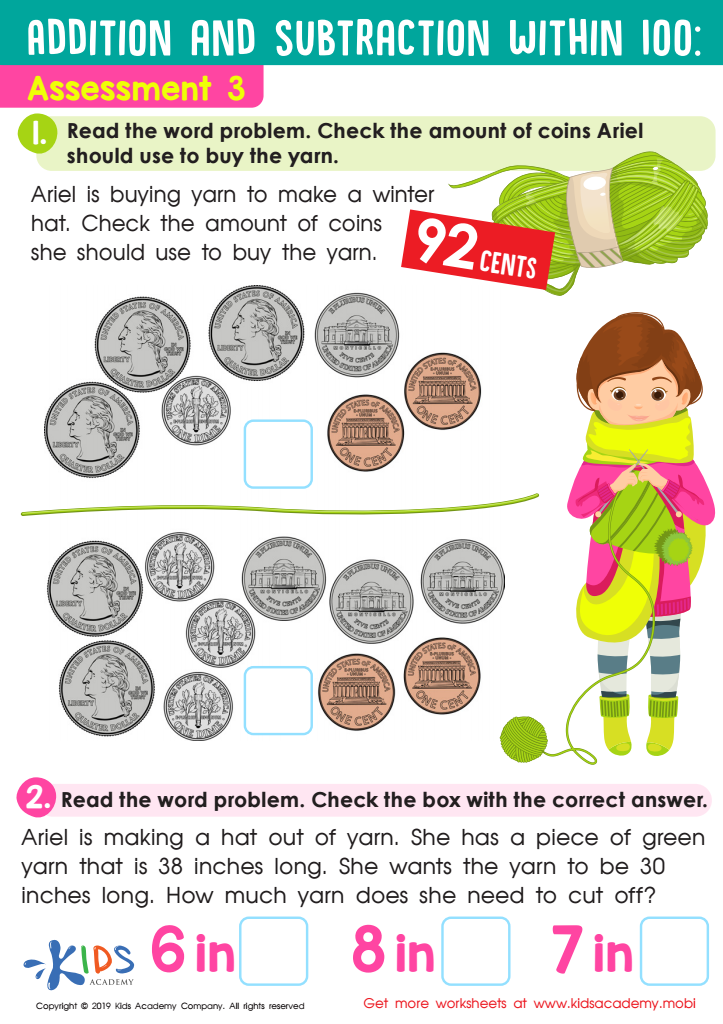
Assessment 3 Math Worksheet
 Assign to My Students
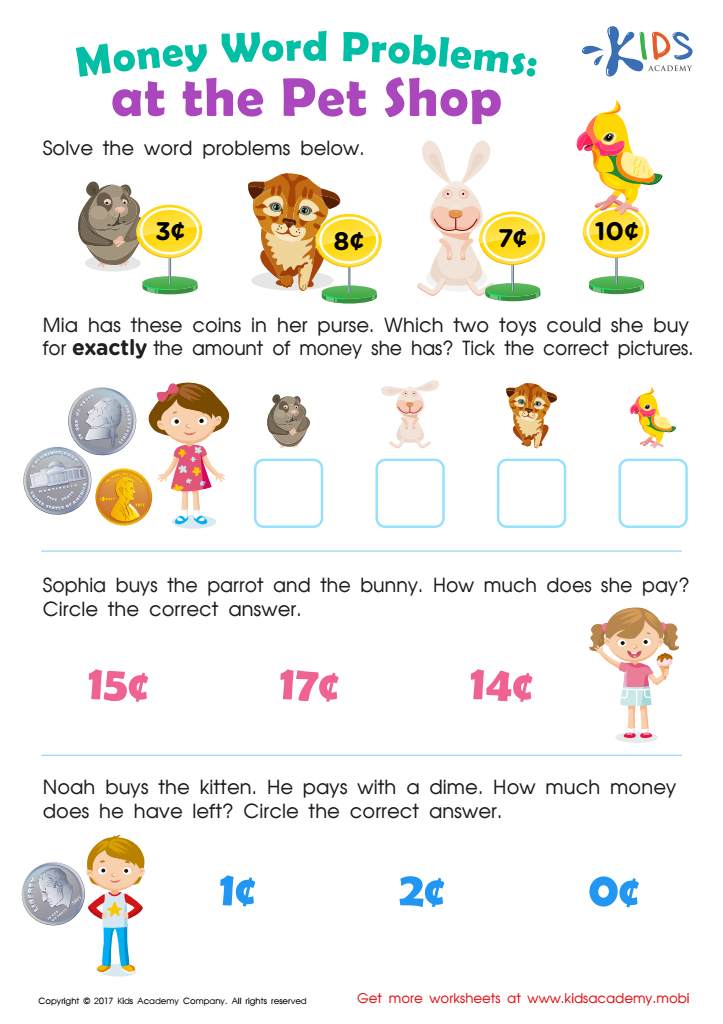
Pet Shop Worksheet
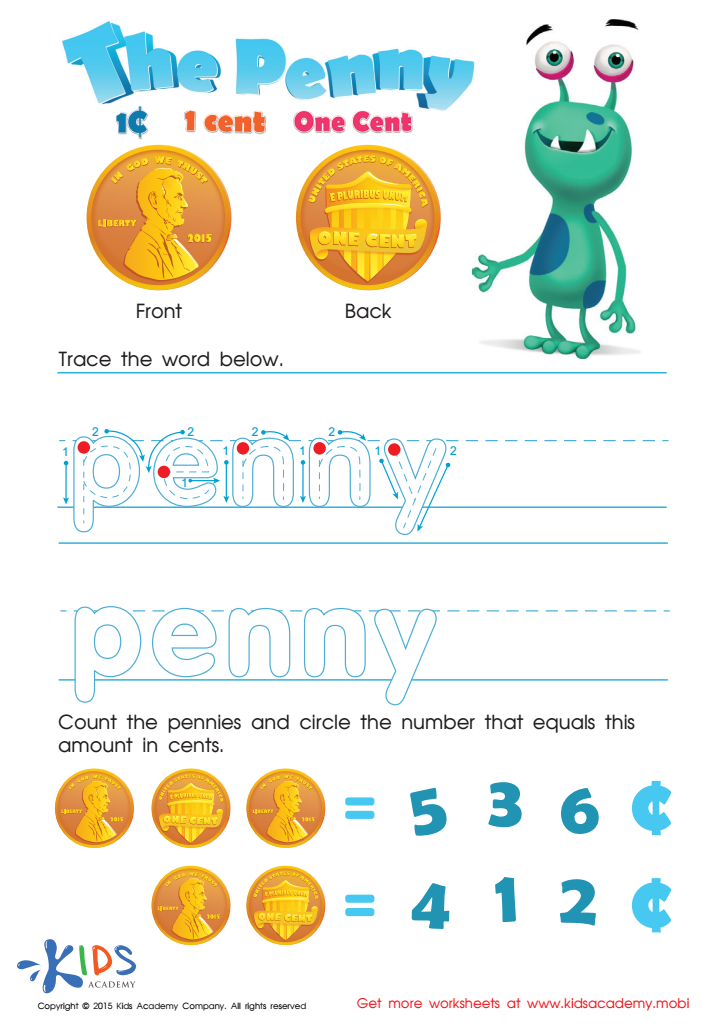
One Cent or the Penny Money Worksheet
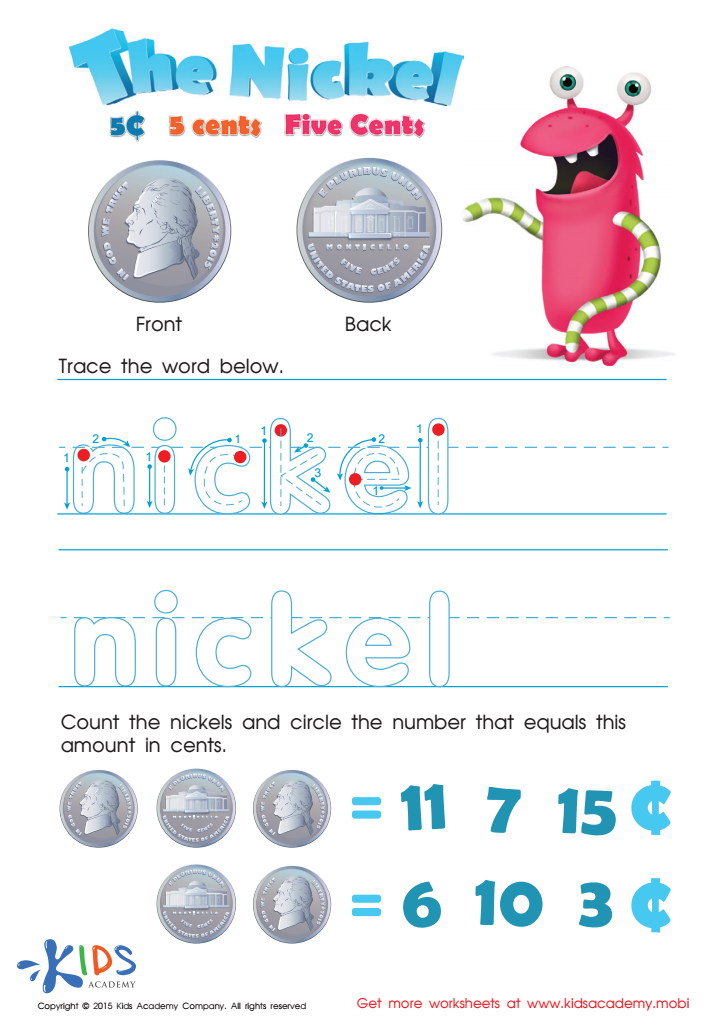
Five Cents or the Nickel Money Worksheet
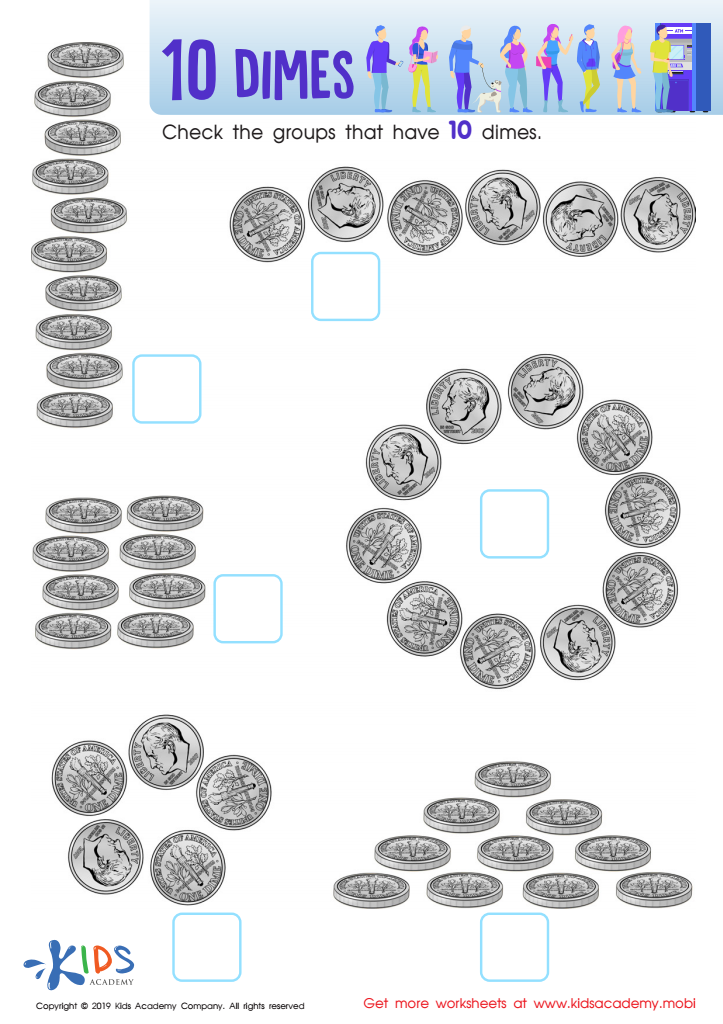
10 Dimes Worksheet








Developing counting skills and understanding money for children ages 3-6 is crucial for several reasons. This foundational knowledge sets the stage for essential life skills and cognitive development. Firstly, counting skills form the basis for all future mathematical learning. By engaging young children in counting exercises, parents and teachers help them grasp number concepts, sequencing, and one-to-one correspondence—all fundamental for arithmetic proficiency.
Additionally, early exposure to money concepts promotes practical financial literacy from a young age. Understanding money involves recognizing its value, differentiating between various denominations, and conceptualizing its use in transactions. This early familiarity can lead to better money management skills later in life, fostering financial responsibility and smart decision-making.
Moreover, counting and money-handling activities enhance fine motor skills, attention to detail, and persistence. Activities such as sorting coins or counting bills require precision and concentration, honing a child's ability to focus and carry out tasks methodically.
Socially, these skills can boost a child's confidence and independence. Understanding how to count and use money encourages autonomy in activities like buying small items or participating in family shopping trips. Overall, prioritizing counting skills and money understanding in early childhood education paves the way for cognitive, practical, and social benefits that contribute to a well-rounded upbringing.








