Basic geometry Geometry Worksheets for Ages 3-6
3 filtered results
-
From - To
Discover our "Basic Geometry Worksheets" designed specifically for children aged 3-6! These engaging and interactive activities introduce young learners to fundamental geometric shapes such as circles, squares, and triangles. Our worksheets promote early math skills through fun puzzles, tracing exercises, and shape identification tasks that make learning enjoyable. With vibrant illustrations and user-friendly formats, these resources support cognitive development and foster a love for geometry. Perfect for home or classroom use, our worksheets are an excellent way to build foundational knowledge while enhancing fine motor skills. Let your child explore the world of shapes and unleash their creativity today!
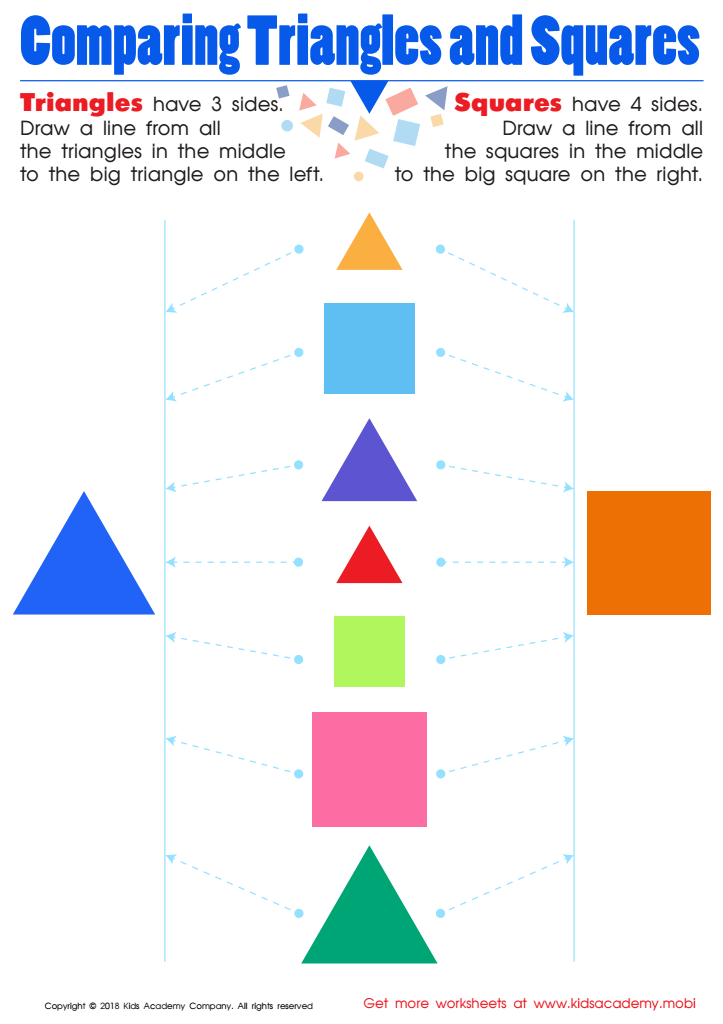
Comparing Triangles Squares Worksheet
 Assign to My Students











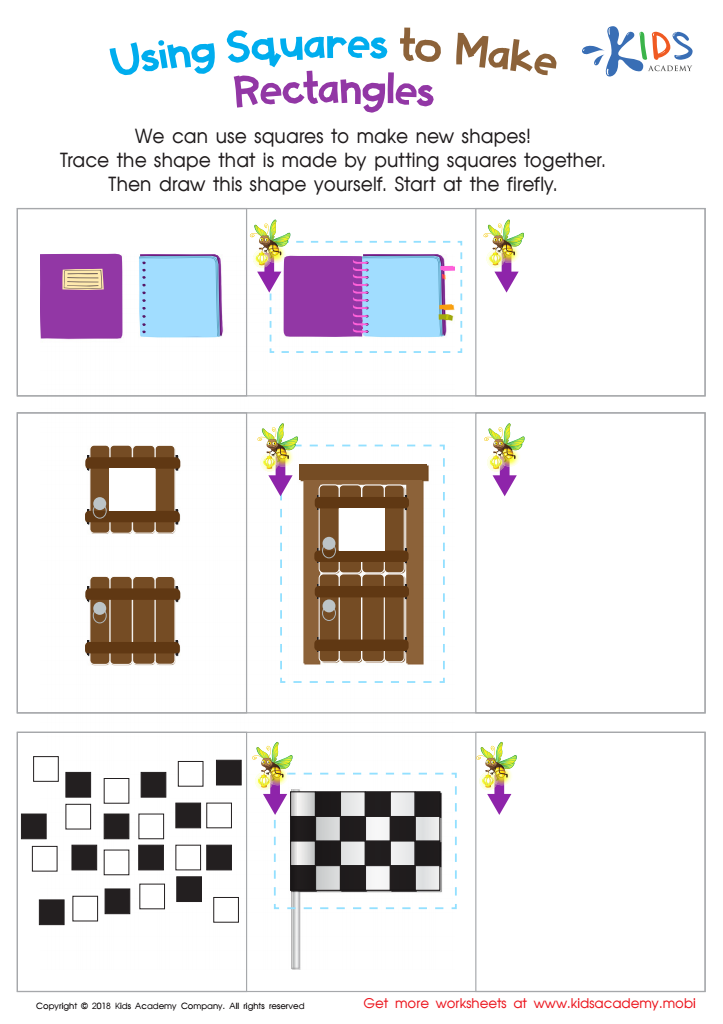
Using Squares to Make Rectangles Worksheet
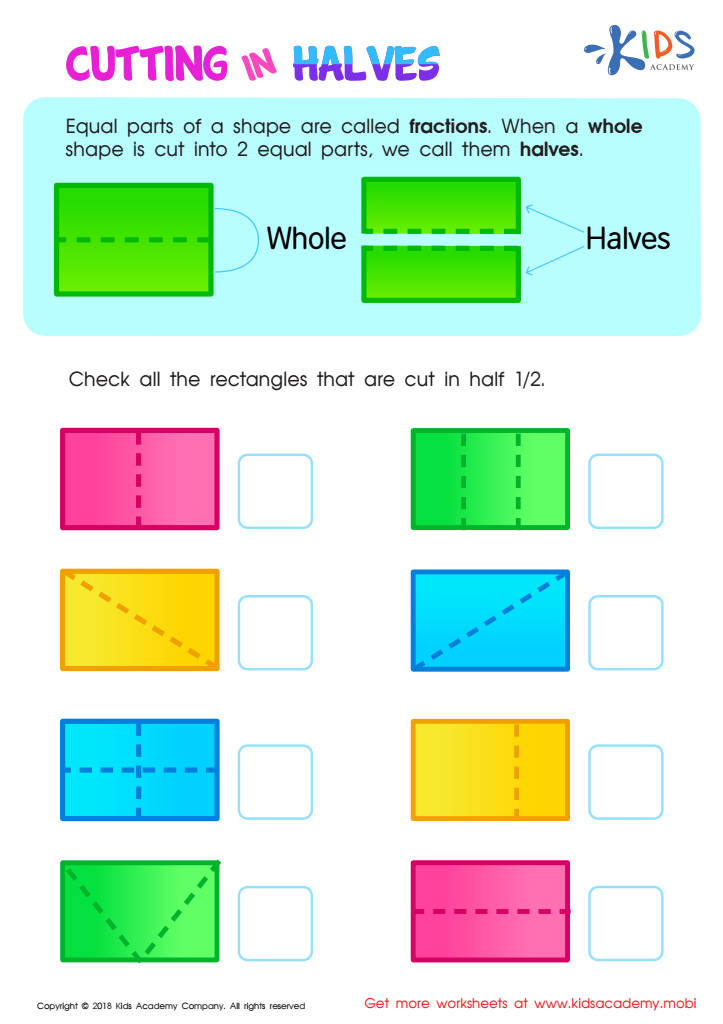
Cutting in Halves Worksheet








Parents and teachers should prioritize basic geometry for children ages 3-6 because it lays a crucial foundation for mathematical understanding and cognitive development. At this age, children explore shapes, spatial relationships, and concepts of measurement through hands-on activities and play. This not only enhances their problem-solving skills but also nurtures their creativity and curiosity.
Learning basic geometry helps children understand their environment. By recognizing shapes and patterns, children develop observational skills and begin to categorize objects, a fundamental aspect of cognitive growth. These skills translate into greater abilities in subjects like math and science later on.
In addition, engaging with geometry cultivates critical thinking. Children learn to identify, compare, and manipulate shapes, contributing to their analytical skills. This early exposure builds confidence in tackling complex concepts in the future.
Furthermore, geometric activities promote fine motor skills through tasks like drawing shapes or constructing objects with blocks. The social aspect of group activities also enhances communication skills and teamwork.
In summary, prioritizing basic geometry in early education not only fosters essential mathematical and cognitive skills, but also supports overall development, preparing children for lifelong learning in a structured and playful manner.








