Differentiating shapes Geometry Worksheets for Ages 3-6
3 filtered results
-
From - To
Discover our engaging Differentiating Shapes Geometry Worksheets designed specifically for children aged 3-6! These worksheets provide fun and interactive activities that help young learners recognize, identify, and differentiate between various shapes such as circles, squares, triangles, and more. Each worksheet is tailored to different skill levels, ensuring every child can learn at their own pace. With colorful illustrations and age-appropriate exercises, kids will enjoy exploring the world of geometry while developing essential spatial awareness and problem-solving skills. Perfect for homeschooling or supplementary practice, our worksheets make learning shapes an exciting adventure for your little ones!
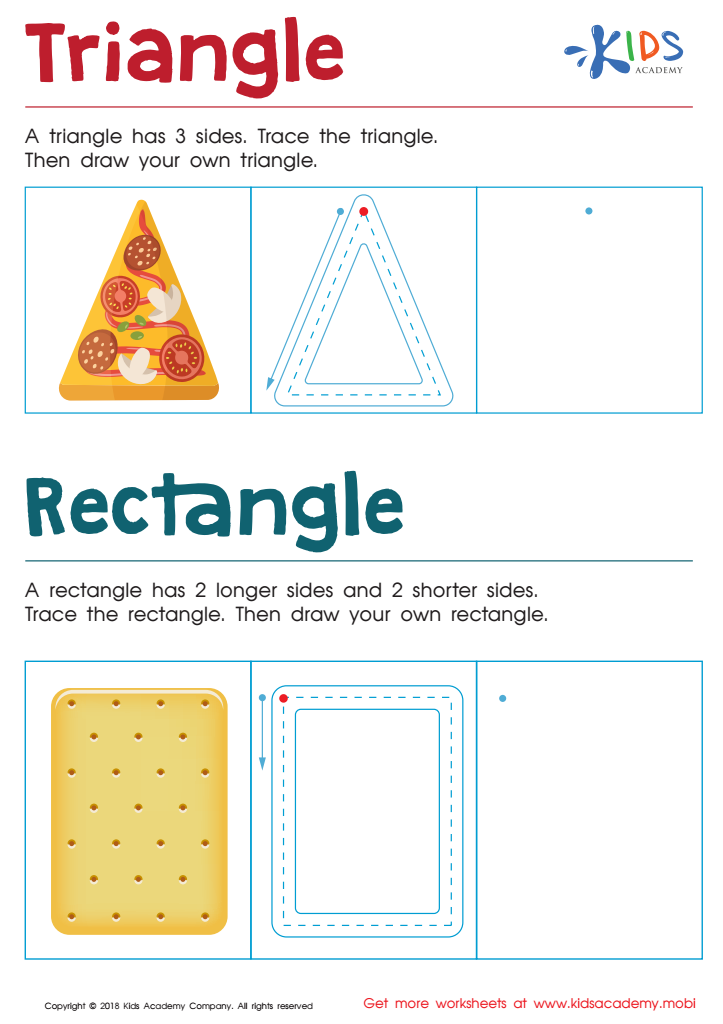
Triangle Rectangle Worksheet
 Assign to My Students











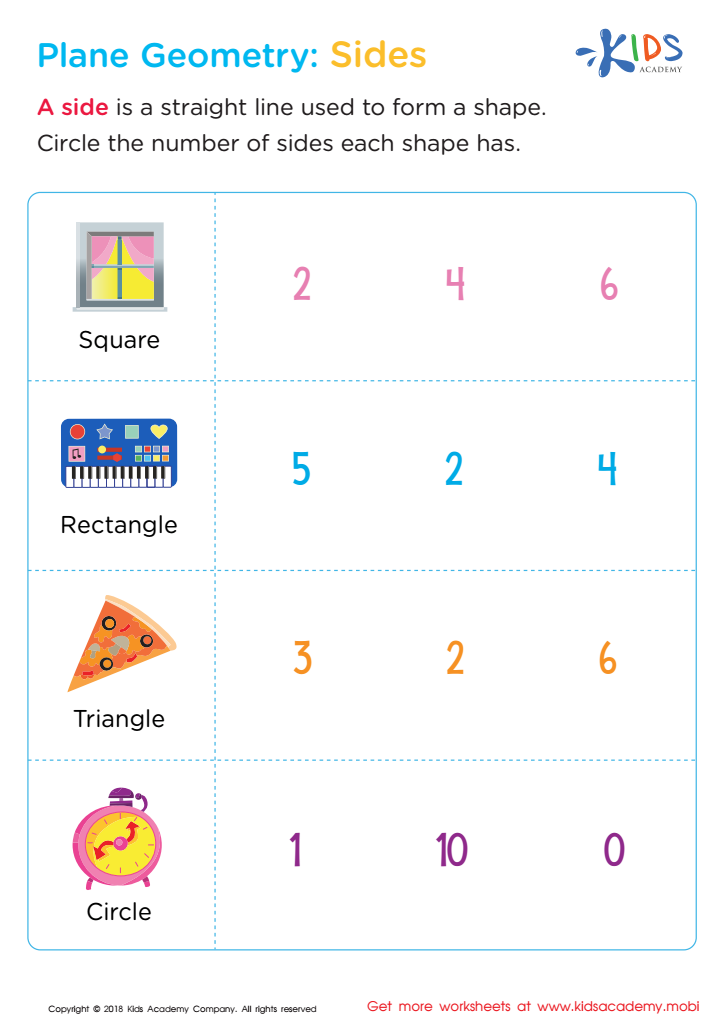
Plane Geometry: Sides Worksheet
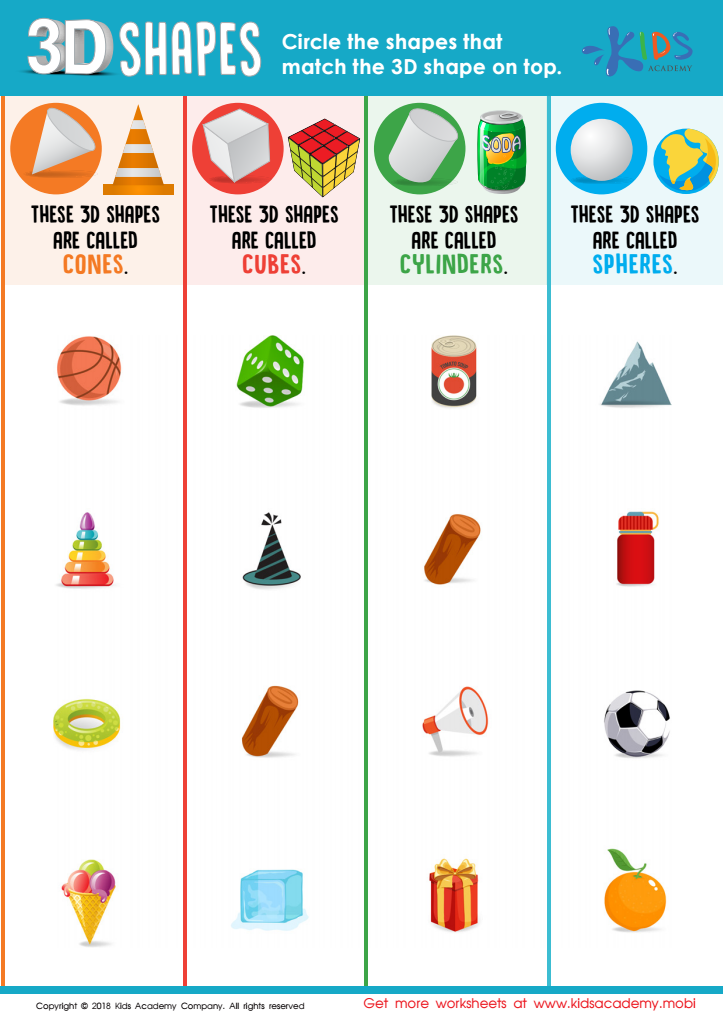
3D Shapes Worksheet








Differentiating shapes in geometry for children aged 3-6 is crucial for their cognitive development and early math skills. At this formative stage, children are naturally curious and eager to explore their environment, making it the perfect opportunity to introduce shapes. Recognizing and distinguishing between different shapes not only builds a foundation for mathematical understanding but also enhances visual-spatial skills, critical for future problem-solving.
Parents and teachers should care about this differentiation because it lays the groundwork for geometry, fosters critical thinking, and nurtures creativity. Engaging young children in activities that involve sorting, comparing, and manipulating shapes helps them to understand concepts such as symmetry, size, and dimensionality. This skill set is essential for more complex mathematics as they grow.
Furthermore, differentiating shapes support language development as children learn to articulate the characteristics of shapes, thereby enriching their vocabulary. It also aids in improving their fine motor skills through related hands-on activities like drawing or constructing shapes. Lastly, instilling a love for geometry and shapes early on encourages a lifelong interest in math, ensuring that children are not only prepared academically but also inspired to explore the world around them. Overall, it forms a solid base for their future educational journey.








