Addition Practice Numbers Worksheets for Ages 3-6 - Page 2
28 filtered results
-
From - To
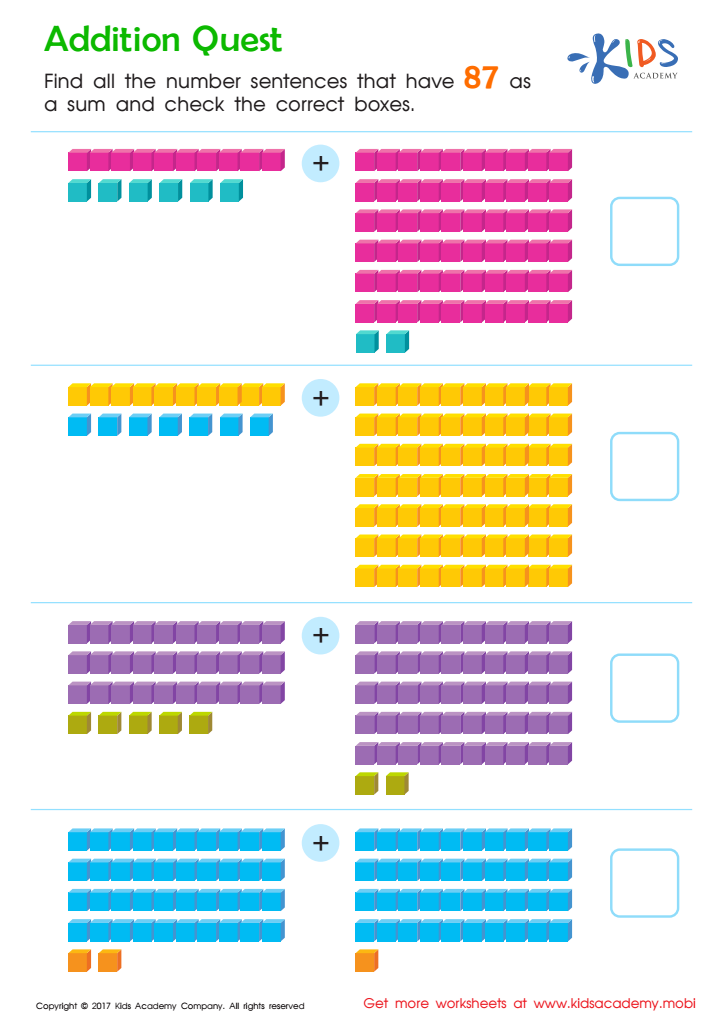
Addition Quest Worksheet: Part 1
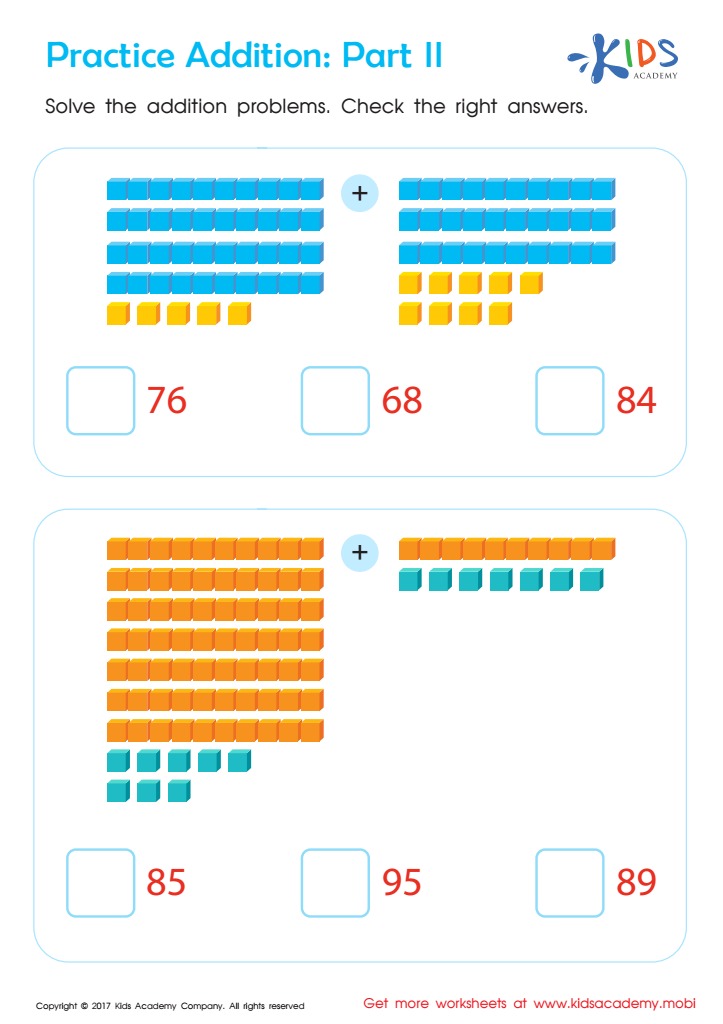
Practice Addition: Part 2 Worksheet
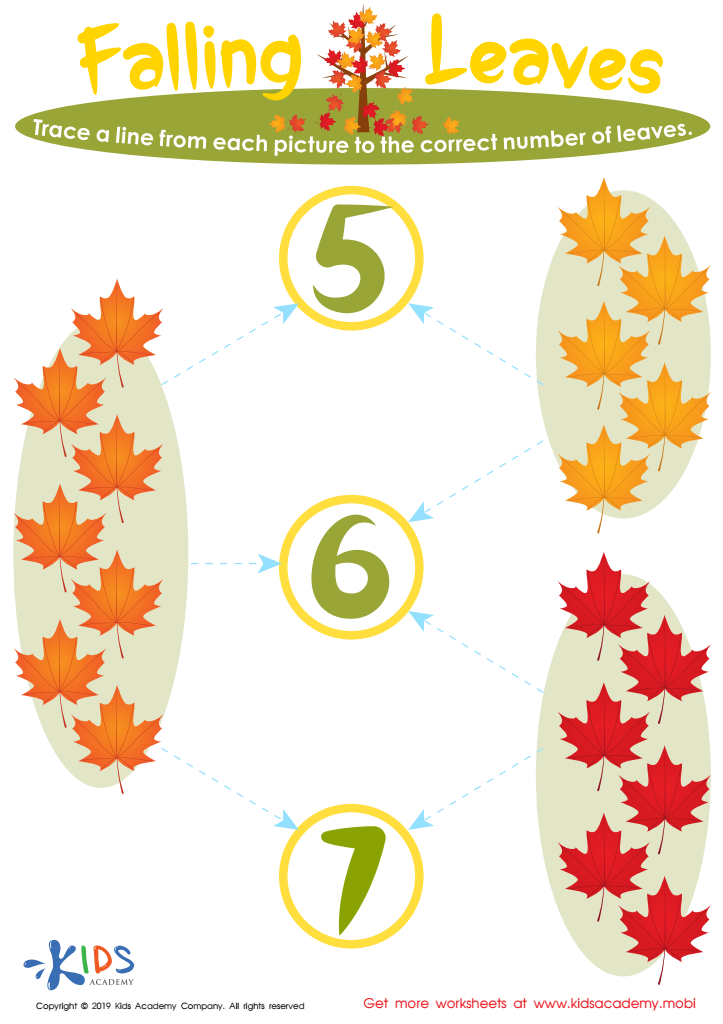
Falling Leaves Worksheet
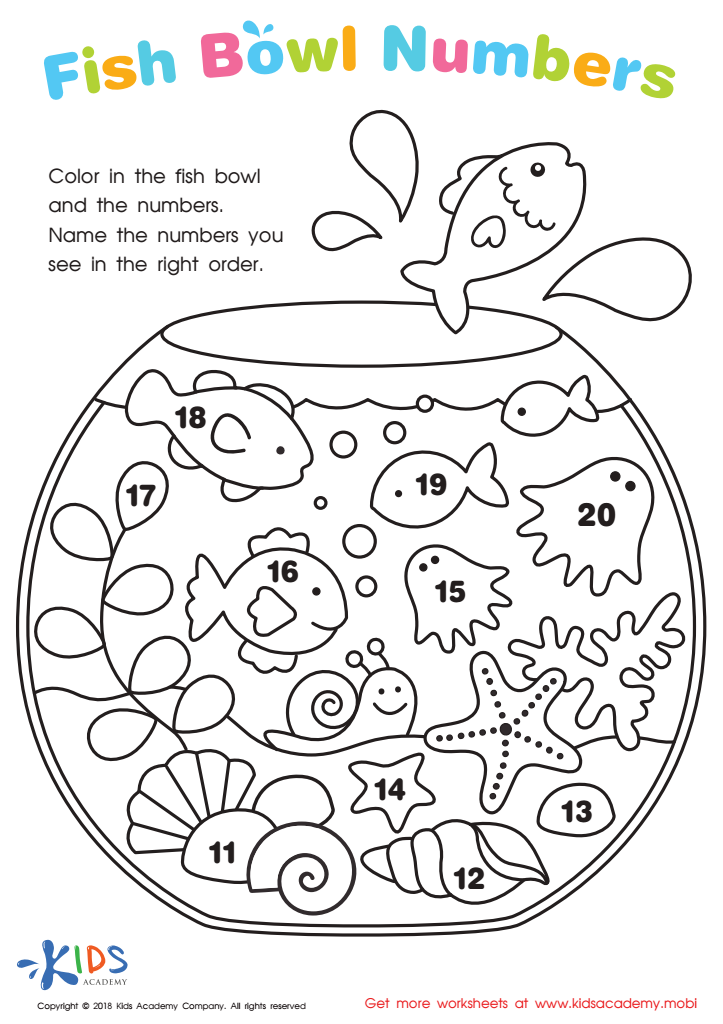
Fish Bowl Numbers Worksheet
 Assign to My Students








Addition practice for children aged 3-6 is crucial for several reasons. Firstly, it lays the fundamental groundwork for later mathematical learning. Early exposure to addition helps children develop a strong number sense, which is an understanding of numbers and their relationships. This is essential for more complex math concepts they will encounter in higher grades.
Secondly, practicing addition at an early age enhances cognitive development. Engaging in addition exercises stimulates the brain, enhancing memory, concentration, and problem-solving skills. These cognitive abilities are not only beneficial for math but also for other learning areas, contributing to overall academic success.
Furthermore, early math proficiency is strongly linked to future academic achievements. Studies have shown that early math skills are a more accurate predictor of future academic performance than early reading skills. By fostering an environment where children can practice and improve their addition skills, parents and teachers can give them a significant advantage in their academic journey.
Lastly, addition practice can boost a child's confidence and enjoyment in learning math. When children successfully grasp addition concepts, their sense of accomplishment and confidence grows, making them more enthusiastic and less anxious about math. This positive attitude toward math will serve as a foundation for continuous learning and effort in the subject.








