Developing math skills Numbers Worksheets for Ages 3-6
3 filtered results
-
From - To
Welcome to our "Developing Math Skills: Numbers Worksheets for Ages 3-6" page! Here, you will find a rich collection of engaging, interactive worksheets designed to help young learners cultivate essential number skills. Our carefully crafted activities encourage counting, number recognition, and foundational math concepts in a fun and intuitive way. Ideal for parents and educators, these resources provide a variety of exercises to support early childhood development. With colorful visuals and age-appropriate challenges, your child will build confidence and enthusiasm for math. Start exploring now to boost your little one's mathematical journey!
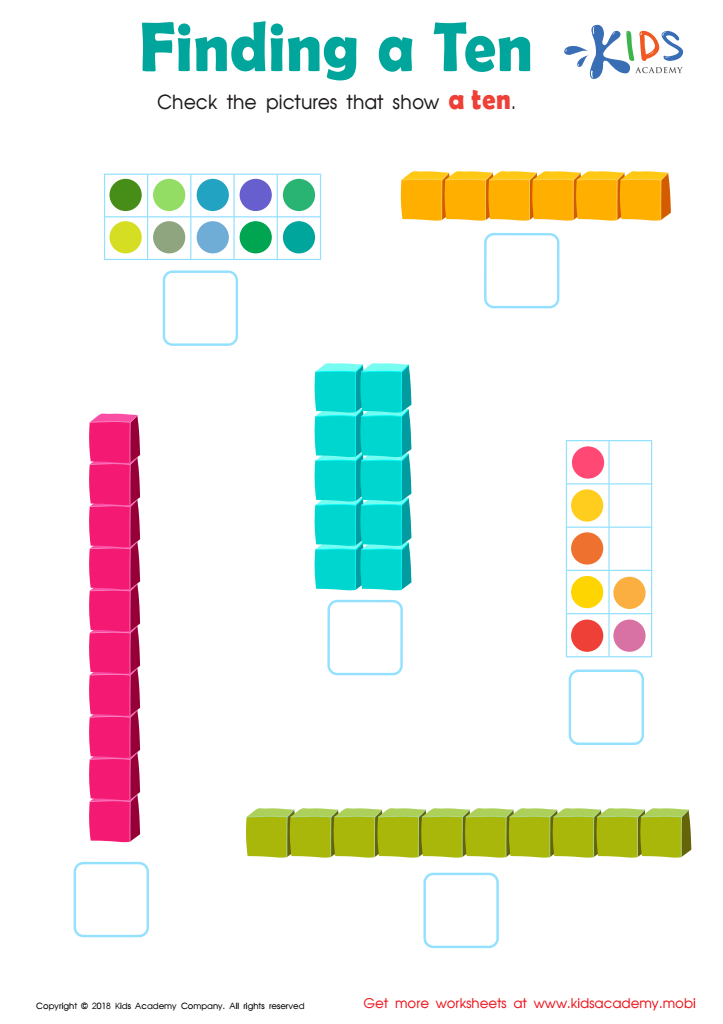
Finding a Ten Worksheet
 Assign to My Students
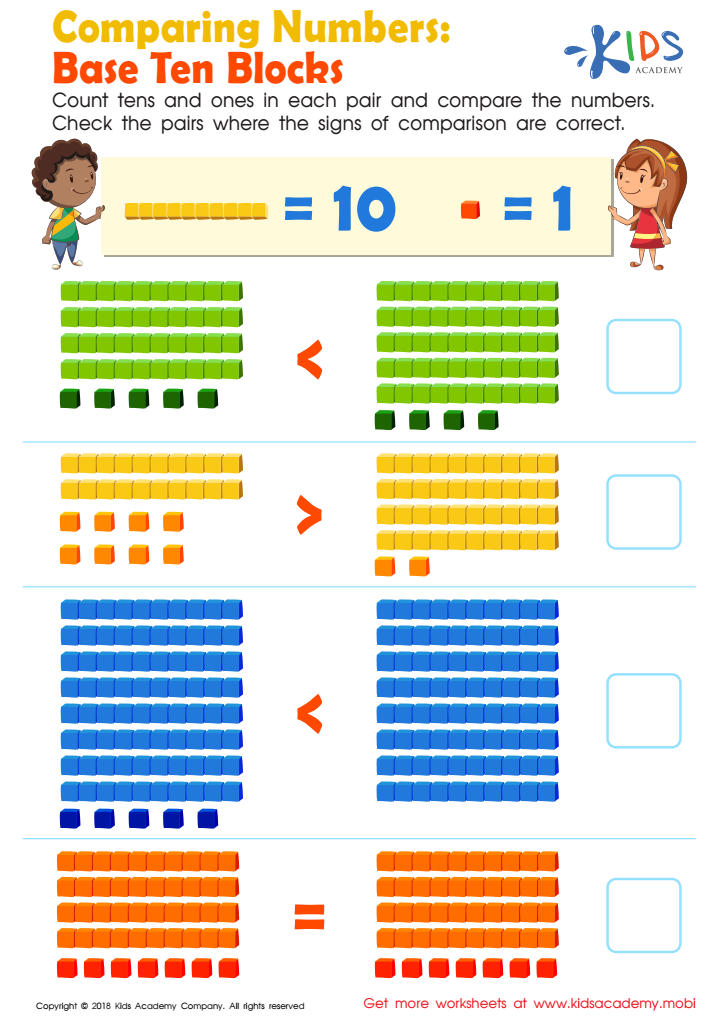
Comparing Numbers: Base Ten Blocks Worksheet
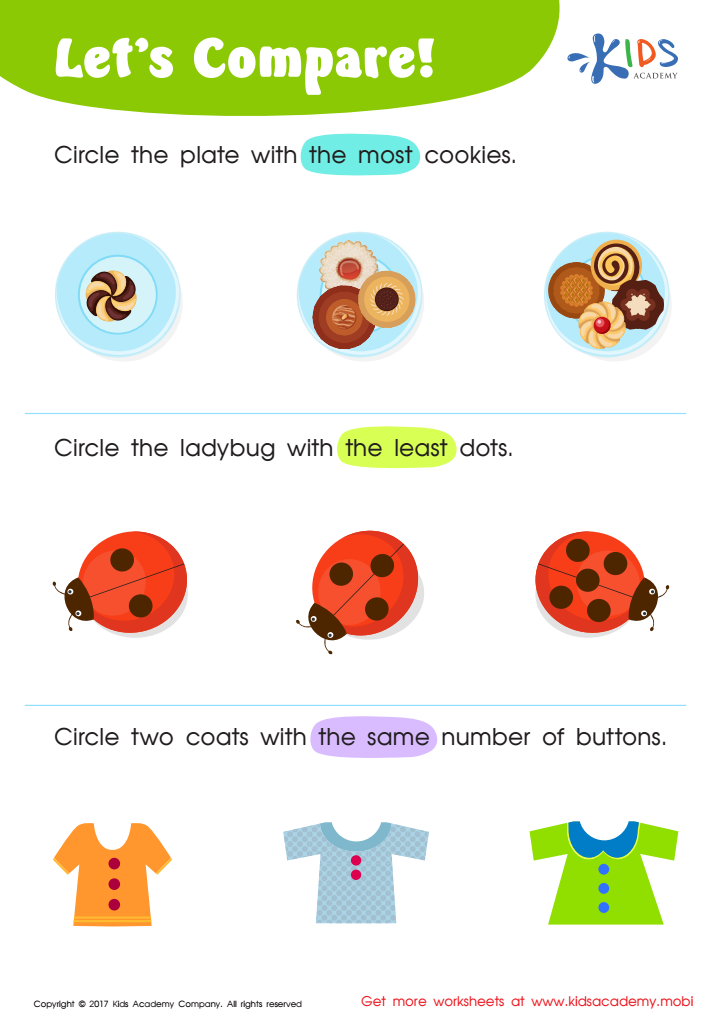
Matching: Classifying Toys by Size Worksheet








Developing math skills in young children, particularly between the ages of 3-6, lays a critical foundation for their future academic success and problem-solving abilities. During these formative years, children's brains are highly receptive to learning concepts that will influence their cognitive development. By introducing number concepts early on, parents and teachers can foster mathematical thinking, logic, and critical reasoning skills essential for everyday life.
Moreover, early math skills are linked to enhanced literacy abilities. Engaging children in counting, recognizing shapes, and understanding basic operations helps them build the connective pathways in their brains that promote overall learning. Math skills also encourage independence and the ability to take on challenges—qualities that are invaluable in all areas of life.
Understanding numbers and their relationships promotes curiosity and exploration. Parents and teachers can provide various hands-on activities, such as counting objects, measuring ingredients in cooking, or playing games that stimulate interest in math concepts. When children enjoy learning numbers, they are more likely to develop a positive attitude towards mathematics in the long run. Supporting children in developing these skills not only prepares them academically but also instills confidence, resilience, and a love for learning that lasts a lifetime.








