Enhancing Counting Skills Numbers Worksheets for Ages 3-6
6 filtered results
-
From - To
Boost your child's counting proficiency with our expertly designed "Enhancing Counting Skills Numbers Worksheets" for ages 3-6. Tailored to develop foundational math abilities, these engaging worksheets encompass a variety of activities, fostering numerical recognition, counting abilities, and fine motor skills through fun and colorful exercises. Perfect for preschoolers and kindergarteners, each worksheet is crafted to captivate young learners' interests, making early math education an enjoyable journey. Our resources support both classroom and at-home learning, ensuring children build confidence and competence in their counting skills. Unlock your child's mathematical potential with our comprehensive and interactive worksheets today!
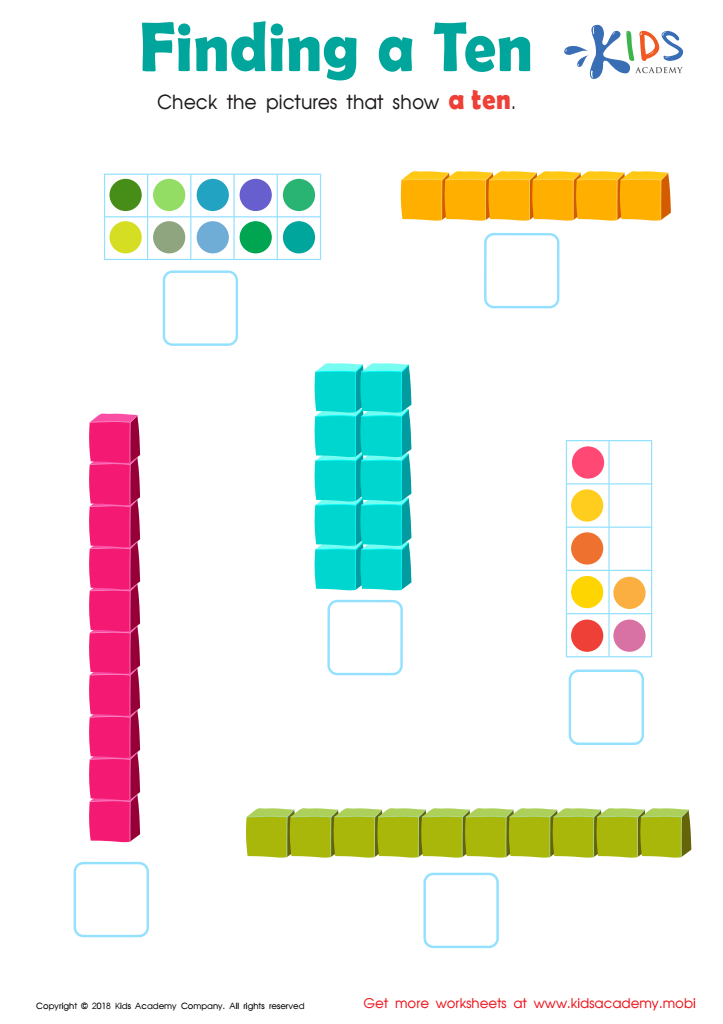
Finding a Ten Worksheet
 Assign to My Students
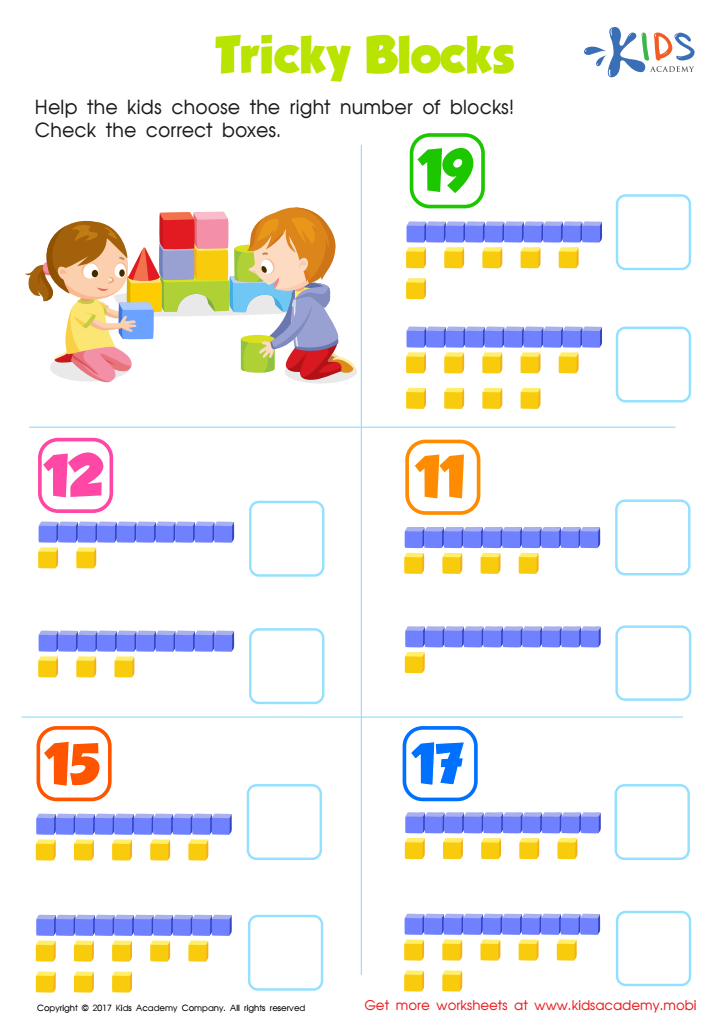
Tricky Blocks Worksheet
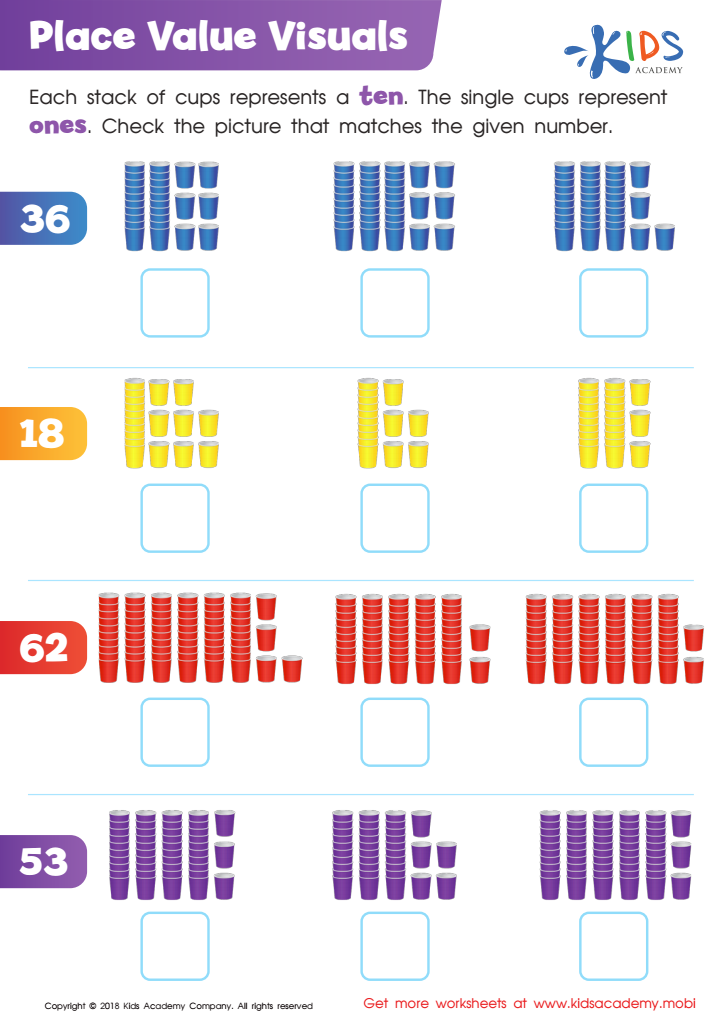
Place Value Visuals Worksheet
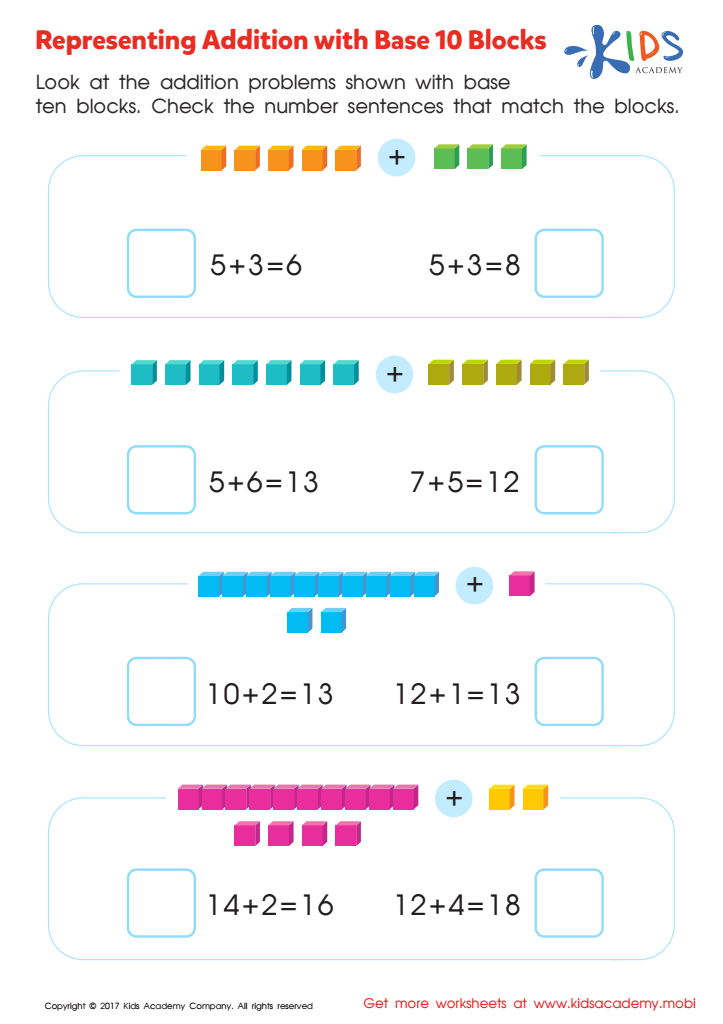
Representing Addition with Base 10 Blocks Worksheet
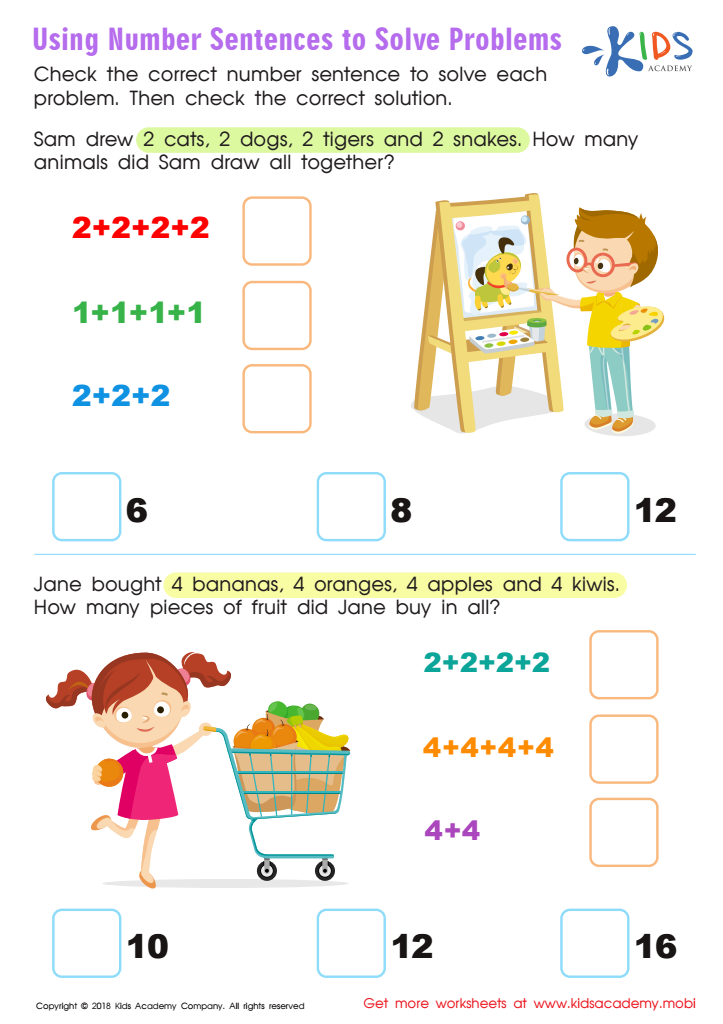
Using Number Sentences to Solve Problems Worksheet
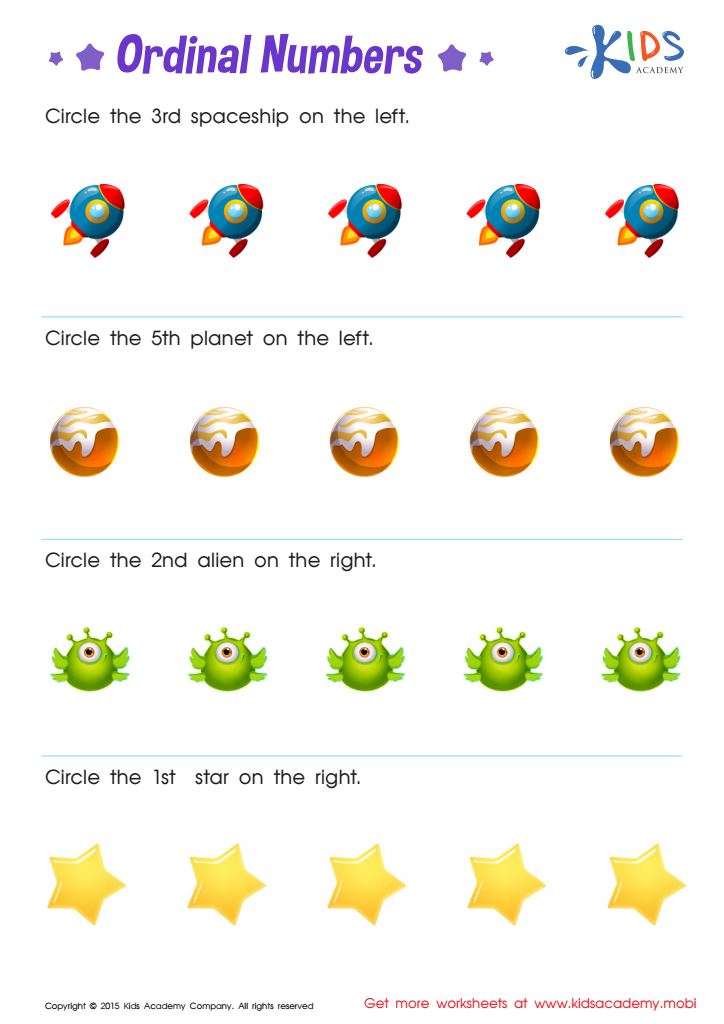
Ordinal Numbers: Space Ordinals Worksheet








Enhancing counting skills for children aged 3-6 is foundational for their cognitive, linguistic, and mathematical development. At this crucial stage, young brains are exceptionally receptive to learning and absorbing new concepts. Counting introduces them to the basic principles of numbers, which are essential building blocks for more complex mathematical operations they will encounter in later schooling.
Counting and number recognition are intertwined with the development of fine motor skills, as children often use physical objects like blocks or beads to touch and count. This hands-on approach reinforces their learning through sensory experiences. Moreover, discussing numbers bolsters vocabulary and language development, improving their ability to communicate effectively.
From a social perspective, mastering counting helps children gain confidence. They can participate more actively in group activities, where concepts of sharing, turn-taking, and cooperative play often involve counting and measuring.
Cognitively, early counting exercises enhance memory, attention, and problem-solving skills. Parents and teachers who emphasize counting help children develop a positive attitude toward mathematics, laying the groundwork for success in school and daily life tasks like managing time and money.
Overall, early emphasis on counting equips children with invaluable skills, fostering academic preparedness, social development, and cognitive growth, which are crucial for lifelong learning and practical daily functioning.








