Fruit identification Numbers Worksheets for Ages 3-6
3 filtered results
-
From - To
Discover our engaging Fruit Identification Numbers Worksheets designed for children ages 3-6! These fun and interactive activities help young learners recognize various fruits while enhancing their counting and number recognition skills. With vibrant illustrations and age-appropriate exercises, kids will enjoy identifying fruits and associating them with corresponding numbers. Perfect for early childhood education settings or at-home learning, these worksheets encourage creativity and provide a hands-on approach to mathematics. By integrating familiar and delicious themes like fruits, children are motivated to explore numbers in a playful and engaging way. Download now and watch your little ones learn and grow with joy!
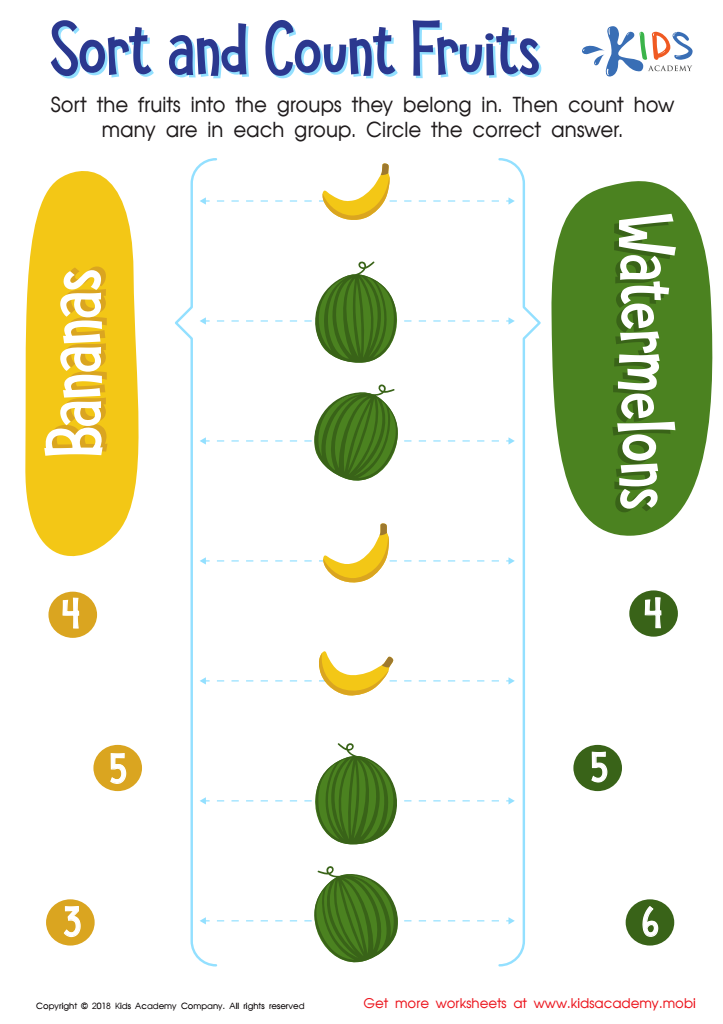
Sort and Count Fruits Worksheet
 Assign to My Students
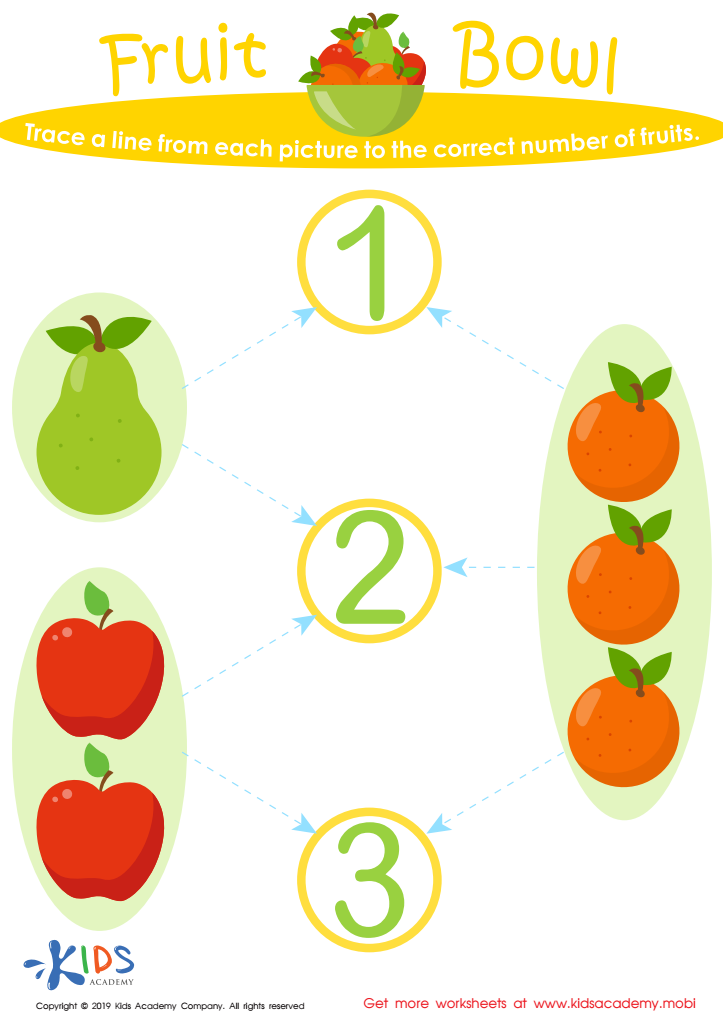
Fruit Bowl Worksheet
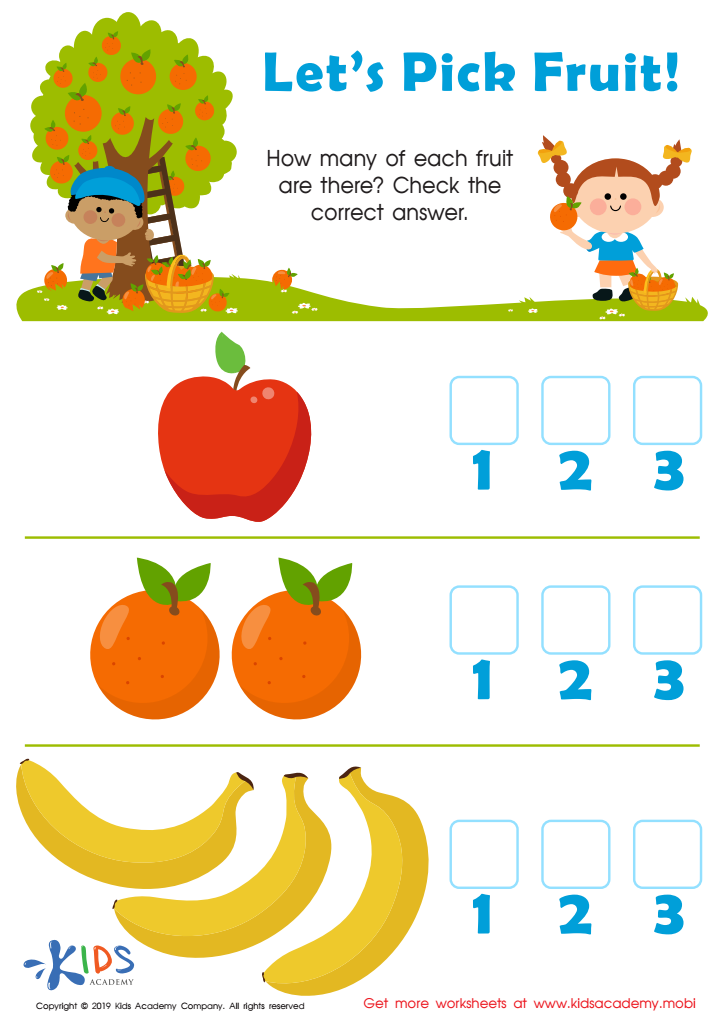
Let's Pick Fruit Worksheet








Fruit identification numbers (PLU codes) are important for parents and teachers of young children aged 3-6 for several reasons. Firstly, they promote health literacy early on. Understanding these numbers helps children recognize and differentiate between organic and conventionally grown produce, fostering informed food choices as they grow. This foundational knowledge can lead to lifetime habits of selecting healthier options, which is critical at a stage when children are developing their eating habits.
Moreover, discussing PLU codes with young children makes learning interactive and fun. It gives an opportunity to engage them in conversations about nutrition, the origins of their food, and the importance of fruit and vegetables in their diets. This can enhance their curiosity about where food comes from, aiding in comprehension of the life cycle and farming processes.
Additionally, recognizing and memorizing these codes can serve as an early math skill, linking numeracy skills with real-world applications. Group activities like sorting fruits by their codes can also promote teamwork and social skills. In conclusion, focusing on fruit identification numbers helps children develop a well-rounded understanding of nutrition while promoting engagement, curiosity, and learning in an essential aspect of their early education.








