Improving number sense Numbers Worksheets for Ages 3-6
3 filtered results
-
From - To
Welcome to our "Improving Number Sense Worksheets" for children ages 3-6! These engaging and interactive worksheets are designed to help young learners develop a fundamental understanding of numbers and their relationships. Our resources make learning enjoyable, promoting skills such as number recognition, counting, and simple operations. Each worksheet features vibrant illustrations and age-appropriate challenges to foster curiosity and build confidence in math. Encourage a love for numbers with fun activities that stimulate critical thinking and problem-solving. Explore our collection today and give your child the tools they need for a strong mathematical foundation!
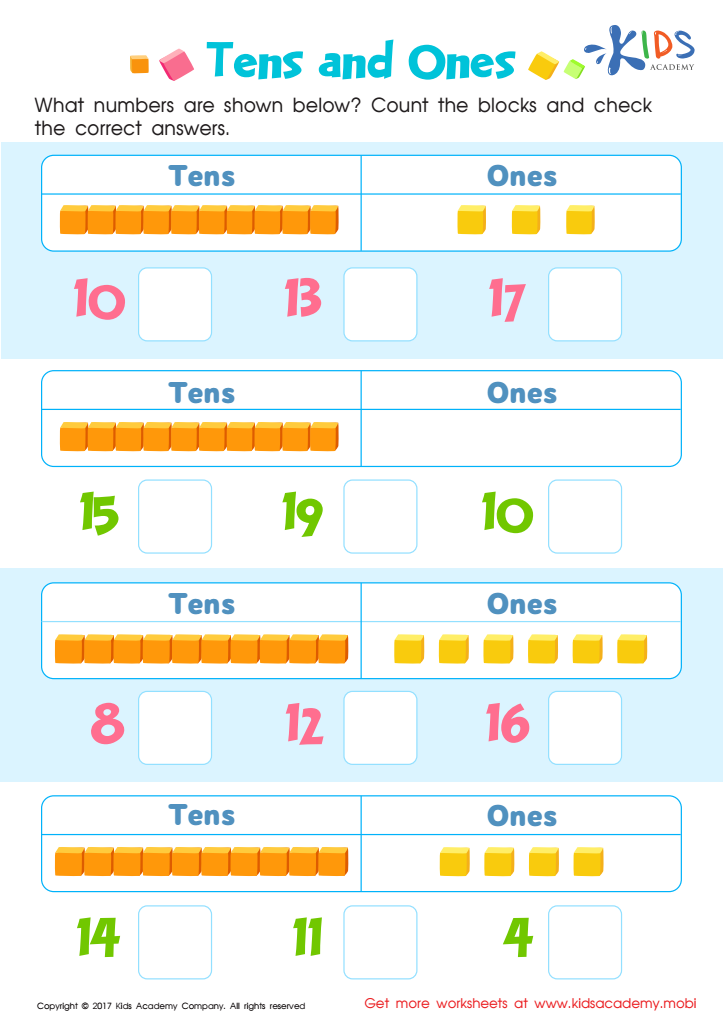
Tens and Ones Worksheet
 Assign to My Students
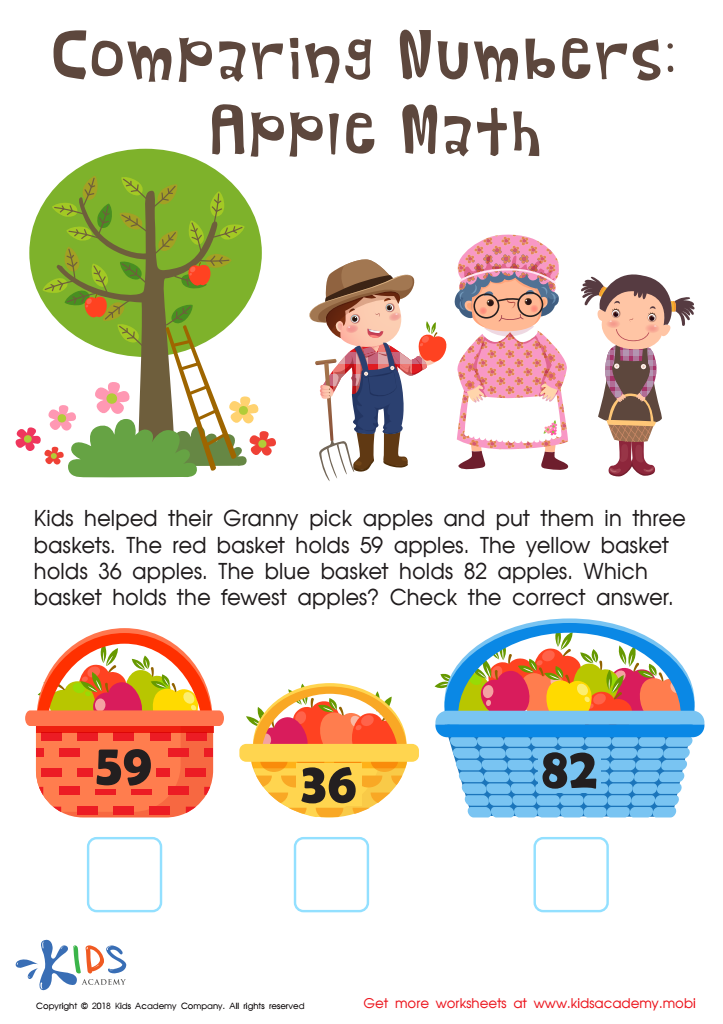
Apple Math Worksheet
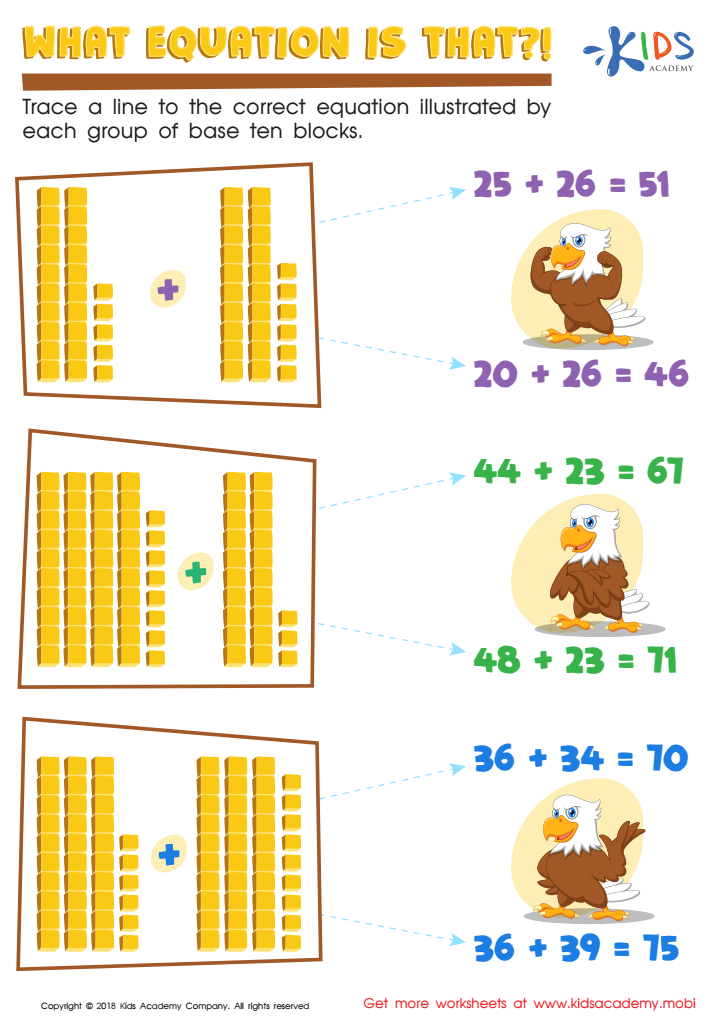
What Equation Is That? Worksheet








Improving number sense in children aged 3-6 is crucial for laying a strong mathematical foundation. During these formative years, children develop critical cognitive skills, and early exposure to numbers fosters positive attitudes towards math. Parents and teachers play an essential role in this process.
Why should they care? First, strong number sense enhances problem-solving abilities. Children learn to recognize patterns, compare quantities, and understand basic arithmetic concepts, promoting logical thinking that extends beyond math. Second, number sense develops confidence. When children grasp fundamental concepts, they feel empowered to tackle more complex challenges, reducing math anxiety in the future.
Additionally, a solid number sense supports academic achievement. Research indicates that early math skills correlate with later success across subjects, not just mathematics. Familiarity with numbers, counting, and simple operations aids literacy as well, as these skills nurture overall cognitive development.
Finally, instilling joy and curiosity about numbers can lead to lifelong learning. Fun activities such as counting games, cooking projects, or nature walks about patterns help create rich, engaging experiences. By prioritizing the improvement of number sense in young children, parents and teachers endorse a foundation for future learning, preparing children not just for school, but for life.








