Logical Reasoning Numbers Worksheets for Ages 3-6
4 filtered results
-
From - To
Introduce your child to the world of numbers with our engaging Logical Reasoning Numbers Worksheets for Ages 3-6. Designed to enhance critical thinking, these worksheets help young learners understand through visually appealing exercises that blend fun with learning. Ideal for preschool and kindergarten, these worksheets foster numerical skills alongside logic development. Each activity focuses on essential concepts such as counting, sequencing, and pattern recognition, making math an enjoyable experience. Perfect for both classroom settings or at-home practice, our worksheets lay a solid foundation for future mathematical success while nurturing a love for numbers and problem-solving skills.
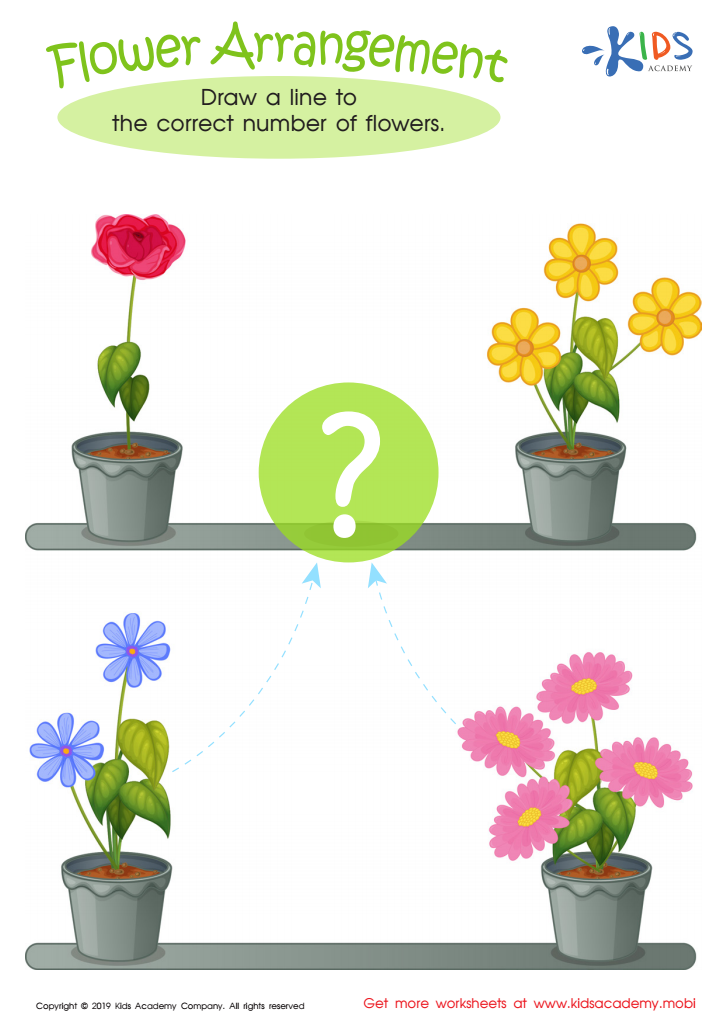
Flower Arrangement Worksheet
 Assign to My Students
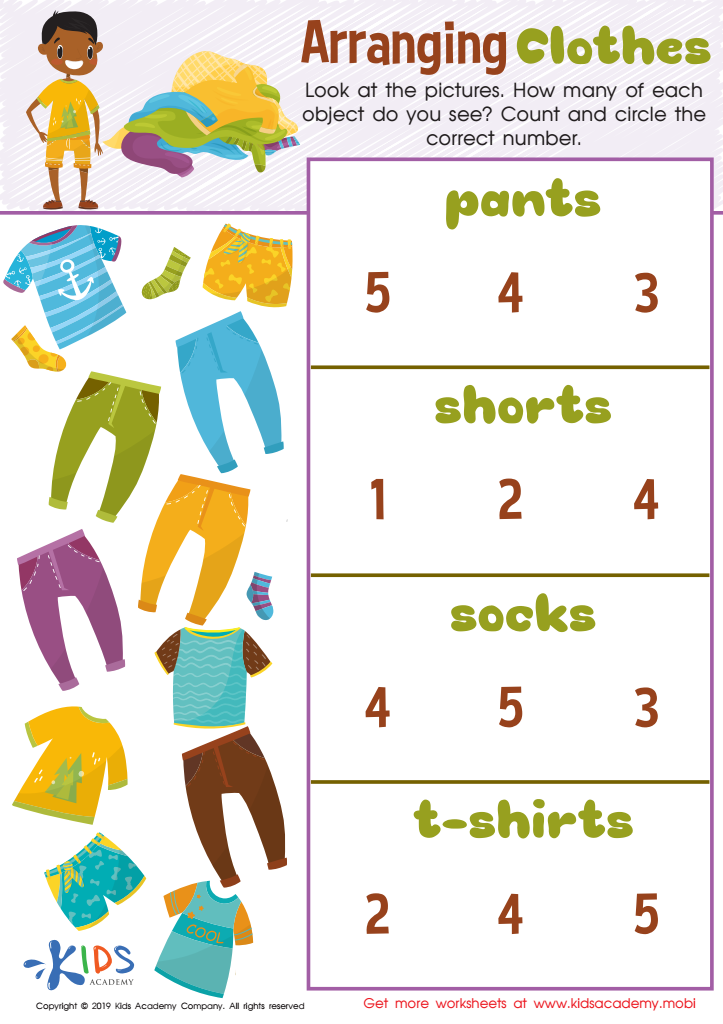
Arranging Clothes Worksheet
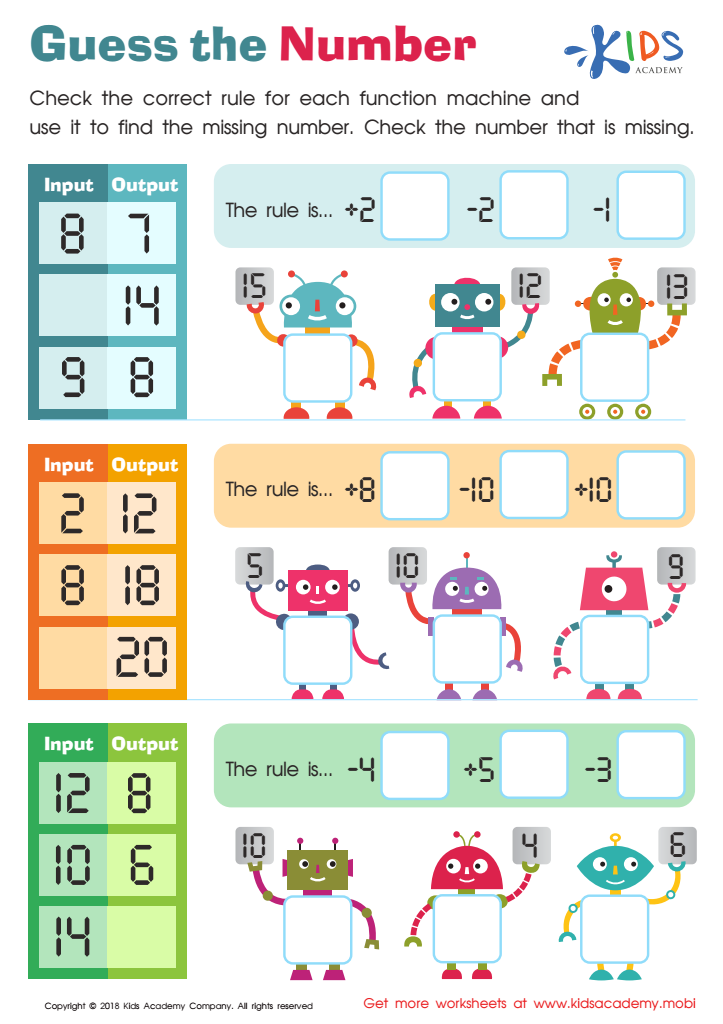
Guess the Number Worksheet
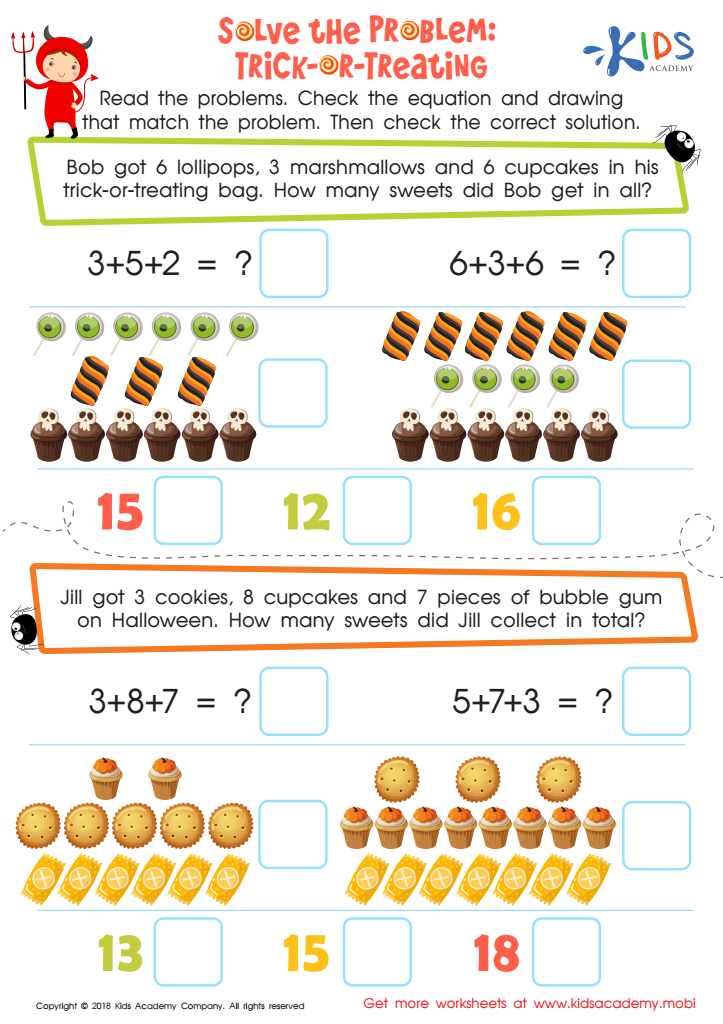
Solve the Problem: Trick–or–treating Worksheet








Logical reasoning skills in early childhood are essential building blocks for later academic and life success. For children aged 3-6, engaging with numbers through logical reasoning helps develop critical thinking, problem-solving, and foundational math skills.
First, learning to reason with numbers nurtures cognitive development by stimulating mental processes that help children understand concepts like sequences, patterns, and counting. This early exposure sets a strong groundwork for more complex mathematical operations in later schooling. For instance, when a child understands the concept of sequencing with numbers, they are not just counting; they are also learning to identify and predict patterns, which is a crucial skill in subjects like math and science.
Second, logical reasoning with numbers promotes spatial reasoning. Activities such as sorting, classifying, and comparing objects based on numerical attributes enhance a child's ability to visualize and manipulate objects, further supporting their understanding of geometry and measurement.
Finally, engaging with numbers encourages perseverance and attention to detail. When children solve puzzles or play number games, they learn to approach problems methodically, consider various solutions, and correct mistakes, thereby building persistence and resilience.
Overall, investing time in fostering logical reasoning with numbers for young children equips them with crucial intellectual skills, offering a solid base for future academic success and everyday decision-making.








