Understanding comparisons Numbers Worksheets for Ages 3-6
3 filtered results
-
From - To
Introduce young learners to the world of numbers with our "Understanding Comparisons Numbers Worksheets for Ages 3-6." Designed by educators, these engaging worksheets help children grasp essential math skills by comparing numbers in a fun and interactive way. Suitable for preschool to early-grade students, these printables foster critical thinking through activities that challenge kids to identify greater, less than, or equal values. With bright illustrations and simple instructions, kids build strong foundational math skills while enjoying playful comparisons. Perfect for parents and teachers, these worksheets are a valuable resource for early childhood mathematical development.
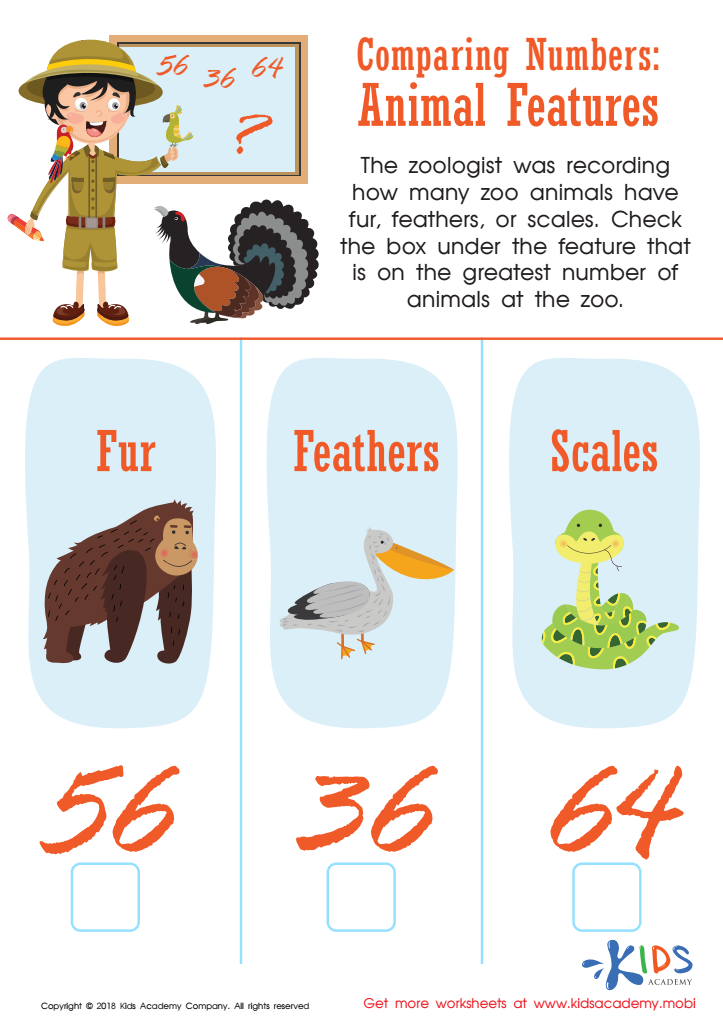
Animal Features Worksheet
 Assign to My Students
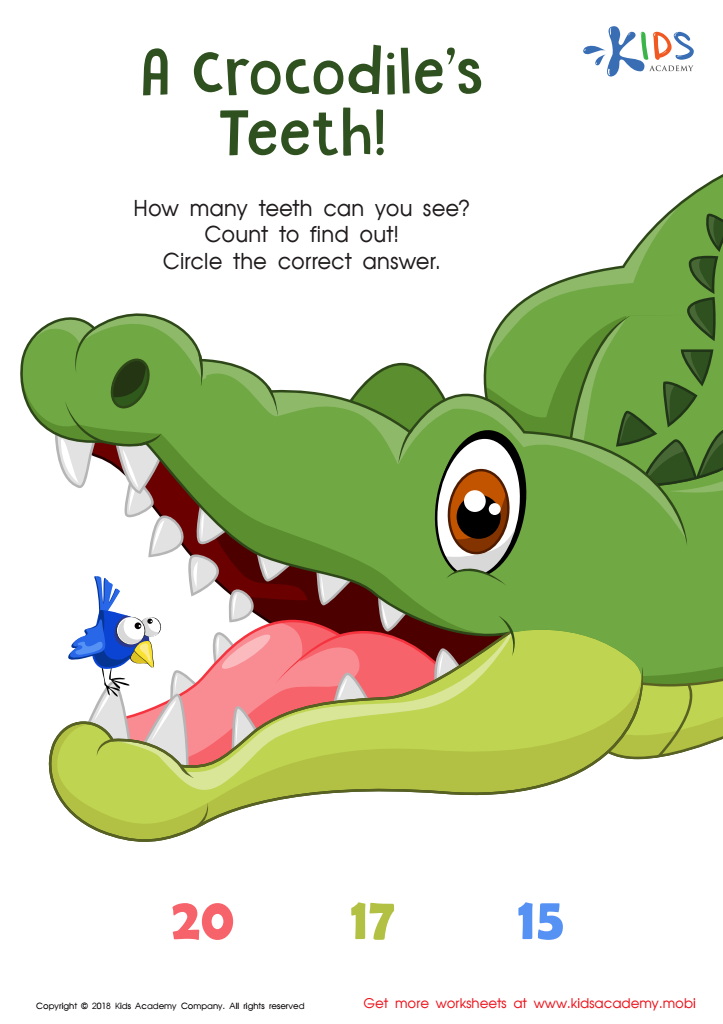
A Crocodile's Teeth Worksheet
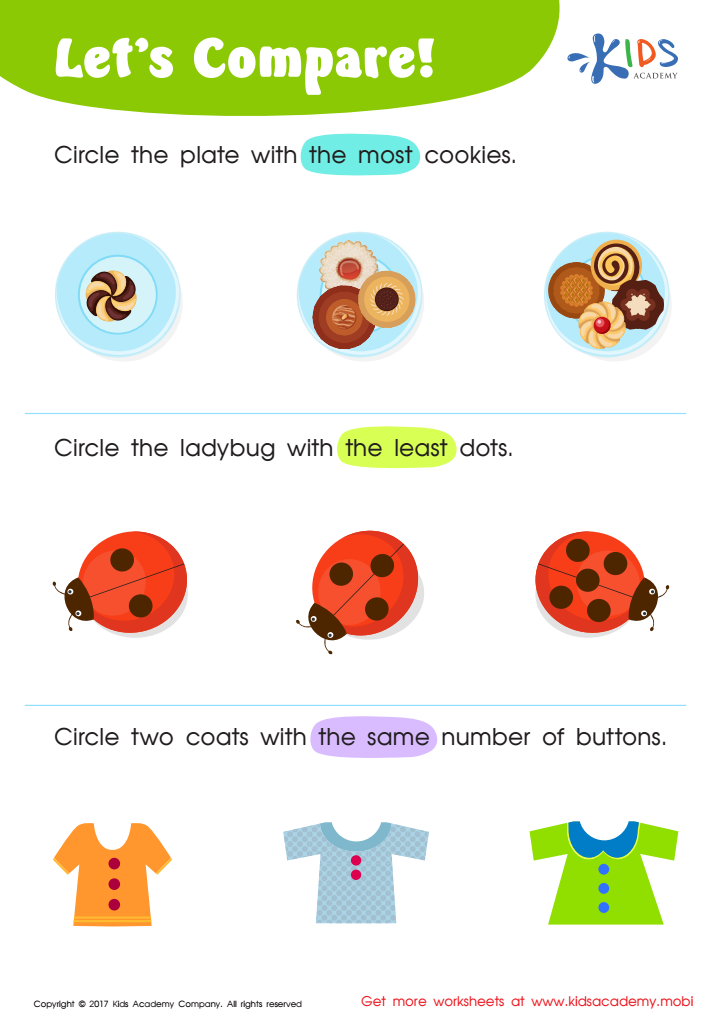
Matching: Classifying Toys by Size Worksheet








Understanding comparison numbers for ages 3-6 is a foundational skill that significantly impacts a child’s cognitive and academic development. At this early stage, children are beginning to explore mathematical concepts that will support their future learning. Introducing them to comparisons, such as bigger and smaller, more and less, and equal and not equal, helps develop critical thinking and problem-solving abilities.
When children grasp number comparisons, they build a sense of number magnitude and hierarchy, which is essential for mastering more complex math skills later on. For example, understanding that 5 is greater than 3 will pave the way for learning addition and subtraction.
Moreover, these skills foster language development and vocabulary as children learn terms like “more,” “less,” “greater,” and “equal.” This language helps them articulate their thoughts and improves their ability to communicate mathematical ideas.
Additionally, understanding comparisons boosts confidence in young learners. When children see themselves successfully tackling comparison tasks, they are more likely to engage positively with math activities, developing a love for learning.
Parents and teachers should prioritize comparison numbers practice through playful activities and everyday experiences, fostering positive attitudes towards mathematics and setting the stage for academic achievement, logical thinking, and problem-solving skills.








