
Addition skills Math Worksheets for Ages 3-6
114 filtered results
Difficulty Level
Grade
Age
-
From - To
Subject
Activity
Standards
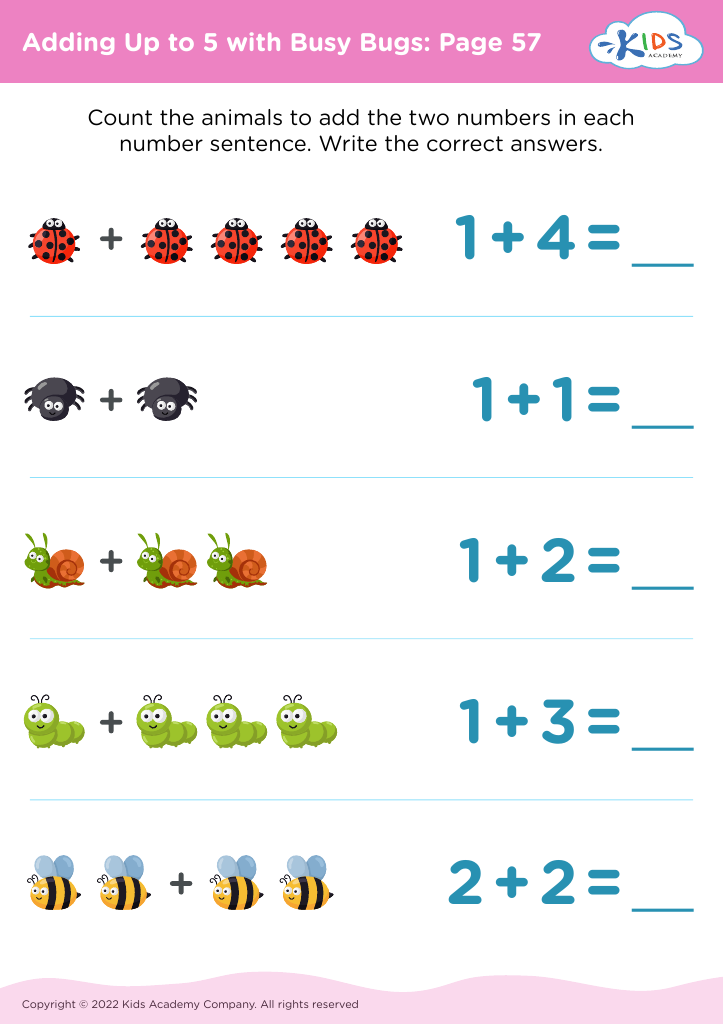
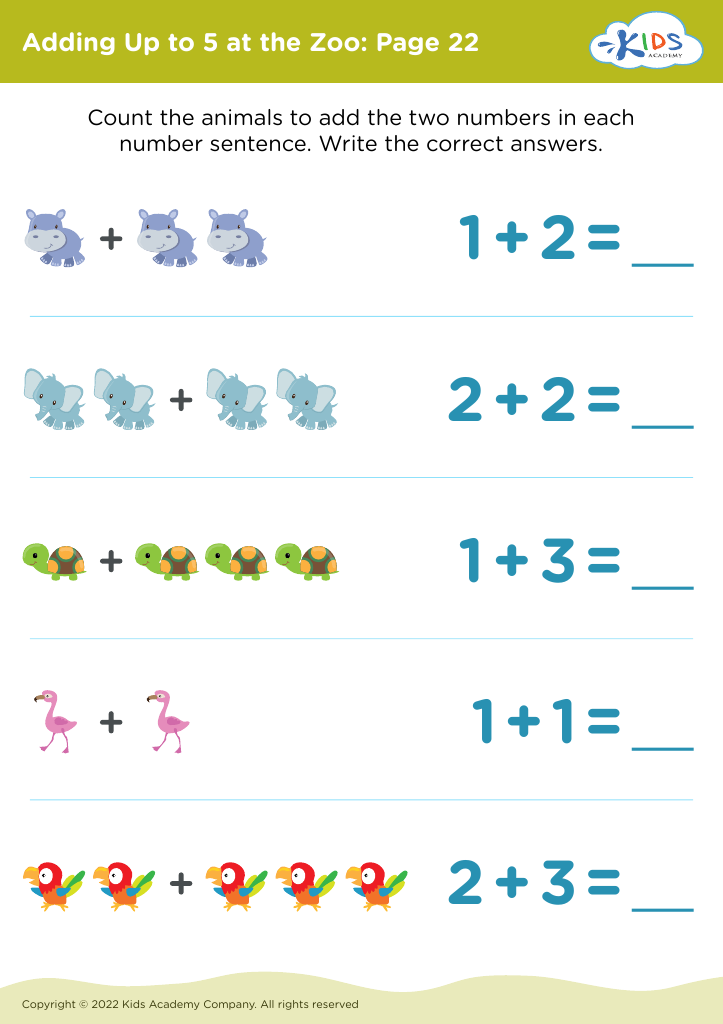
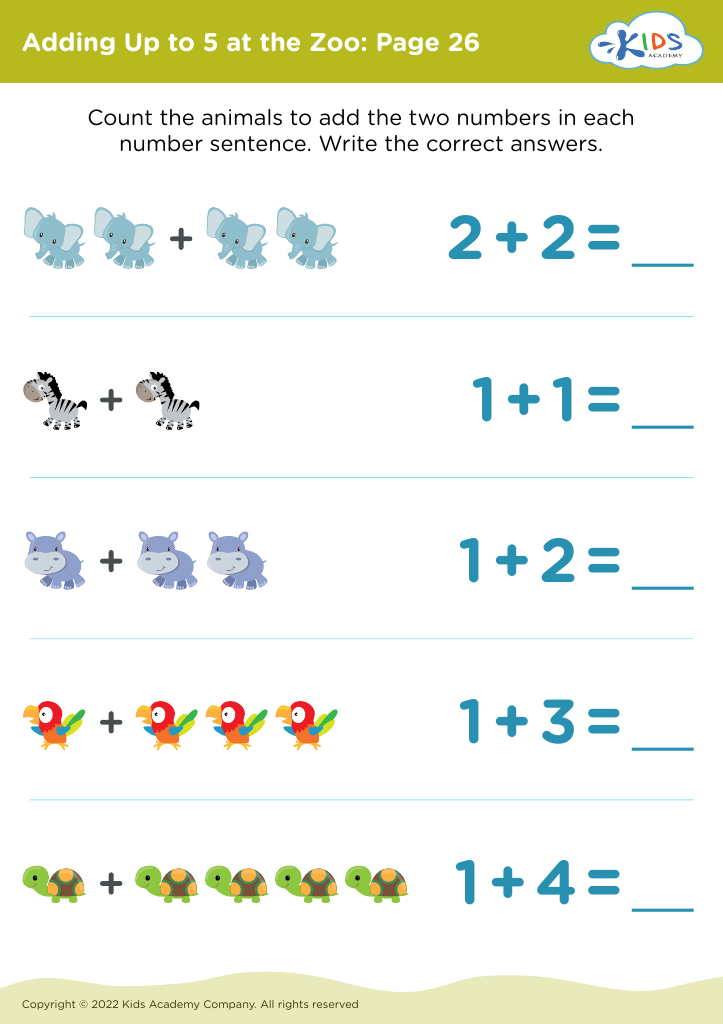
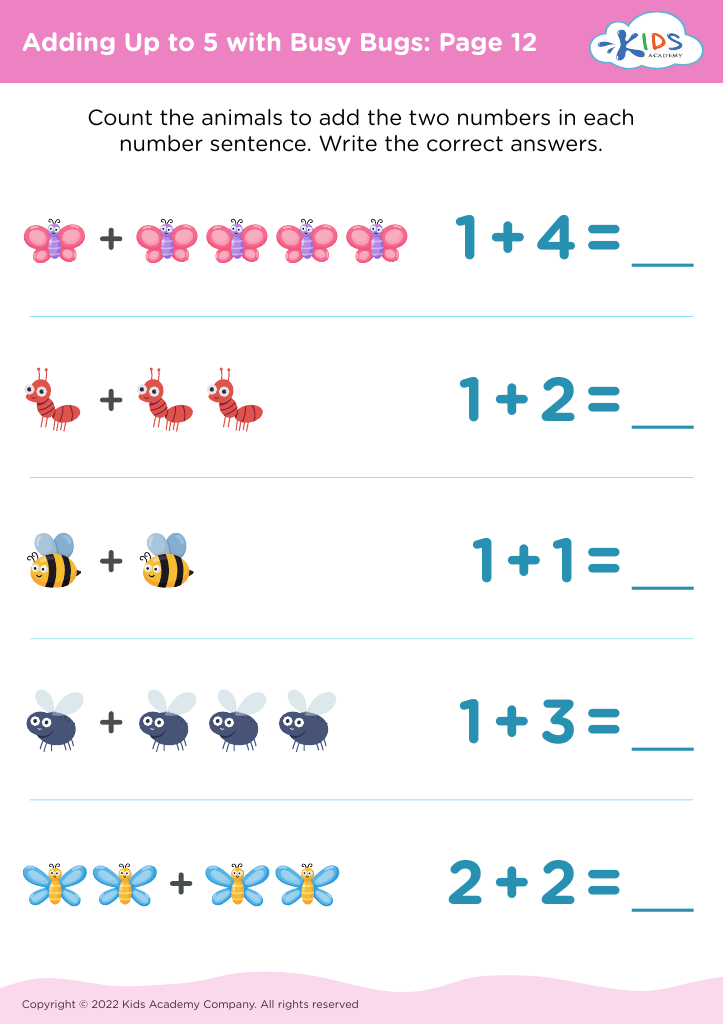
Nurture your child's early math abilities with our "Addition Skills Math Worksheets" for ages 3-6 from Kids Academy. Our thoughtfully designed worksheets introduce young learners to the basics of addition through engaging visual aids, interactive activities, and age-appropriate exercises. Each worksheet aims to build confidence and reinforce foundational math skills, making learning both fun and effective. Ideal for parents and educators, these printable resources support children in mastering addition concepts, paving the way for future math success. Start your child's math journey today by exploring our extensive collection of printable addition worksheets, tailored to young minds.
Favorites
With answer key
Interactive
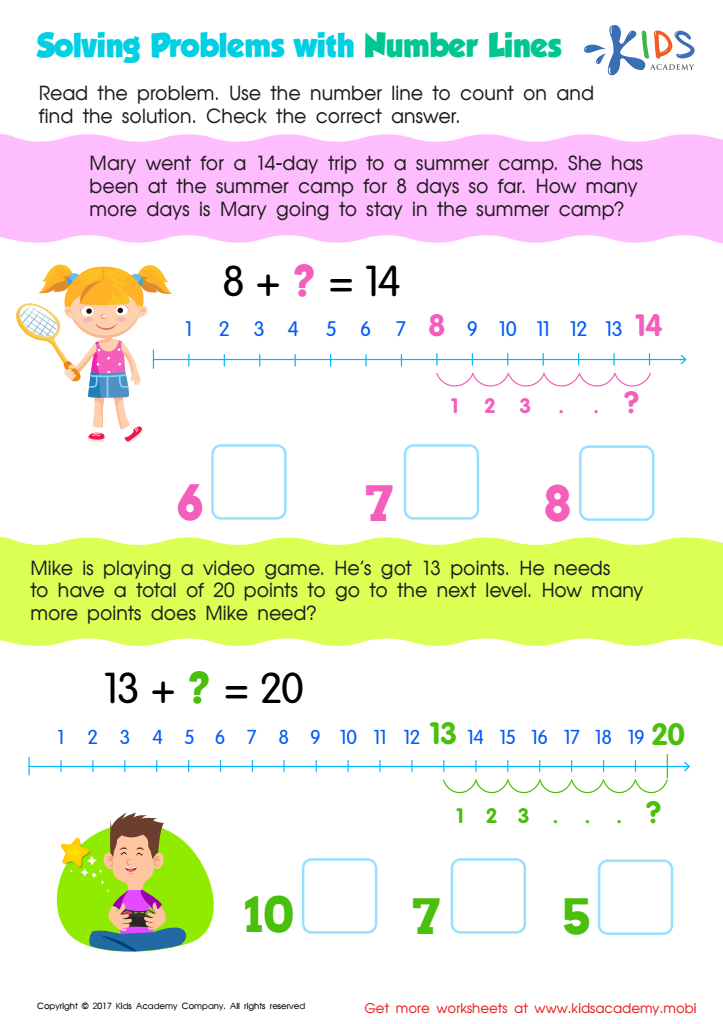
Solving Problems: Number Lines Worksheet
Number lines are fun and help build number sense and reasoning. This worksheet uses them to help students count on to find a solution to an equation. They'll have fun counting with familiar numbers and 10-bases, while also working on algebraic reasoning.
 Assign to My Students
Solving Problems: Number Lines Worksheet
Worksheet
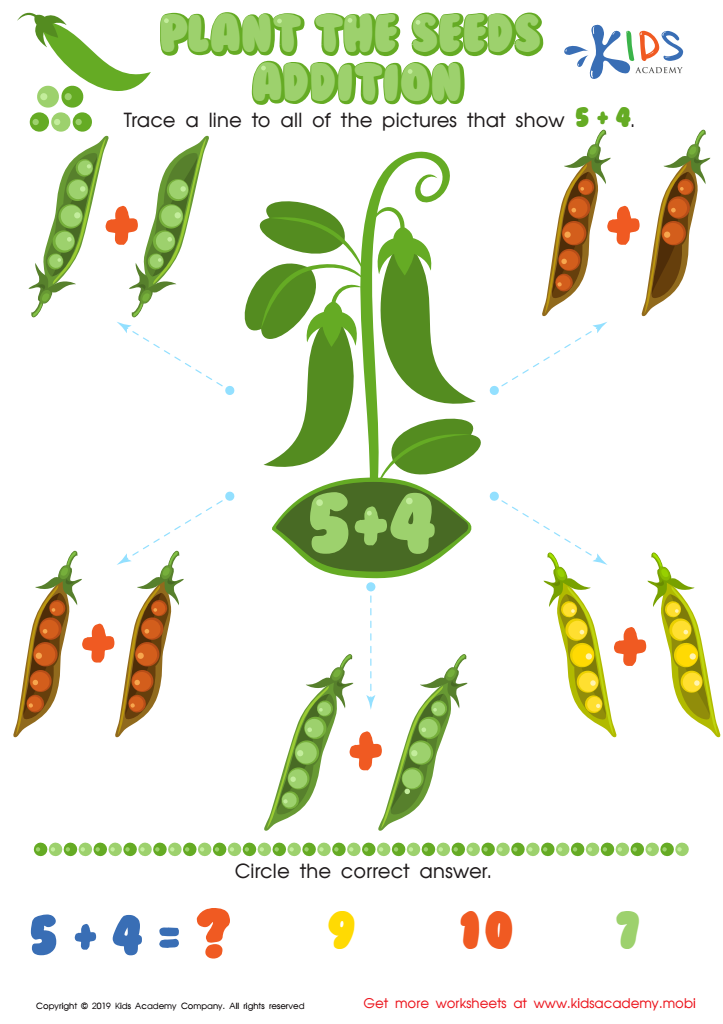
Plant the Seeds Addition Worksheet
This worksheet combines math and learning about plants. Ask kids to name their favorite plants and which ones they see the most. Have them trace a line to all pictures in the middle which show the equation 5+4. Enjoy the beauty of plants while introducing math skills!
Plant the Seeds Addition Worksheet
Worksheet
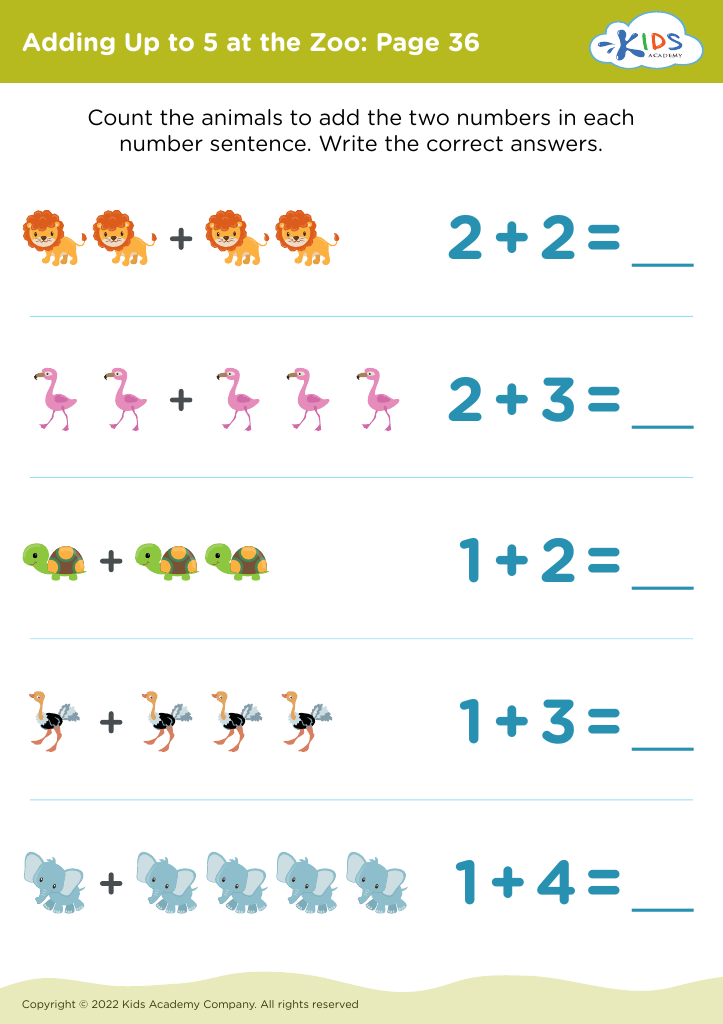
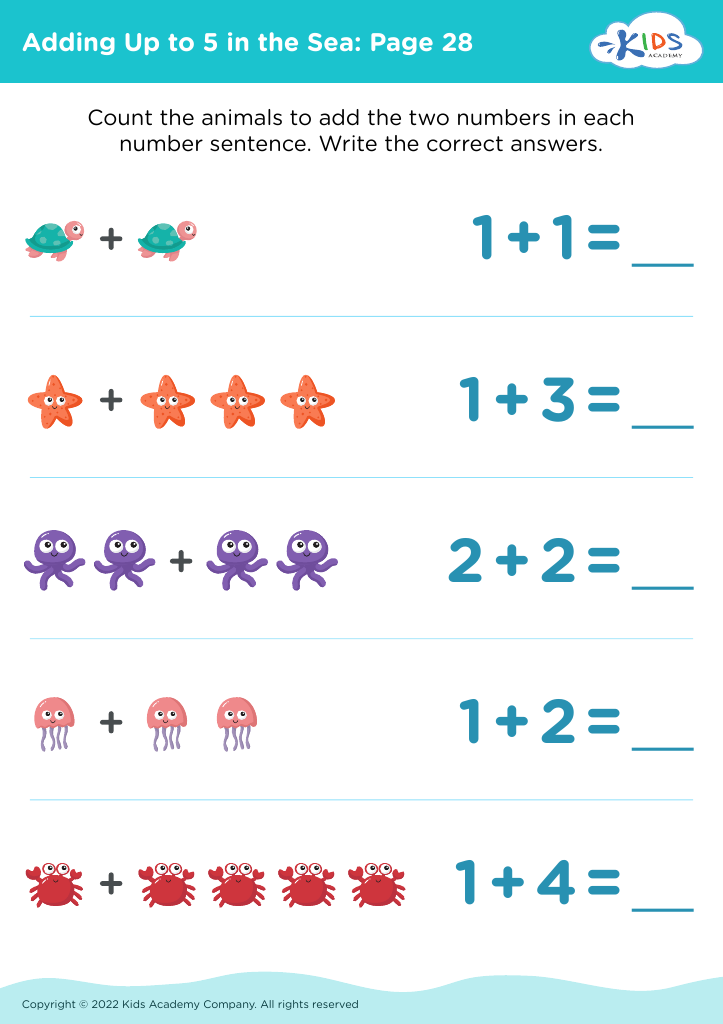
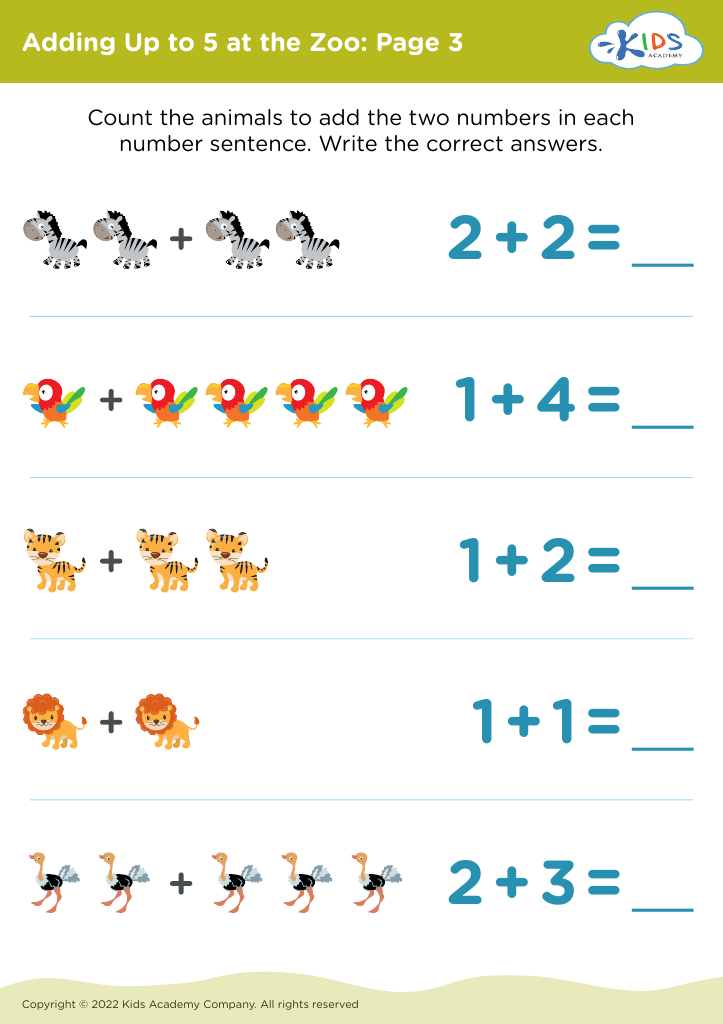
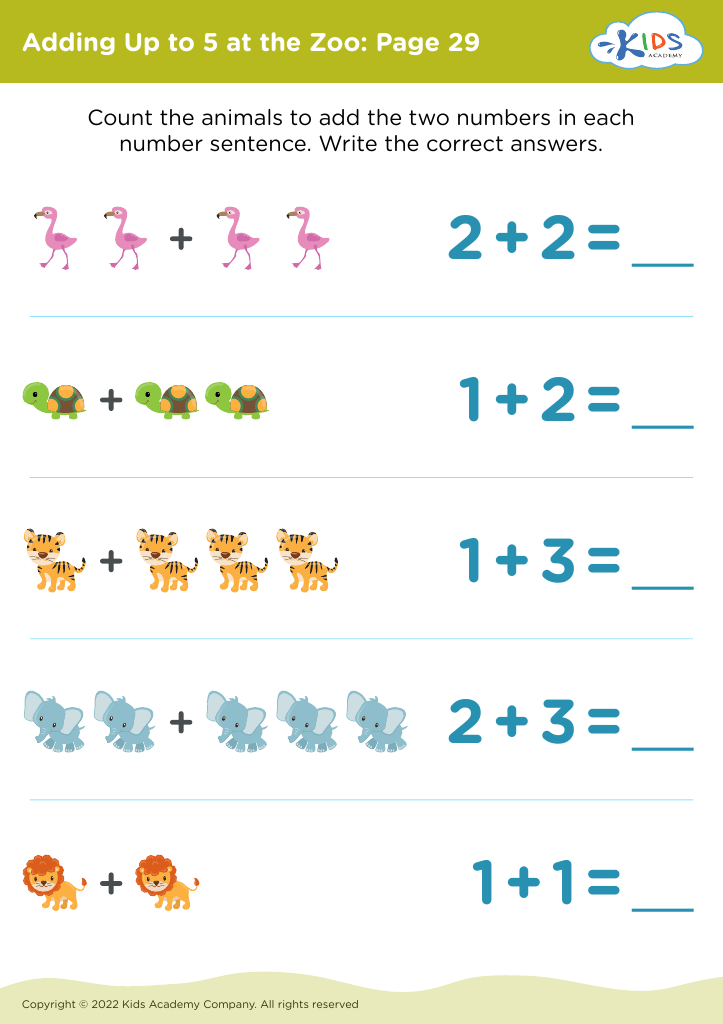
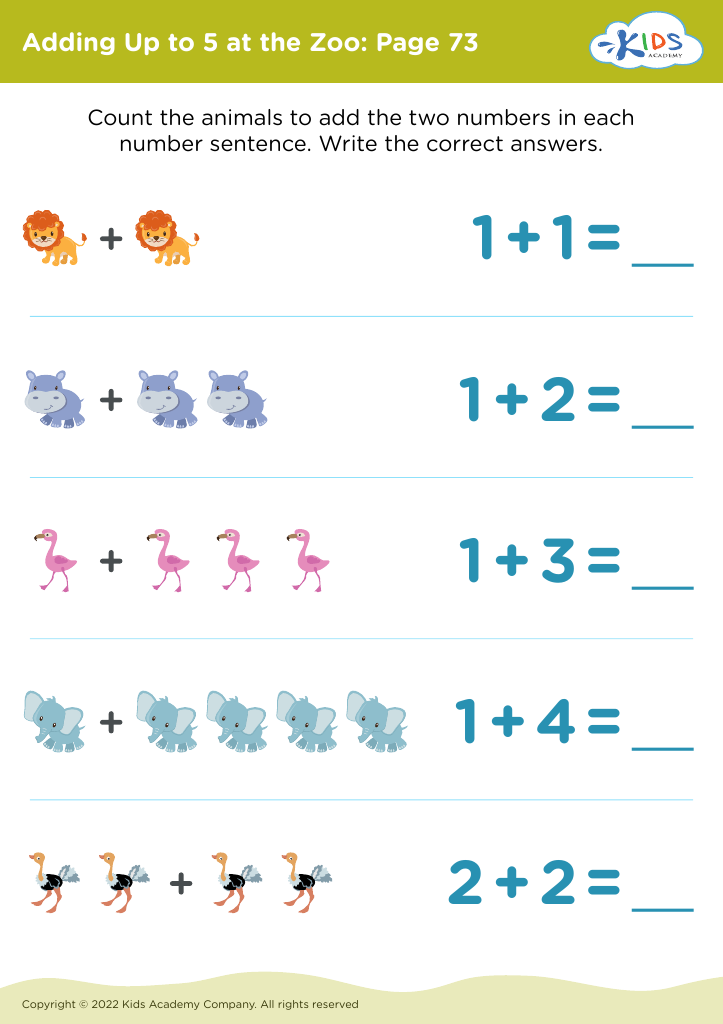
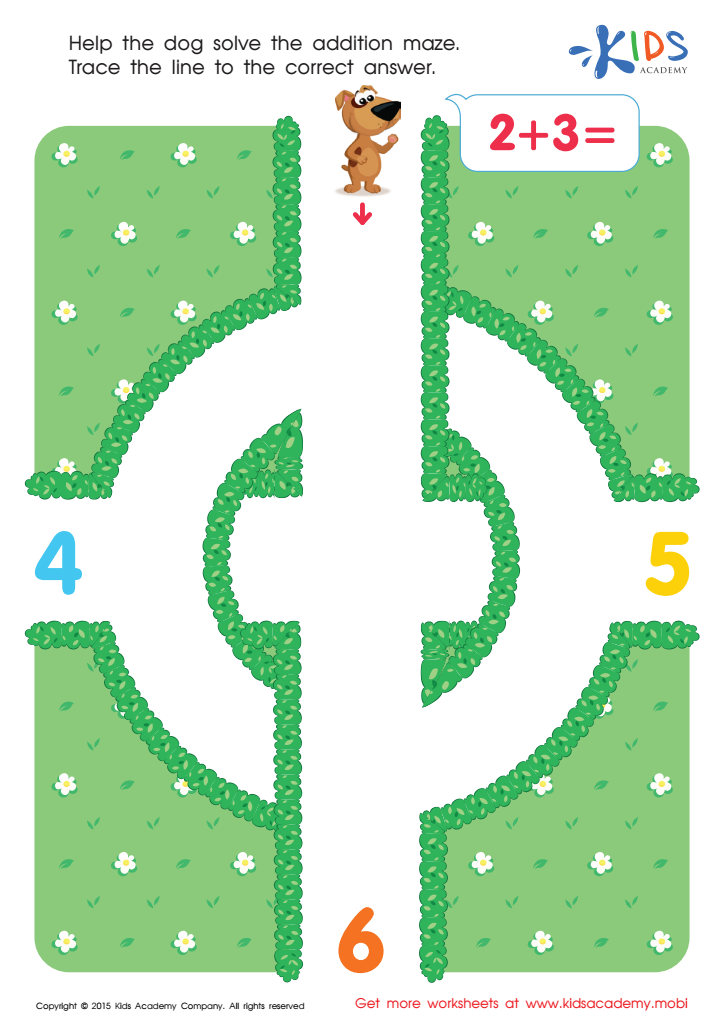
Two And Three Addition Worksheet
Give your children the task and let them find the path to the right answer while they make their way through the maze, and don't forget to let them trace the path.
Two And Three Addition Worksheet
Worksheet
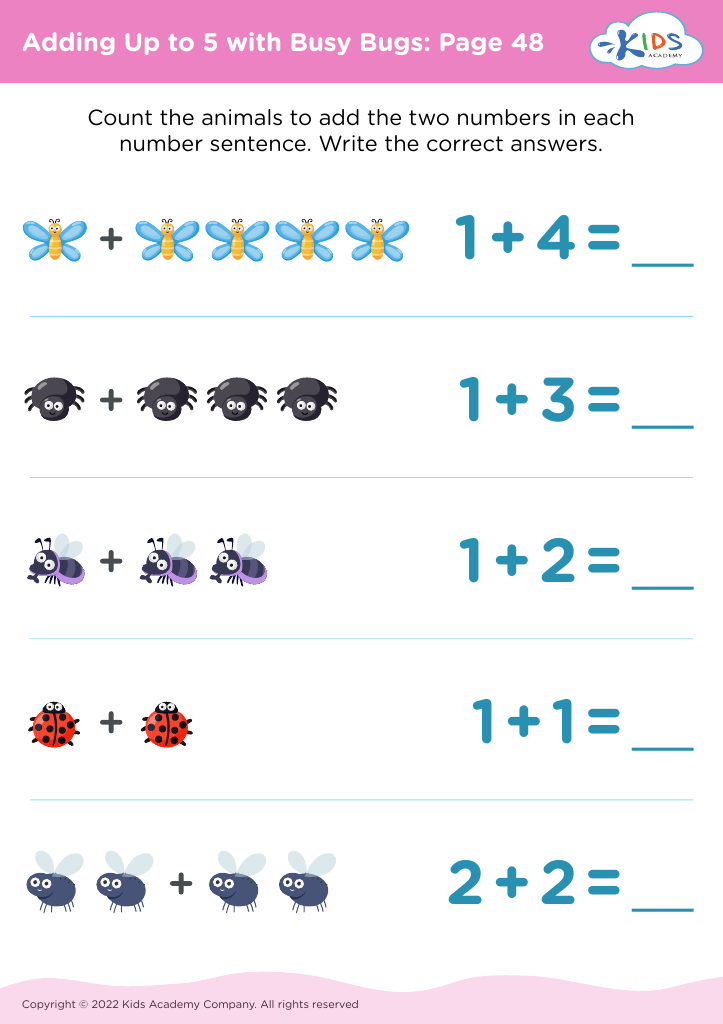
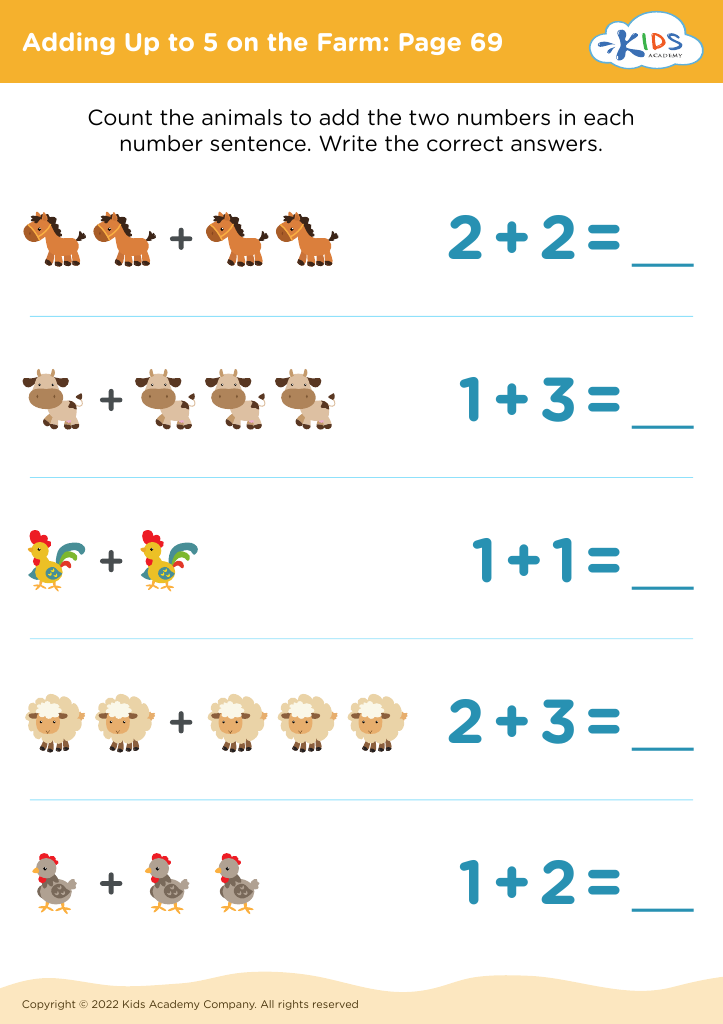
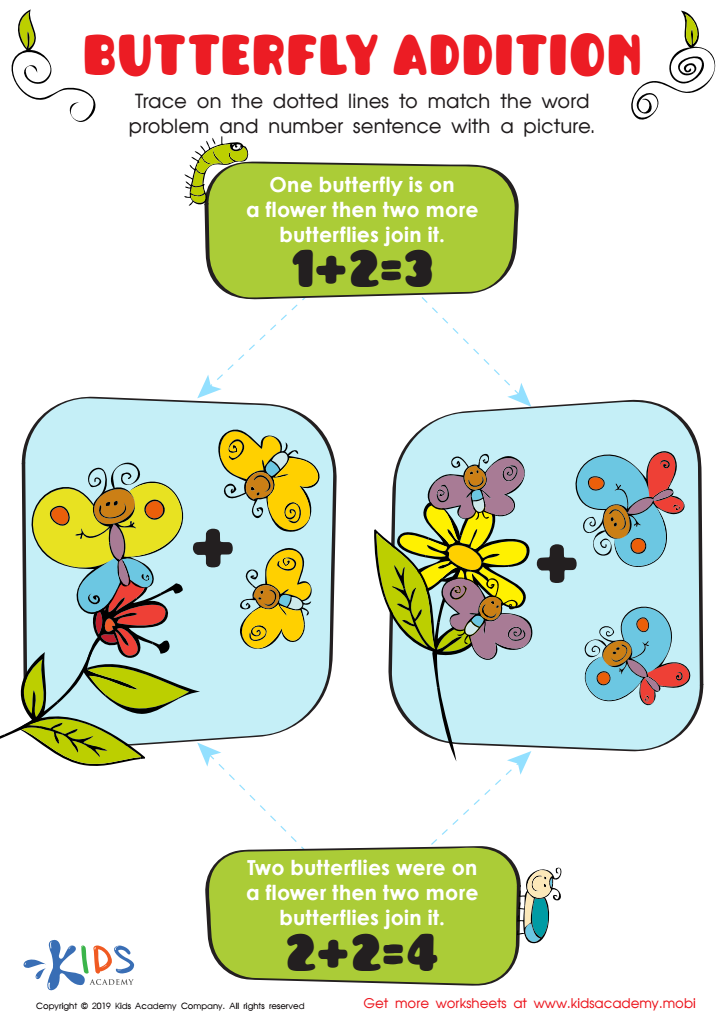
Butterfly Addition Worksheet
This tracing sheet is great for kids to work on math skills and have fun too. Read the word problems to them, then help them trace the dotted lines to match the problem and number sentence to a picture. Not only is it educational, it's beautiful too - your kids will love learning about butterflies!
Butterfly Addition Worksheet
Worksheet
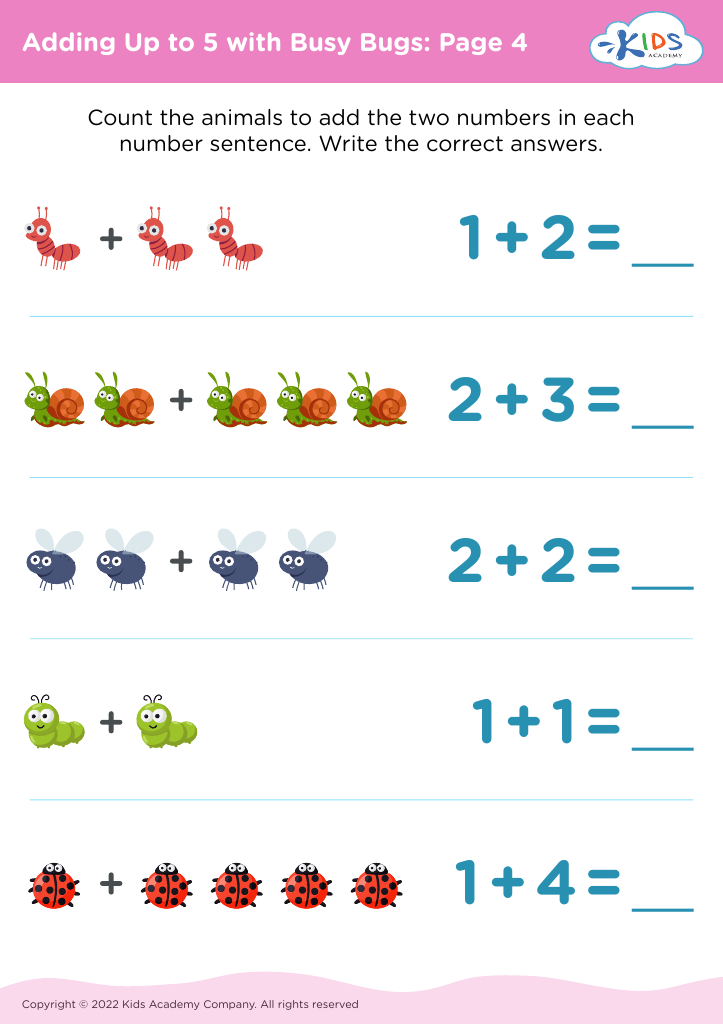
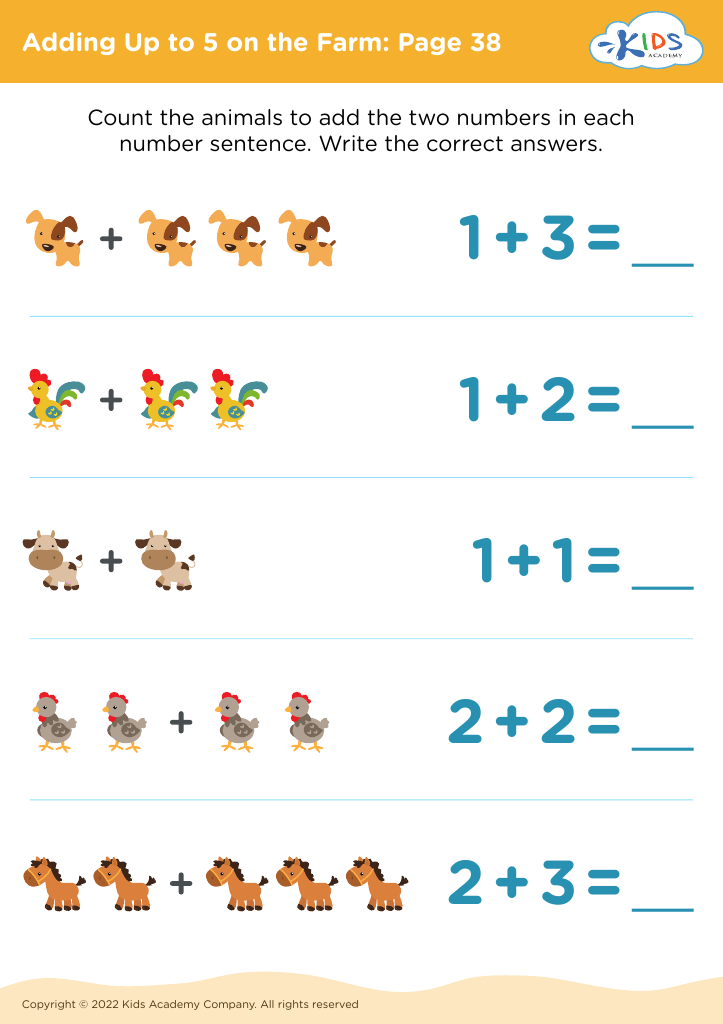
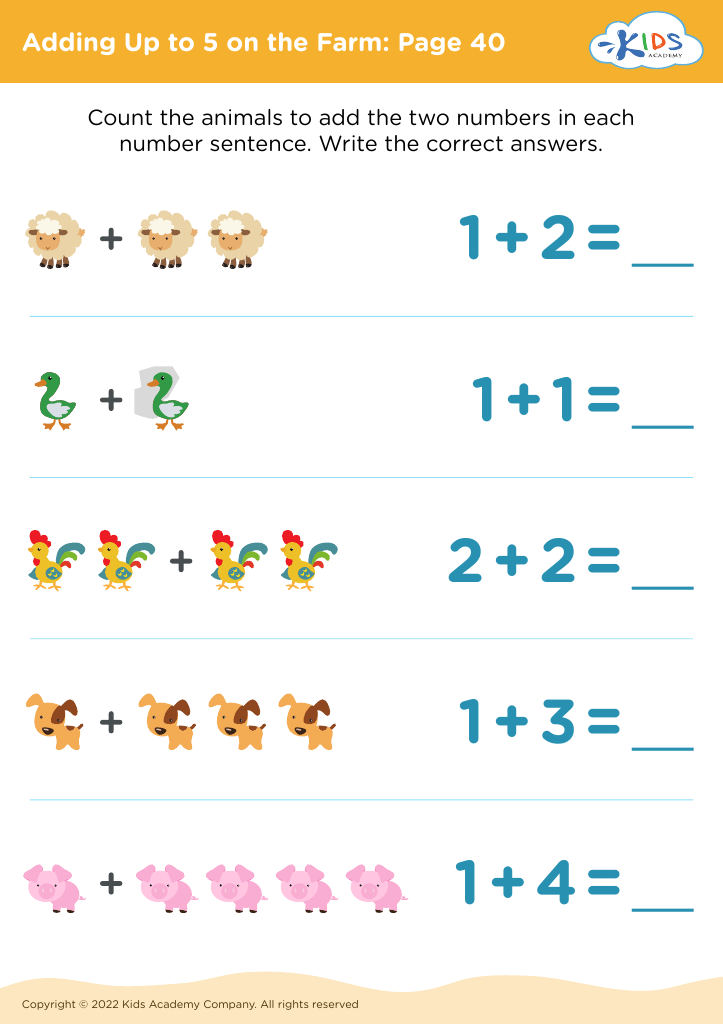
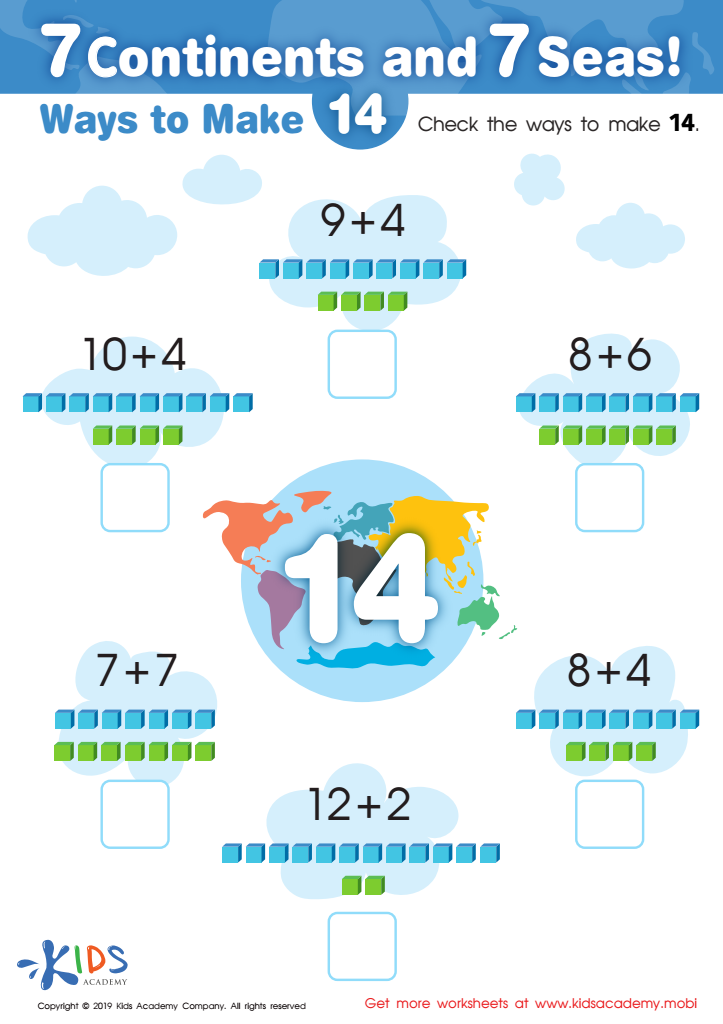
7 Continents and 7 Seas Worksheet
Remind kids of the continents and show them how different numbers can add up to the same figure. Give examples, like 2+2 =4, and 3+1 =4. Ask if they can provide other examples, then work through the simple additions in this worksheet with them. Ask them to circle all equations that make 14.
7 Continents and 7 Seas Worksheet
Worksheet
Join Kids Academy for Free
Who is primarily going to use this learning content?








Developing addition skills in children aged 3-6 is crucial for several reasons. Firstly, early math skills form the foundation for all future learning in mathematics. Understanding addition helps children grasp more complex concepts like subtraction, multiplication, and division. Early familiarity with numbers and basic operations promotes cognitive development, problem-solving, and logical thinking.
Secondly, building math skills at a young age establishes confidence. When children successfully learn to add, they feel more capable and ready to take on new challenges, fostering a positive attitude towards learning. This early confidence can influence their overall academic performance and attitude towards school.
Additionally, early math skills are important for everyday life. Children use basic addition when dividing toys, sharing snacks, or even playing games. These practical applications show children the relevance of math in their daily lives and encourage continuous learning outside of the classroom.
Finally, fostering early addition skills can identify potential learning difficulties. Early identification allows for timely intervention, ensuring that all children receive the support they need to succeed academically.
In summary, honing addition skills in early childhood provides the building blocks for future learning, boosts confidence, facilitates everyday life, and helps spot any learning challenges early on.








