Basic math abilities Math Worksheets for Ages 3-6
3 filtered results
-
From - To
Encourage your child's foundational math skills with our Basic Math Abilities Worksheets, tailored specifically for ages 3-6. These engaging printables from Kids Academy support early learners in mastering key concepts such as counting, number recognition, basic addition, and subtraction. Each worksheet combines fun illustrations with educational content, ensuring that learning is both enjoyable and effective. With a variety of activities designed to strengthen critical math abilities, your little ones will gain confidence and develop a solid math foundation, setting the stage for future academic success. Start exploring our collection to give your child a head start in math today!
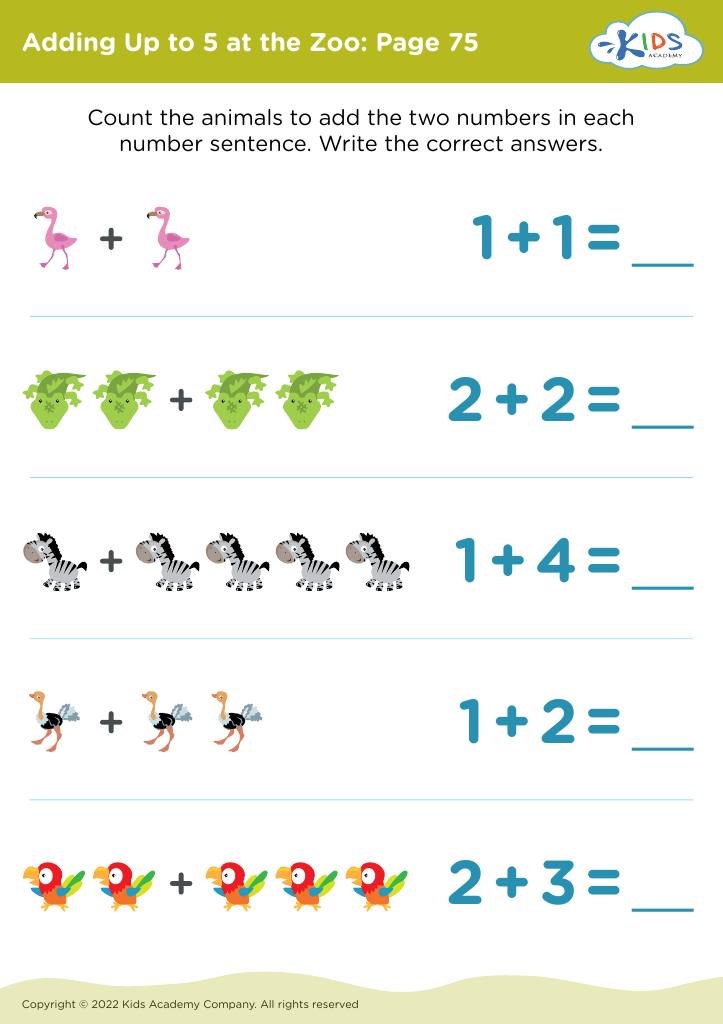
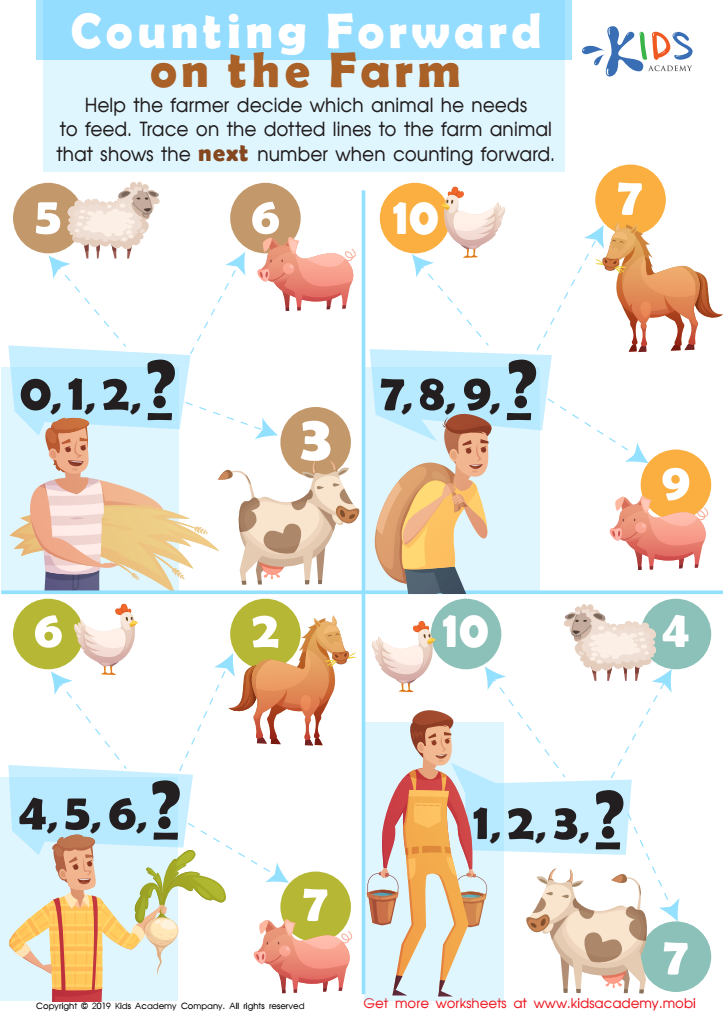
Counting Forward On the Farm Worksheet
 Assign to My Students
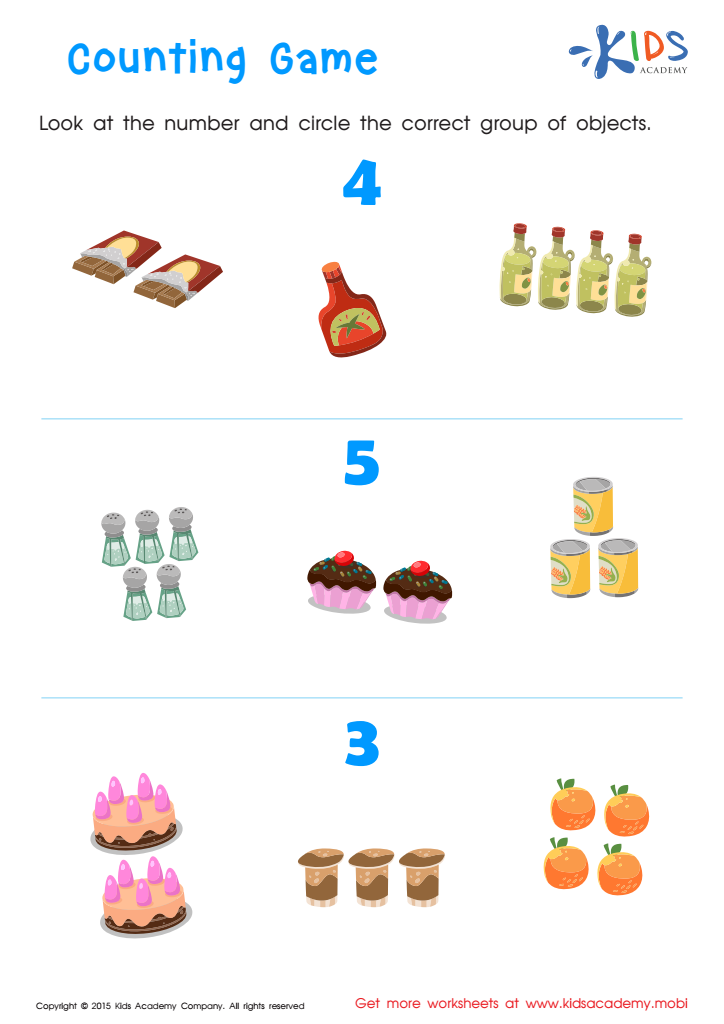
Counting Worksheet






Basic math abilities for children ages 3-6 are foundational for their future academic success and daily life. At this developmental stage, kids are highly receptive and capable of learning basic math concepts like counting, recognizing patterns, and understanding shapes and sizes. These skills develop crucial cognitive abilities such as problem-solving and logical thinking, which are transferable to other subjects and real-world situations.
When parents and teachers focus on nurturing these early math skills, they not only contribute to the child’s academic preparation but also boost their confidence and curiosity. Engaging in simple math-related activities, like counting objects during playtime or identifying shapes in the environment, makes learning fun and builds a positive attitude towards the subject. Research indicates that children who enter school with strong early math skills perform better not only in mathematics but also in reading and other academic areas.
Moreover, early math proficiency is linked to long-term educational attainment and career opportunities. Parents and teachers play a vital role in fostering an environment that encourages exploration, questioning, and hands-on learning. By prioritizing early math education, they lay the groundwork for a child's future learning trajectory and overall intellectual development.








