
Basic math comprehension Math Worksheets for Ages 3-6
4 filtered results
Difficulty Level
Grade
Age
-
From - To
Subject
Activity
Standards
Discover our engaging and educational Basic Math Comprehension Worksheets designed for children ages 3-6. These printables feature interactive activities that help young learners develop foundational math skills. With a focus on counting, number recognition, simple addition, and subtraction, our worksheets make learning math fun and accessible. Perfect for preschoolers and kindergarteners, these exercises aid cognitive development and enhance problem-solving abilities. Parents and educators will find our resources invaluable for supporting early math comprehension and fostering a lifelong love for learning. Visit our page to provide your child with the essential tools they need for early math success.
Favorites
With answer key
Interactive
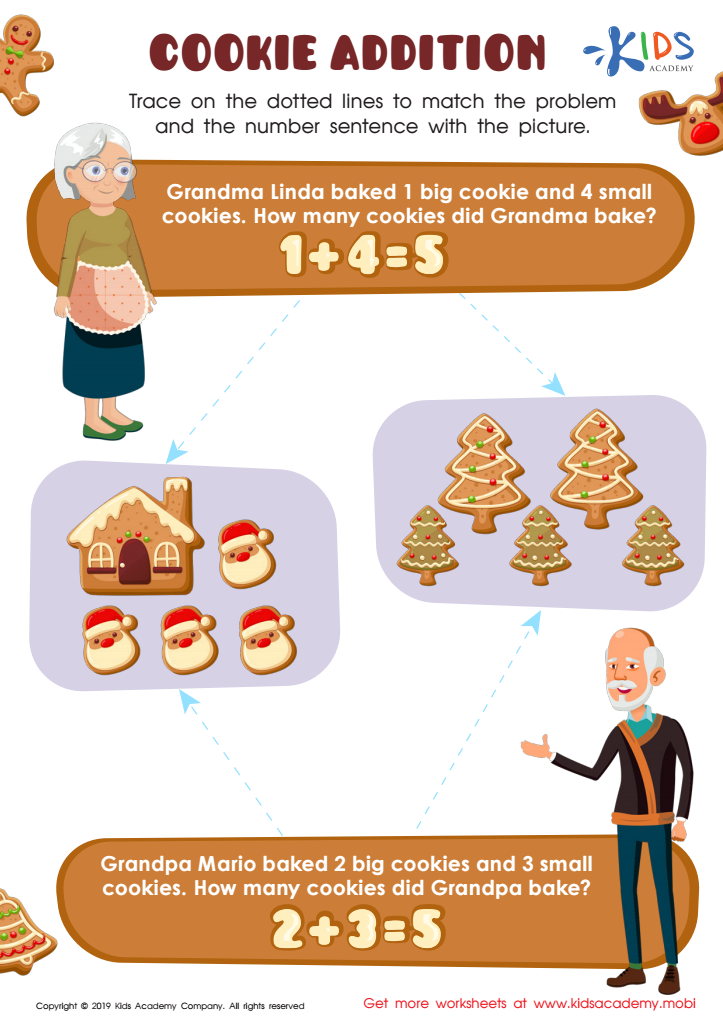
Cookie Addition Worksheet
Let your kids have fun identifying pictures in their worksheet. Read word sentences to them and help them turn them into number problems. Then, get them to trace the lines to match the problem and the number sentence with the picture. They’ll love it, especially if they love cookies!
 Assign to My Students
Cookie Addition Worksheet
Worksheet
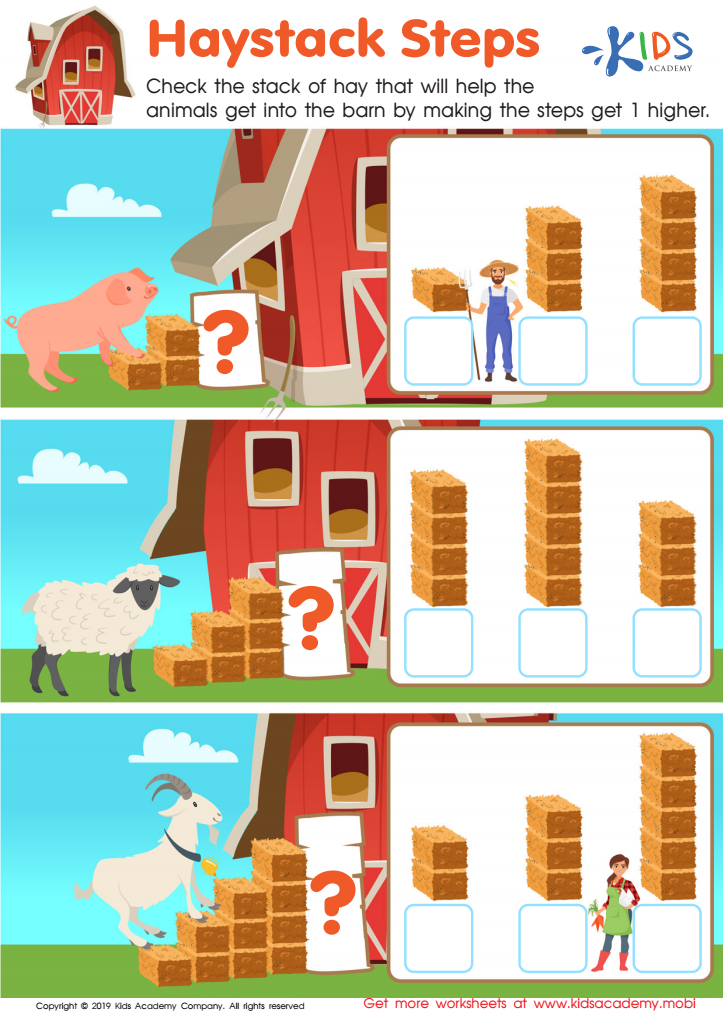
Haystack Steps Worksheet
Have your kids ever visited a farm? What activities and sights did they enjoy? Farmers are essential to our lives, growing food and providing us with dairy and eggs. In this worksheet, a farmer has made a haystack for his animals to climb into the barn. Ask your kids to add an extra layer to the stack to make the climb easier.
Haystack Steps Worksheet
Worksheet
Join Kids Academy for Free
Who is primarily going to use this learning content?








Parents and teachers should place significant importance on basic math comprehension for children ages 3-6 because it forms the foundation for future learning and problem-solving skills. At this young age, children’s brains are highly receptive to new concepts and learning experiences. Early math skills, such as counting, recognizing numbers, shapes, and patterns, train the brain to think logically and strategically. These skills are not just crucial for arithmetic tasks but facilitate cognitive development and improve critical thinking, attention to detail, and the ability to distinguish patterns—abilities that children will rely on in nearly every aspect of life.
Moreover, developing math skills early on boosts children’s confidence and fosters a positive attitude toward learning, reducing the likelihood of math anxiety in later years. Engaging with math through fun, interactive activities at this stage allows children to perceive math as enjoyable and rewarding rather than intimidating. Additionally, early math comprehension correlates strongly with later academic success across subjects, including reading and science. Hence, by prioritizing basic math understanding in the formative preschool and early elementary years, parents and teachers are not merely teaching children how to calculate; they support a well-rounded intellectual growth that will benefit children throughout their academic journey and in everyday life decisions.








