Comparing object weights Math Worksheets for Ages 3-6
3 filtered results
-
From - To
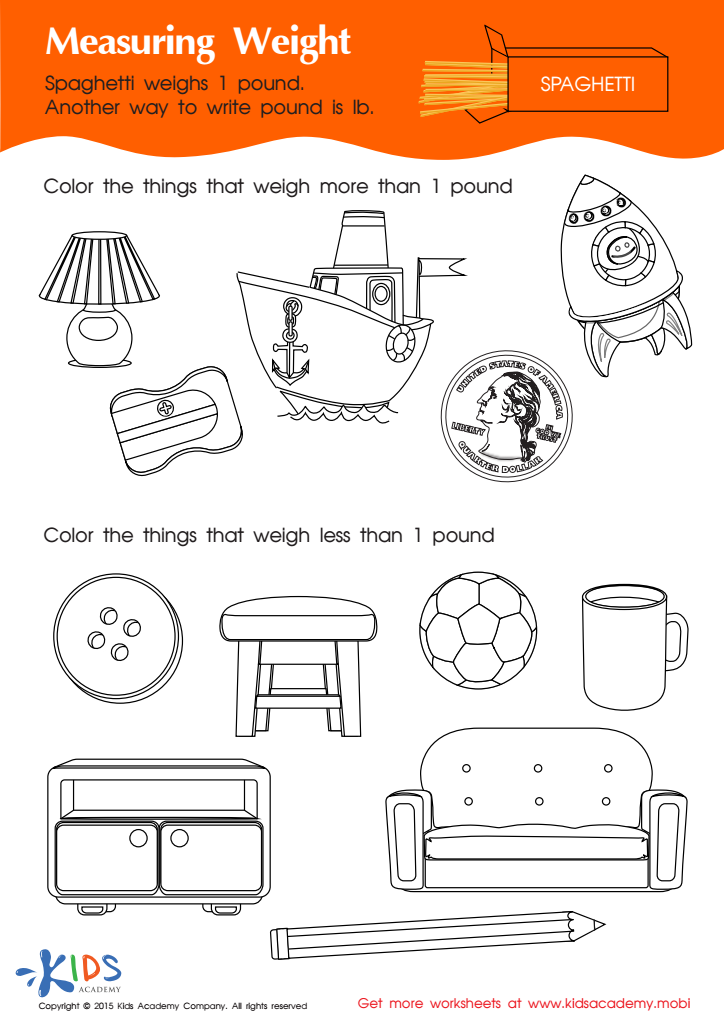
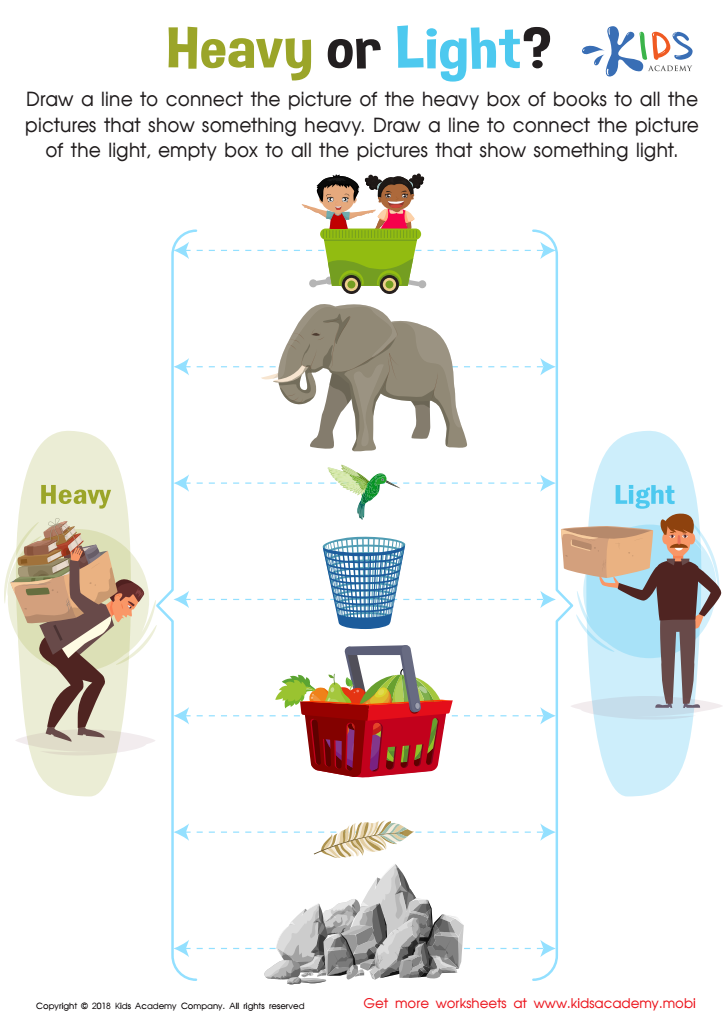
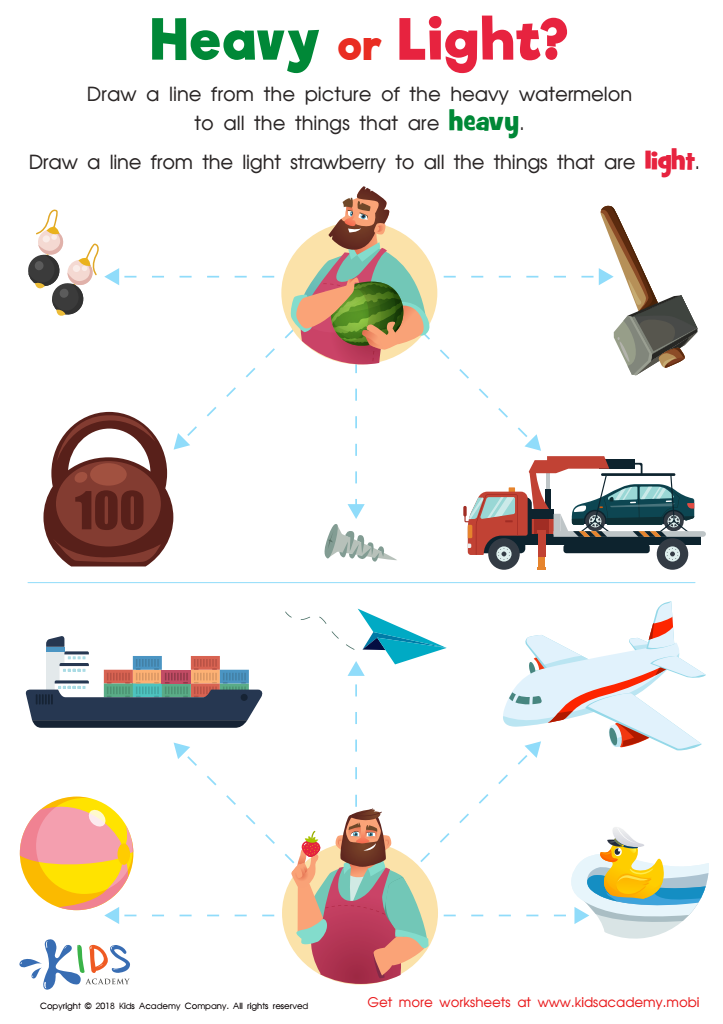
Unlock your child's mathematical potential with our engaging "Comparing Object Weights" math worksheets designed for ages 3-6! These interactive worksheets help young learners explore the concept of weight through hands-on activities and visual comparisons. Children will delight in sorting objects, identifying lighter and heavier items, and developing essential critical thinking skills. Each worksheet is crafted to make learning fun and intuitive, ensuring that kids stay engaged while grasping foundational math concepts. Ideal for home or classroom use, our resources foster independent learning and enhance early math skills in an enjoyable way. Start your child’s math journey today!
 Assign to My Students
Heavy or Light? Worksheet
Heavy or Light? Worksheet







Comparing object weights is an essential math concept for children aged 3-6, and it holds significant importance for both parents and teachers. At this developmental stage, learning about weight comparison nurtures critical thinking, encourages hands-on exploration, and lays the foundation for future mathematical understanding.
By engaging children in activities that involve comparing the weights of objects, they begin to develop their observational and analytical skills. For instance, when children lift different items and discuss which feels heavier or lighter, they are practicing basic reasoning and language skills. This not only fosters a sense of curiosity but also makes math tangible and relatable in their everyday lives.
Furthermore, comparing weights introduces foundational concepts such as measurement and number, which are pivotal as they progress in their math education. It can also contribute to their understanding of capacity, balance, and stability, encouraging them to formulate hypotheses, test outcomes, and draw conclusions.
Parents and teachers play a crucial role by creating an environment that supports this exploration. Ultimately, engaging in weight comparison enhances cognitive development, promotes problem-solving skills, and helps young children develop a positive attitude toward math, setting them on a path for lifelong learning.








