
Time recognition Math Worksheets for Ages 3-6
3 filtered results
Difficulty Level
Grade
Age
-
From - To
Subject
Activity
Standards
Discover our engaging Time Recognition Math Worksheets tailored for children ages 3-6. Our expertly designed activities teach kids to identify, read, and understand the clock, laying a strong foundation for essential time-telling skills. Filled with colorful illustrations and age-appropriate challenges, these worksheets turn learning into a fun experience. Perfect for preschoolers and kindergarteners, they help develop critical thinking and fine motor skills. Whether you are an educator or a parent, these printable resources are ideal for classroom use or home practice, ensuring young learners grasp the concept of time with ease and enjoyment.
Favorites
With answer key
Interactive
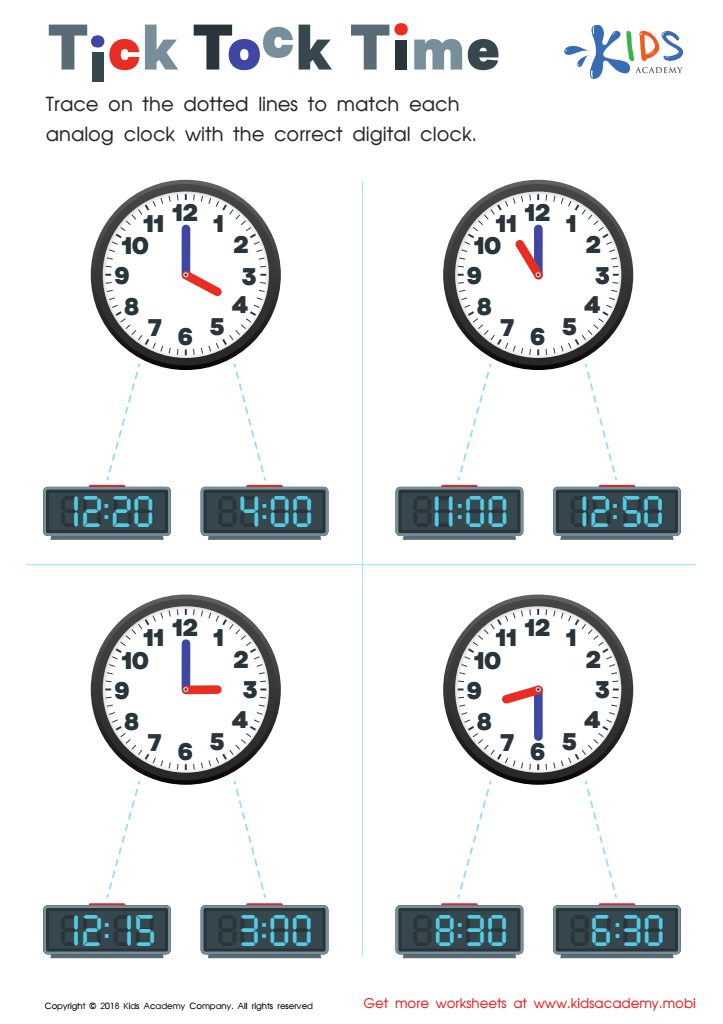
Tick Tock Time Worksheet
Trace the dotted lines on this worksheet to match analog and digital clocks! It's a great way to help your kids learn time-telling. They'll get better at converting analog to digital, and vice versa. Get your children to try it - it's a fun way to practice!
 Assign to My Students
Tick Tock Time Worksheet
Worksheet
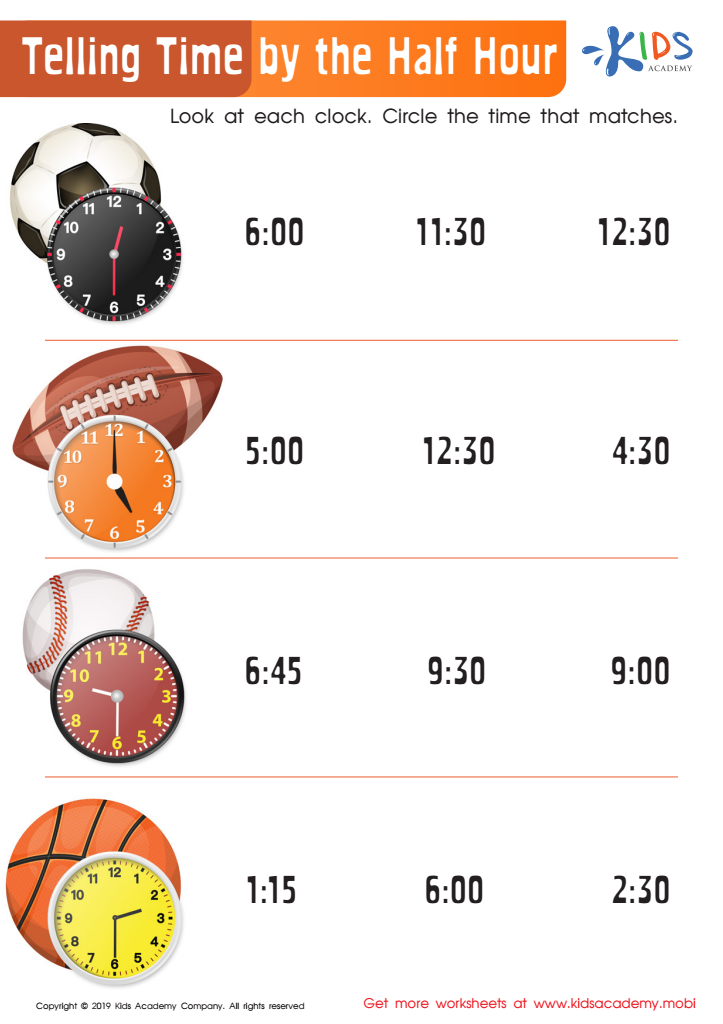
Telling Time by the Half Hour Worksheet
Teach kids to tell time with this worksheet! Four clocks are labeled with different times; help your child circle the right one. It's a great way to teach them to read analog and digital clocks, watches, and written times. Easy and fun learning!
Telling Time by the Half Hour Worksheet
Worksheet
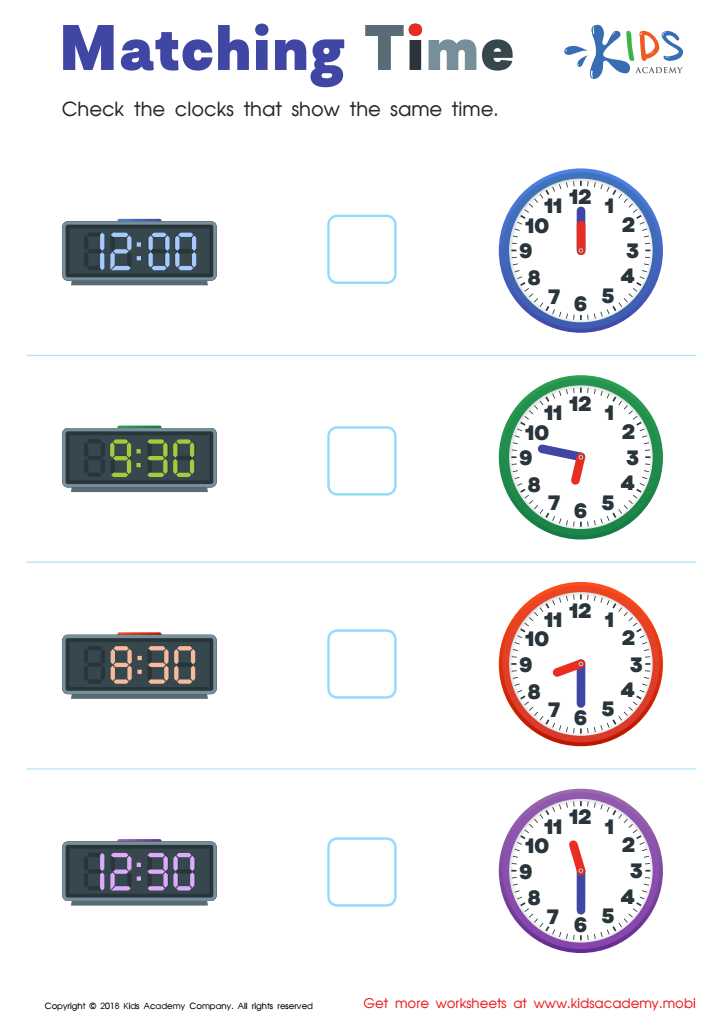
Matching Time Worksheet
Teach your child to read time in both digital and analog formats with this helpful printout. They'll identify clocks that match in both formats and check them off. Colorful and engaging, it's a great way to help your child understand the concept of time-telling.
Matching Time Worksheet
Worksheet
Join Kids Academy for Free
Who is primarily going to use this learning content?







Time recognition and early math skills are foundational elements in a child's cognitive development, particularly during the ages of 3-6. This critical period witnesses rapid brain development, which sets the stage for future learning and problem-solving abilities. Understanding and recognizing time helps children build important skills such as sequencing, predicting, time management, and understanding daily routines and order.
Parents and teachers should care about these concepts because they help children comprehend the world around them. With time recognition skills, children can better understand the concepts of "before," "after," and duration, which are integral in developing a sense of order and routine. This familiarity with the passage of time supports better adjustment to school schedules and daily tasks.
Additionally, early math skills are vital as they enhance logical reasoning and critical thinking. Research consistently shows that early math proficiency is a strong predictor of later academic success, not just in mathematics but across other subjects as well. Simple activities such as counting, understanding shapes and patterns, or recognizing numbers can turn everyday interactions into rich learning experiences.
Ultimately, by fostering time recognition and early math skills in young children, parents and teachers play a crucial role in building a strong educational foundation that supports lifelong learning and intellectual curiosity.








