Understanding fractions Math Worksheets for Ages 3-6 - Page 2
27 filtered results
-
From - To
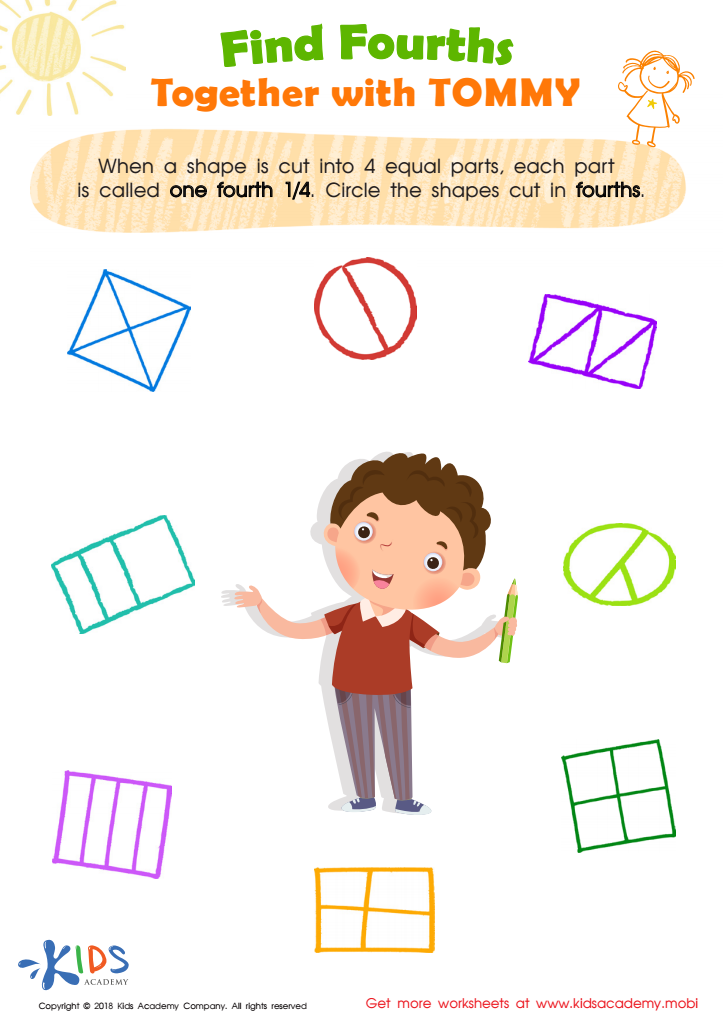
Find Fourths Together with Tommy Worksheet
 Assign to My Students
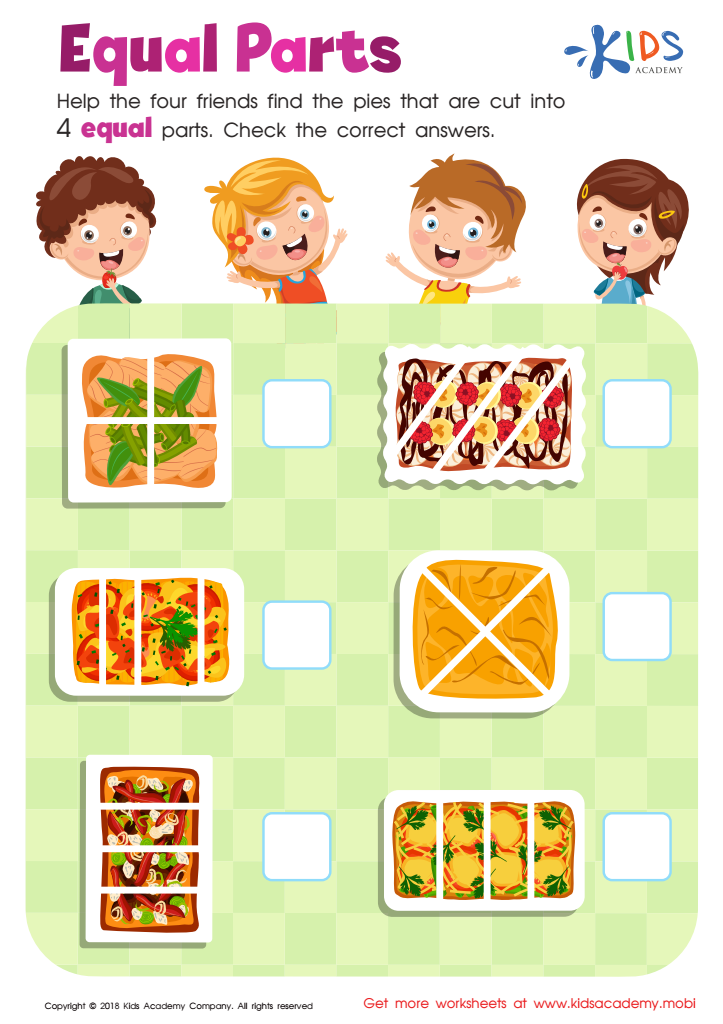
Equal Parts: Food Worksheet
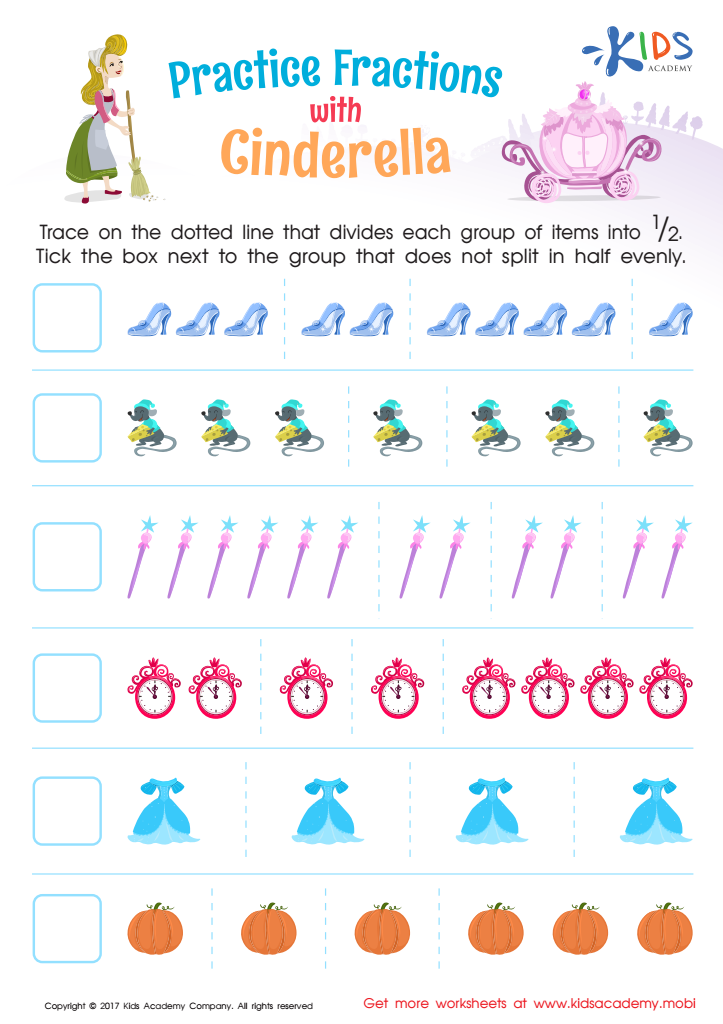
Fractions: Cinderella Printable





Understanding fractions at an early age is crucial for young learners, as it lays the foundation for future math skills. For children aged 3-6, encountering fractions through engaging, hands-on activities cultivates a deep understanding of part-whole relationships. This understanding helps them grasp essential math concepts when they progress to more advanced topics.
Parents and teachers play a vital role in facilitating this learning. By introducing fractions through everyday experiences—such as sharing snacks, dividing toys, or during art projects—they make math relatable and fun. This practical approach fosters a positive attitude towards mathematics and encourages critical thinking.
Early exposure to fractions also enhances cognitive development. It improves mathematical reasoning skills and encourages problem-solving capabilities, setting the stage for success in later math classes. Additionally, learning fractions aids in developing language skills, as children learn to express and compare quantities.
Ultimately, caring about fraction understanding at this age ensures that children build confidence and competence in mathematics, paving the way for academic success. By investing in early math education, parents and teachers equip children with the tools they need to navigate not just future math challenges, but also real-life situations that involve measurements, sharing, and divisions.








