Comparing object weights Measurement Worksheets for Ages 3-6
3 filtered results
-
From - To
Discover our engaging "Comparing Object Weights Measurement Worksheets for Ages 3-6", designed to spark early learning and curiosity in young minds. These colorful, easy-to-follow worksheets provide interactive scenarios that help children compare and understand the concept of weight. Perfect for preschoolers and kindergartners, the activities promote critical thinking as kids determine which objects are heavier or lighter. Foster foundational math skills through playful, hands-on learning that boosts confidence and cognitive development. Ideal for both classroom and home use, our expertly crafted worksheets make learning to compare weights a fun and rewarding experience for every young learner.
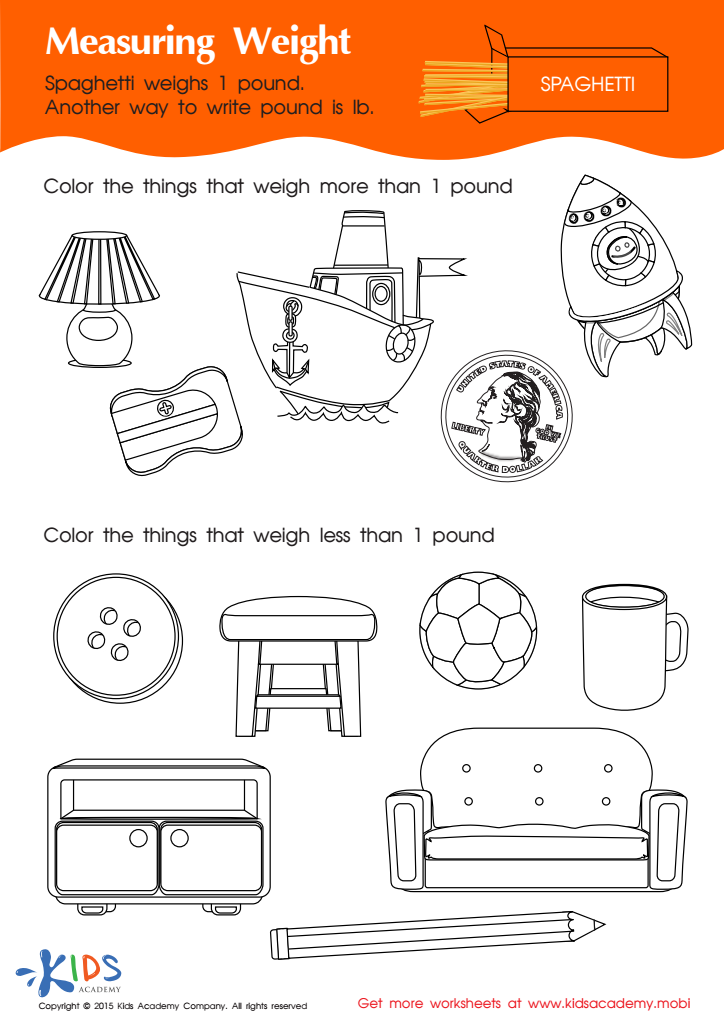
 Assign to My Students
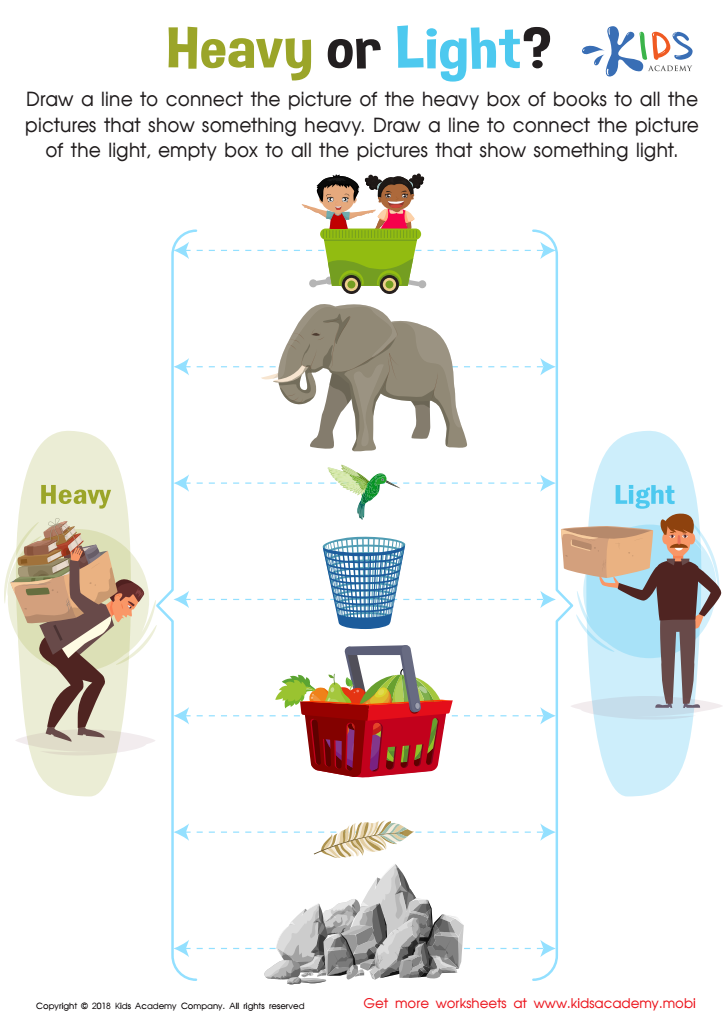
Heavy or Light? Worksheet
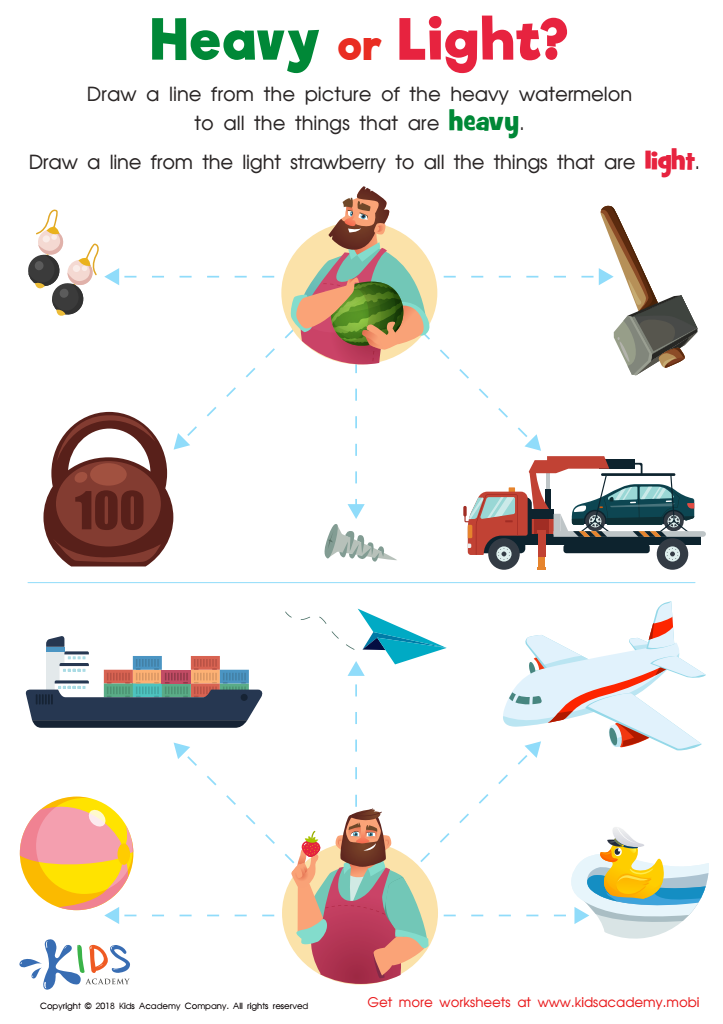
Heavy or Light? Worksheet








Understanding weight comparison is a critical component of early childhood development for children aged 3-6. At this tender age, children's cognitive abilities are rapidly expanding as they begin to explore and make sense of the world around them. Comparing object weights is an excellent hands-on activity to enhance this understanding.
Firstly, weight comparison helps develop fundamental math skills. Kids learn basic concepts like 'heavier' and 'lighter,' which are foundational for more complex mathematical operations they will encounter later. These early interactions with measurement and comparison lay the groundwork for problem-solving and analytical thinking.
Secondly, this activity nurtures sensory and motor skills. Manipulating various objects to compare weights naturally engages children’s senses and aids in fine motor development. It encourages hands-on play, an essential method through which young children learn best.
Moreover, such activities promote language development. As children describe their actions, they acquire new vocabulary and practice articulating their thoughts clearly. Words like 'balance,' 'scale,' 'equal,' and 'different' become part of their lexicon, improving both their spoken and understanding language skills.
Lastly, comparing weights fosters scientific thinking. It encourages curiosity, experimentation, and observation—core aspects of the scientific method. By engaging in these comparisons, children start asking questions and making predictions, building a foundation for future scientific inquiry.
In essence, comparing object weights is more than just a fun activity; it’s a multifaceted educational tool that promotes critical developmental skills.








