Understanding skip-counting Skip Counting Worksheets for Ages 3-6
3 filtered results
-
From - To
Explore our engaging "Understanding Skip-Counting Worksheets" tailored for ages 3-6! Designed to enhance early math skills, these worksheets introduce children to the concept of skip counting through fun, interactive activities. Young learners will practice counting by twos, fives, and tens, developing essential number sense and patterns in a playful context. Our materials support visual learning, helping kids to confidently grasp skip counting while honing fine motor skills. Perfect for parents and educators, these worksheets are a valuable resource for reinforcing foundational math concepts. Start your child's math journey today with our captivating skip-counting resources, fostering a love for numbers and learning!
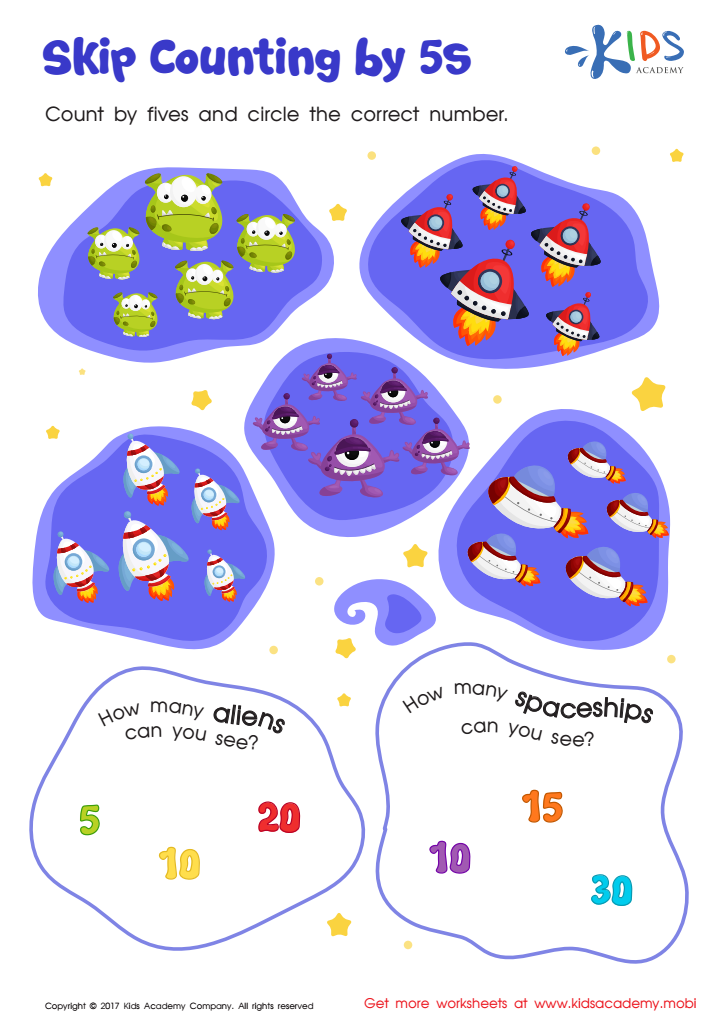
Skip Counting by 5s: Aliens and Spaceships Printable
 Assign to My Students
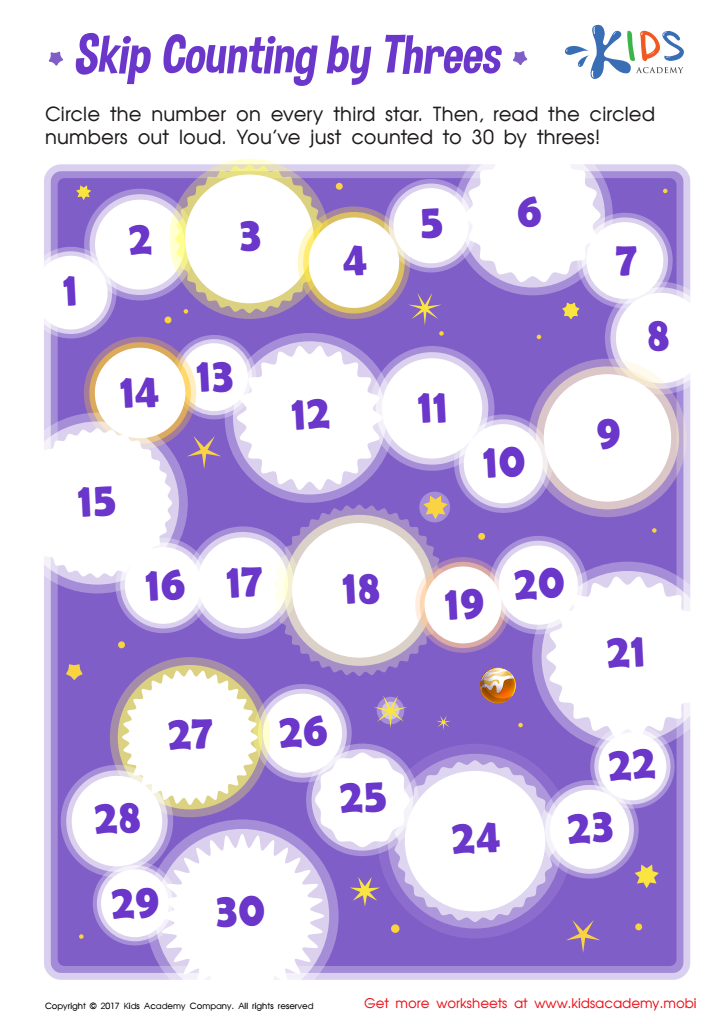
Skip Counting By Three Printable
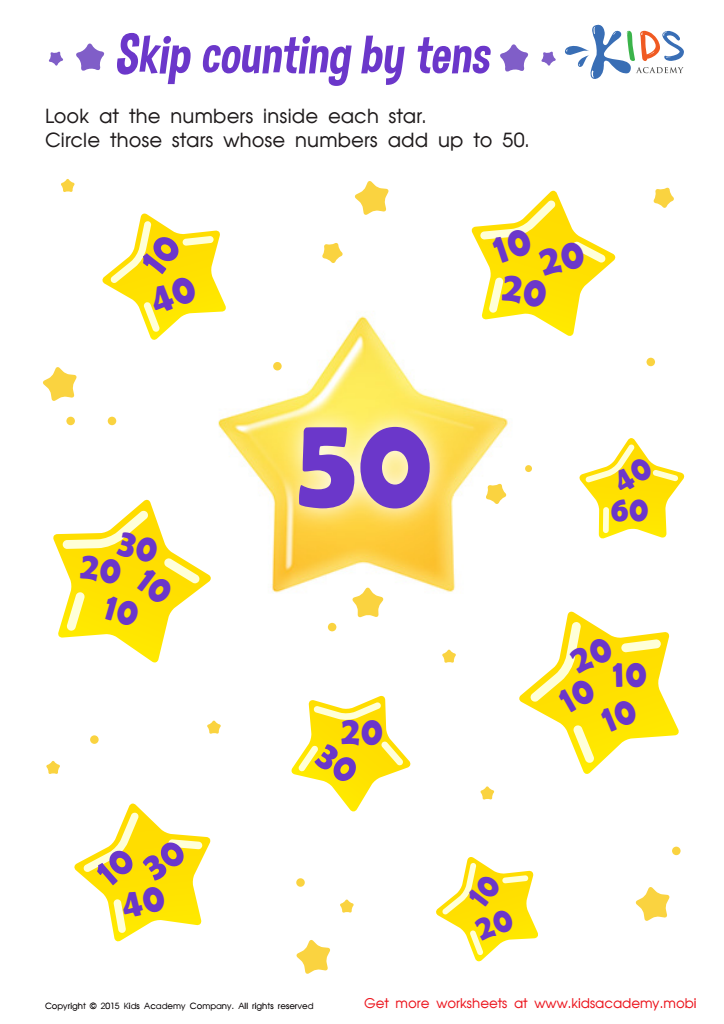
Learn Dozens: Skip Counting by Tens Printable






.jpg)

Skip-counting is a foundational math skill for young learners, typically ages 3-6, that goes beyond simple counting. It involves counting by sets of numbers, such as twos, fives, or tens, rather than one by one. Understanding skip-counting is vital for several reasons. First, it helps young children develop number sense and an understanding of patterns, which are crucial for later concepts in addition, subtraction, and multiplication.
Secondly, skip-counting fosters early problem-solving skills. When children learn to recognize patterns in numbers, they gain the tools to approach mathematical problems with strategies instead of rote memorization. This early analytical thinking lays the groundwork for their mathematical journey.
Moreover, skip-counting can enhance children’s engagement with math by making it more interactive and enjoyable. Fun songs and games that incorporate skip-counting not only make the learning process enjoyable but also motivate children to practice these skills in a relaxed, playful environment.
Lastly, early exposure to skip-counting promotes confidence in math. As children successfully grasp this skill, they are likely to develop a positive attitude toward mathematics, setting the stage for academic success in the future. Thus, parents and teachers should prioritize skip-counting within early childhood education.








