Cognitive Development Subtraction Worksheets for Ages 3-6
4 filtered results
-
From - To
Introduce subtraction to young learners aged 3-6 with our engaging Cognitive Development Subtraction Worksheets. Designed to blend fun with learning, these printable activities focus on bolstering essential math skills while fostering cognitive growth. Each worksheet offers age-appropriate subtraction problems paired with colorful visuals, making math practice enjoyable and effective. By gradually increasing in complexity, our materials help children build confidence and develop a strong numerical foundation. Ideal for use at home or in the classroom, these worksheets support critical thinking, problem-solving, and early arithmetic skills, setting the stage for future math success. Download now and watch your child's math skills flourish!
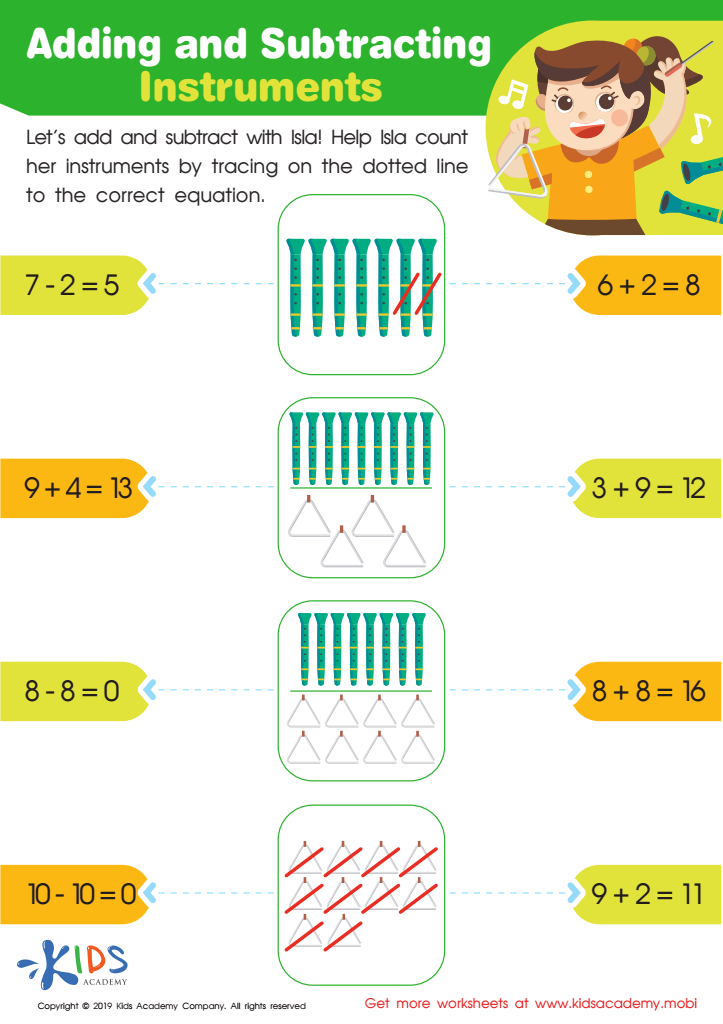
Adding and Subtracting: Instruments Worksheet
 Assign to My Students
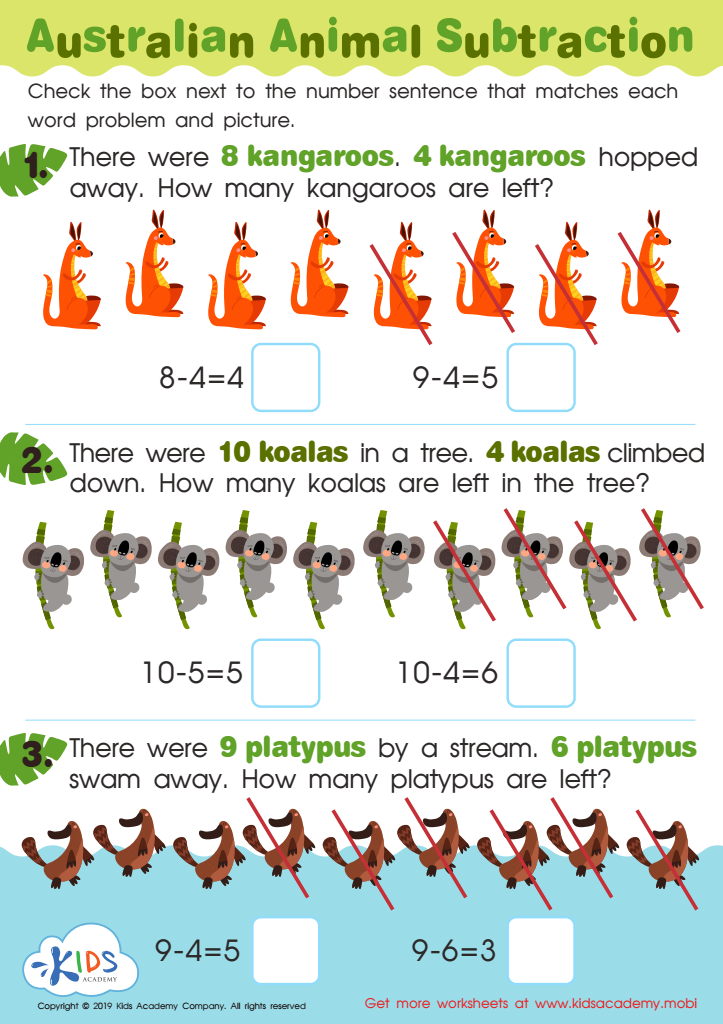
Australian Animal Subtraction Worksheet
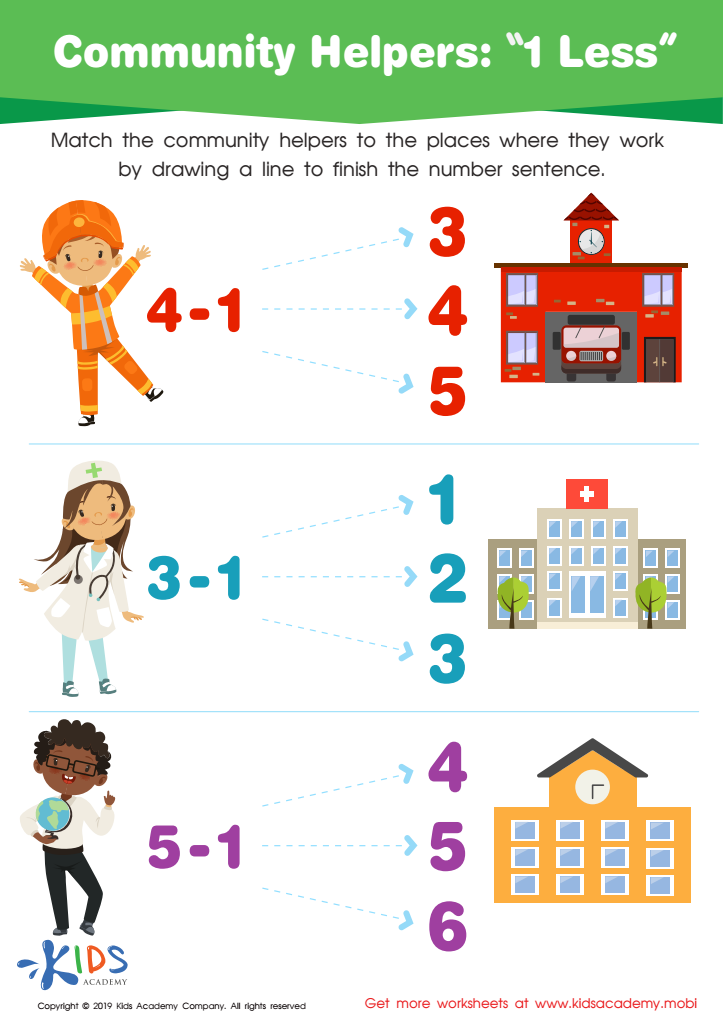
Community Helpers: 1 less Worksheet
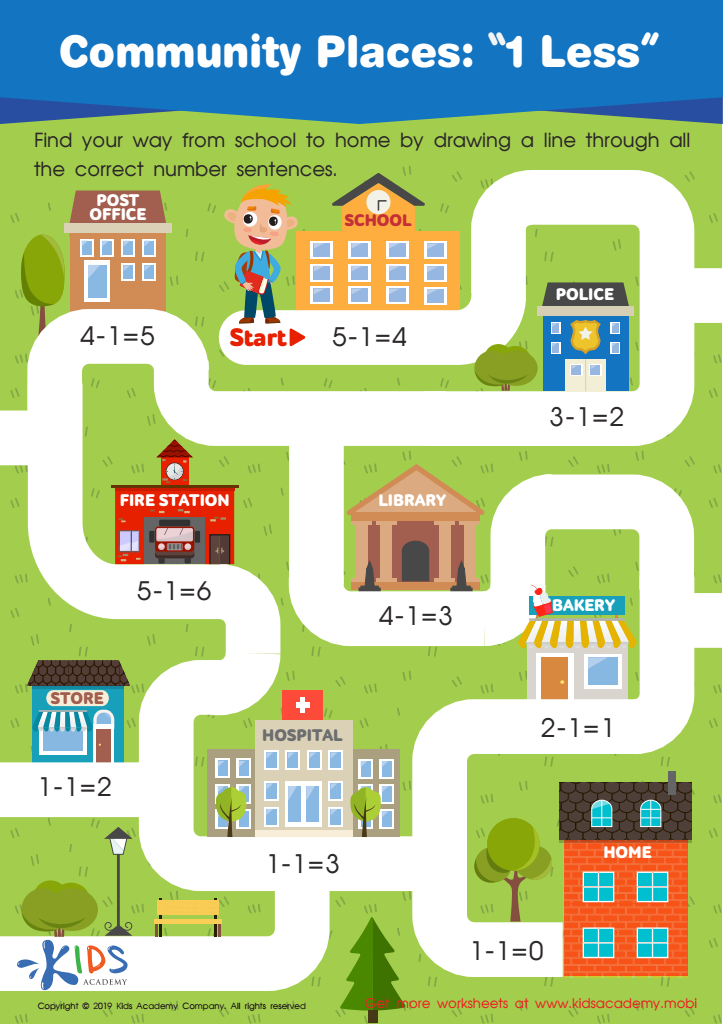
Community Places: 1 Less Worksheet








Parents and teachers should be mindful of cognitive development concerning subtraction for children aged 3-6 because it lays a critical foundation for future mathematical understanding and problem-solving skills. At this stage, children's brains are highly adaptable and responsive to learning new concepts. Introducing subtraction helps develop their numerical awareness and understanding of how numbers relate to one another.
Young learners who begin to grasp subtraction develop better critical thinking and reasoning skills. They learn to recognize patterns, understand cause and effect, and become adept at decision-making. Additionally, mastering early math skills improves their confidence, fostering a positive attitude toward more complex subjects later on.
Engaging in subtraction activities also enhances children's memory and concentration. Through tangible activities—like using fingers or physical objects to represent subtraction scenarios—children learn through experience, which resonates more profoundly at this developmental stage. It supports fine motor skills and spatial awareness as they maneuver objects during counting exercises.
On a broader social level, early exposure to subtraction encourages sharing and cooperative tasks amongst their peers, promoting social interactions and communication skills. By providing support and emphasizing the importance of cognitive development in subtraction, parents and teachers ensure a well-rounded academic and personal growth trajectory for the child.








