
Mental arithmetic Subtraction Worksheets for Ages 3-6
3 filtered results
Difficulty Level
Grade
Age
-
From - To
Subject
Activity
Standards
Boost your child's math confidence with our Mental Arithmetic Subtraction Worksheets, designed specifically for ages 3-6! These engaging and colorful worksheets help young learners practice essential subtraction skills while enhancing their mental arithmetic abilities. Each worksheet features a variety of fun and interactive exercises, tailored to keep kids interested and excited about learning. Perfect for home or classroom use, our subtraction worksheets aim to build a strong numerical foundation, improve focus, and develop problem-solving skills. Unlock your child's full math potential with Kids Academy's expertly crafted resources!
Favorites
With answer key
Interactive
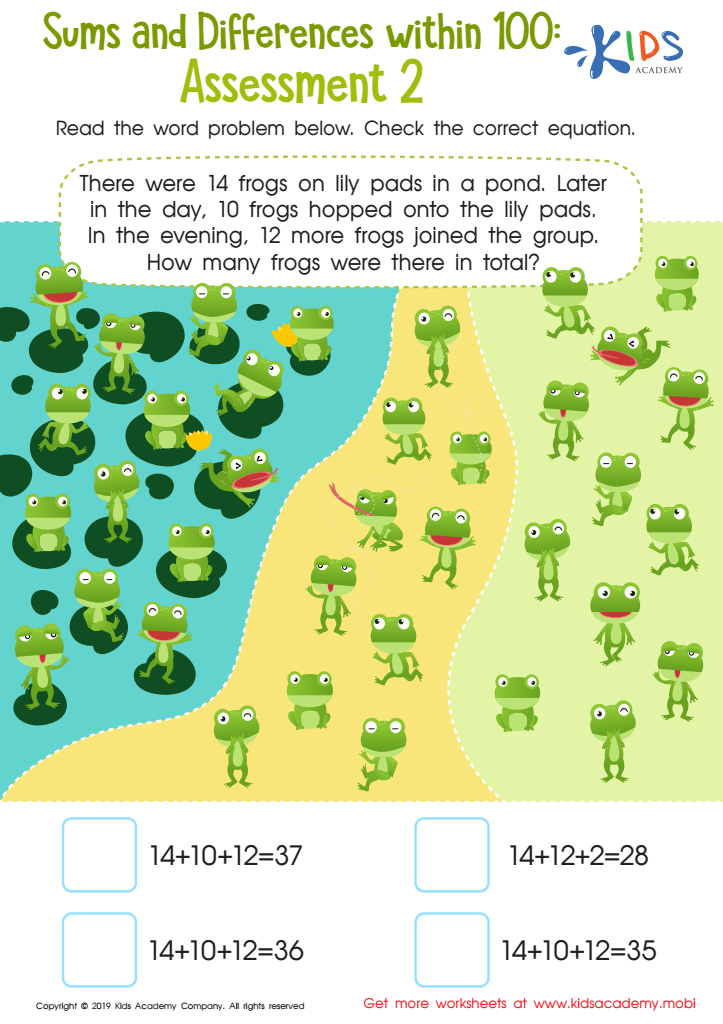
Sums and Differences Within 1 - Assessment 2 Worksheet
Help your kids practice math with these simple word problems. Read the question, discuss with them to form the equation and then check the answer. Give them a chance to sharpen their math skills!
 Assign to My Students
Sums and Differences Within 1 - Assessment 2 Worksheet
Worksheet
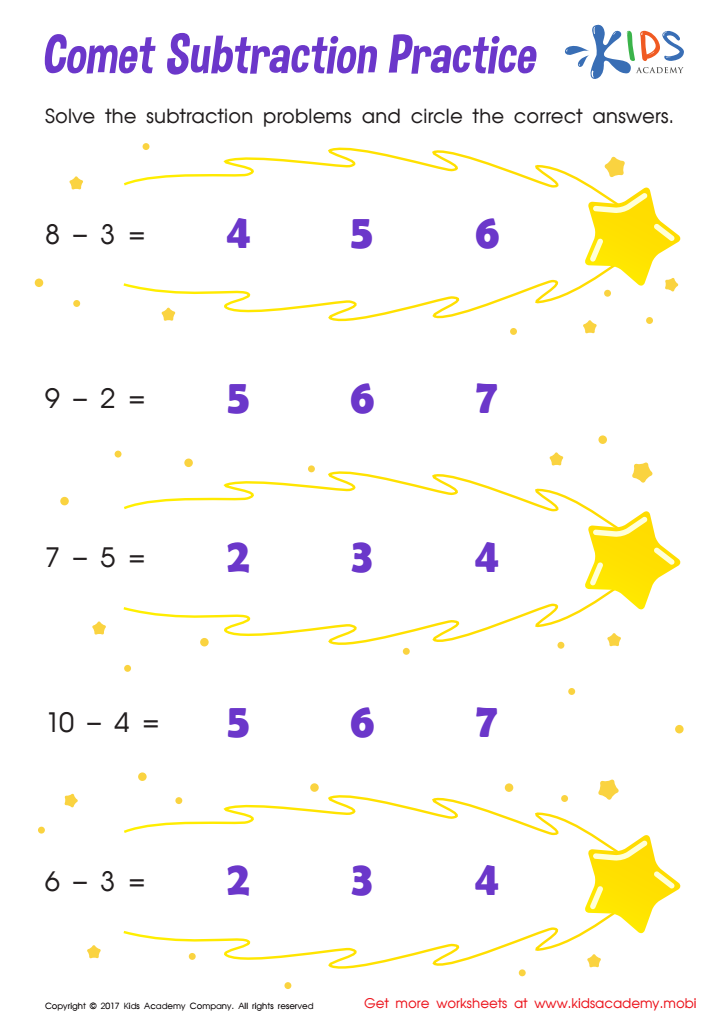
Comet Subtraction Practice Substraction Worksheet
This versatile 2nd grade math worksheet is perfect for parents wanting to get creative! It allows for practicing subtraction using different strategies, such as a number line, and provides answer choices for the child. Enjoy fun pictures in outer space to motivate your child and strengthen their problem-solving skills. It's the perfect way to learn!
Comet Subtraction Practice Substraction Worksheet
Worksheet
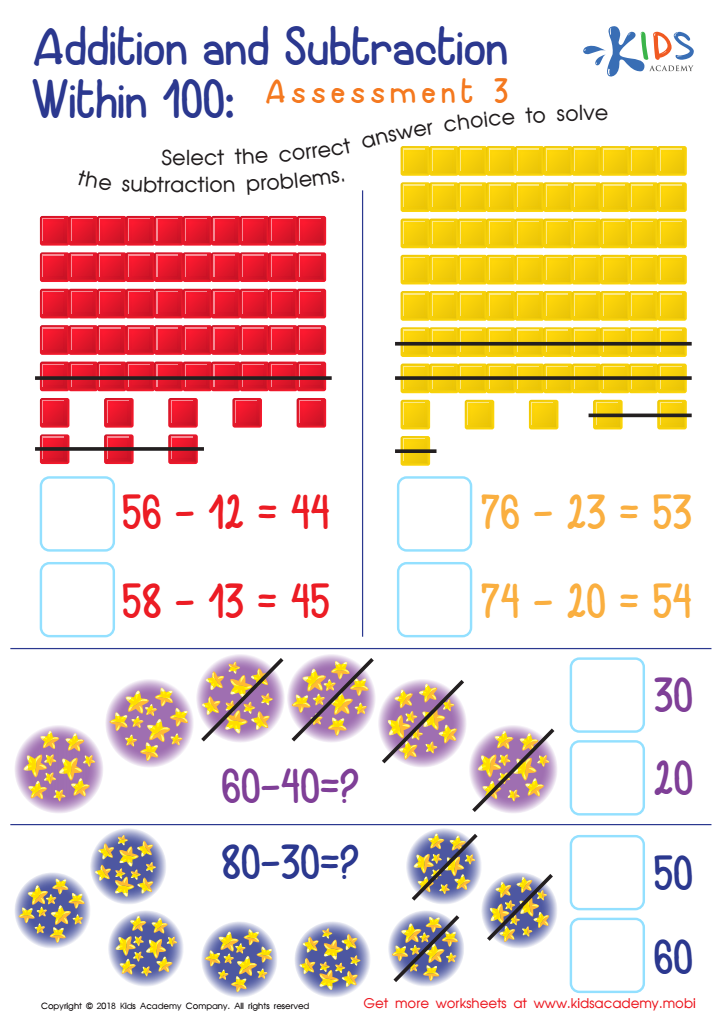
Addition and Subtraction Within 1: Assessment 3 Worksheet
Help your kids count the base ten blocks in the picture. Then, count how many have been marked off. Ask them to select the correct answer choice to solve the subtraction problems based on the blocks counted. 80 words
Addition and Subtraction Within 1: Assessment 3 Worksheet
Worksheet
Join Kids Academy for Free
Who is primarily going to use this learning content?





.jpg)


Mental arithmetic, particularly subtraction, for children ages 3-6 is a foundational skill that parents and teachers should prioritize for several key reasons. At this early stage of development, young brains are highly adaptable and capable of learning new concepts quickly. Introducing mental subtraction helps to enhance cognitive abilities such as memory, concentration, and problem-solving skills. It encourages children to think critically and independently, laying the groundwork for complex mathematical concepts that they will encounter later.
Mastering mental arithmetic also boosts confidence. When children understand how to subtract numbers without relying on physical counting or external aids, they experience a sense of accomplishment. This confidence extends beyond mathematics, positively impacting other areas of learning and social interaction.
Moreover, early mental subtraction exercises support the development of numerical literacy. This fluency means that children can better understand everyday concepts like time, money, and measurements. These are life skills that they will carry into adulthood, affecting their ability to function efficiently in society.
By caring about mental arithmetic subtraction for young children, parents and educators are investing in a strong intellectual foundation that will support future academic success and practical life skills, making this phase of early education crucial.








