Basic Addition Building Vocabulary Worksheets for Ages 3-6
3 filtered results
-
From - To
Introduce young learners to the world of math with our engaging Basic Addition Building Vocabulary Worksheets designed for ages 3-6. Perfect for early readers, these printables make learning fun with colorful visuals and simple word problems that build both math and language skills. Each worksheet helps children grasp basic addition concepts while expanding their vocabulary in relatable, easy-to-understand terms. With a variety of activities and exercises, our resources are ideal for enhancing number sense, word recognition, and cognitive development. Foster a love for learning and confidence in math with these versatile and educational worksheets from Kids Academy!
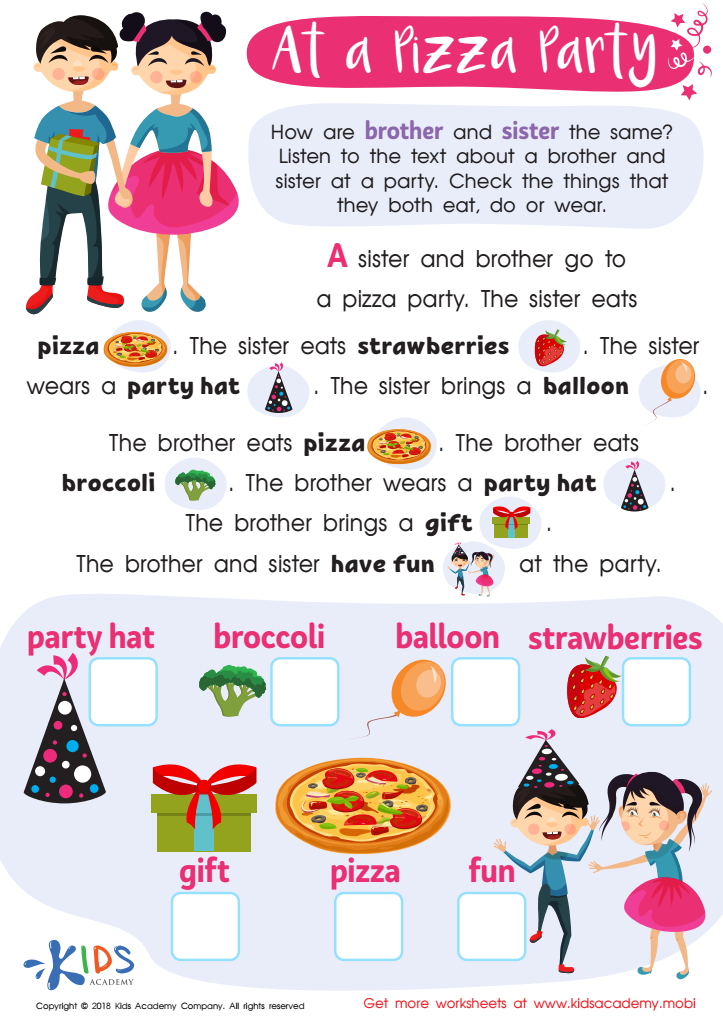
At a Pizza Party Worksheet
 Assign to My Students











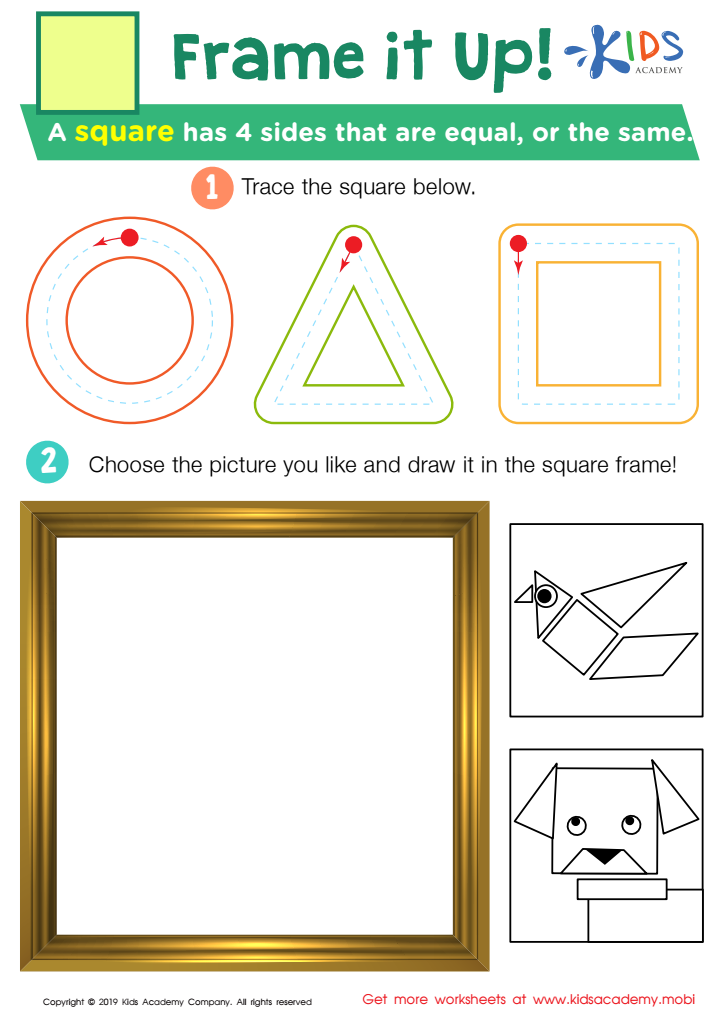
Frame it Up Worksheet








Understanding basic addition and the vocabulary associated with it is crucial for children aged 3-6 because it sets the foundation for future mathematical learning. During these early years, children's minds are exceptionally malleable, making it an ideal time to introduce fundamental concepts in simple, relatable terms. When parents and teachers emphasize basic addition building vocabulary, such as "add," "plus," "total," and "sum," they empower children to articulate mathematical ideas more clearly, assisting in cognitive and language development.
Moreover, establishing a solid mathematical vocabulary helps children build confidence in their numerical skills. This confidence encourages them to engage more deeply with mathematical problems as they continue their education. Understanding these terms also aids in developing problem-solving skills early on, as children learn to identify and apply addition in various scenarios, from counting toys or fruits to playing games that involve simple sums.
Finally, early exposure to basic mathematical vocabulary can foster a positive attitude towards mathematics. When children grasp these foundational concepts with ease, they are likely to approach more complex mathematical problems with enthusiasm rather than apprehension. Hence, giving attention to basic addition vocabulary isn't just about learning to add—it's about nurturing a lifelong love for learning and critical thinking.








