
Sight word recognition Building Vocabulary Worksheets for Ages 3-6
8 filtered results
Difficulty Level
Grade
Age
-
From - To
Subject
Activity
Standards
Unlock your child's reading potential with our "Sight Word Recognition Building Vocabulary Worksheets" designed for ages 3-6. These engaging, printable worksheets focus on essential sight words, aiming to improve literacy skills through fun and interactive activities. By practicing sight word recognition, children enhance their reading fluency and confidence. Our carefully crafted exercises include matching, coloring, and simple sentences that captivate young learners while fostering a love for reading. Ideal for both classroom and home use, these worksheets make vocabulary building accessible and enjoyable. Start your child's journey towards literacy success and watch their skills soar with our innovative resources!
Favorites
With answer key
Interactive
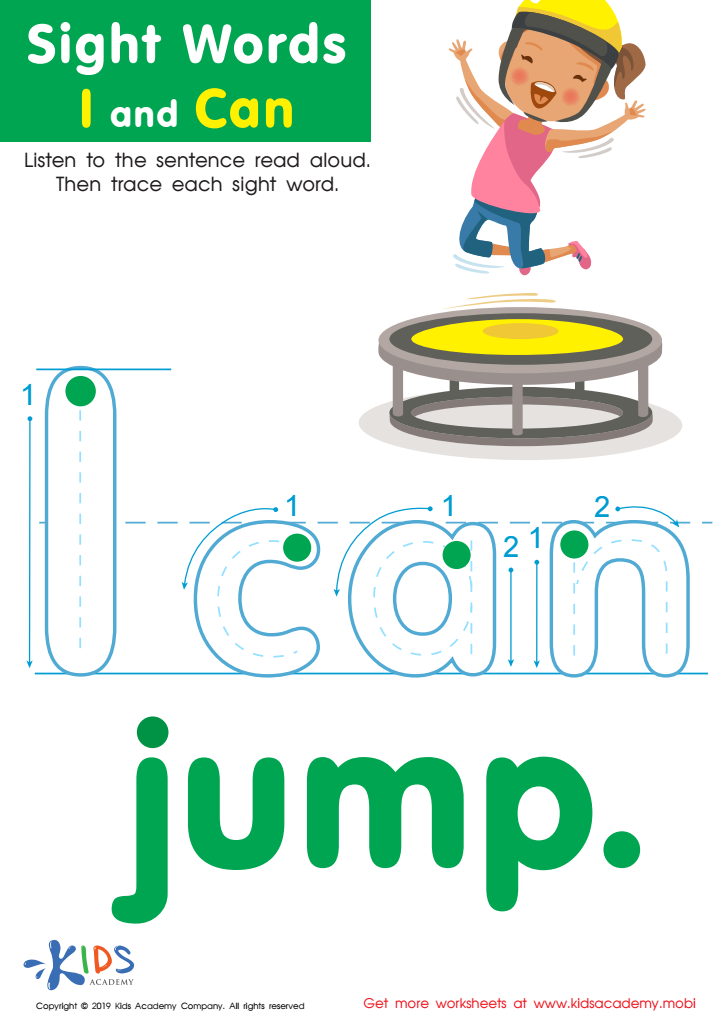
Sight Words I Can Worksheet
Emerging readers can build confidence and improve reading skills with this free worksheet! They'll trace the lines to complete the "I Can" phrase then use the picture clue to decode the last word. This activity encourages reading and writing, and is empowering for kids as they explore all the things they can do!
 Assign to My Students
Sight Words I Can Worksheet
Worksheet











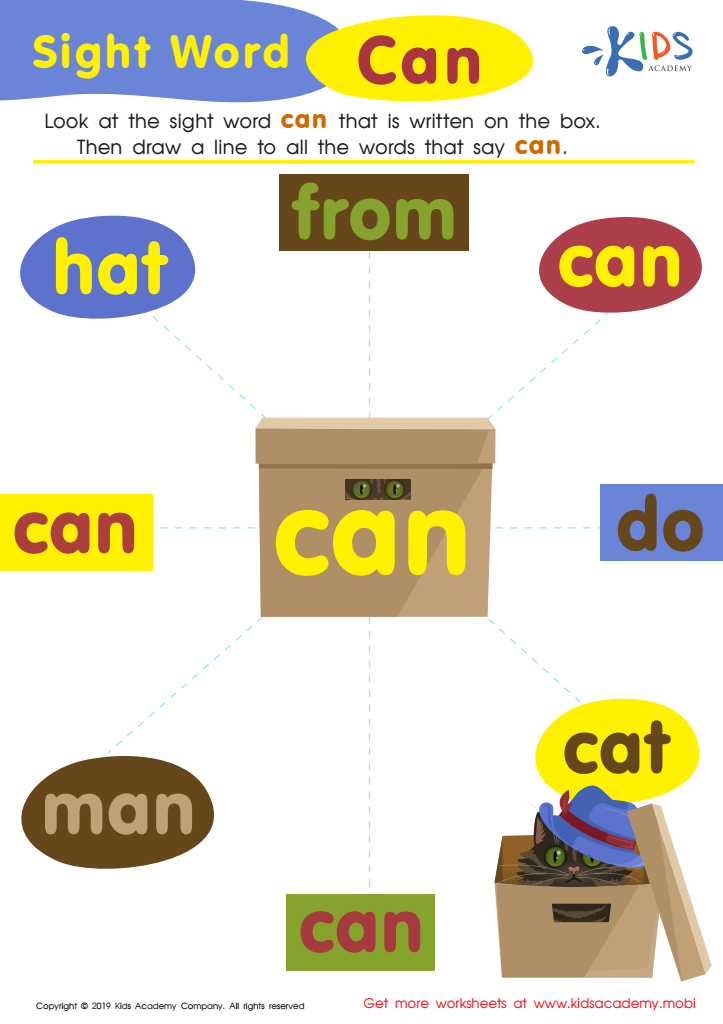
Sight Word Can Worksheet
Learning sight words is key for strong readers. Kids with large word bases find reading simpler, since they don't have to decode words they already know. This free worksheet uses the word 'can' to help kids improve their visual discrimination and refine motor skills, while providing pictures to help them along.
Sight Word Can Worksheet
Worksheet
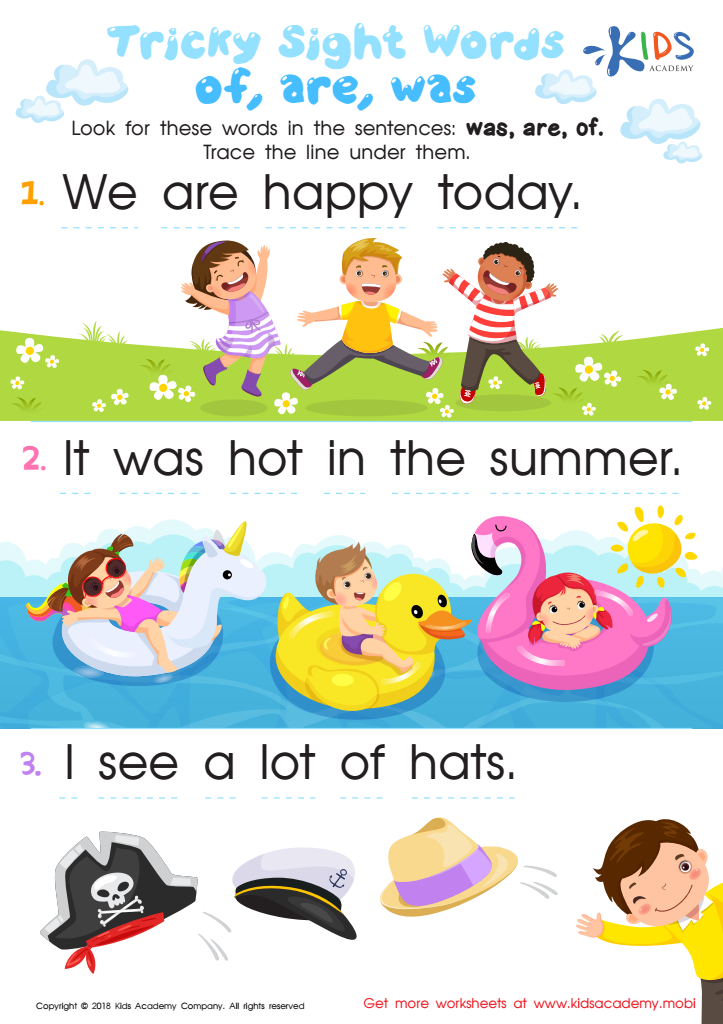
Tricky Sight Words Worksheet
Read the sentences to your students. Ask them to spot words 'of, are, was' and trace the line under them. It could be challenging for them to use them correctly or understand their meanings. Provide help where needed.
Tricky Sight Words Worksheet
Worksheet
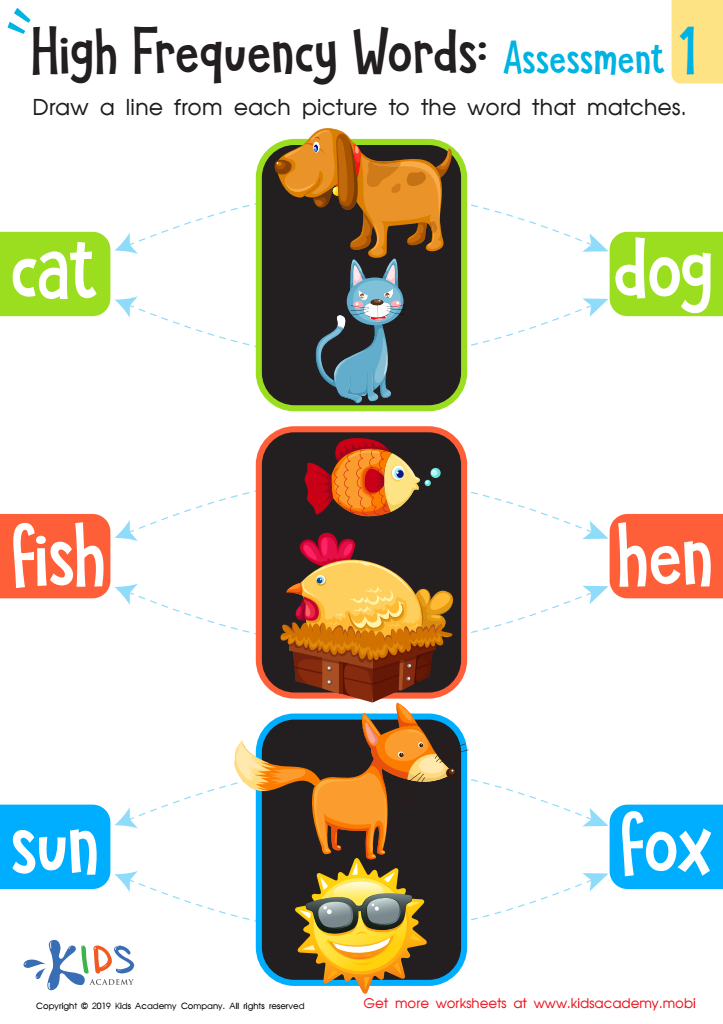
High Frequency Words: Assessment 1 Worksheet
Emergent readers need to know high-frequency words accurately and quickly to develop fluency. Connecting these words to colorful, fun pictures helps reading prosody. This assessment worksheet uses traceable lines to help learners match pictures to words.
High Frequency Words: Assessment 1 Worksheet
Worksheet
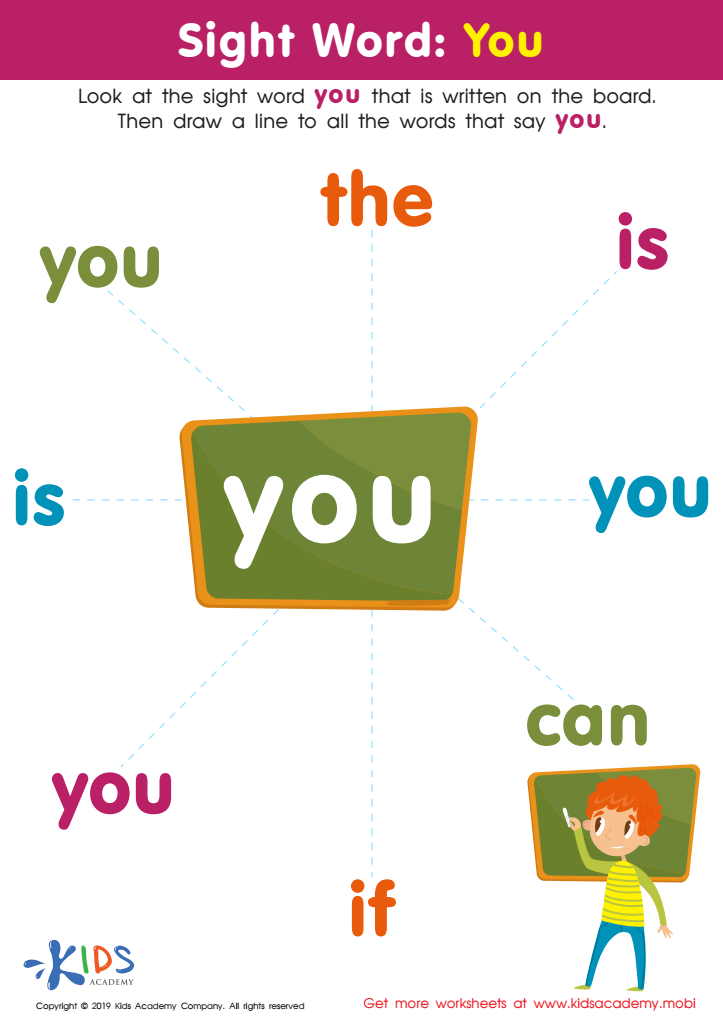
Sight Word You Worksheet
This free worksheet features the word 'you' and helps beginning readers practice visual-discriminatory skills. Using traceable lines and different colored words, it's an easy way to reinforce their identification of the word and build fluency.
Sight Word You Worksheet
Worksheet
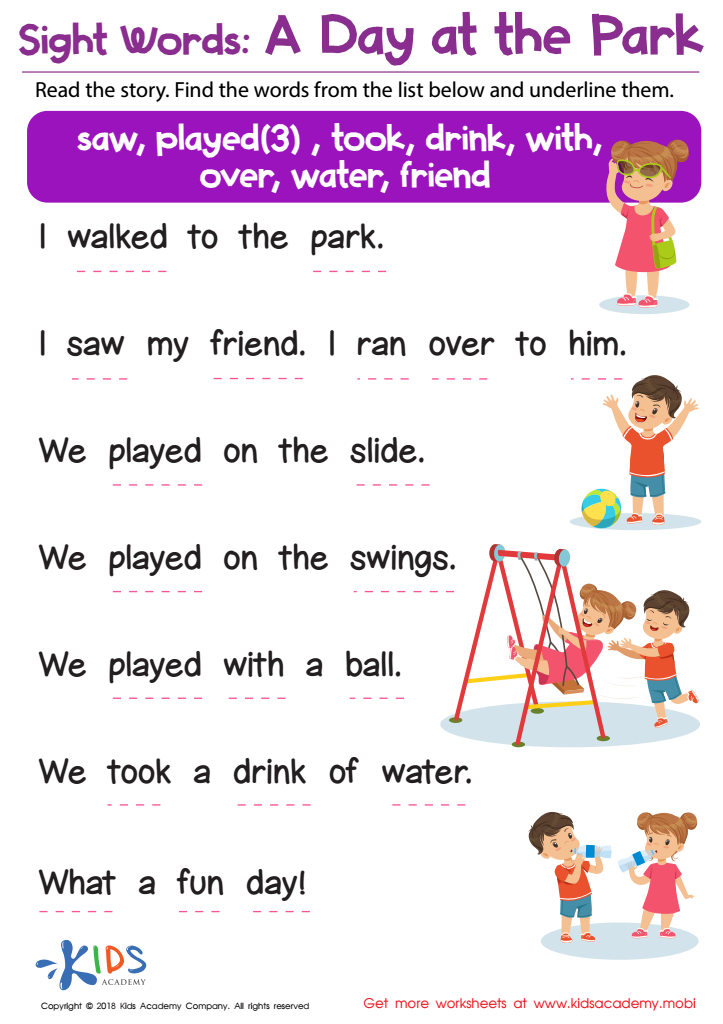
Sight Words: A Day at the Park Worksheet
This worksheet offers kids practice reading sight words in a story. With picture clues and repetitive wording, they'll work with words that can't be sounded out to reinforce their learning. This is an important step in the reading process that helps kids become more confident readers.
Sight Words: A Day at the Park Worksheet
Worksheet
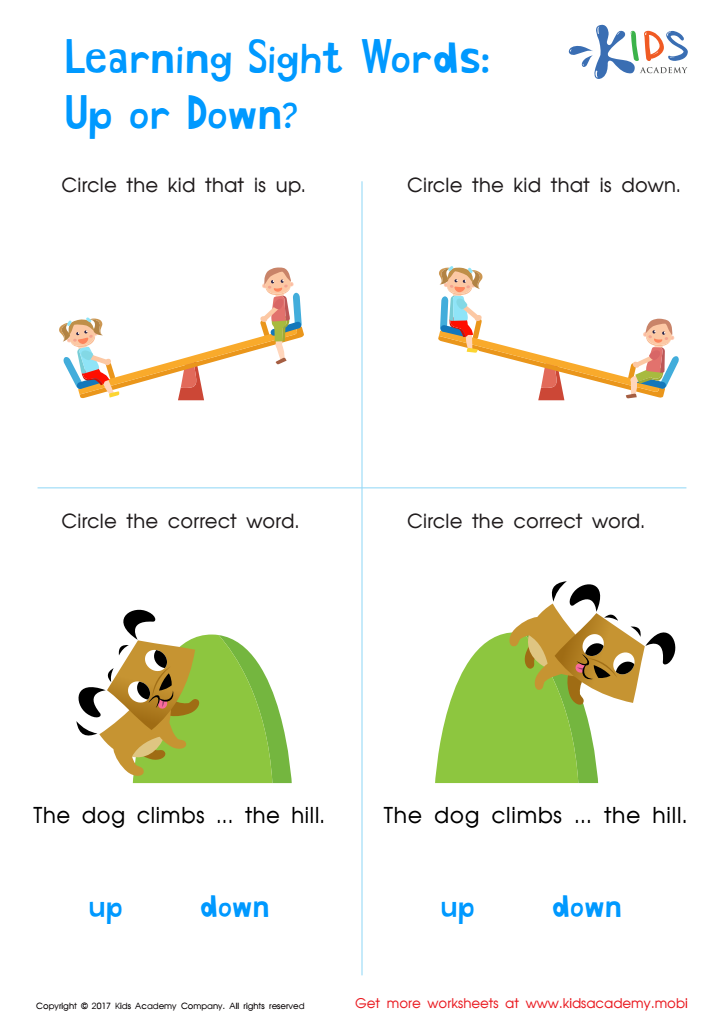
Up or Down Printable Sight Words Worksheet
Help your child identify up and down in print with this sight words worksheet. It has simple sentences, vibrant images and easy-to-read language that allow your little learner to practice these essential sight words. Perfect for early readers!
Help your early reader identify and read up and down with this sight words worksheet. It provides simple sentences, clear language and vibrant images to help them practice these essential sight words. Perfect for toddlers!
Up or Down Printable Sight Words Worksheet
Worksheet
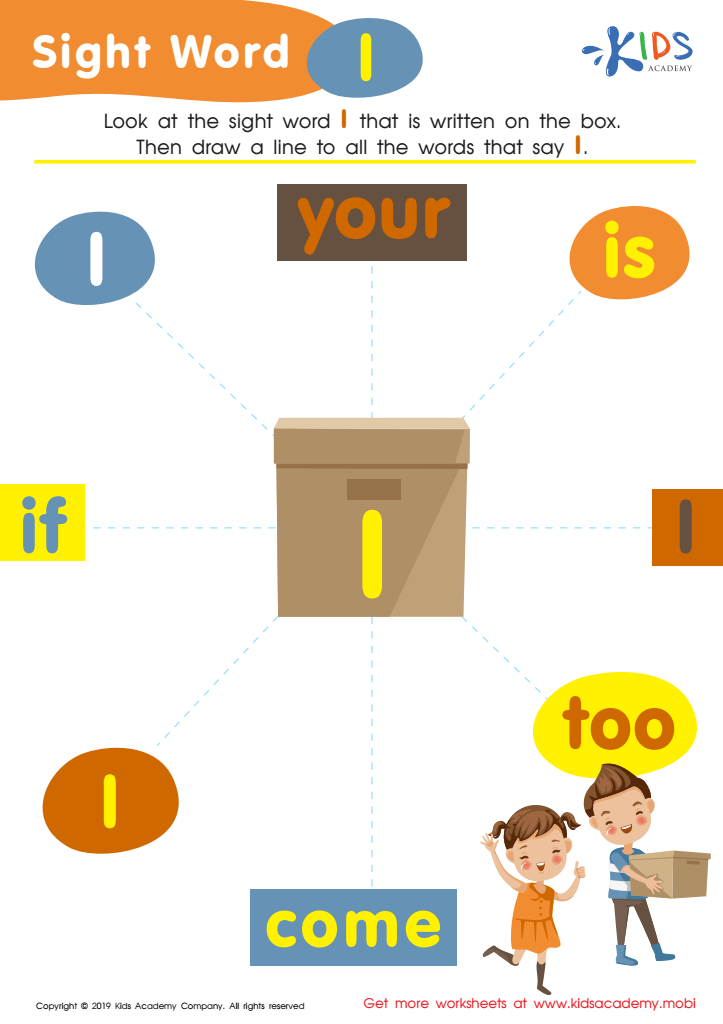
Sight Word I Worksheet
Recognizing the sight word 'I' is harder than it looks! When kids are learning to read, they understand 'I' by its sound, not as a word. This free worksheet gives them practice with 'I', letting them work on their fine motor skills too. They'll join 'I' to shapes containing the same letter. It's a great way to give kids confidence in their reading skills!
Sight Word I Worksheet
Worksheet
Join Kids Academy for Free
Who is primarily going to use this learning content?








Sight word recognition and vocabulary building are crucial for children's early literacy development, particularly for ages 3-6. At this formative stage, children are like sponges, absorbing information that sets the foundation for future learning.
When children recognize sight words—common words they can identify instantly—they experience enhanced reading fluency, leading to improved comprehension. This skill not only makes reading more enjoyable but also encourages children to engage with books more frequently, fostering a lifelong love of literature.
Building vocabulary is equally important as it equips children with the words needed to express themselves and understand the world around them. A rich vocabulary enhances conversation skills and aids in various developmental areas, including social interactions, emotional expression, and critical thinking.
For parents and teachers, investing time in activities that promote sight word recognition and vocabulary growth can lead to significant educational outcomes. Strategies may include reading aloud, playing word games, or integrating vocabulary words into daily routines. The early introduction to these concepts helps create confident readers who are more prepared for later academic challenges, leading to better educational performance in years to come. In essence, nurturing these skills cultivates not just proficient readers but enthusiastic learners for life.








