
Vocabulary development Building Vocabulary Worksheets for Ages 3-6
6 filtered results
Difficulty Level
Grade
Age
-
From - To
Subject
Activity
Standards
Welcome to our Vocabulary Development Worksheets for ages 3-6! Designed to foster essential literacy skills, these engaging worksheets help young learners expand their vocabulary through fun activities. Children will explore words, their meanings, and contexts as they participate in visual exercises, matching games, and interactive tasks. Our activities are crafted to ignite curiosity and encourage creativity while developing language skills critical for early reading success. Parents and educators can easily integrate these worksheets into everyday learning, making vocabulary-building an enjoyable experience. Dive into our collection today and help your little ones enhance their language skills in a playful, meaningful way!
Favorites
With answer key
Interactive
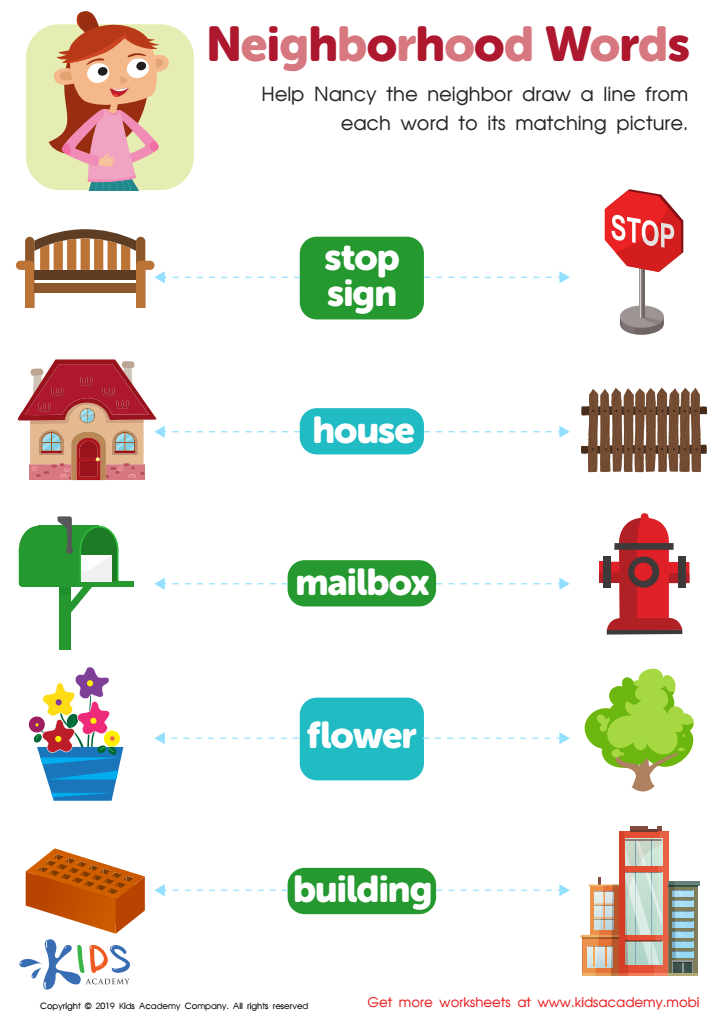
Neighborhood Words Worksheet
Help preschoolers develop life skills and familiarize them with words and concepts with this worksheet! It'll also boost their fine motor skills as they trace lines to match pictures with the words. They'll learn new words and feel more confident in their reading.
 Assign to My Students
Neighborhood Words Worksheet
Worksheet











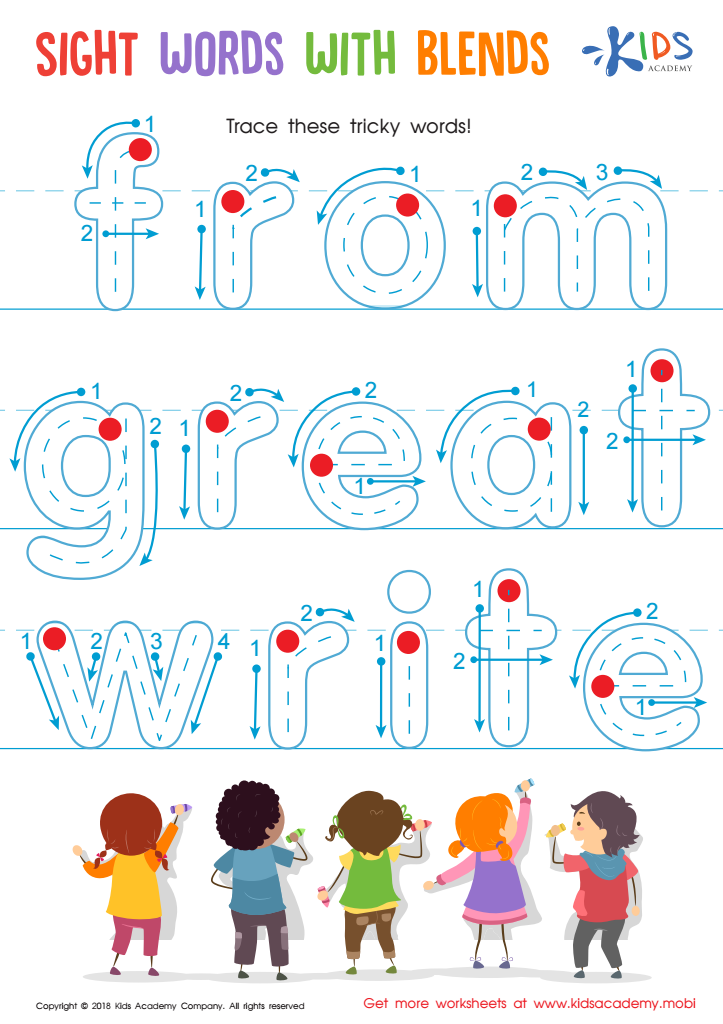
Sight Words with Blends Worksheet
This free PDF lets your children trace and write sight words with tricky blends. The guide numbers help them start from the top, building fine motor skills and enhancing sight word vocab. It's a great way to give your kids a solid foundation for reading!
Sight Words with Blends Worksheet
Worksheet
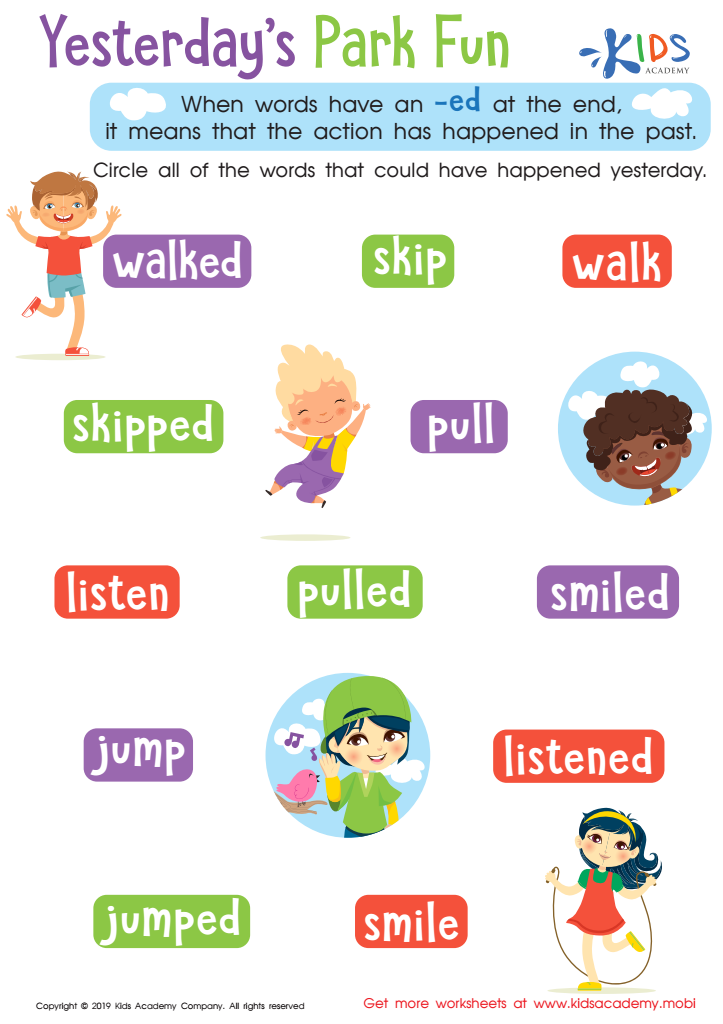
Yesterday's Park Fun Worksheet
Add -ed to the end of words and you get a word that happened in the past. This PDF helps your child understand this concept by giving practice examples: walk, pull, jump and smile can all be transformed into the past tense with a -ed suffix. They'll circle all the words that happened yesterday and learn about the past tense.
Yesterday's Park Fun Worksheet
Worksheet
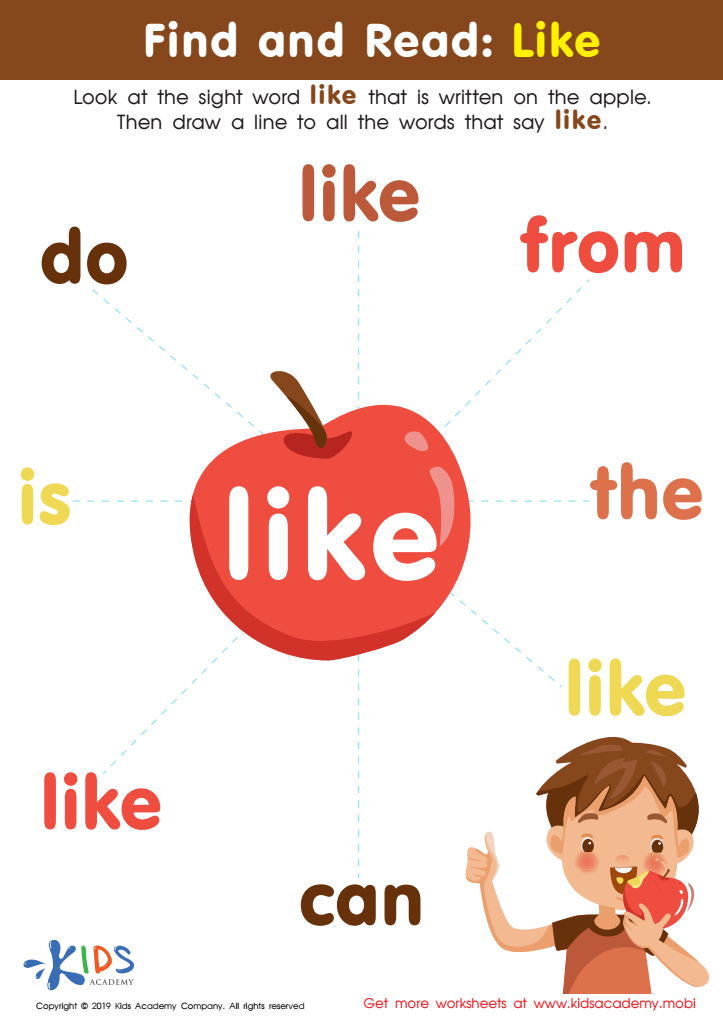
Find and Read: Like Worksheet
Reading starts with learning sight words. This free PDF worksheet helps kids learn the word "like" in various ways. It encourages their visual discrimination skills with its colorful design and traceable lines. It's a great way to help them recognize and differentiate this common sight word from other words that look similar.
Find and Read: Like Worksheet
Worksheet
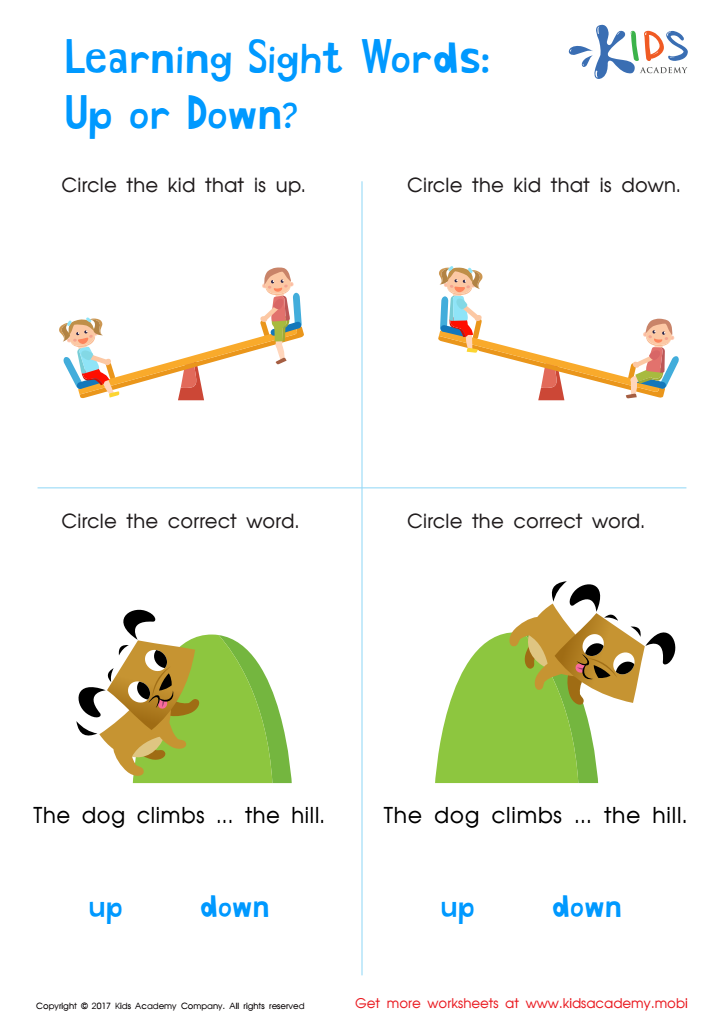
Up or Down Printable Sight Words Worksheet
Help your child identify up and down in print with this sight words worksheet. It has simple sentences, vibrant images and easy-to-read language that allow your little learner to practice these essential sight words. Perfect for early readers!
Help your early reader identify and read up and down with this sight words worksheet. It provides simple sentences, clear language and vibrant images to help them practice these essential sight words. Perfect for toddlers!
Up or Down Printable Sight Words Worksheet
Worksheet
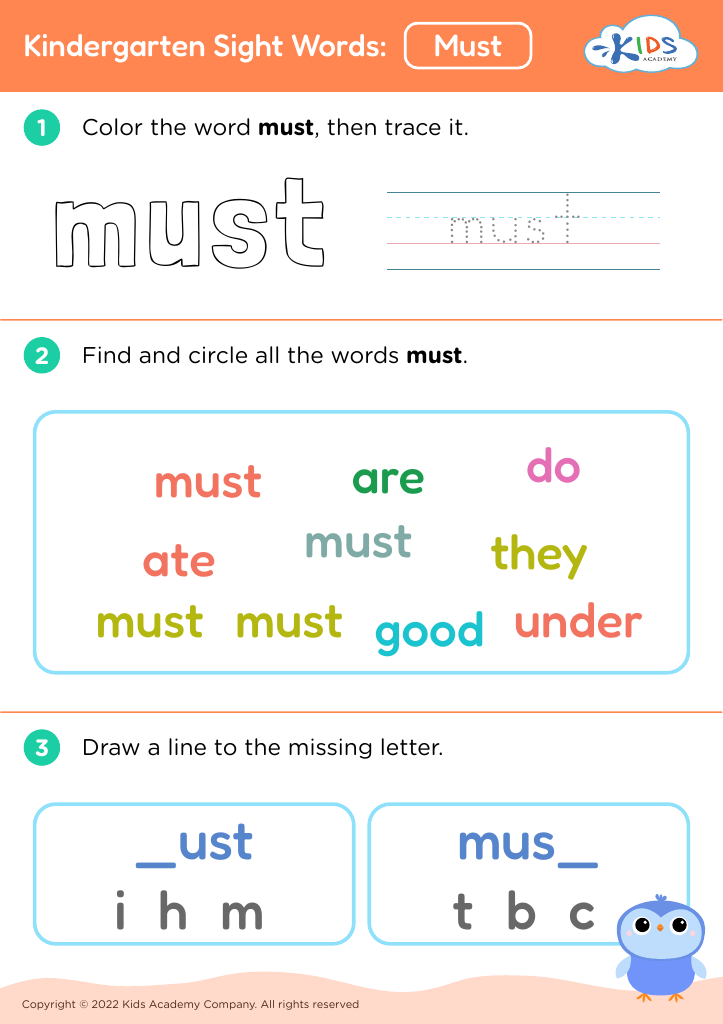
Join Kids Academy for Free
Who is primarily going to use this learning content?








Vocabulary development for children ages 3-6 is crucial for their overall language skills, cognitive growth, and academic success. At this stage, children's brains are like sponges, absorbing language patterns and meanings that will form the foundation for future communication skills. A rich vocabulary enhances their ability to express thoughts and emotions, fostering effective social interactions and relationships.
By building a robust vocabulary early, parents and teachers equip children with the tools needed to comprehend instruction, participate in discussions, and engage in storytelling, enhancing their literacy development. Vocabulary is directly linked to reading comprehension; children with a strong vocabulary are more likely to understand what they read and articulate their ideas clearly.
Additionally, vocabulary learning aids cognitive development, as it encourages critical thinking and problem-solving skills. Engaging children in conversations, reading age-appropriate books, and exposing them to diverse words in context creates a rich language environment. This proactive approach ultimately cultivates a love for learning and empowers children to thrive academically and socially, setting a solid foundation for lifelong learning and success. Prioritizing vocabulary development is, therefore, an investment in a child's future.








