Vocabulary expansion Building Vocabulary Worksheets for Ages 3-6 - Page 2
27 filtered results
-
From - To
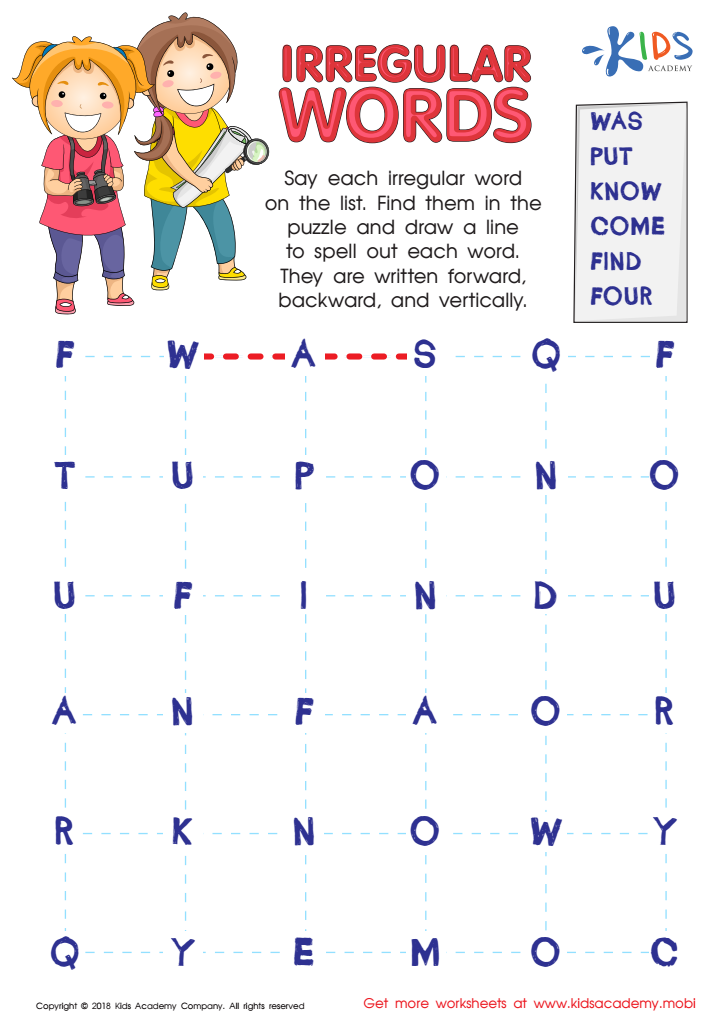
Irregular Words Worksheet
 Assign to My Students











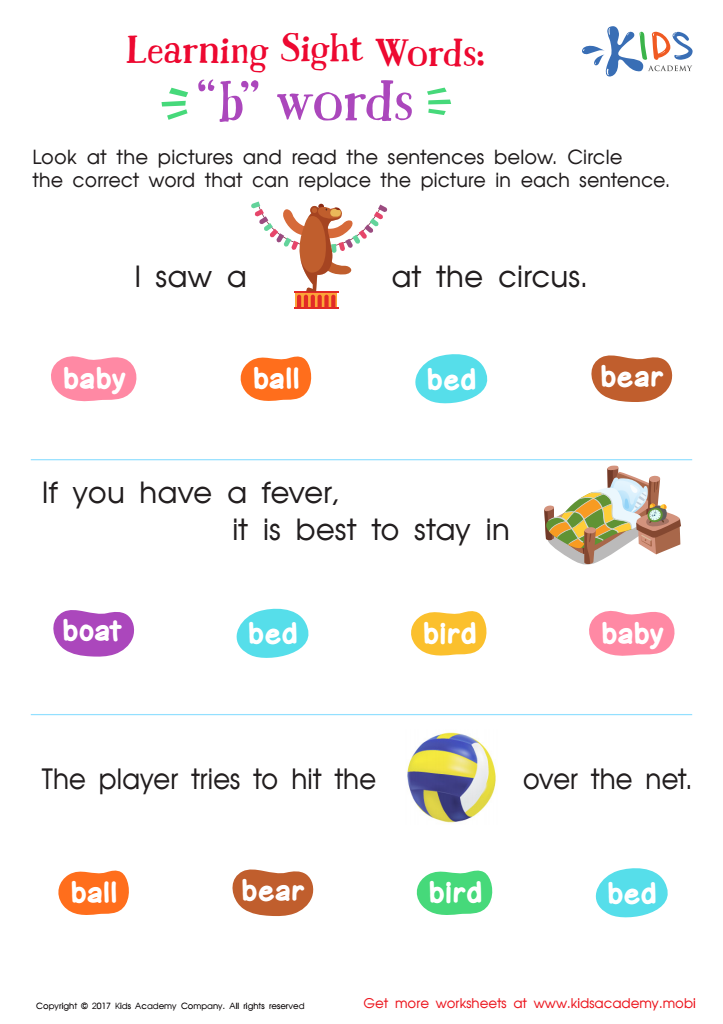
"B" Words Printable Sight Words Worksheet
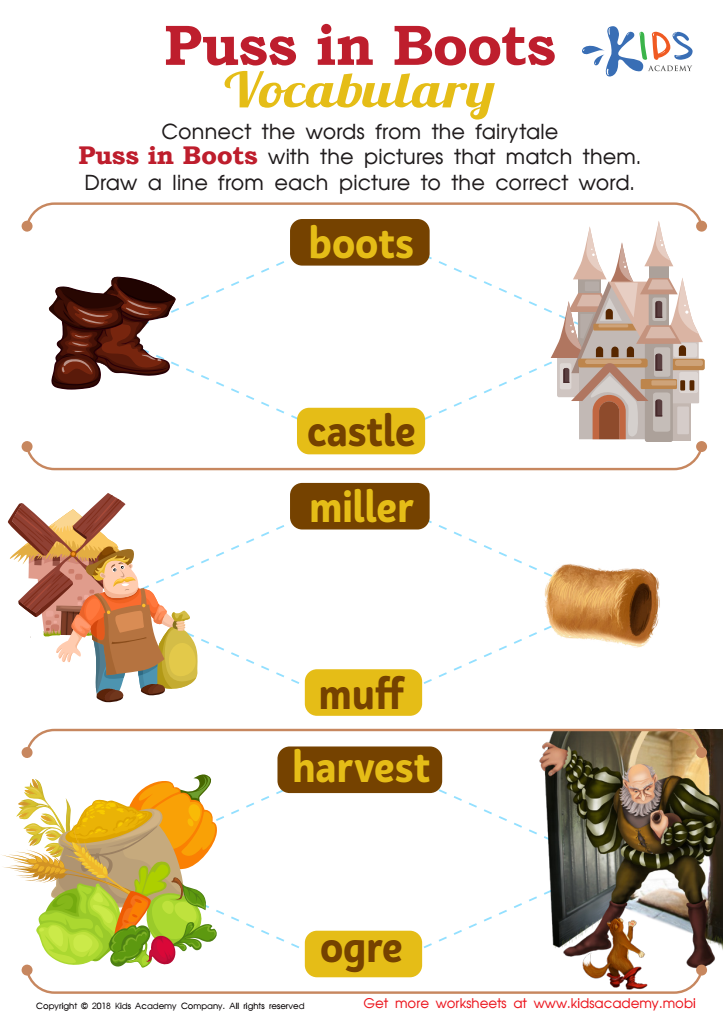
Puss in Boots Vocabulary Worksheet




.jpg)



Building vocabulary for ages 3-6 is crucial for several reasons, making it essential for both parents and teachers to prioritize this aspect of early literacy. During these formative years, children's brains are particularly receptive to language acquisition, and a rich vocabulary lays the foundation for their cognitive development and reading skills.
A strong vocabulary promotes effective communication, enabling children to express their thoughts, emotions, and needs more clearly. This helps to boost their confidence and self-esteem, as they are better equipped to engage in conversations and social interactions. Moreover, research shows that a robust vocabulary correlates with academic success; the more words a child knows, the better they can comprehend new material and excel in reading and writing throughout their educational journey.
Additionally, expanding vocabulary enhances critical thinking and problem-solving skills. When children can articulate their thoughts and make connections between concepts, they develop a deeper understanding of the world around them.
For teachers and parents, fostering vocabulary can be accomplished through interactive storytelling, play-based learning, and engaging conversations. By investing time and effort into vocabulary expansion, they not only enrich the child's language experience but also equip them with essential tools for lifelong learning and success.








