Animal identification Reading Worksheets for Ages 3-6
5 filtered results
-
From - To
Enhance your child's reading skills and foster a love for nature with our Animal Identification Reading Worksheets designed for ages 3-6. These engaging, educational worksheets highlight various animals, integrating vibrant pictures and simple texts to help young learners recognize and name different species. Each worksheet is tailored to build vocabulary, reading comprehension, and cognitive skills in an enjoyable manner. Perfect for early learning at home or in preschool settings, our worksheets provide a fun and interactive way to connect with the natural world while solidifying foundational reading abilities. Explore and download today to ignite your child's curiosity and intellect!
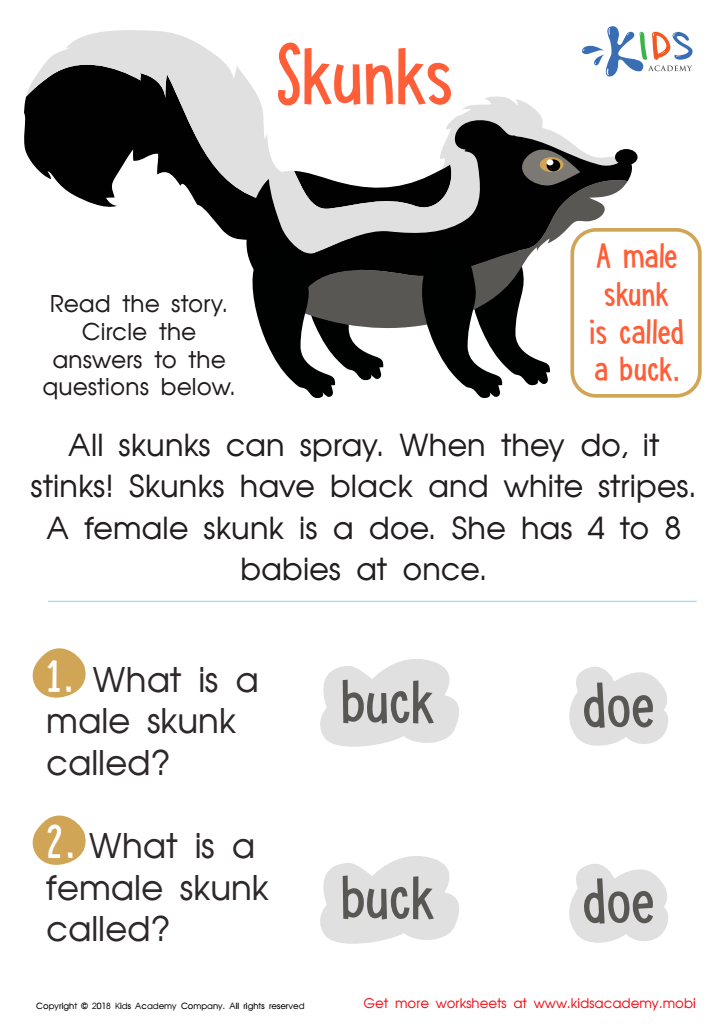
Skunks Worksheet
 Assign to My Students
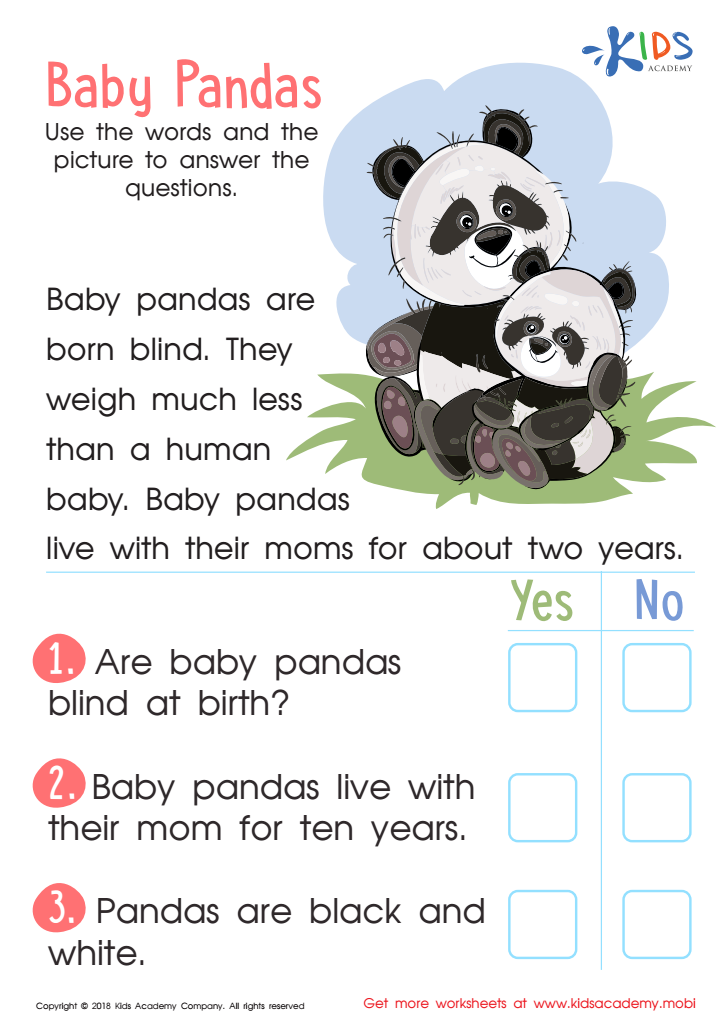
Baby Pandas Worksheet
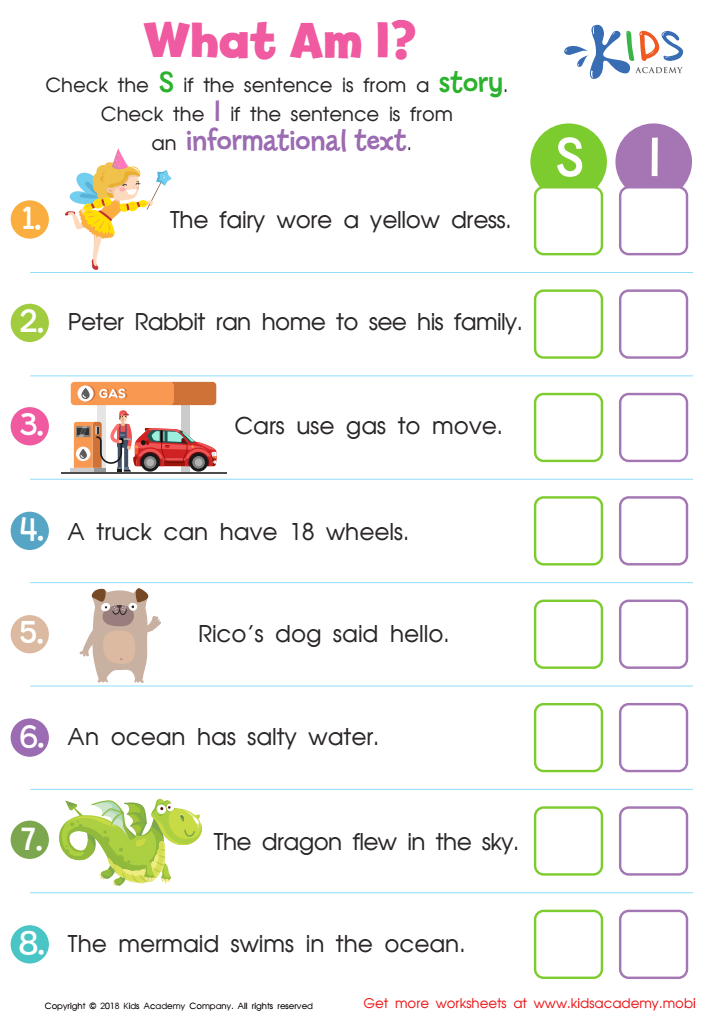
What Am I? Worksheet
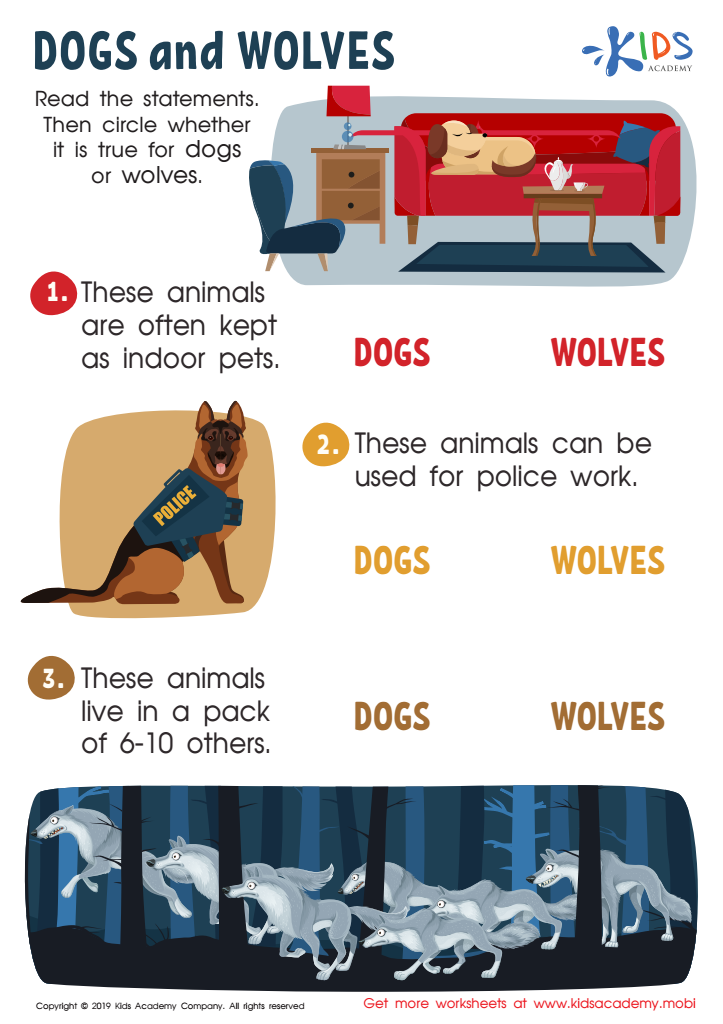
Dogs and Wolves Worksheet







Animal identification reading is important for young children, ages 3-6, because it builds foundational skills that are essential for their overall development. At this early stage, children are naturally curious, and learning about animals taps into their enthusiasm for discovery. Recognizing and naming animals enhances vocabulary and language abilities, providing them with a broad range of words and concepts to express themselves more clearly.
Additionally, this type of learning enhances cognitive skills such as memory, observation, and categorization. Children learn to differentiate between different animals and understand their characteristics, which aligns with basic scientific skills of classification and inquiry. This also encourages early reading skills as they recognize letter patterns, sounds, and simple words associated with different animals.
Social and emotional benefits are also notable. Learning about animals can foster empathy and an understanding of the importance of taking care of living beings. This can lead to a more compassionate outlook and a sense of responsibility towards the environment and animal welfare.
For teachers and parents, engaging children with animal identification reading materials can be an avenue for interactive learning that makes education enjoyable. It lays a diverse and solid foundation for future learning, connecting practical life science knowledge with enhancing literacy skills.








