Improving math skills Reading Worksheets for Ages 3-6
3 filtered results
-
From - To
Empower your child's learning journey with our "Improving Math Skills Reading Worksheets for Ages 3-6". Expertly designed, these engaging worksheets combine fundamental math concepts with fun and interactive reading exercises. Young learners will develop essential skills through activities that enhance number recognition, counting, basic addition, and pattern recognition. These worksheets also incorporate colorful illustrations and simple instructions to maintain interest and foster independent learning. Ideal for both classroom settings and home practice, our resources ensure a strong mathematical foundation. Help your child boost their confidence and unlock their potential with our comprehensive math and reading worksheet collection.
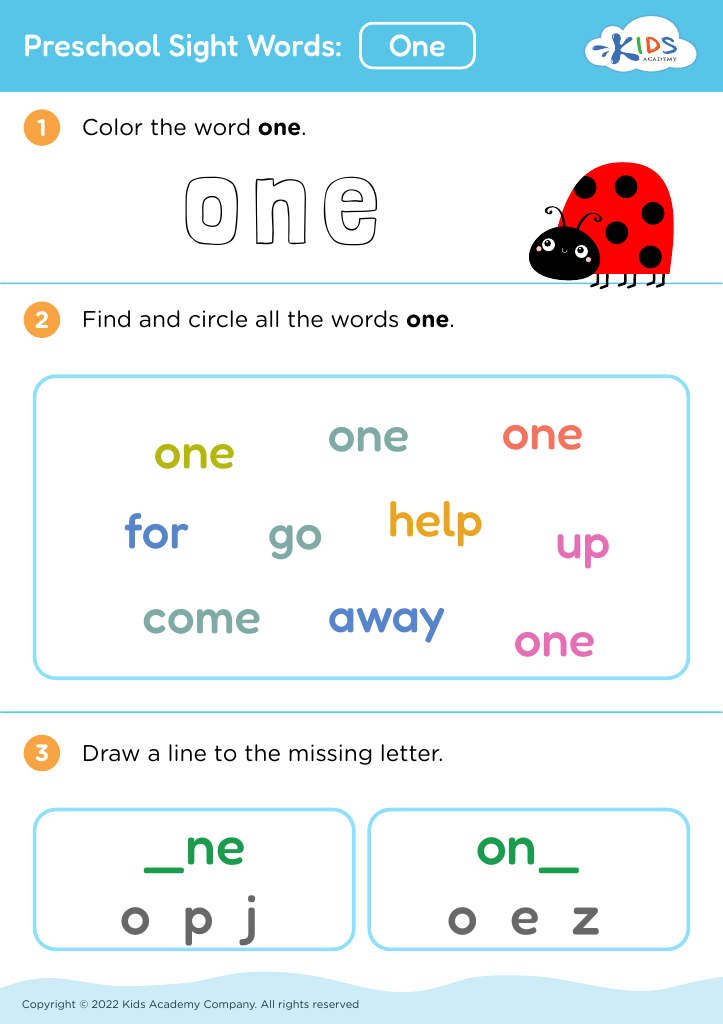
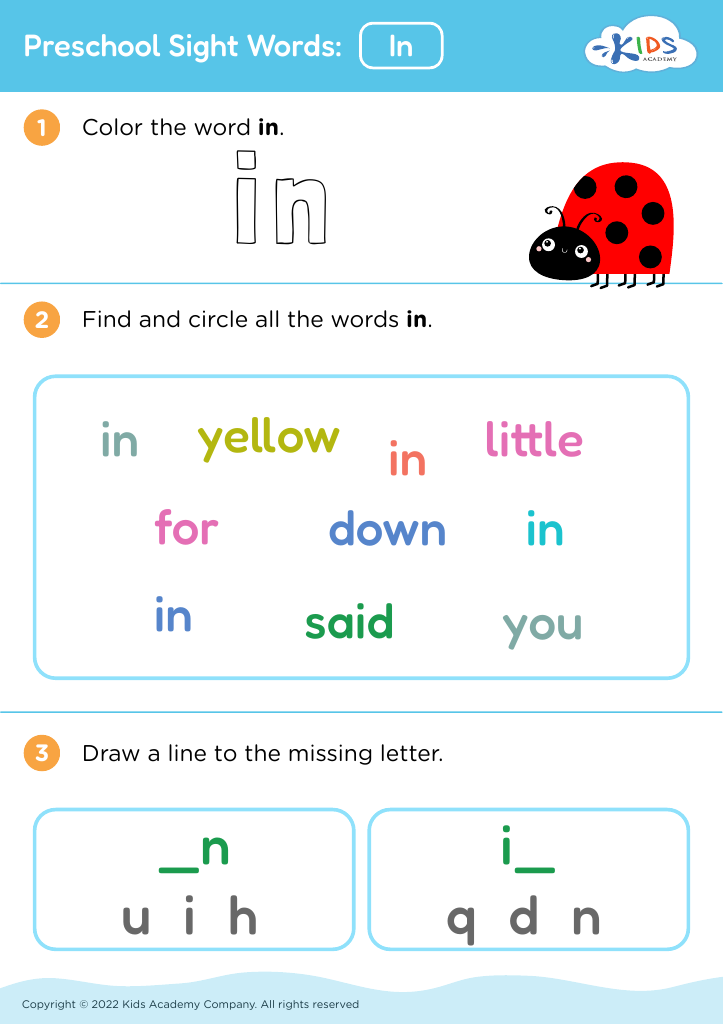
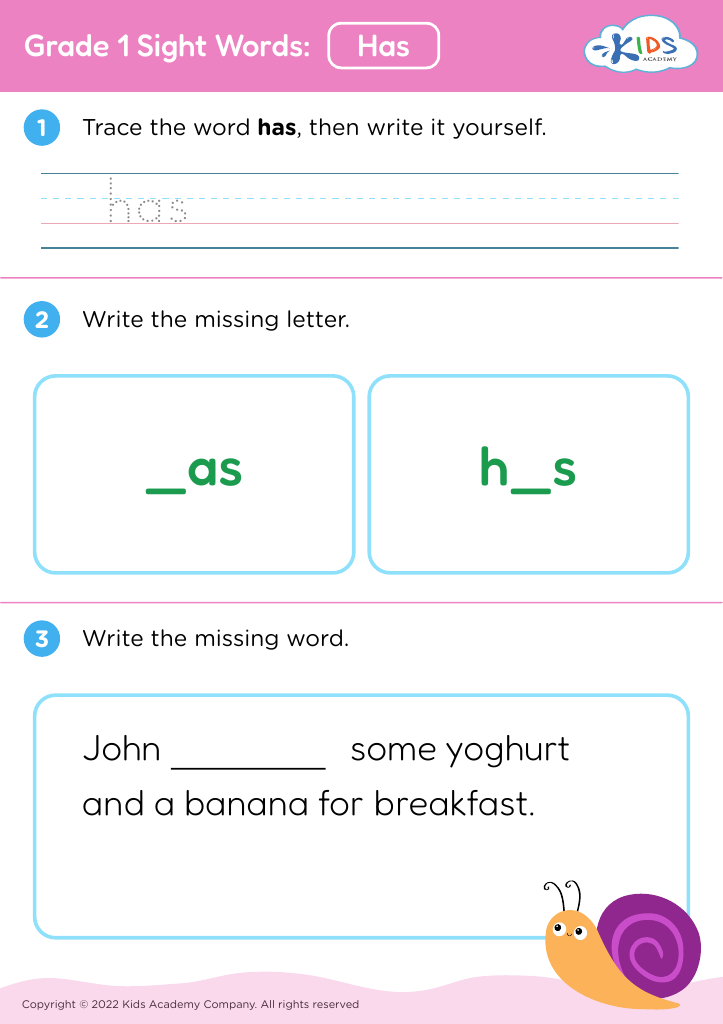







Improving math and reading skills in children ages 3-6 is crucial as these formative years lay the foundation for future academic achievement and intellectual development. Early math skills play a crucial role in everyday life and are predictive of later success not only in mathematics but also in reading. Developing a strong number sense, pattern recognition, and introductory problem-solving skills can help your child tackle more complex concepts with confidence.
Reading, too, is a fundamental skill that opens the door to all other learning. Early exposure to books and literacy activities enhances vocabulary, comprehension, and phonemic awareness. It fosters a lifelong love for reading and creates a positive attitude towards learning.
Both math and reading skills contribute significantly to a child's ability to think critically, solve problems, and understand the world around them. Additionally, success in these areas boosts a child’s self-esteem and encourages a positive academic self-identity. Parents and teachers who prioritize these foundational skills provide children with the tools they need to thrive in more advanced educational settings and in everyday life. Given the rapid brain development during these early years, investing in a child's math and reading skills yields long-term benefits that set the stage for comprehensive life skills and academic success.








