Pattern recognition Reading Worksheets for Ages 3-6
4 filtered results
-
From - To
Discover our engaging Pattern Recognition Reading Worksheets designed for children aged 3-6! These interactive resources help young learners develop essential skills by recognizing sequences, shapes, and colors in a fun and accessible way. Our worksheets include vibrant illustrations and age-appropriate activities that stimulate curiosity and boost early literacy skills. As children practice identifying patterns, they enhance their cognitive abilities and lay a strong foundation for reading success. Perfect for classrooms or home learning, these worksheets make learning enjoyable and effective. Unlock your child's potential and watch their confidence grow as they master pattern recognition through play! Explore our collection today!
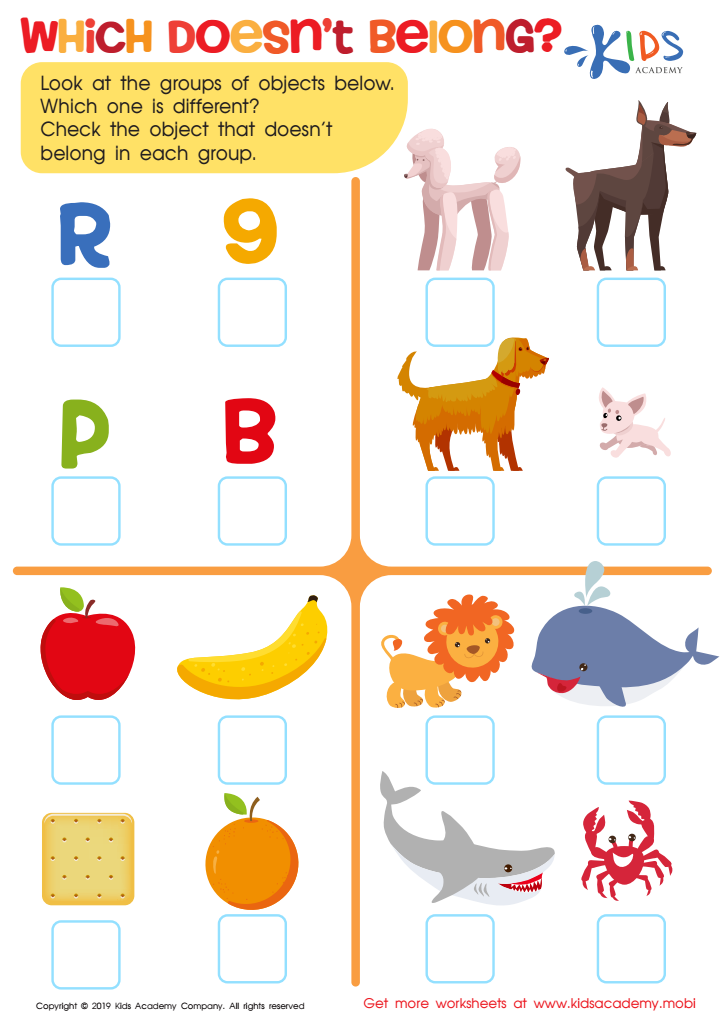
Which Doesn't Belong? Worksheet
 Assign to My Students
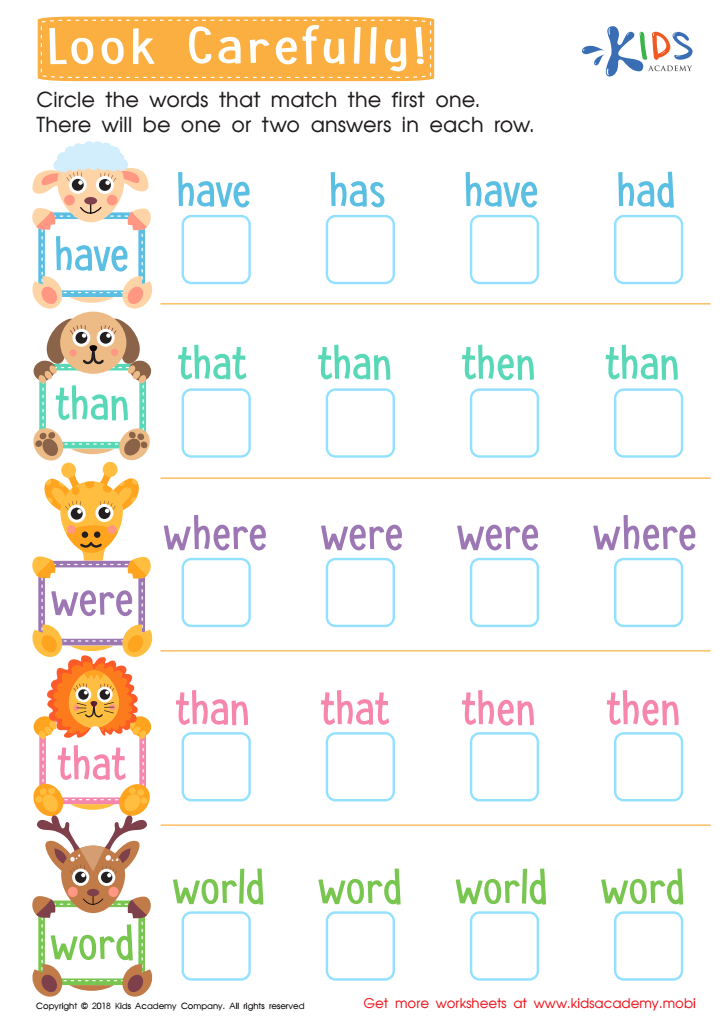
Look Carefully Worksheet
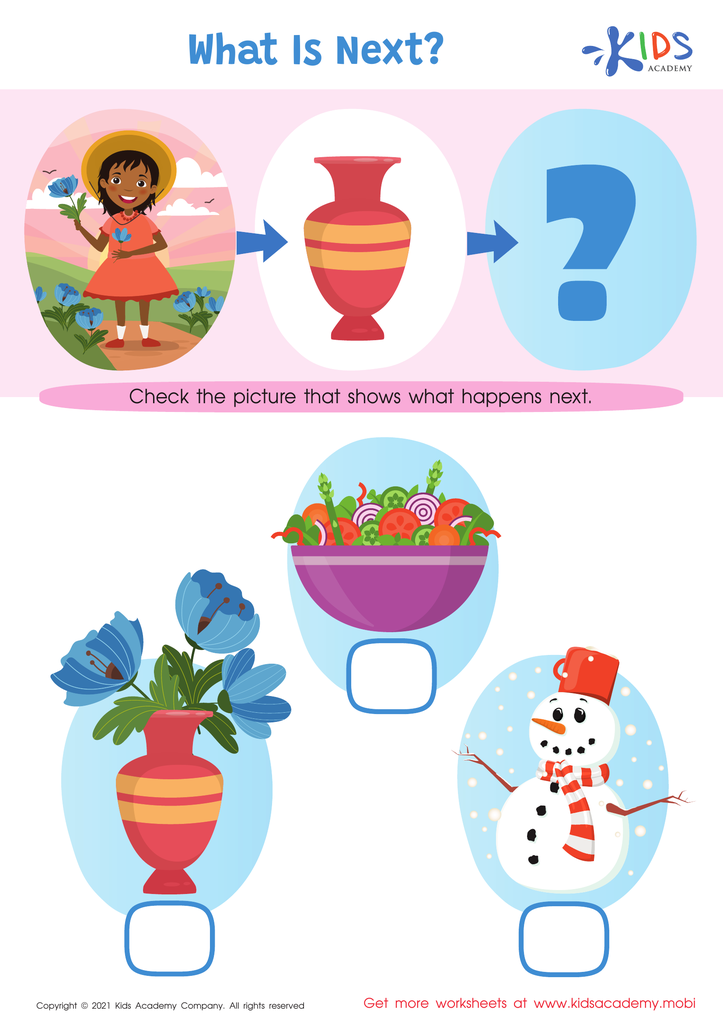
What is Next? Worksheet
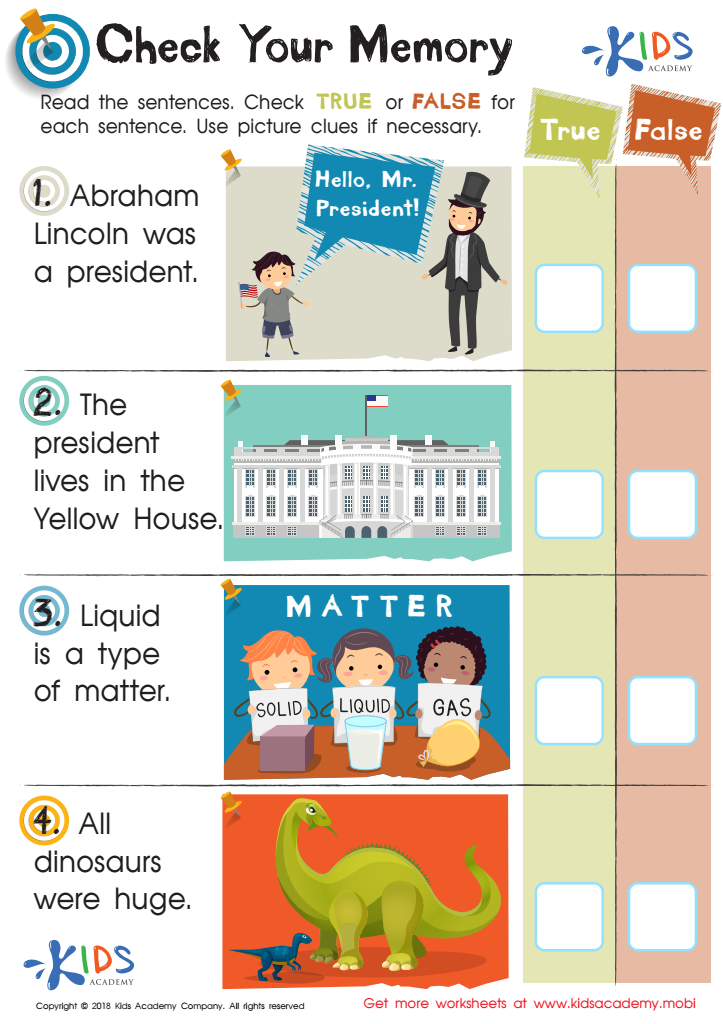
Check Memory Worksheet







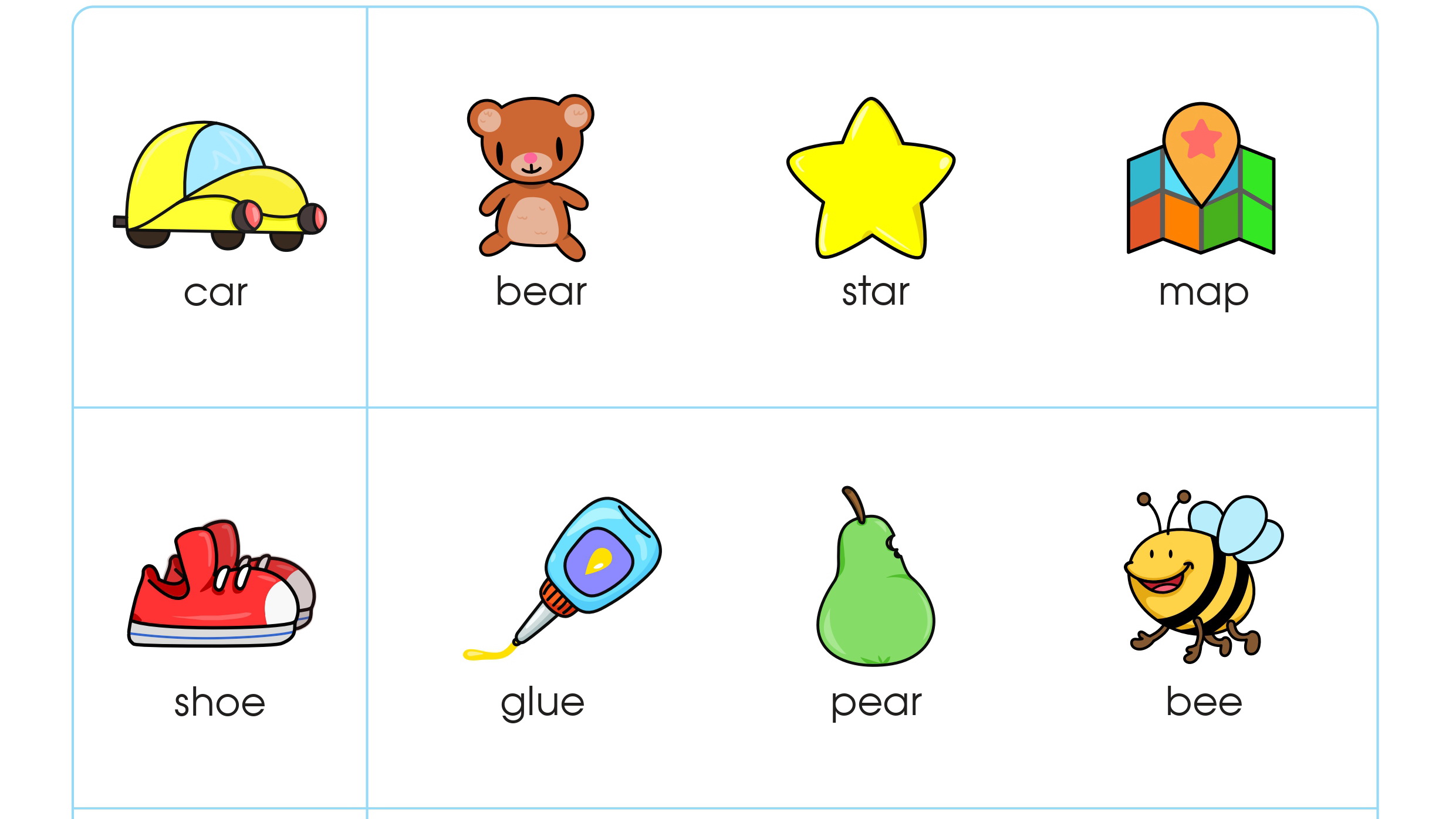
Pattern recognition is a foundational skill in early reading development for children aged 3-6. It refers to the ability to identify, predict, and interpret repeated sequences and relationships in text. Parents and teachers should prioritize this skill because it lays the groundwork for fluent reading and comprehension. As youngsters learn to recognize patterns in letters, words, and sentences, they become more proficient readers.
Engaging with patterns helps children make connections between symbols and sounds, enhancing their phonetic awareness. For example, when children spot rhymes or repeated phrases in storybooks, they can anticipate what comes next, boosting their confidence and enjoyment of reading. This early achievement fosters a love for literature, encouraging lifelong reading habits.
Furthermore, pattern recognition enhances critical thinking skills as children analyze and predict. It nurtures creativity, making reading an interactive, dynamic experience rather than a passive one. Parents and teachers can incorporate games, songs, and activities that highlight patterns—such as singing nursery rhymes or using illustrated books with repetitive texts—which support this skill naturally.
Ultimately, a solid foundation in pattern recognition not only supports literacy development but also prepares children for future academic success. It's essential that adults actively nurture this critical skill in young learners.








