
Phonics Skills Reading Worksheets for Ages 3-6
6 filtered results
Difficulty Level
Grade
Age
-
From - To
Subject
Activity
Standards
Develop essential phonics skills with our engaging reading worksheets designed specifically for children ages 3-6. These worksheets provide a fun and interactive way for young learners to understand sound-letter relationships, build vocabulary, and enhance early reading abilities. With colorful illustrations and age-appropriate activities, kids will enjoy practicing letter recognition, blending sounds, and mastering simple words. Perfect for homeschooling or classroom settings, our phonics worksheets encourage independent learning while helping to instill a love for reading. Browse our collection now to support your child's literacy journey and make learning phonics an enjoyable experience!
Favorites
With answer key
Interactive
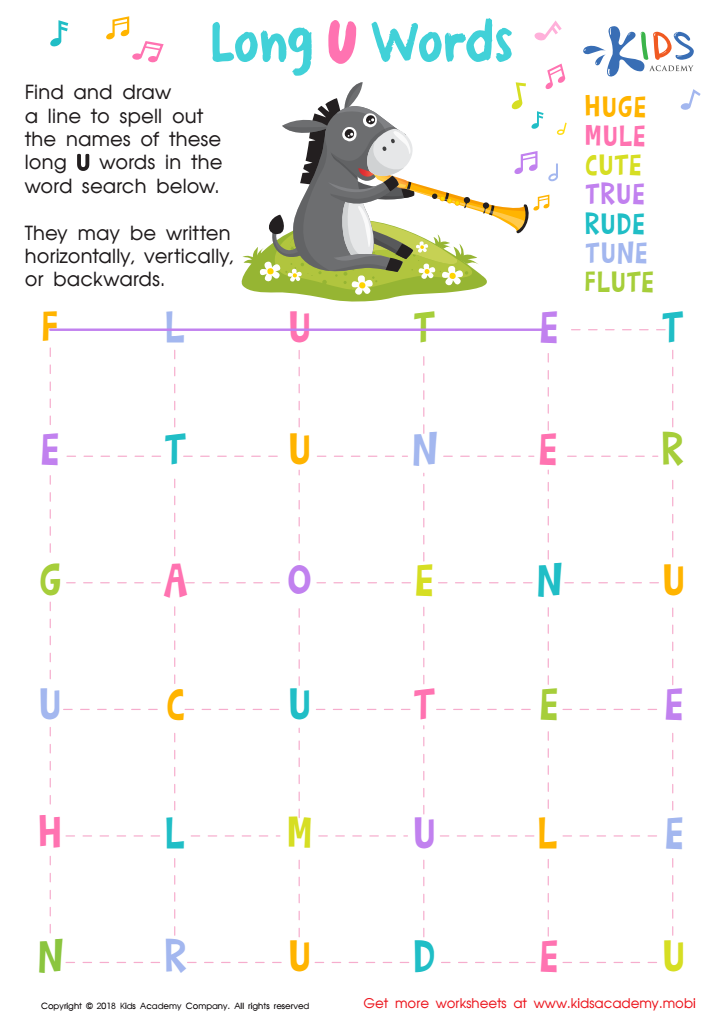
Long /u/ Words Worksheet
Your child needs to learn phonetics to enunciate and differentiate words. This fun worksheet encourages them to find and draw lines connecting the long 'U' words in the word search. Help them read the words on the right side of the picture, then look for them in the word search (horizontally, backwards or vertically).
Long /u/ Words Worksheet
Worksheet
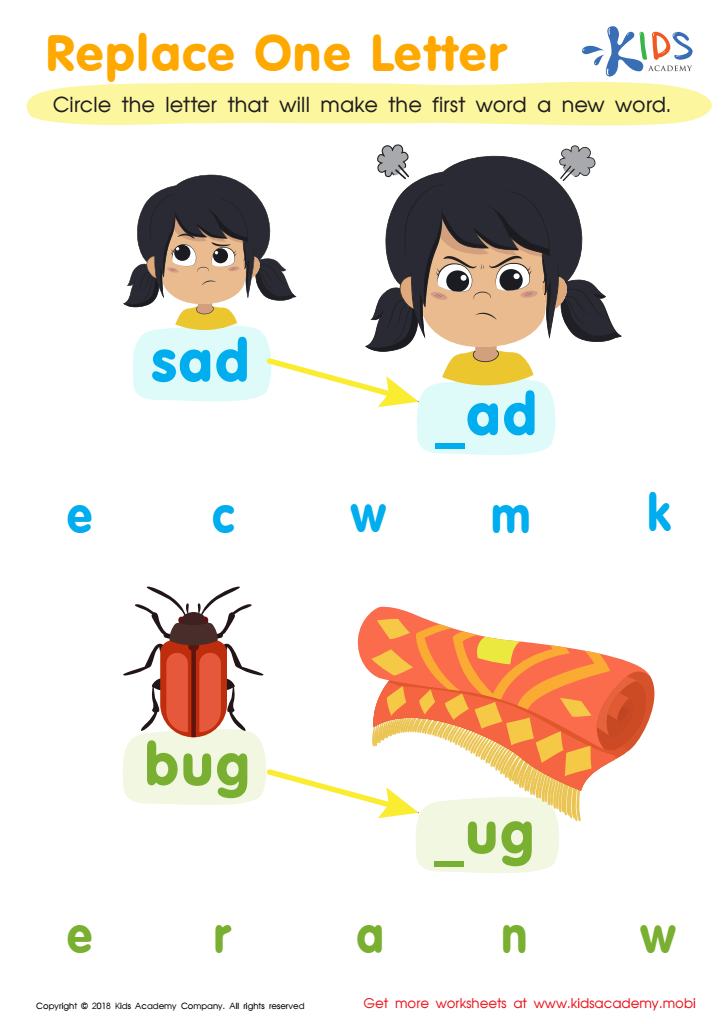
Replace One Letter Worksheet
Emerging readers will practice switching initial consonants to create new words with this fun PDF worksheet. They'll use picture clues, learn about onset letters and work on their fine motor skills as they circle the right letter for each "ad" and "ug" word family.
Replace One Letter Worksheet
Worksheet
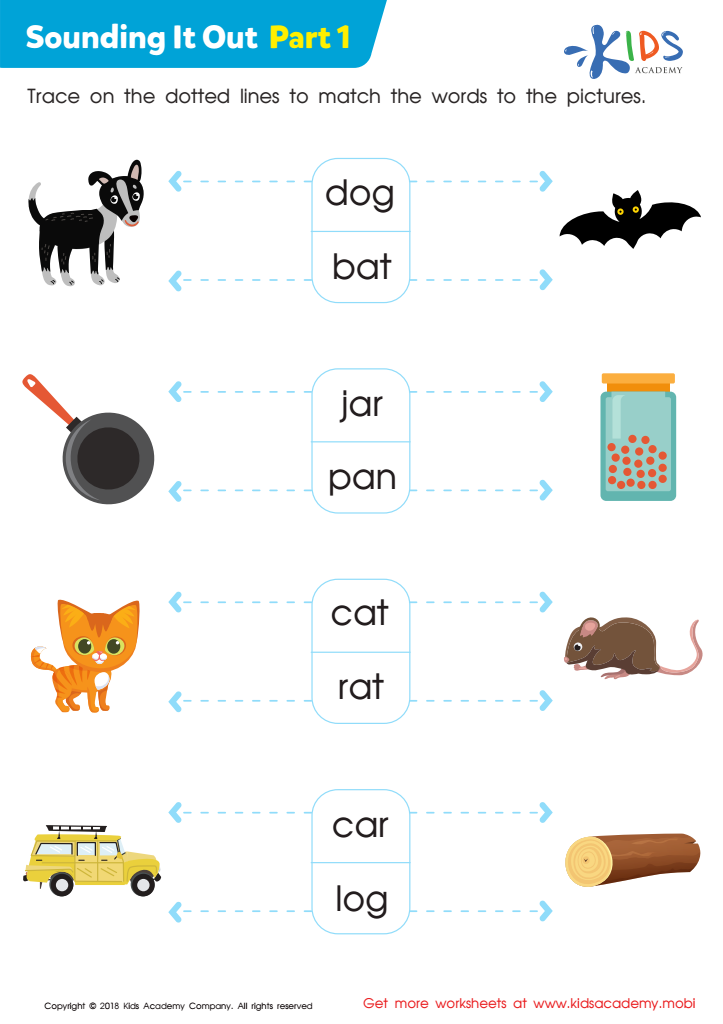
Sounding it Out: Part 1 Worksheet
Help kids learn to read with this fun worksheet! Kids use picture clues to sound out words and trace the dotted lines to match each word to its corresponding image. Stimulating and interactive, this printable is a great way for little learners to practice phonics.
Sounding it Out: Part 1 Worksheet
Worksheet
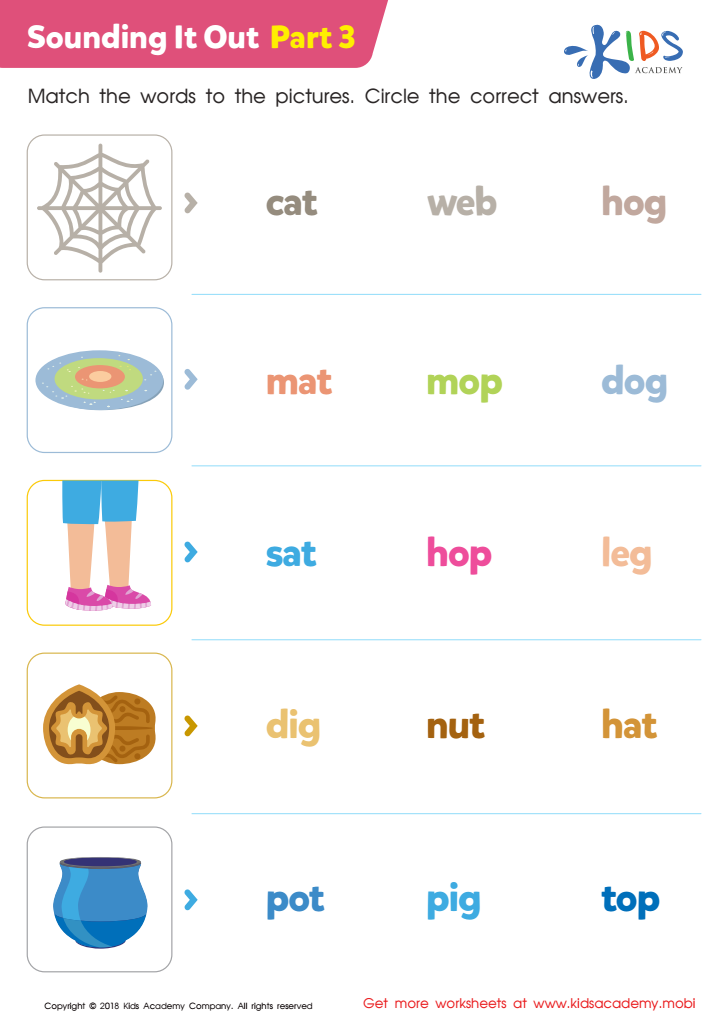
Sounding it Out: Part 3 Worksheet
Once Parts 1 and 2 are complete, this printable phonics worksheet will help kids take their reading skills to the next level! As they gain confidence, give them hints less often and direct their attention to three words in a row. Ask them to read and circle the correct word to complete!
Sounding it Out: Part 3 Worksheet
Worksheet
Long Vowel Sound A Worksheet Worksheet
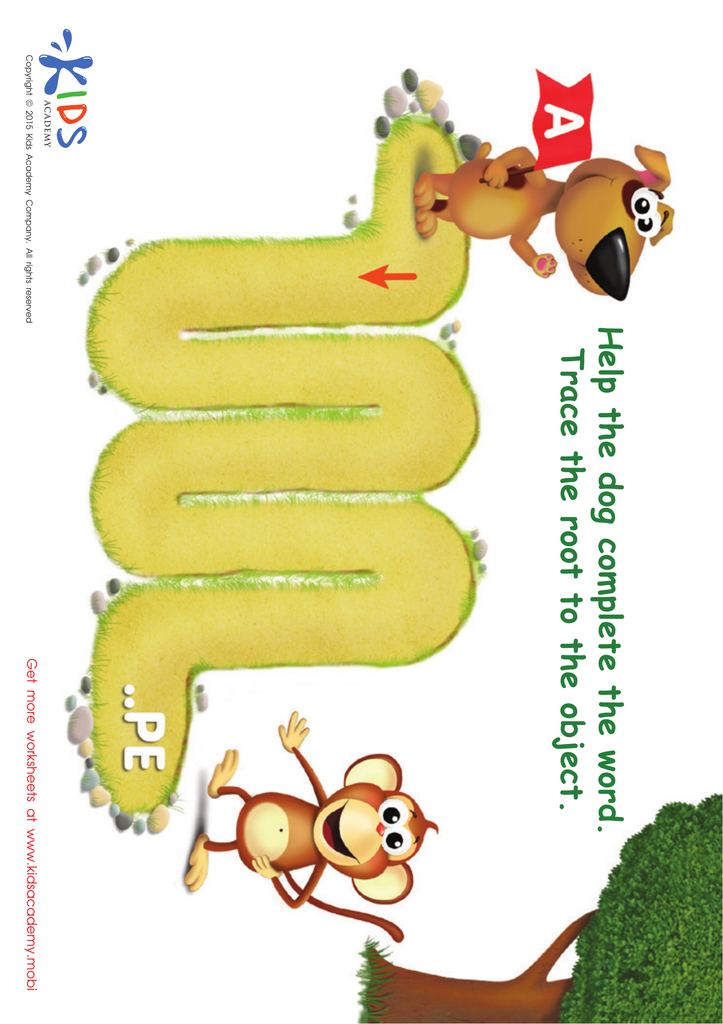
Help our adorable dog by completing the word he's holding a flag for! Use the picture as a clue to read the word. This PDF worksheet will help early learners with pre-reading and phonics skills. For an added challenge, have your child write the word on the page near the path they drew. Be sure to talk about what the long vowel A sounds like for the best results.
Long Vowel Sound A Worksheet Worksheet
Worksheet
Long and Short E Worksheet
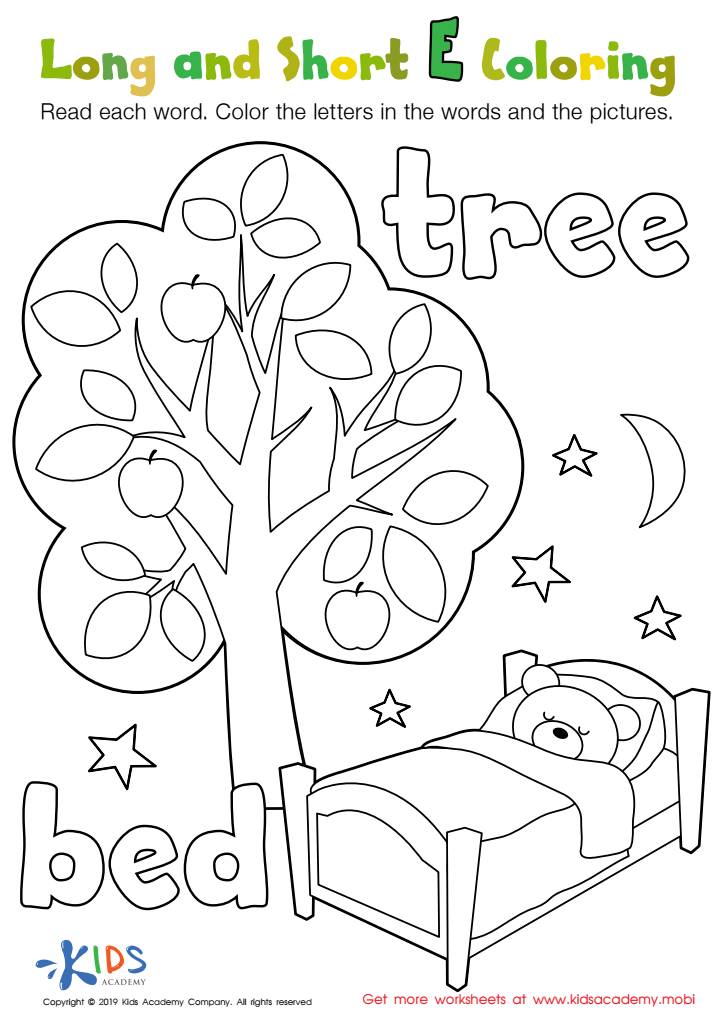
This fun printout makes learning phonics enjoyable for Grade 3 students. Get them to read the words “tree” and “bed” to recognize the different sounds of the letter “E”. After hearing the words they can color the words and the pictures to understand differences between long and short vowels.
Download (PDF)
 Assign to My Students
Assign to My Students
Long and Short E Worksheet
Worksheet
Join Kids Academy for Free
Who is primarily going to use this learning content?







Phonics skills reading is crucial for children aged 3-6 as it lays the foundational building blocks for literacy development. At this early stage, children are developing vital cognitive, auditory, and language skills; effective phonics instruction empowers them to decode words, understand sound-letter relationships, and ultimately become proficient readers.
Children who grasp phonics can sound out unfamiliar words, which boosts their confidence and fosters a love for reading. Additionally, strong phonics skills enhance vocabulary development and support comprehension, providing a solid framework for lifelong learning. Research has shown that early readers who are proficient in phonics demonstrate greater academic success later on.
Moreover, parents and teachers play a significant role in nurturing phonics skills. Engaging activities such as singing rhymes, playing word games, and reading aloud can spark children’s interest in letters and sounds, making the learning process enjoyable. Support from adults not only reinforces phonics but also creates a language-rich environment critical for cognitive growth.
Ultimately, by focusing on phonics reading, parents and teachers can equip young learners with essential skills that transcend literacy, influencing their overall academic performance and well-being in the years to come. This foundational investment in literacy is vital for ensuring a successful future for every child.








