Rhyming skills development Reading Worksheets for Ages 3-6
3 filtered results
-
From - To
Unlock your child's potential with our engaging Rhyming Skills Development Reading Worksheets for Ages 3-6! Designed to enhance phonemic awareness, these worksheets help young learners master the art of rhyming, a crucial building block for reading success. Packed with vibrant illustrations and fun activities, your little ones will enjoy practicing their skills in an interactive way. From matching rhyming words to completing short poems, each worksheet encourages creativity and language development. Perfect for parents and educators, our resources make learning enjoyable and effective. Get started today to help your child develop essential literacy skills that will benefit them for years to come!
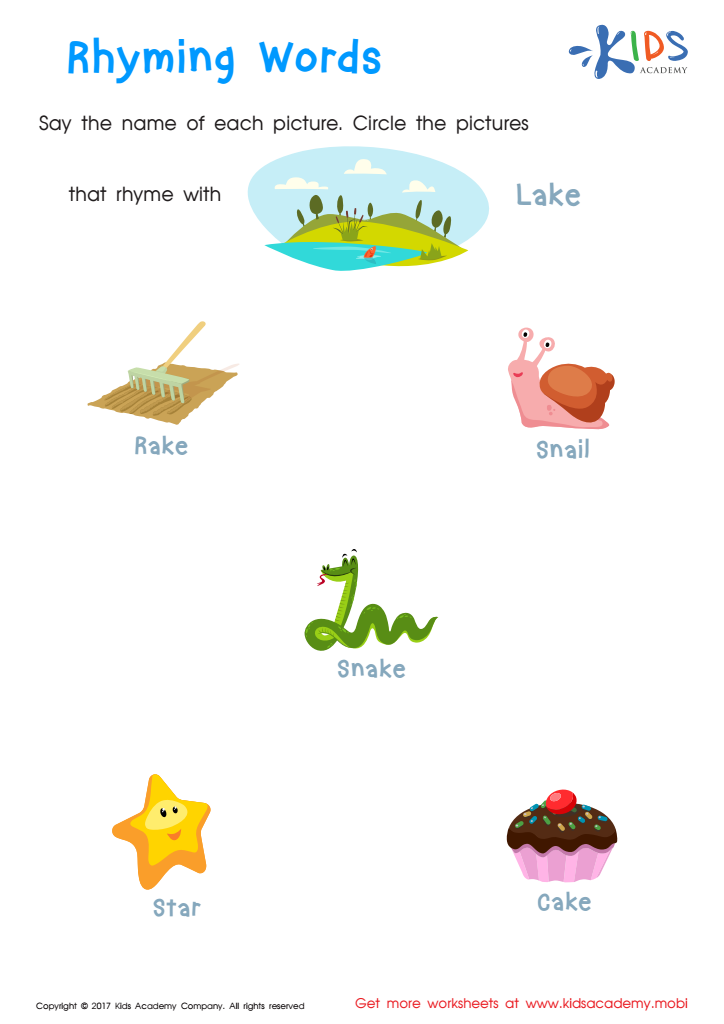
Rhyming Words Rhyming Worksheet
 Assign to My Students
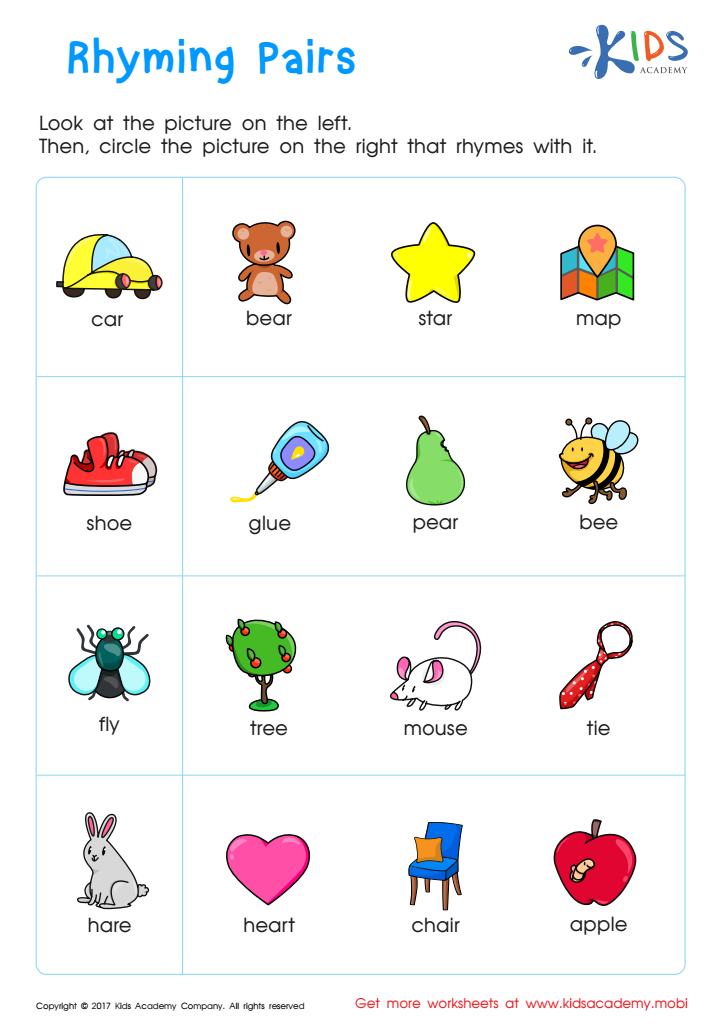
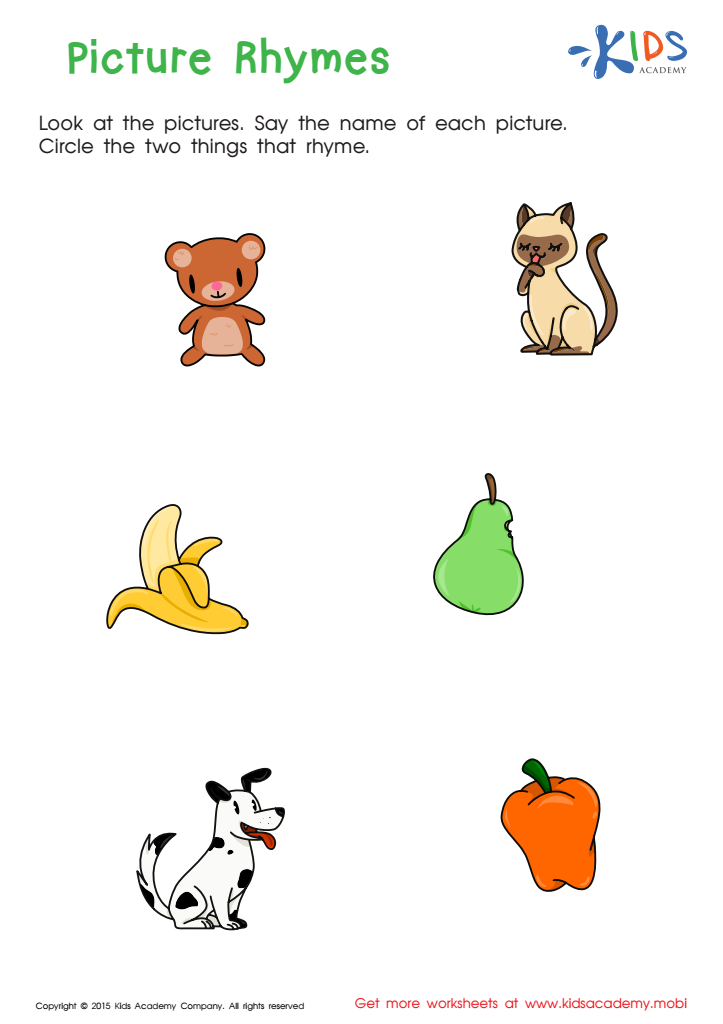
First Words: Picture Rhymes Worksheet


.jpg)





Rhyming skills are crucial for early literacy development in children aged 3-6, making it important for parents and teachers to prioritize this aspect of reading. When children engage with rhymes, they sharpen their auditory discrimination skills, enabling them to hear and identify sounds in words. This phonemic awareness forms the foundation for effective reading, as kids learn to recognize patterns in language, which ultimately aids in decoding unfamiliar words.
Additionally, rhyming fosters vocabulary development. Exposure to different rhyming words and pairs expands children's linguistic repertoire and enhances their understanding of language structure. It is also a fun and engaging way to foster early writing skills; children start to understand how sounds can be manipulated to create new words.
Moreover, incorporating rhymes into reading creates a joyful learning environment. The rhythmic nature of rhymes not only captivates young learners' attention but also makes reading a more enjoyable experience, encouraging a lifelong love of books. When parents and teachers prioritize rhyming activities—through songs, poems, or playful reading—they enrich children's cognitive development and lay the groundwork for their future literacy success, ultimately building confident and enthusiastic readers.








