Understanding prepositions Reading Worksheets for Ages 3-6
6 filtered results
-
From - To
Discover our engaging “Understanding Prepositions” reading worksheets, specially designed for children aged 3-6! These interactive resources help young learners grasp essential prepositions through fun exercises and vibrant illustrations. Each worksheet fosters essential reading skills while encouraging kids to identify and use prepositions in everyday language. With a focus on creativity and play, these activities are perfect for fostering early literacy in a delightful way. Whether at home or in the classroom, our worksheets provide a valuable foundation for your child's reading journey. Explore our collection today and help your little ones master prepositions while enjoying their learning experience!
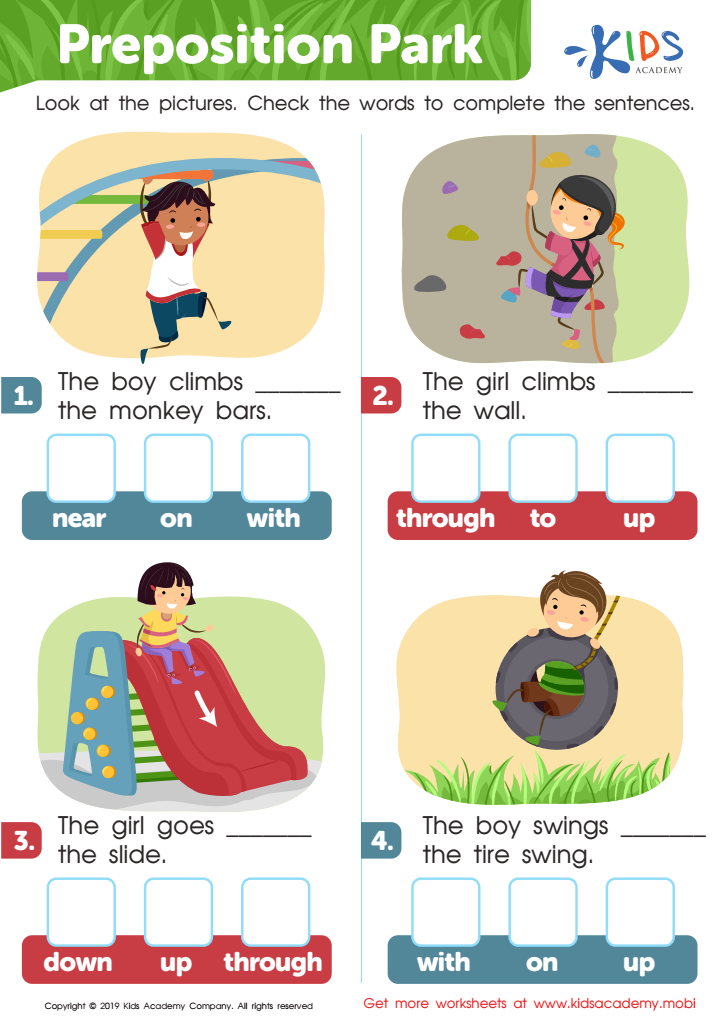
Preposition Park Worksheet
 Assign to My Students
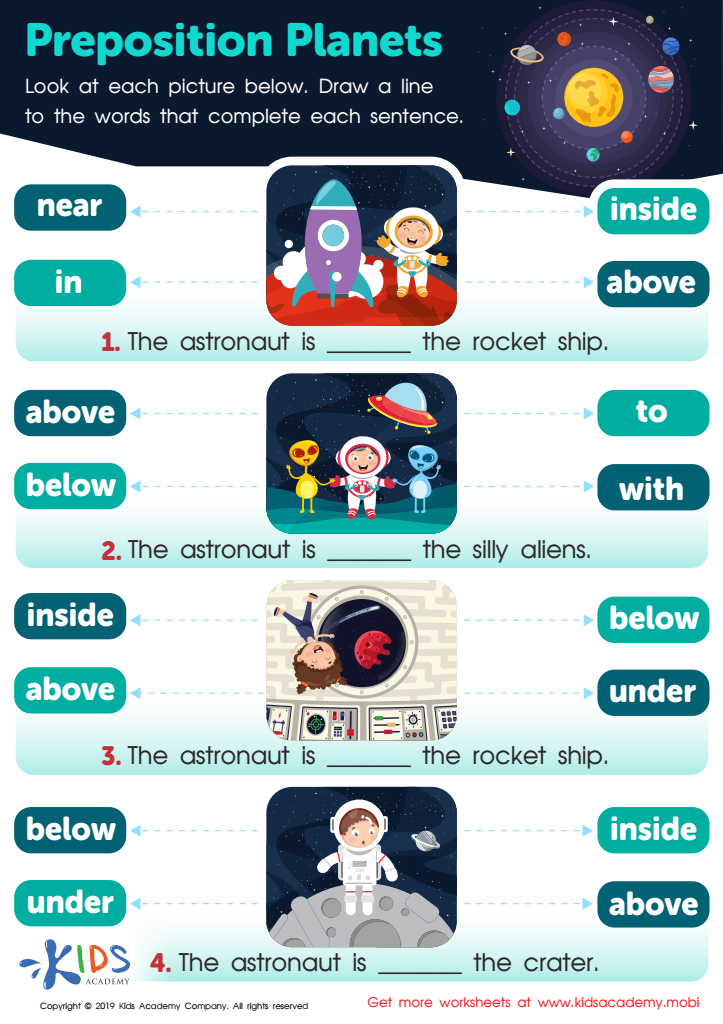
Preposition Planets Worksheet
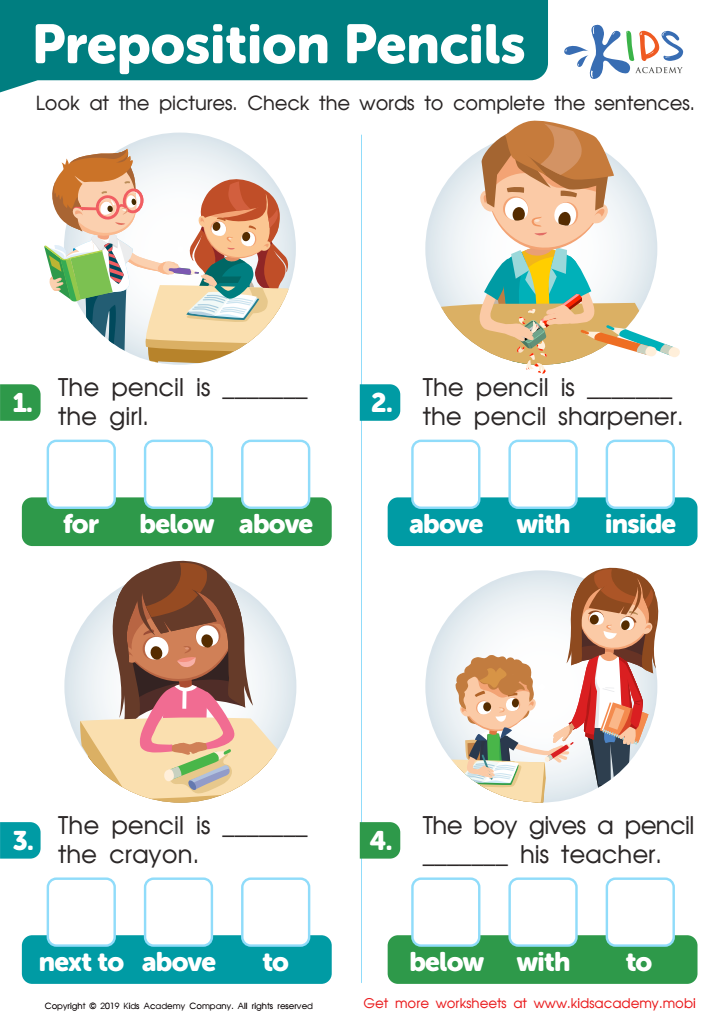
Preposition Pencils Worksheet
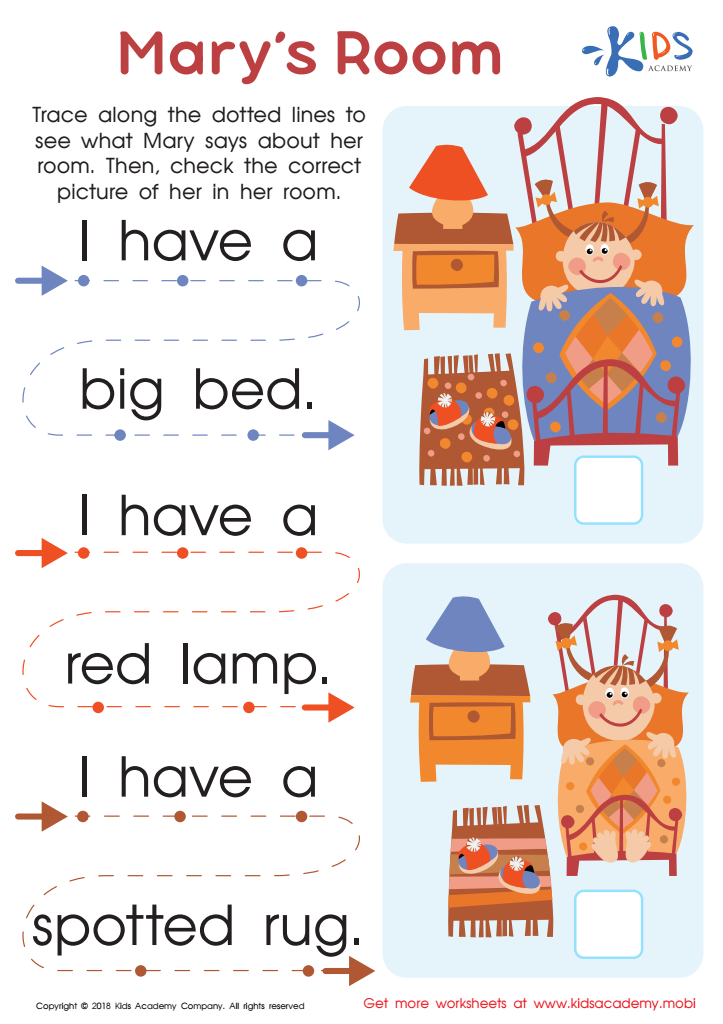
Mary's Room Worksheet



.jpg)



Understanding prepositions is essential for young children aged 3-6, as they form the foundation of language comprehension and communication. Parents and teachers should care about this skill because prepositions, which describe the relationships between nouns and other words in a sentence, help children gain a clearer understanding of spatial concepts and position. For example, terms like "in," "on," "under," and "between" enable children to articulate their surroundings and express themselves more accurately.
Early exposure to prepositions fosters listening and following directions—skills critical for academic and social interactions. When children can understand phrases like "put the toy under the table," they are developing their cognitive processing and attention. Furthermore, grasping prepositions enhances their reading skills as they encounter descriptive language in stories.
As children learn to use prepositions correctly, their writing becomes more descriptive and imaginative, enriching their storytelling abilities. Ultimately, focusing on prepositions cultivates essential linguistic skills that lay the groundwork for literacy, communication, and critical thinking—skills crucial for lifelong learning. By engaging in playful activities and incorporating prepositions into daily conversations, parents and teachers create a rich learning environment that supports early language development.








