Visual Perception Skills Reading Worksheets for Ages 3-6
4 filtered results
-
From - To
Boost your child's reading readiness with our Visual Perception Skills Worksheets for ages 3-6! Designed to enhance essential visual processing abilities, these engaging worksheets help young learners recognize shapes, patterns, and letters through fun activities. By improving their visual discrimination, attention to detail, and spatial awareness, children build a solid foundation for reading and writing. Our easy-to-follow exercises are perfect for parents and educators looking to support early literacy development in a playful manner. Explore our collection of visually stimulating worksheets and watch your child's confidence soar as they master key skills for academic success!
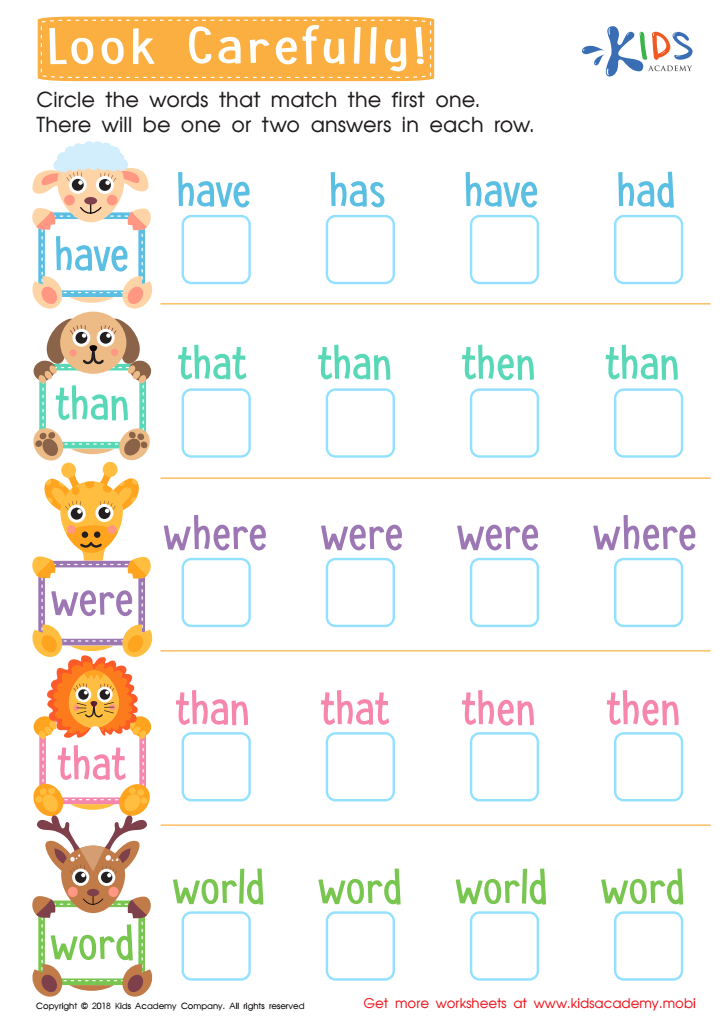
Look Carefully Worksheet
 Assign to My Students
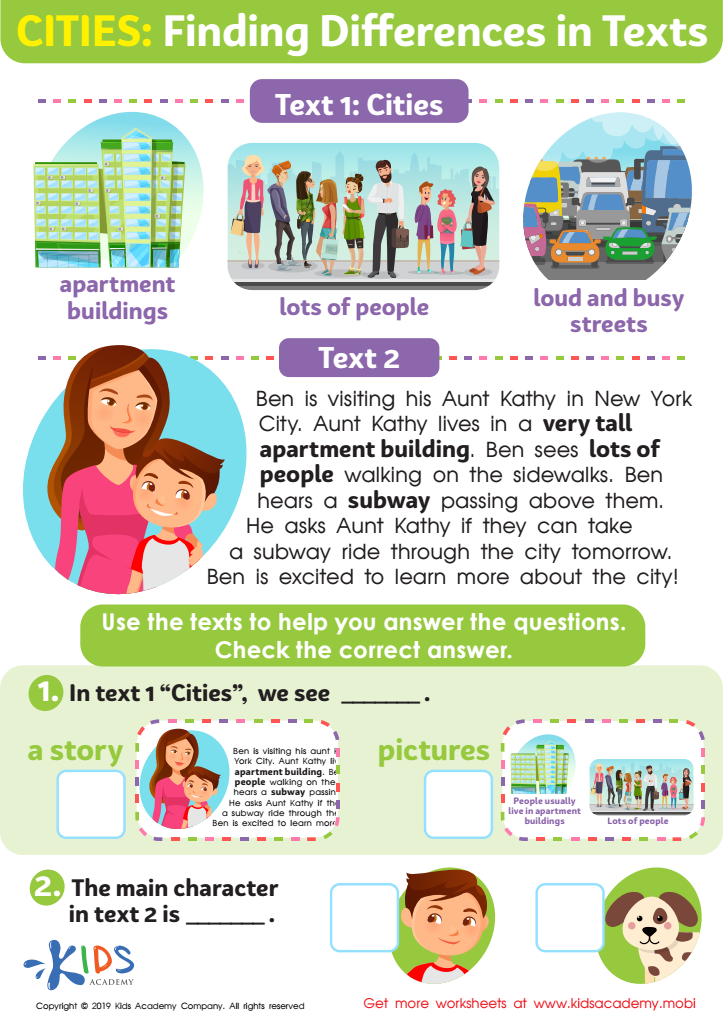
Cities: Finding Differences Worksheet
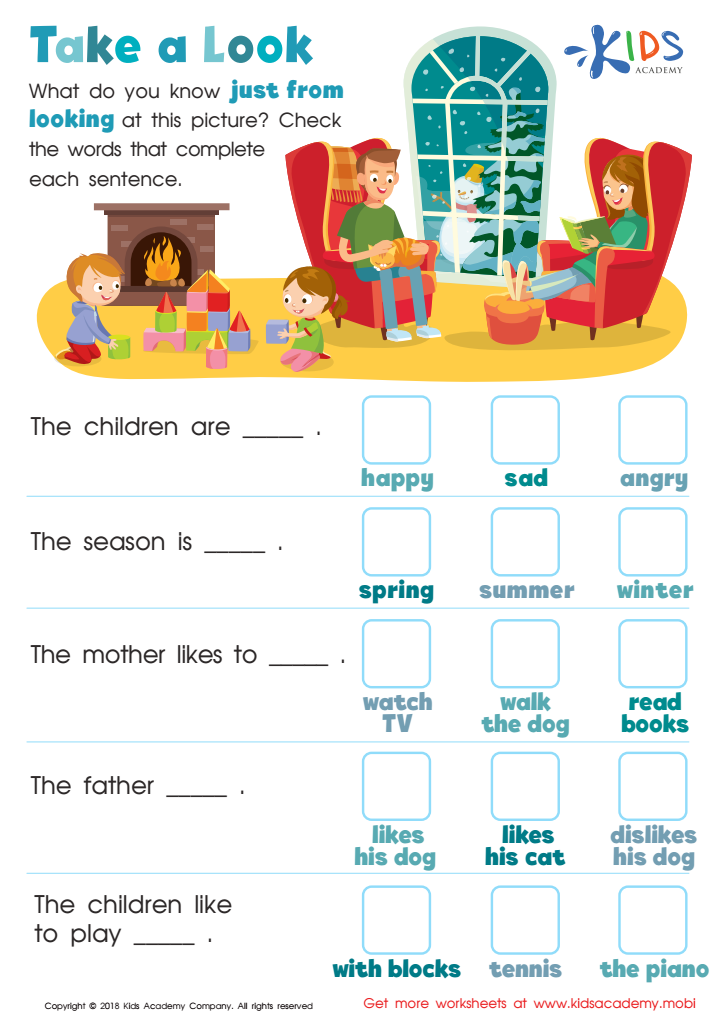
Take a Look - Part 1 Worksheet
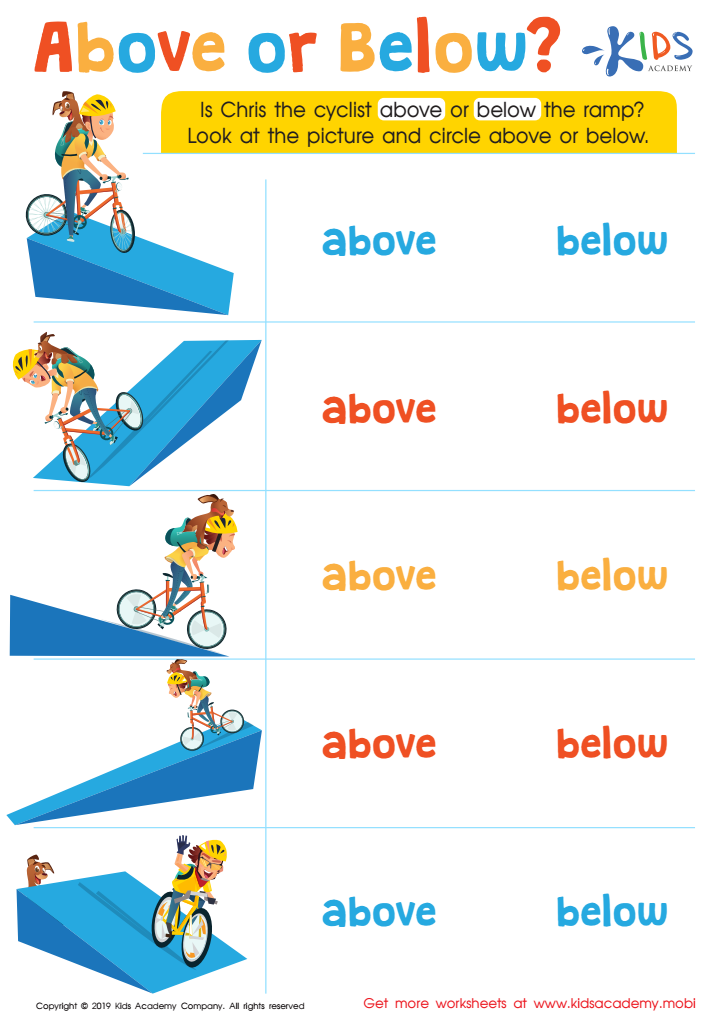
Above or Below? Worksheet








Visual perception skills are crucial for children aged 3-6 as they lay the foundation for reading success. These skills involve the ability to interpret and make sense of what the eyes see, which helps children recognize letters, words, and their relationships on a page. Strong visual perception is directly linked to a child’s ability to decode text, understand sequences, and grasp concepts such as shapes and sizes, which are essential for literacy development.
Parents and teachers should be concerned about cultivating these skills early because they are fundamental for future academic achievements. Children who struggle with visual perception may find reading challenging, leading to frustration and a lack of confidence in their abilities. By supporting the development of these skills through targeted activities like puzzles, matching games, and reading exercises, adults can foster a love for learning and reading.
Additionally, promoting visual perception skills early on can help identify any underlying difficulties that may affect learning. Early intervention can address these concerns before they impact a child’s educational journey. In a world increasingly driven by written information, ensuring that children develop strong visual perception can significantly enhance their ability to learn, communicate, and participate fully in their educational environment.








