Enhance your child's reading journey with our engaging Reading Skills Comprehension Worksheets tailored for ages 3-6. These comprehensive worksheets are expertly crafted to develop foundational reading skills, improve vocabulary, and boost comprehension through fun, age-appropriate activities. Designed for young learners, each worksheet nurtures a love for reading while building crucial literacy skills. Explore various interactive exercises, from matching characters to identifying key story elements. Perfect for parents and educators, our worksheets support early education and encourage confidence in young readers. Start your child's reading adventure today and watch their skills flourish!

Check out this FREE Trial Lesson on Reading Comprehension for age 3-6!

Picture Book Text Features

Favorites
With answer key
Interactive
  • 3-6
  • Reading Skills
  • Reading Comprehension
l or i? Worksheet
l or i? Worksheet

l or i? Worksheet

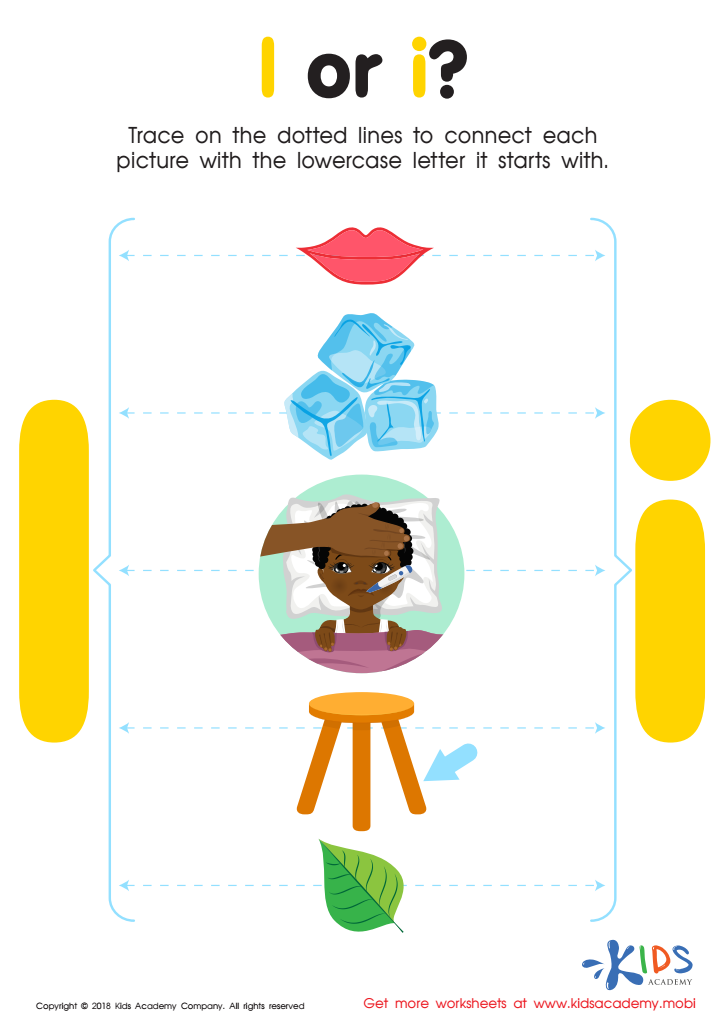
Trace the dotted lines on this worksheet to connect pictures with their lowercase letter. Ask your child what each picture is and the first letter of the word. Guide them to trace the letter with the dotted lines.
l or i? Worksheet
Worksheet
Craft and Structure: Assessment 1 Worksheet

Craft and Structure: Assessment 1 Worksheet

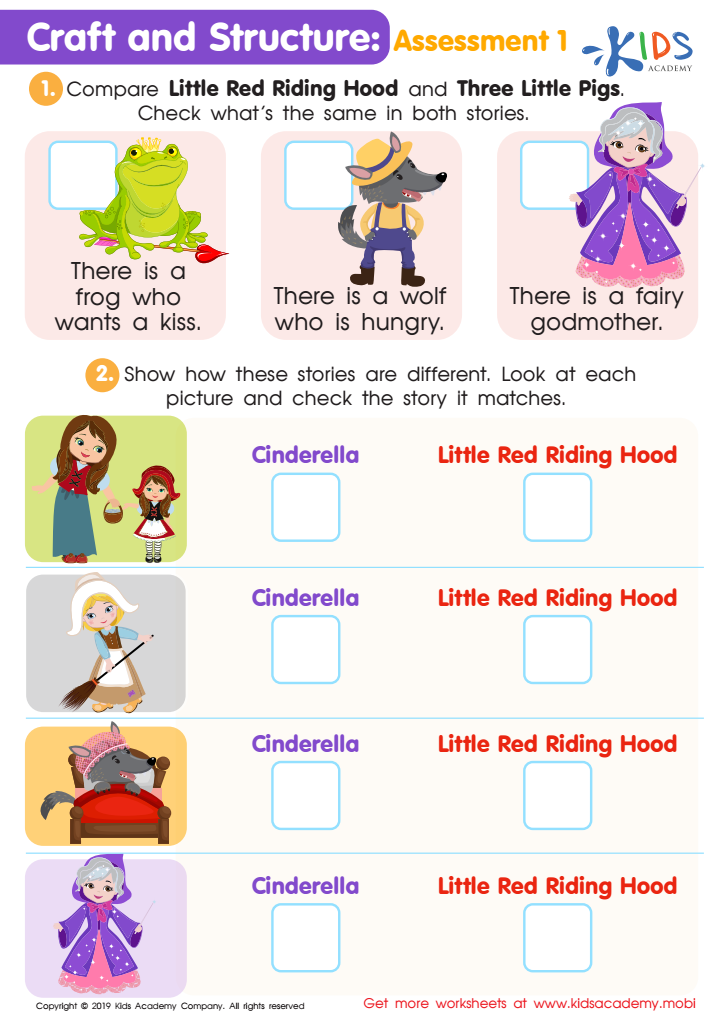
Fairytales are a great way to bond with your kids while teaching them. Popular stories include Little Red Riding Hood and Three Little Pigs. Test how well they understood these two with this assessment worksheet. Ask them to compare the two stories and check what is the same. Doing this will help kids learn new words and sentence construction, as well as teaching them life lessons.
Craft and Structure: Assessment 1 Worksheet
Worksheet
Where Does the Character Belong? Worksheet

Where Does the Character Belong? Worksheet

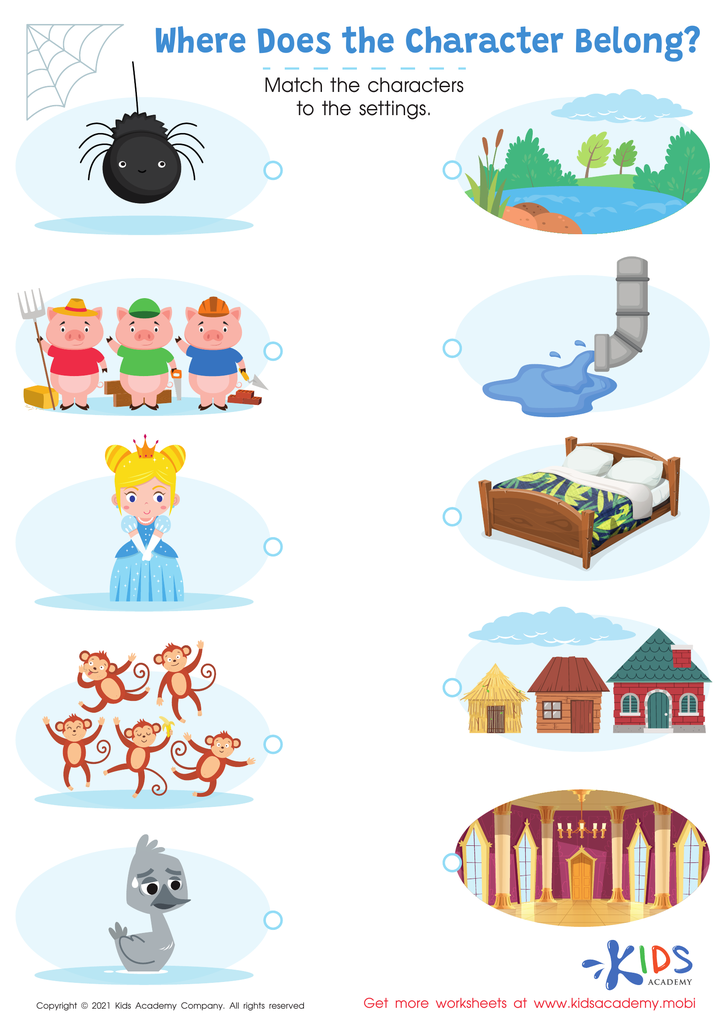
Fairy Tales are a great way to teach young ones about settings, characters and other literary elements. This worksheet contains illustrations from popular fairy tales to help kids identify characters and match them to the right settings. It's a fun way to improve recall skills and enhance comprehension using visuals.
Where Does the Character Belong? Worksheet
Worksheet
Can You Match the Sentence? Worksheet

Can You Match the Sentence? Worksheet

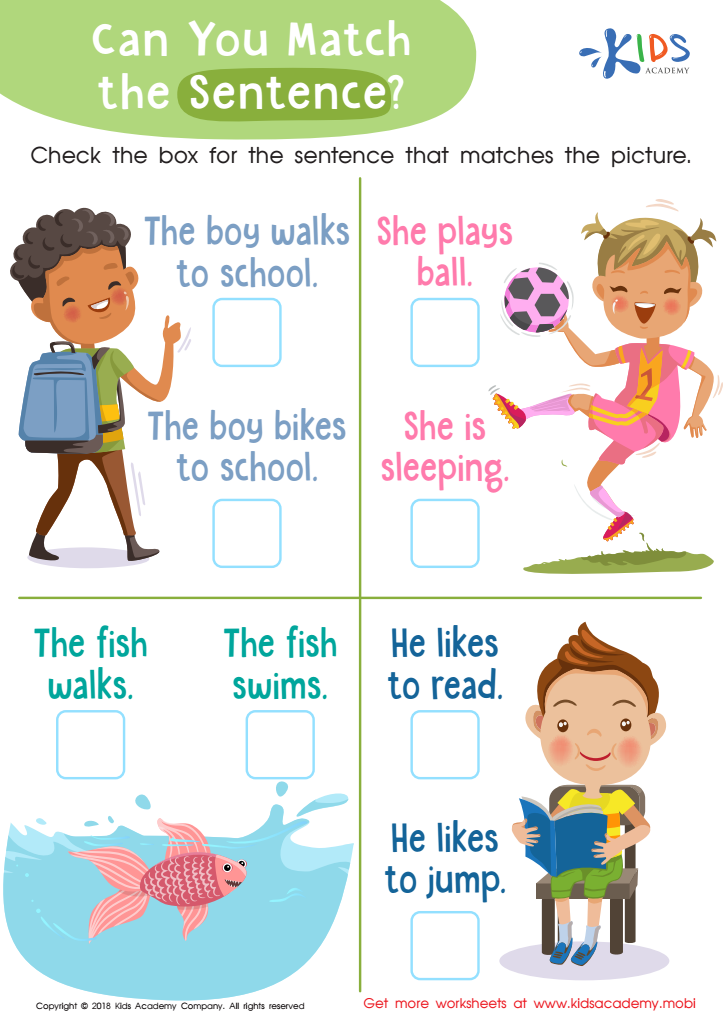
Kids gain fluency with this worksheet which uses bright pictures. They select the sentence that matches the image and check the box. This repetition of words and phrases helps them improve their reading skills while having fun.
Can You Match the Sentence? Worksheet
Worksheet
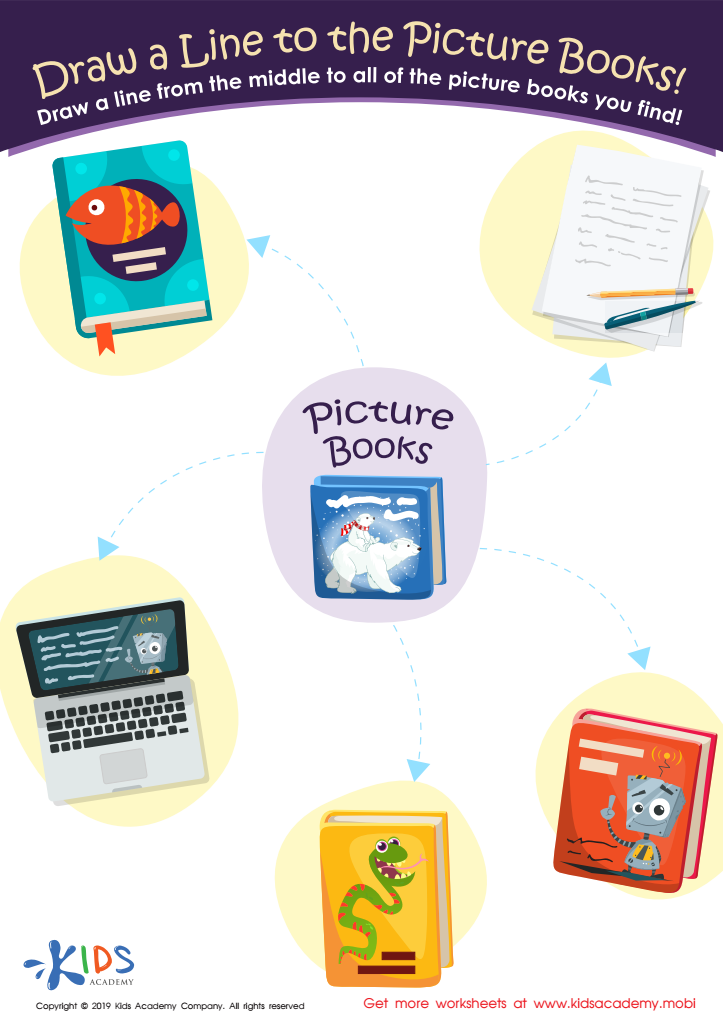
Draw a Line to the Picture Books Worksheet

Draw a Line to the Picture Books Worksheet

Encourage your students to read and explore with this fun exercise! They'll draw a line from the word 'picture books' to the five objects. Picture books are exciting, with stories and colorful images. Make story time even more enjoyable with this worksheet!
Draw a Line to the Picture Books Worksheet
Worksheet
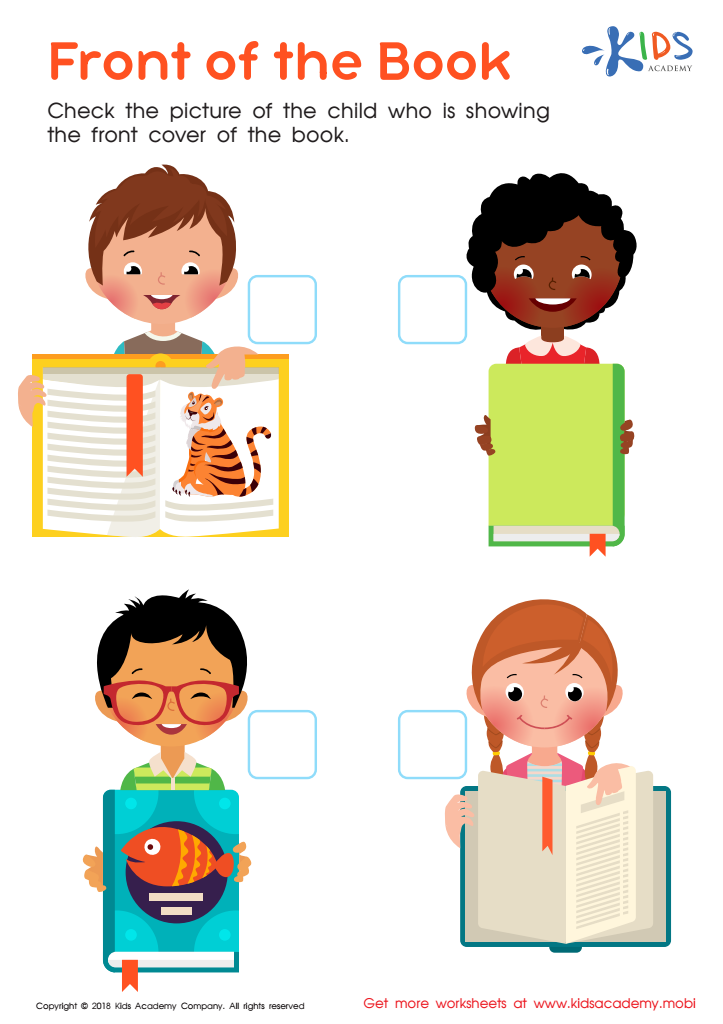
Front of the Book Worksheet

Front of the Book Worksheet

Help your child become a reader with this free worksheet! It's full of fun new friends and is designed to help kids understand concepts about the front of a book. They'll look at each picture and decide which friend is holding the book with the front cover, and check off the correct answer in the given boxes. Get your little one ready to be a reader!
Front of the Book Worksheet
Worksheet
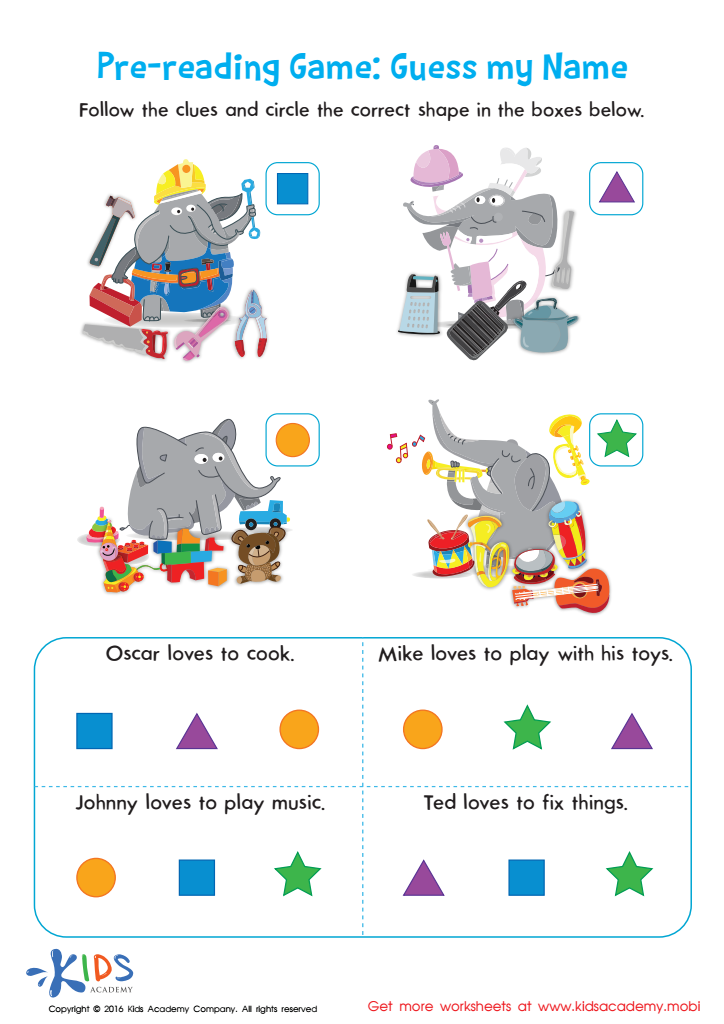
Pre reading worksheet guess my name

Pre Reading Worksheet Guess My Name

Guess My Name is a fun way to practice inference skills. Guess My Name is a fun pre-reading game to help your child practice drawing inferences from clues. With colorful illustrations, they'll use clues to match each elephant with its sentence and sharpen their inference skills.
Pre Reading Worksheet Guess My Name

Worksheet


Parents and teachers should prioritize developing reading skills and reading comprehension in children ages 3-6 because it forms the cornerstone of future academic success and overall cognitive development. During these formative years, young minds are exceptionally receptive and capable of tremendous growth. Introducing children to reading at an early age improves their vocabulary, sentence structure, and language skills, setting a strong foundation for advanced literacy.

Reading comprehension entails understanding, analyzing, and interpreting text, which is crucial for all subjects including math, science, and social studies. Early proficiency in these skills fosters critical thinking and problem-solving abilities, equipping children to grasp complex concepts more easily later on. Furthermore, early reading nurtures a lifelong love of books and learning, keeping children motivated and curious.

Beyond academic benefits, early reading enhances social skills and emotional intelligence. Stories often contain moral lessons and expose children to diverse cultures and perspectives, fostering empathy and broader worldviews. For parents and teachers, investing time in developing reading skills offers an opportunity to bond and engage meaningfully with children, creating a supportive learning environment. Thus, early focus on reading skills is a vital step toward ensuring children become well-rounded, successful individuals.