Shape Recognition Reading Comprehension Worksheets for Ages 3-6
3 filtered results
-
From - To
Discover our engaging Shape Recognition Reading Comprehension Worksheets designed specifically for children aged 3-6. These worksheets provide a fun and interactive way for young learners to enhance their reading skills while exploring basic shapes. Each activity encourages students to identify shapes in various contexts and comprehend simple sentences related to them, fostering both literacy and cognitive development. Ideal for preschool and early-grade classrooms, our worksheets promote a hands-on approach to learning through colorful visuals and relatable scenarios. Support your child's academic journey and nurture their love for reading with these educational resources that make learning shapes enjoyable!
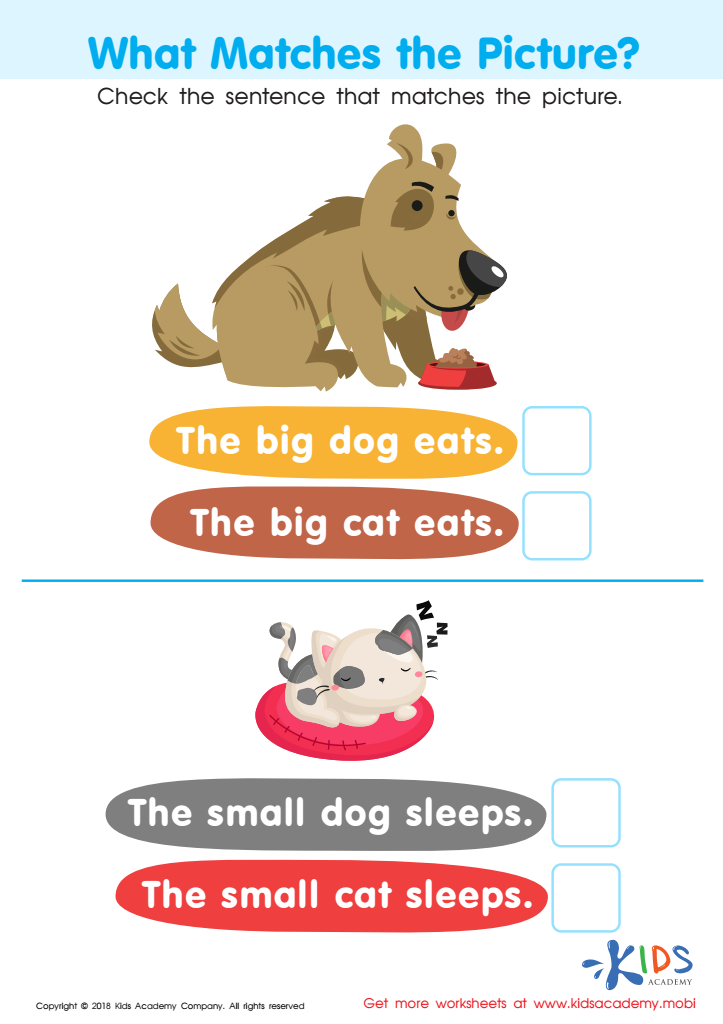
What Matches the Picture? Worksheet
 Assign to My Students
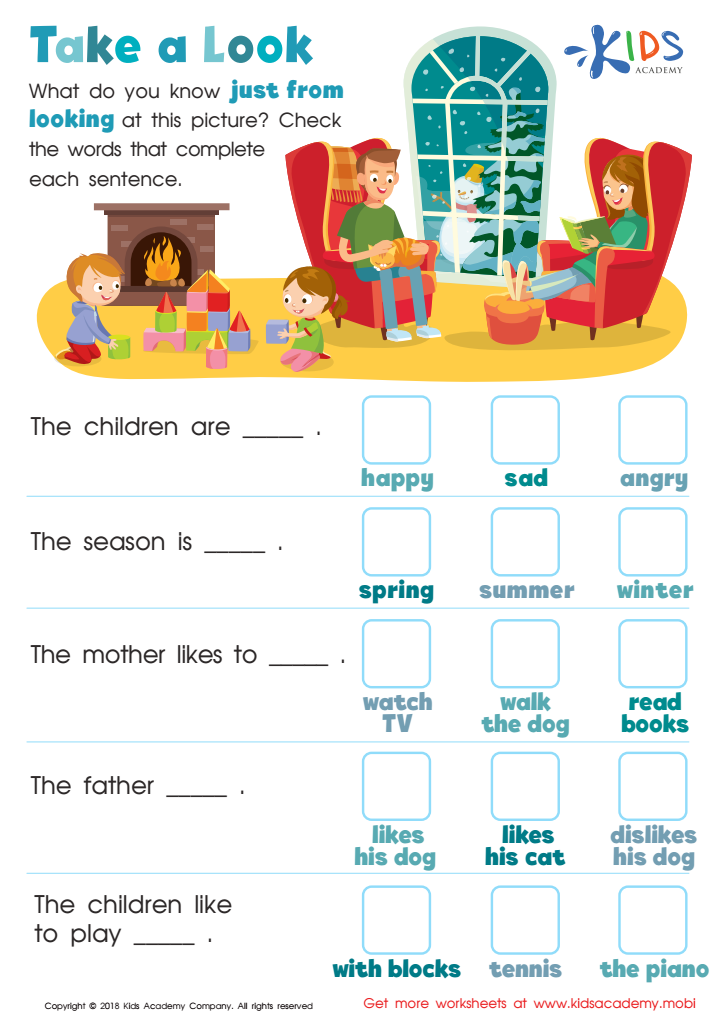
Take a Look - Part 1 Worksheet
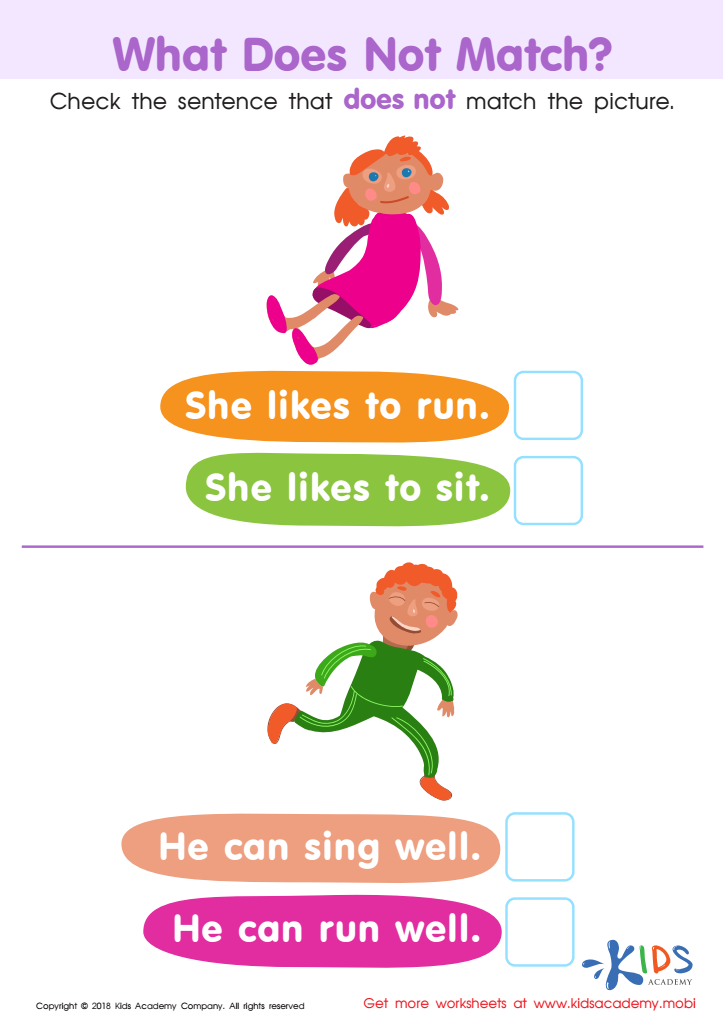
What Does Not Match? Worksheet








Shape recognition is a foundational skill that significantly impacts reading comprehension for children ages 3-6. At this age, children are honing their cognitive abilities and developing critical thinking skills. Understanding shapes helps them identify and decode letters and words, which are often built from geometric forms. By recognizing shapes, children learn to make connections between visual symbols and their meanings, laying the groundwork for effective reading.
Teachers and parents should care about this early stage of learning because shape recognition fosters spatial awareness and enhances problem-solving skills. These skills are not only crucial for literacy but are also linked to mathematics, allowing children to see and manipulate shapes in their environment. Additionally, engaging children in activities that promote shape recognition, such as games or shape-related storytelling, makes learning enjoyable and interactive.
Moreover, the social skills developed through collaborative shape-related activities encourage teamwork and communication. Emphasizing shape recognition helps create a rich, well-rounded educational experience that prepares children for future academic success. In summary, recognizing shapes is not merely a visual task, but a critical component of early literacy and overall cognitive development, making it an essential focus for teachers and parents alike.








