
Enhancing vocabulary Reading Fiction Worksheets for Ages 3-6
3 filtered results
Difficulty Level
Grade
Age
-
From - To
Subject
Activity
Standards
Our "Enhancing Vocabulary Reading Fiction Worksheets for Ages 3-6" are designed to make learning new words fun and engaging for young readers. Each worksheet features captivating stories and activities that help children build their vocabulary while nurturing a love for reading. By exploring vivid illustrations and imaginative tales, kids naturally absorb new words and their meanings. Perfect for parents and educators alike, these worksheets provide an enjoyable way to expand your child's language skills, improve comprehension, and cultivate an early appreciation for literature. Unlock your little one's potential with creative and effective vocabulary enhancement tools!
Favorites
With answer key
Interactive
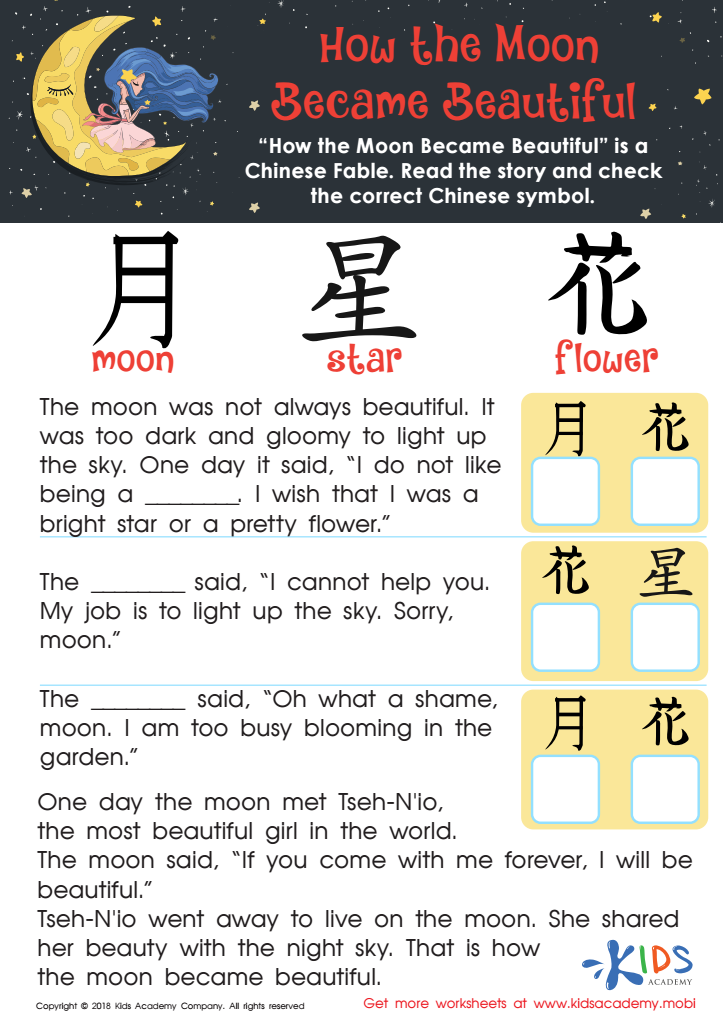
How the Moon Became Beautiful Worksheet
Fables are a great way for kids to learn! This Chinese fable about the moon's beauty is educational and entertaining. The PDF worksheet provides the English translations and symbols associated with the story. Kids can fill in the blanks with the correct symbols and have fun learning a new language!
 Assign to My Students
How the Moon Became Beautiful Worksheet
Worksheet
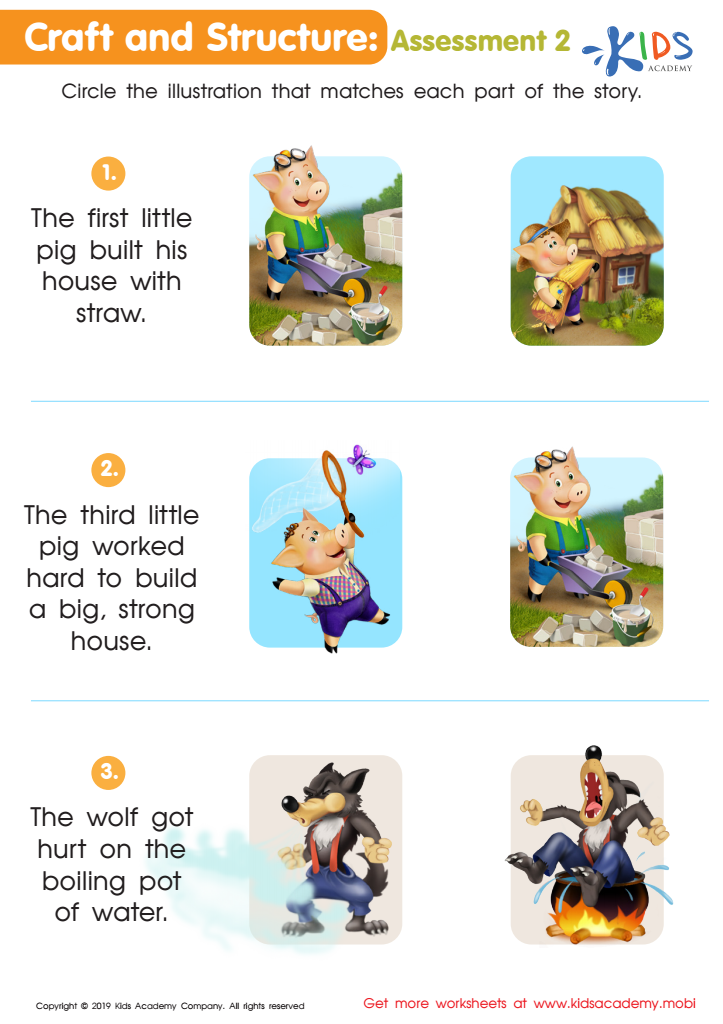
Craft and Structure: Assessment 2 Worksheet 2
This fun printout with colorful illustrations will assess how much your kids pay attention to story time. Go through the pictures and help them circle the ones that match each part of the story. Stimulate their brains and have fun in the process!
Craft and Structure: Assessment 2 Worksheet 2
Worksheet
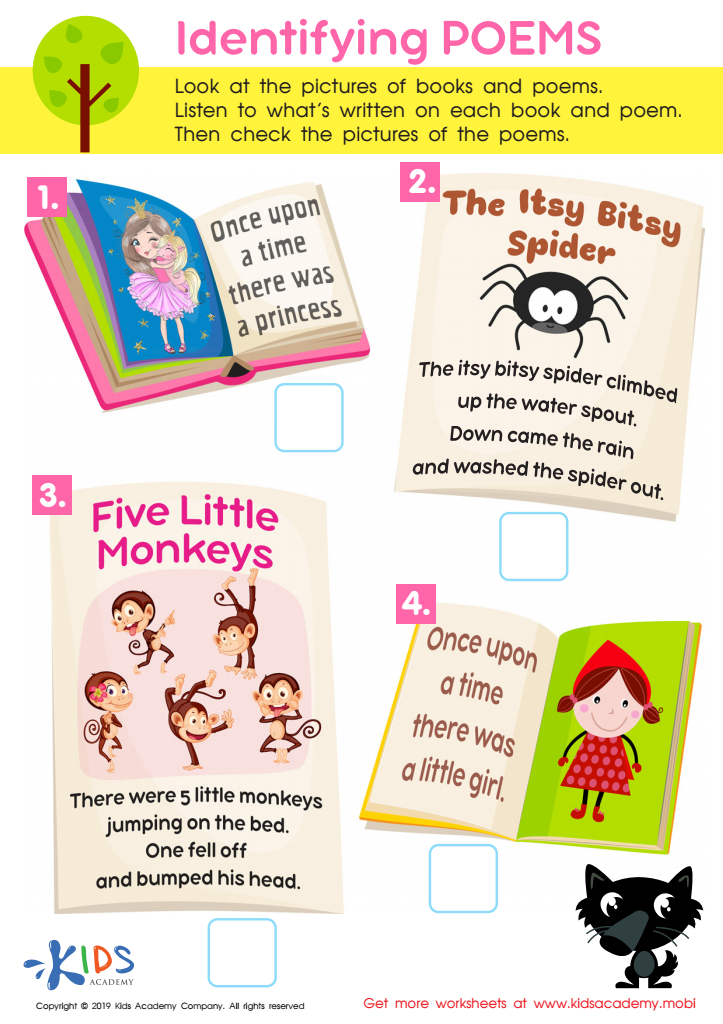
Identifying Poems Worksheet
Read to your kids often and look at the pictures of books and poems in this worksheet. Guide them by reading aloud each book and poem. Make sure they are paying attention and help them check the pictures. This is a great way for your kids to learn to read properly.
Identifying Poems Worksheet
Worksheet
Join Kids Academy for Free
Who is primarily going to use this learning content?








Parents and teachers should prioritize enhancing vocabulary through reading fiction for children aged 3-6 because this critical developmental period lays the foundation for lifelong learning, communication skills, and cognitive development. During these early years, a child's brain is incredibly receptive to new words and concepts. Fiction introduces them to rich, varied language in engaging contexts, making learning both enjoyable and memorable.
When young children are read to from colorful, imaginative storybooks, they encounter vocabulary far beyond their daily conversational language. This exposure not only expands their word bank but also improves their understanding of language nuances, such as context, tone, and emotion. Enhanced vocabulary fosters better comprehension and expressive abilities, enabling children to articulate their thoughts and emotions more accurately.
Moreover, improved vocabulary skills through fiction help children succeed academically. Studies show a strong correlation between early vocabulary acquisition and later reading proficiency, comprehension skills, and overall academic achievement. Reading fiction also stimulates creativity and imagination, essential components of problem-solving and critical thinking.
Ultimately, investing time in reading fiction with young children cultivates a lifelong love of books and learning. It strengthens the parent-child or teacher-student bond, enhances empathy by exposing children to diverse characters and experiences, and equips them with the linguistic tools necessary for successful communication and personal growth.








