Visual interpretation Reading Fiction Worksheets for Ages 3-6
3 filtered results
-
From - To
Discover our engaging "Visual Interpretation Reading Fiction Worksheets" designed for children ages 3-6! These interactive resources help young learners enhance their comprehension skills by connecting vivid images with imaginative stories. Each worksheet offers fun activities encouraging kids to observe visual elements, thereby improving critical thinking and interpretation abilities. Perfect for at-home learning or classroom settings, our worksheets promote early literacy through colorful illustrations and relatable characters. Allow children to explore narratives in a playful way, nurturing their love for reading from a young age while developing important analytical skills. Start your little one's reading adventure today!
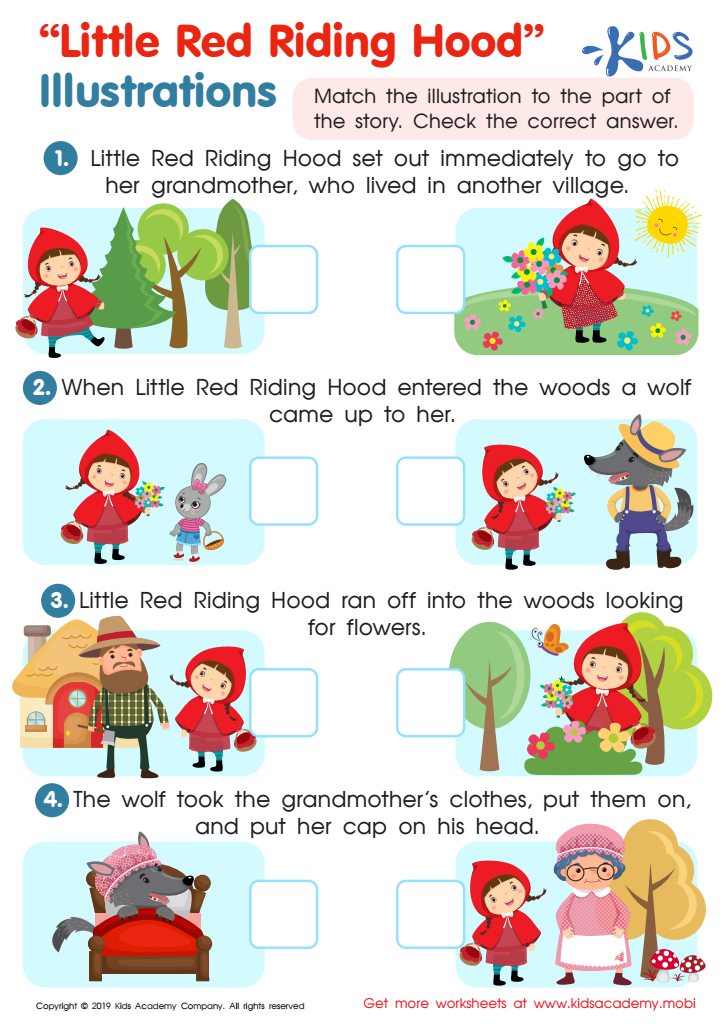
Little Red Riding Hood: Illustrations Worksheet
 Assign to My Students
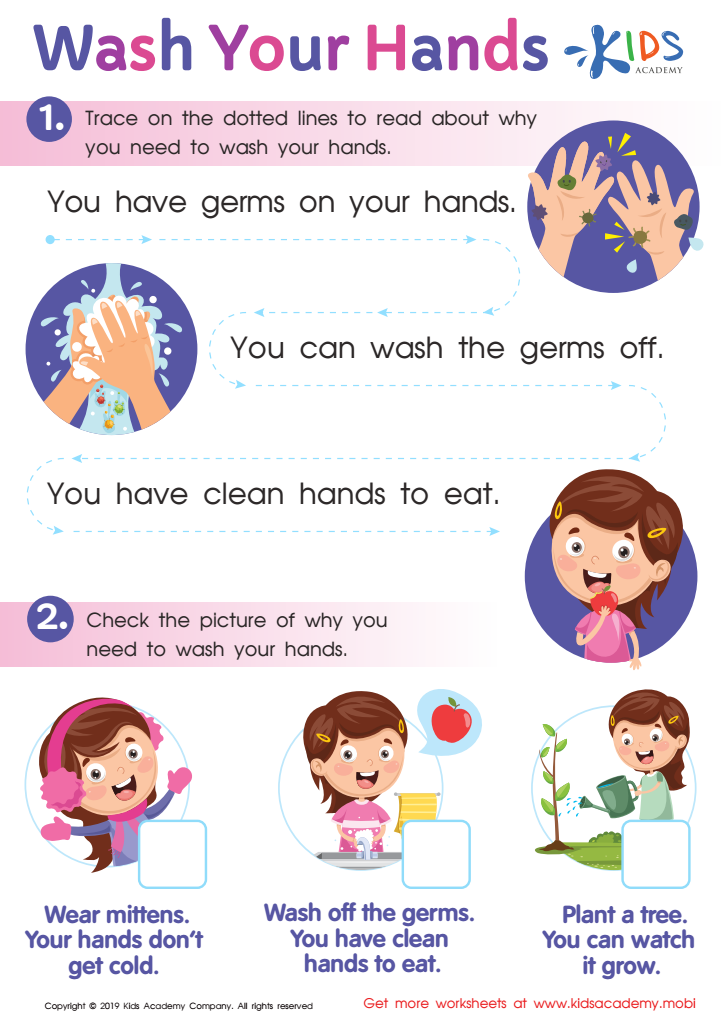
Wash Your Hands Worksheet
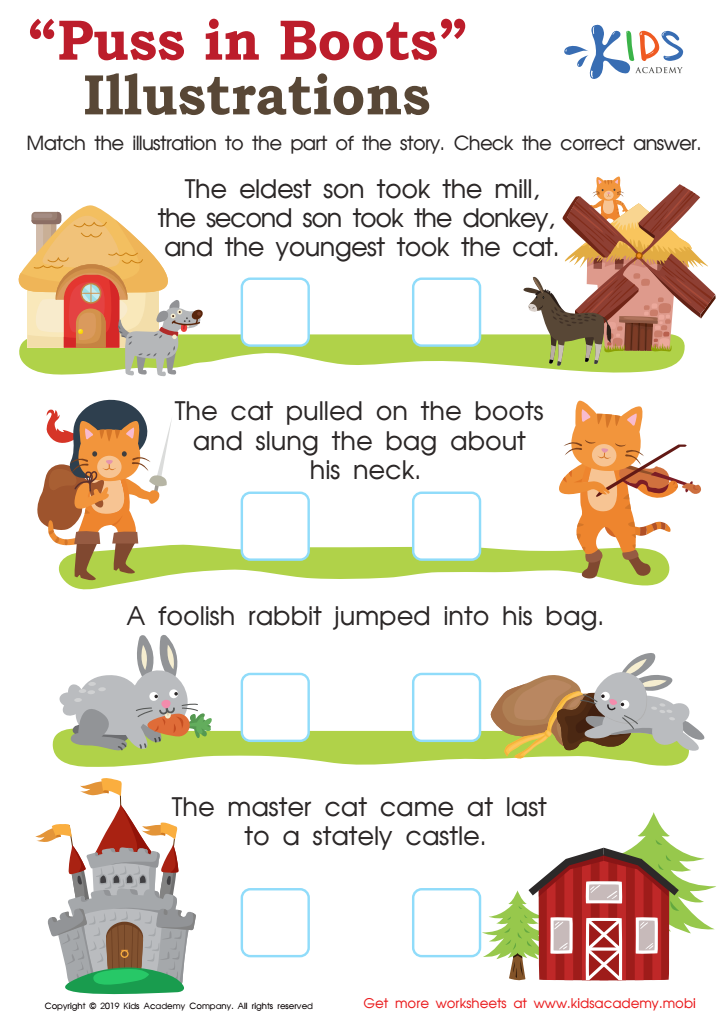
Puss in Boots Illustrations Worksheet








Visual interpretation of reading fiction for ages 3-6 is crucial for several reasons. At this developmental stage, children rely heavily on pictures to understand and engage with stories. Visual elements aid comprehension, giving context to the narrative, and fostering a deeper connection with the material. When parents and teachers emphasize visual literacy, they cultivate critical thinking skills, encouraging children to analyze images, predict outcomes, and make inferences.
Furthermore, visual interpretation enhances vocabulary development. Illustrations often provide a bridge to new words, enabling young learners to associate abstract concepts with visual representations. This process opens pathways for discussions that enrich their understanding and spark creativity.
Involving children in reading activities that incorporate visuals promotes engagement and active participation. It can enhance their motivation to read and develop positive attitudes towards literacy. By facilitating collaborative storytelling and encouraging children to create their own visual narratives, adults nurture confidence and self-expression.
Ultimately, fostering visual interpretation creates a holistic learning experience. It prepares young readers to navigate and appreciate a world filled with both text and imagery, thus setting the foundation for lifelong literacy skills and an appreciation for literature. Parents and teachers play a pivotal role in that journey from an early age.








