Rhyming Words Worksheets for Ages 3-6 - Page 2
26 filtered results
-
From - To
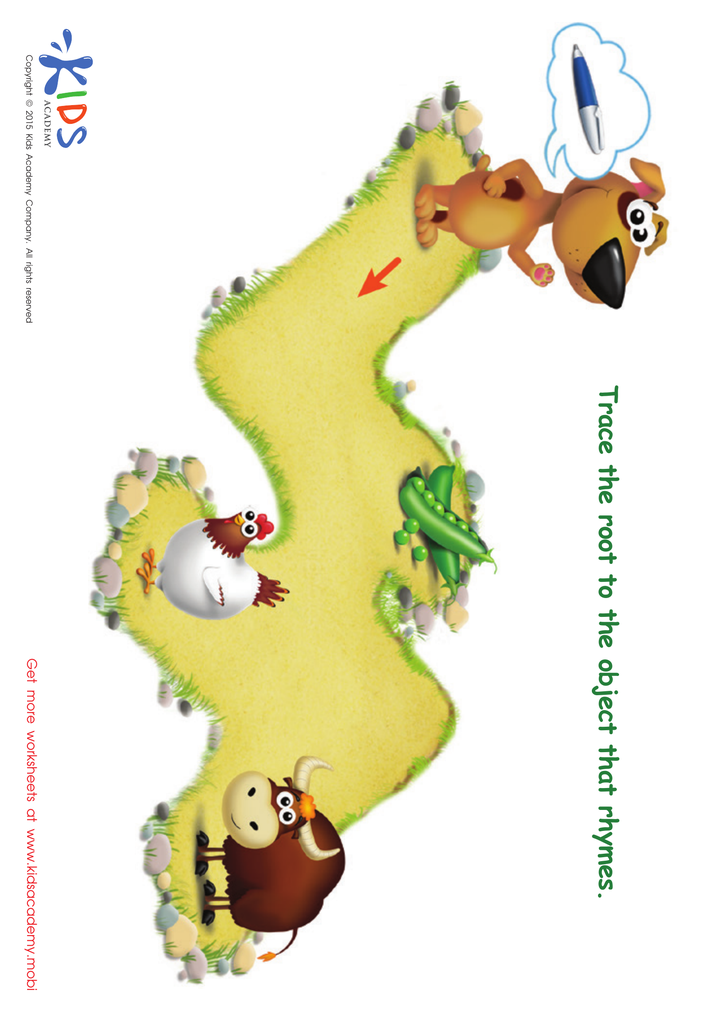
Pen Rhyming Words Worksheet
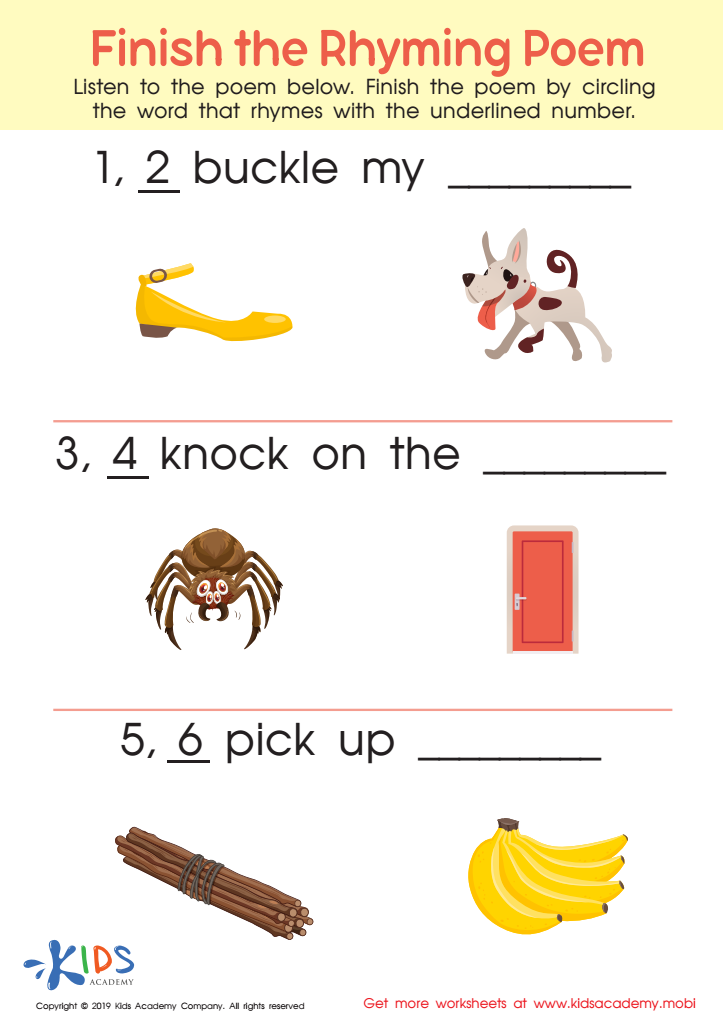
Finish Rhyming Poem Worksheet
 Assign to My Students








Firstly, rhyming words help develop phonological awareness, which is the ability to recognize and manipulate the sounds in a language. This skill is crucial for the future development of reading abilities. When children can identify and produce rhyming words, they're better able to understand patterns in language, distinguish between similar sounds, and improve their spelling skills down the line.
Secondly, rhyming strengthens memory through repetition and familiarity. Rhyming stories and songs, frequently heard and repeated, help children remember words and phrases more easily. This creates a fun and engaging way to enhance their vocabulary and phrase memorization.
Another benefit is the enhancement of listening skills and auditory discrimination. Detecting rhymes requires careful listening, which in turn hones their ability to distinguish between different sounds and syllables.
Additionally, rhyming games and activities often involve rhythmic patterns, which can aid motor development and coordination. Clapping or tapping to the rhythm while reciting rhymes can make the learning experience more dynamic and physically engaging.
Lastly, rhyming fosters creativity and a love for language. Children who play with rhymes become curious about words and their interconnections, sparking imagination and a deeper interest in reading and storytelling. Therefore, rhyming not only equips children with essential phonetic skills but also cultivates a joyous and stimulating early learning environment.








