Rhyming skills development Rhyming Words Worksheets for Ages 3-6
3 filtered results
-
From - To
Enhance your child's phonemic awareness with our engaging Rhyming Words Worksheets, tailored for ages 3-6! These thoughtfully designed activities help young learners identify and create rhymes, a crucial skill in early literacy development. Through fun exercises, children will explore sounds, build vocabulary, and strengthen their reading skills in a playful way. Whether at home or in the classroom, these worksheets offer an interactive approach to encourage a love for language and reading. Discover the joy of rhyming and set your child on the path to reading success with our expertly crafted resources today!
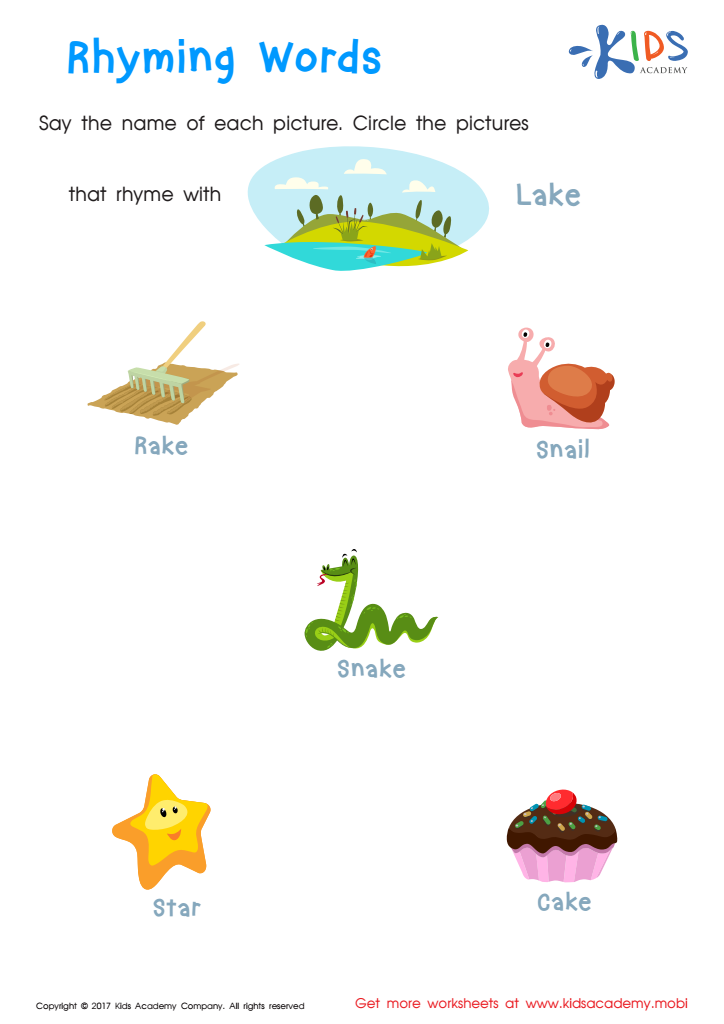
Rhyming Words Rhyming Worksheet
 Assign to My Students
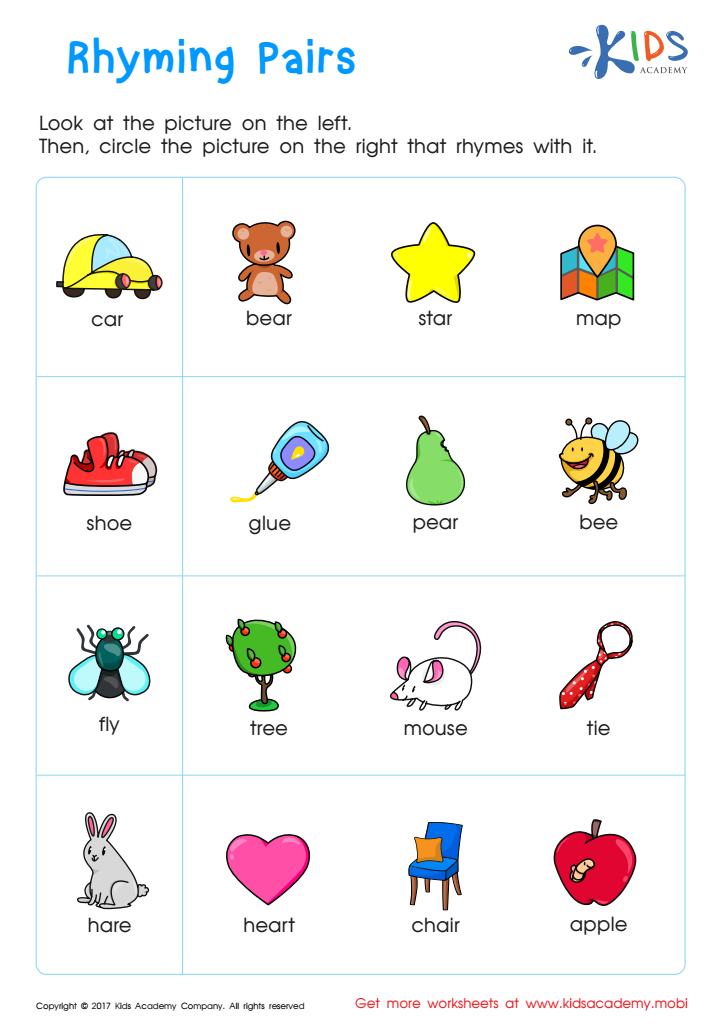
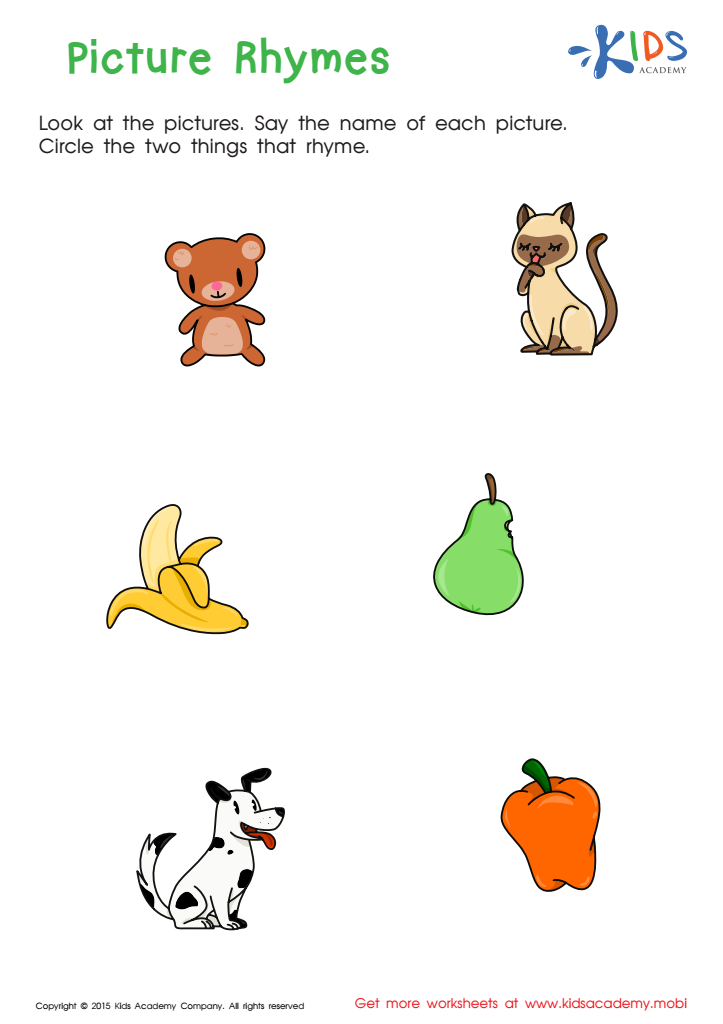
First Words: Picture Rhymes Worksheet






.jpg)

Rhyming skills development is crucial for young children aged 3-6 as it lays the foundation for literacy and communication. This auditory skill enhances phonemic awareness, which is the ability to hear and manipulate sounds in words. When parents and teachers engage children in rhyming activities, they help them recognize patterns in language, fostering early reading skills.
Moreover, rhyme awareness encourages vocabulary expansion; children learn that words can have similar endings, which can help them guess meanings of unfamiliar words. For instance, through rhymes, children bond with literature, developing a love for reading and storytelling. Rhymes also enhance memory retention, as rhythmic patterns make it easier for kids to recall information.
Cognitive development is another key benefit, as engaging in rhyming games boosts critical thinking and creativity. Socially, rhyming activities can be fun, enabling interactive play that enhances communication skills and emotional expression.
In an era where literacy sets the groundwork for future academic success, prioritizing rhyming skills during early childhood is essential. It equips children with essential tools for effective listening, speaking, and reading, ultimately fostering a more confident and motivated learner as they progress in their educational journey.








