Mathematical reasoning Sight Words Worksheets for Ages 3-6
5 filtered results
-
From - To
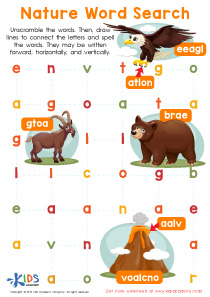
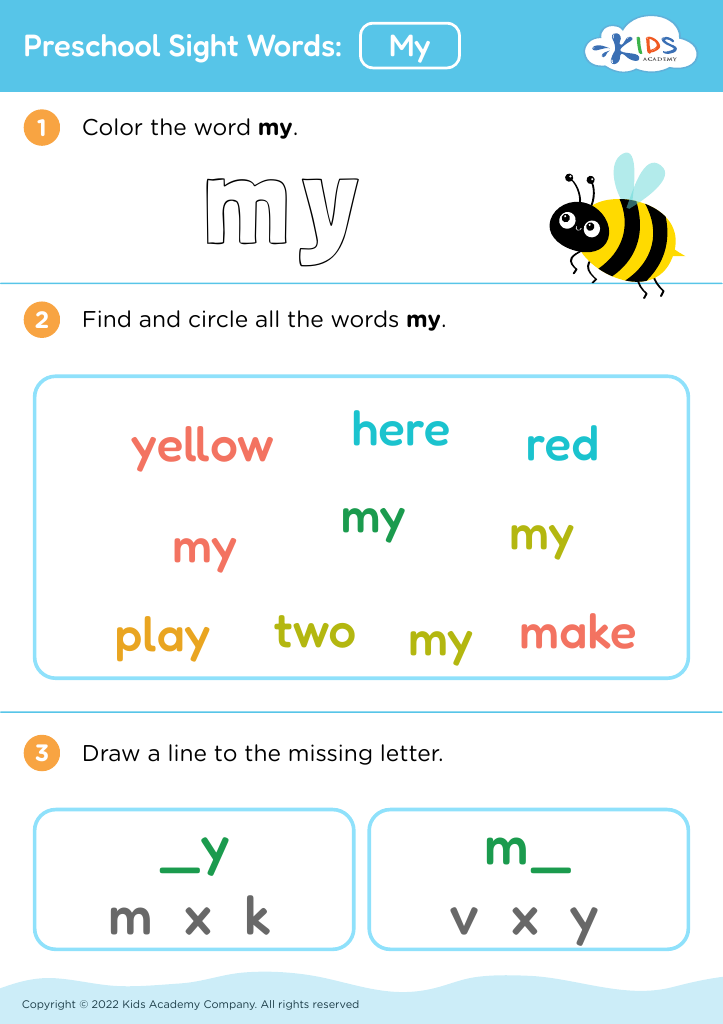
Unlock your child's potential with our Mathematical Reasoning Sight Words Worksheets for ages 3-6. Designed to master critical early learning skills, these engaging worksheets blend foundational math concepts with essential sight words to boost both numeracy and literacy. Each worksheet provides fun activities that stimulate cognitive development, problem-solving, and logical thinking. From pattern recognition to basic counting, your little one will enjoy learning in a playful, interactive manner. Ideal for preschoolers and kindergarteners, our expertly crafted worksheets make early education an exciting journey, laying strong foundations for future academic success. Start your child's learning adventure today!




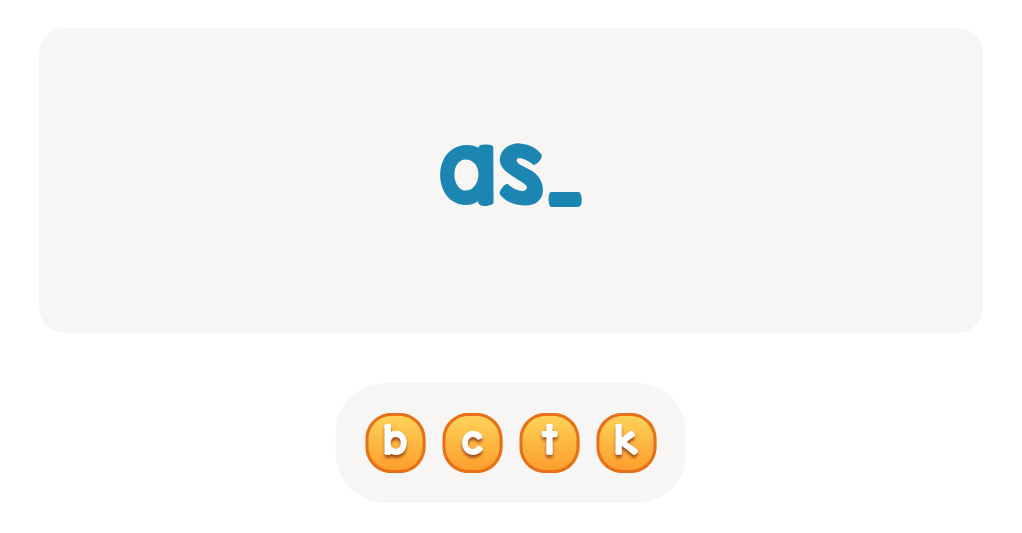
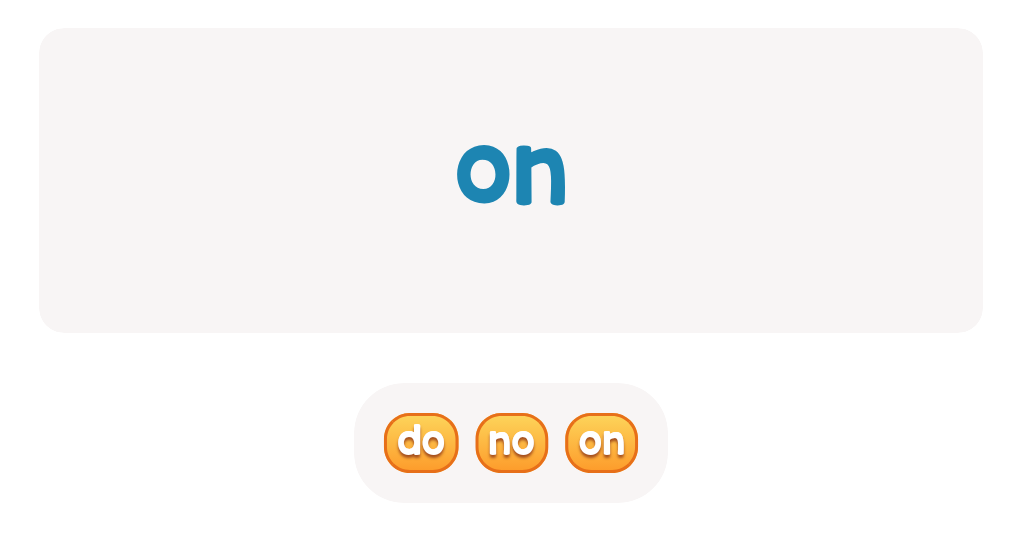
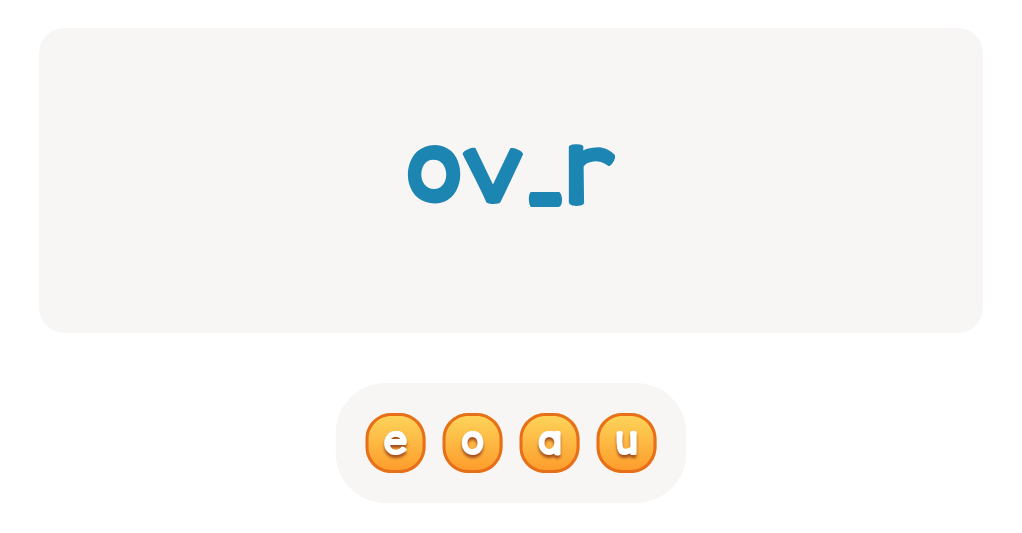
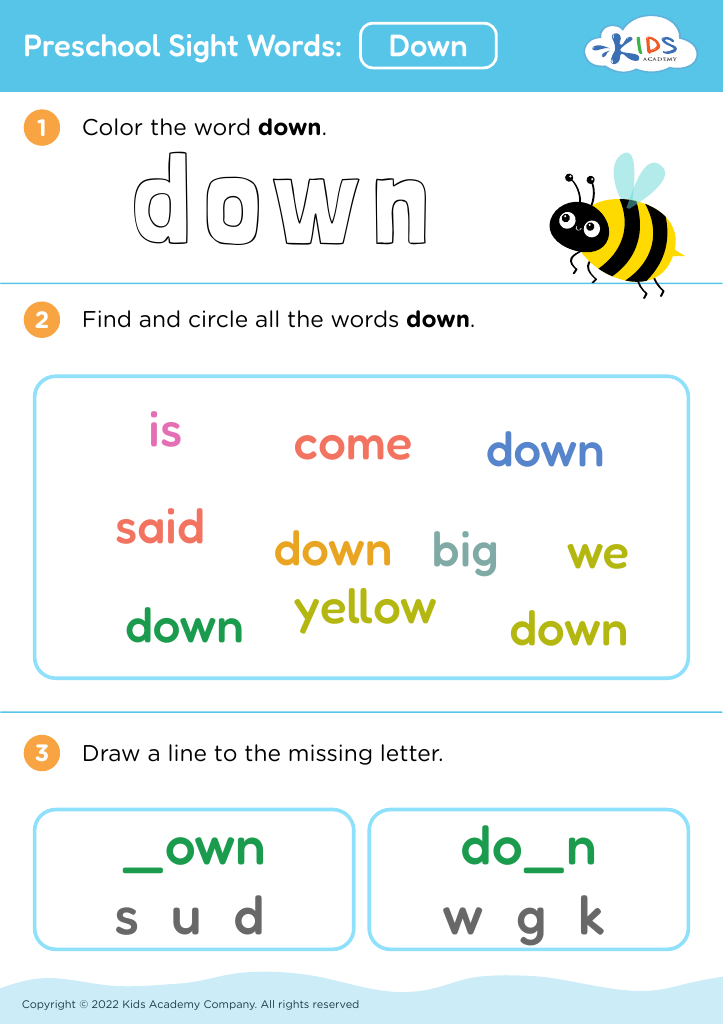
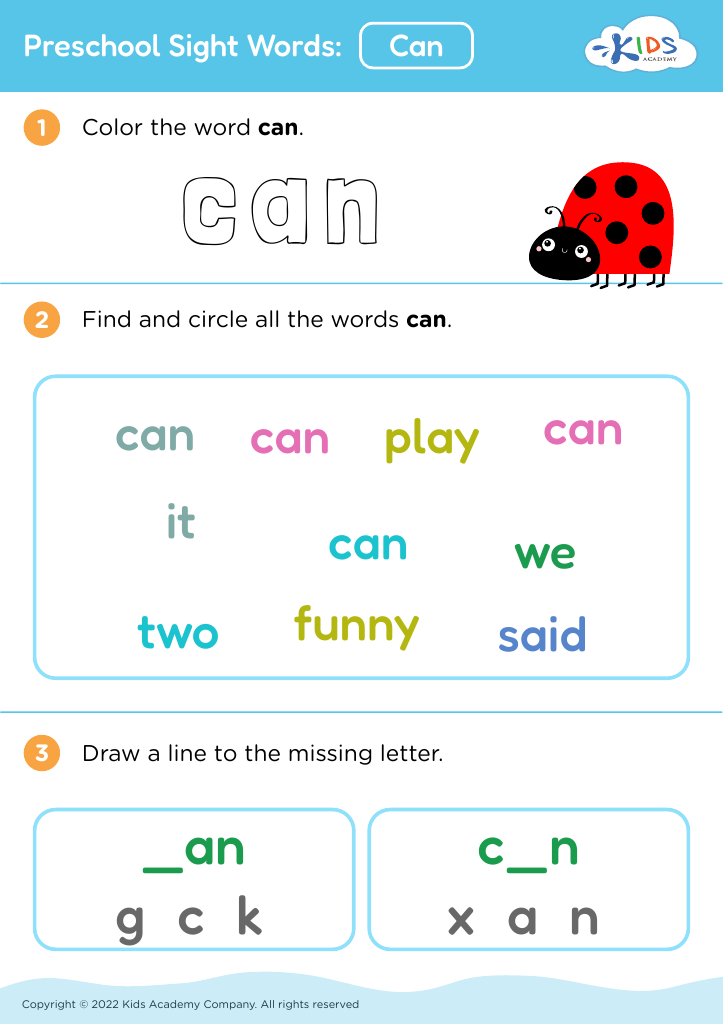
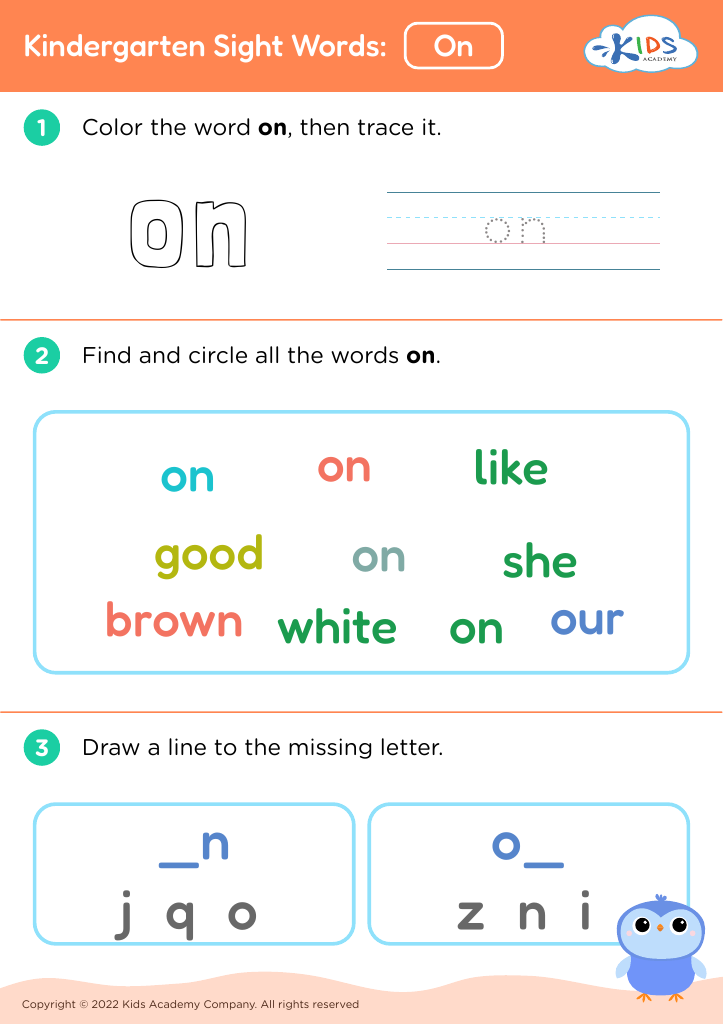
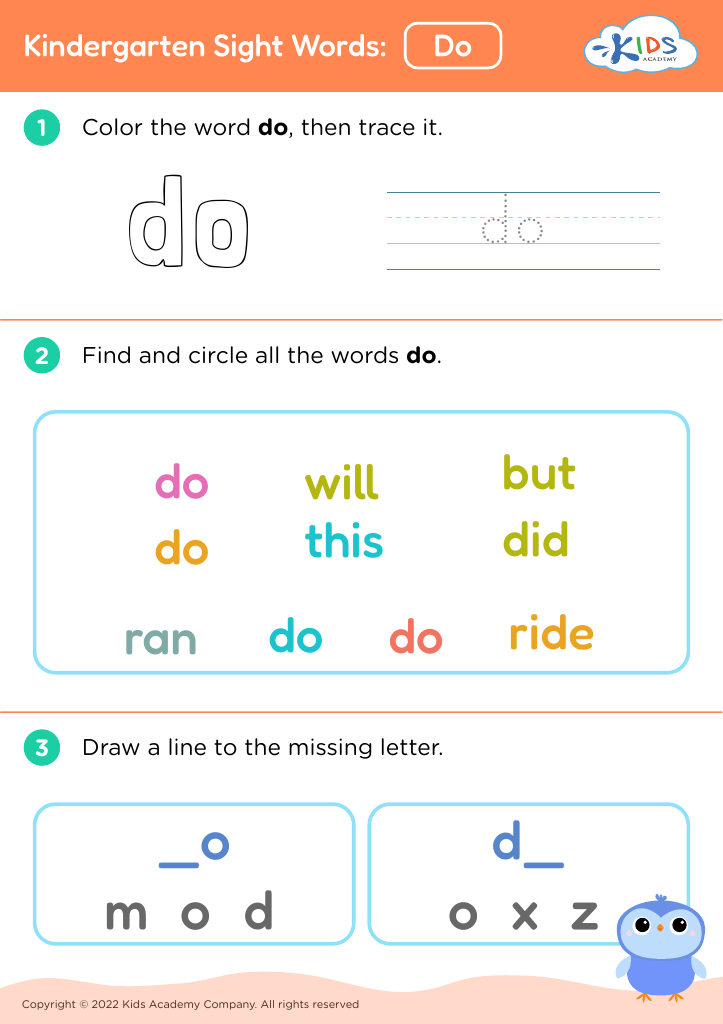








Mathematical reasoning and sight words are fundamental building blocks in early childhood education, critical for children aged 3-6. Parents and teachers must prioritize these areas because they set the stage for future academic success and everyday problem-solving skills.
Mathematical reasoning at a young age enhances cognitive development, enabling children to understand basic concepts such as numbers, patterns, and relationships. This lays the groundwork for advanced mathematical thinking and logical problem-solving skills, essential in academics and real-life situations. Early exposure helps children develop confidence and a positive attitude towards math, leading to better performance in school.
Sight words, or high-frequency words that children recognize instantly, are equally important for literacy development. Mastery of sight words allows children to read more fluently and with greater comprehension, as they leapfrog over the need to decode these common words. This fluency reduces cognitive load, enabling young readers to focus on understanding and enjoying the text. Their growing proficiency in reading fosters a love for learning, contributing to higher motivation and academic achievement.
By promoting mathematical reasoning and sight words during early childhood, teachers and parents equip children with the critical skills they need for both educational success and everyday activities, setting them on a path to become confident, capable learners.