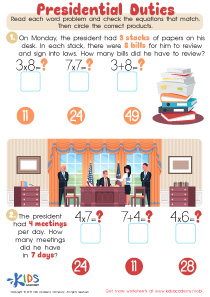
Decision making skills Community Worksheets for Ages 3-6
3 filtered results
-
From - To
Enhance your child's decision-making abilities with our engaging Community Worksheets, designed specifically for ages 3-6. These interactive resources help young learners explore essential choices within their community, fostering critical thinking and problem-solving skills. Through fun activities and scenarios, children will learn to weigh their options and understand the consequences of their decisions, all while developing their reasoning skills. Perfect for home or classroom use, these worksheets encourage discussion and family involvement, making learning a collaborative experience. Equip your preschooler with foundational decision-making skills that will benefit them in everyday situations and future challenges. Start building confidence in choices today!
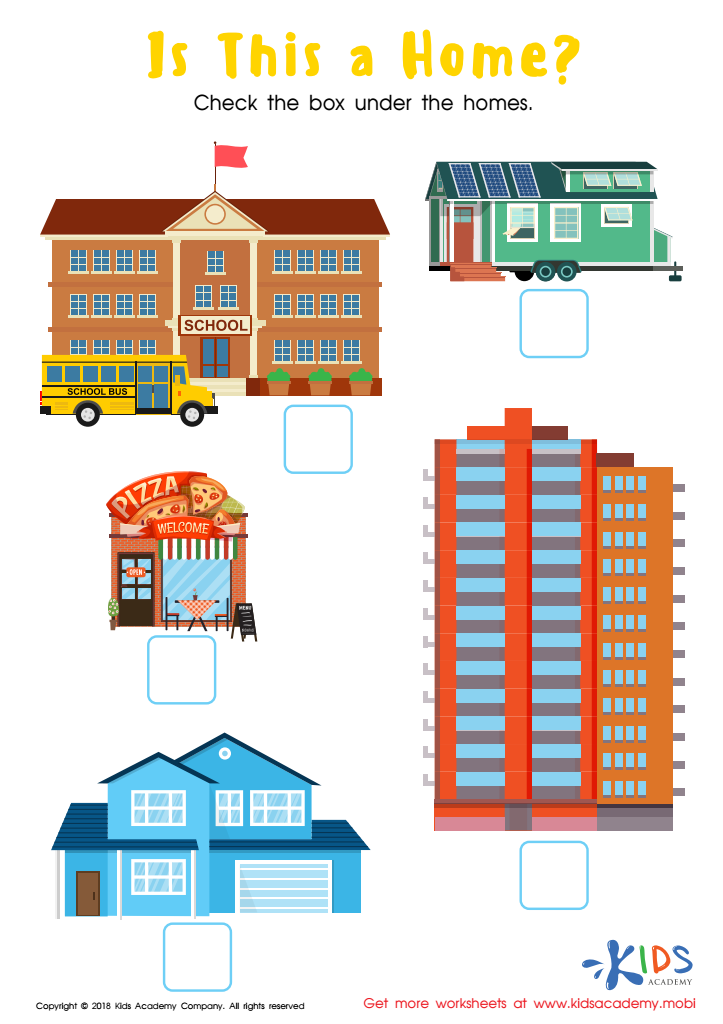
Is this a Home? Worksheet
 Assign to My Students
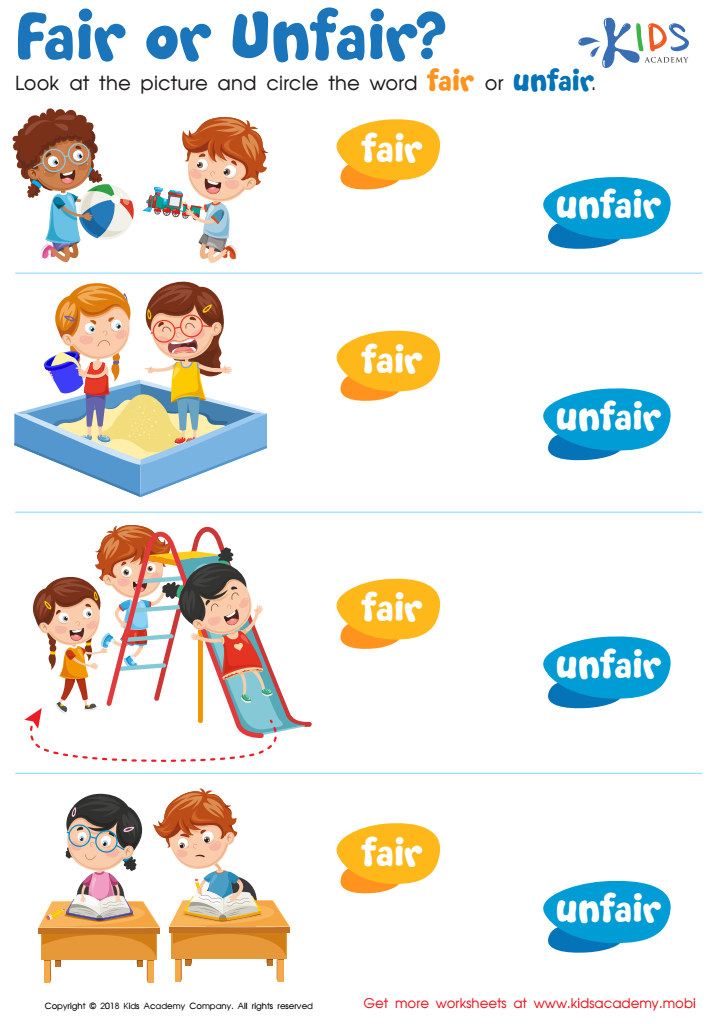
Fair or Unfair Worksheet

Towns Worksheet







Decision-making skills are crucial for children aged 3-6 as they form the foundation for future problem-solving and critical-thinking abilities. During these formative years, kids start to explore independence and learn how to evaluate choices. By encouraging decision-making in young children, parents and teachers help cultivate their sense of agency, allowing them to express preferences and opinions confidently.
Moreover, engaging in decision-making activities promotes cognitive development. Young children learn to weigh options, consider consequences, and understand cause-and-effect relationships while navigating simple choices. This practice enhances their reasoning skills, ultimately contributing to a more structured thought process as they grow older.
In a community setting, fostering these skills contributes to social cohesion and collaboration. When children regularly engage in making decisions with their peers, they learn to listen to different viewpoints and negotiate, leading to increased empathy and cooperation.
By prioritizing decision-making skills in early childhood education, parents and educators not only prepare children for academic success but also equip them with essential life skills. These abilities lay the groundwork for becoming responsible, self-reliant individuals who can face challenges effectively throughout their lives. Thus, investment in decision-making begins early and shapes well-rounded, capable individuals.