
Historical Knowledge History Worksheets for Ages 3-6
5 filtered results
Difficulty Level
Grade
Age
-
From - To
Subject
Activity
Standards
Explore our engaging Historical Knowledge History Worksheets designed for children ages 3-6! These thoughtfully crafted resources introduce young learners to the fascinating world of history in a fun and interactive way. Featuring colorful illustrations and age-appropriate activities, these worksheets foster early understanding of historical concepts, culture, and significant figures. Our materials encourage critical thinking and creativity while aligning with early education standards. Whether used in the classroom or at home, these worksheets are perfect for nurturing curiosity about the past. Help your child build a strong foundation in social studies and ignite their passion for history today!
Favorites
With answer key
Interactive
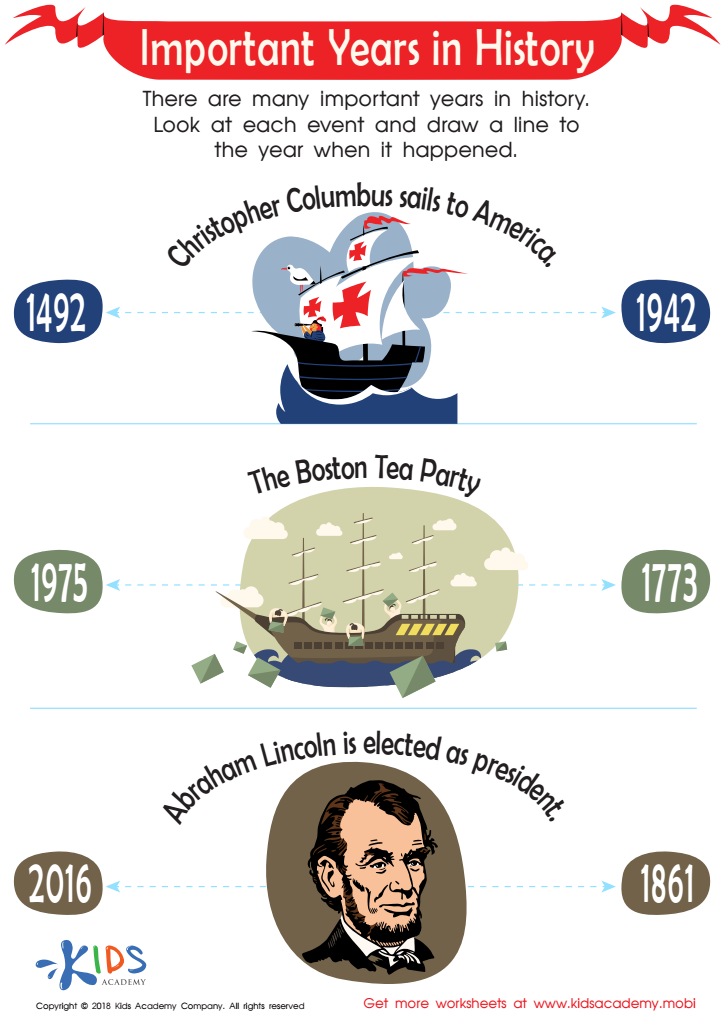
Important Years in History Worksheet
Ask your students if they can name any important dates in history. Then, look at the images in the worksheet with them. Read the sentences above each one to them and have them trace a line to the year when the event occurred.
 Assign to My Students
Important Years in History Worksheet
Worksheet
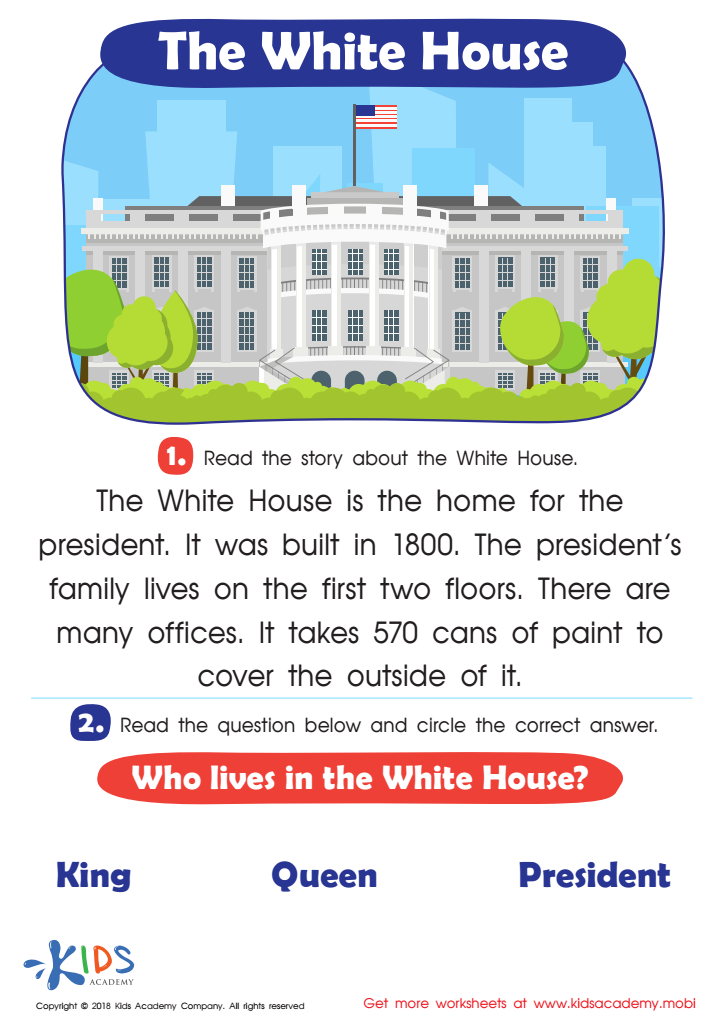
White House Worksheet
Read stories to your students to teach them new words, and about the White House. Before reading, ask your kindergartners what they already know. Then read short sentences for them to learn about the building the U.S President resides in.
White House Worksheet
Worksheet
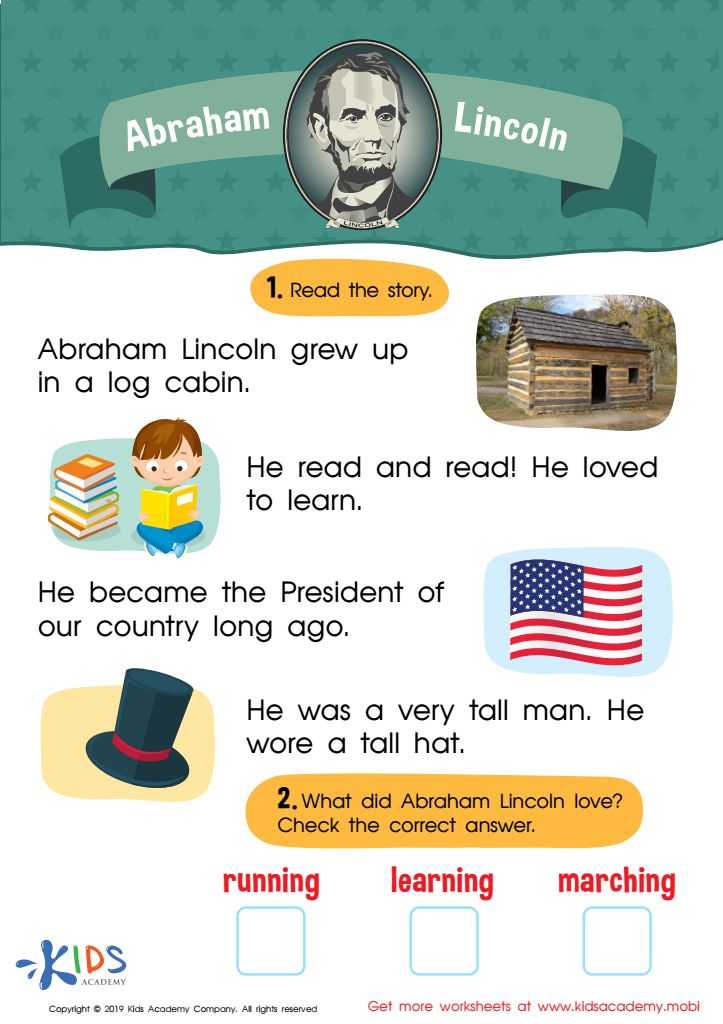
Abraham Lincoln Worksheet
Let your kids listen to interesting stories while having fun! Read the short story in this worksheet, point to the picture representing each sentence, then ask the questions and check the answers. Doing this will help your children learn new things and build their vocabulary.
Abraham Lincoln Worksheet
Worksheet
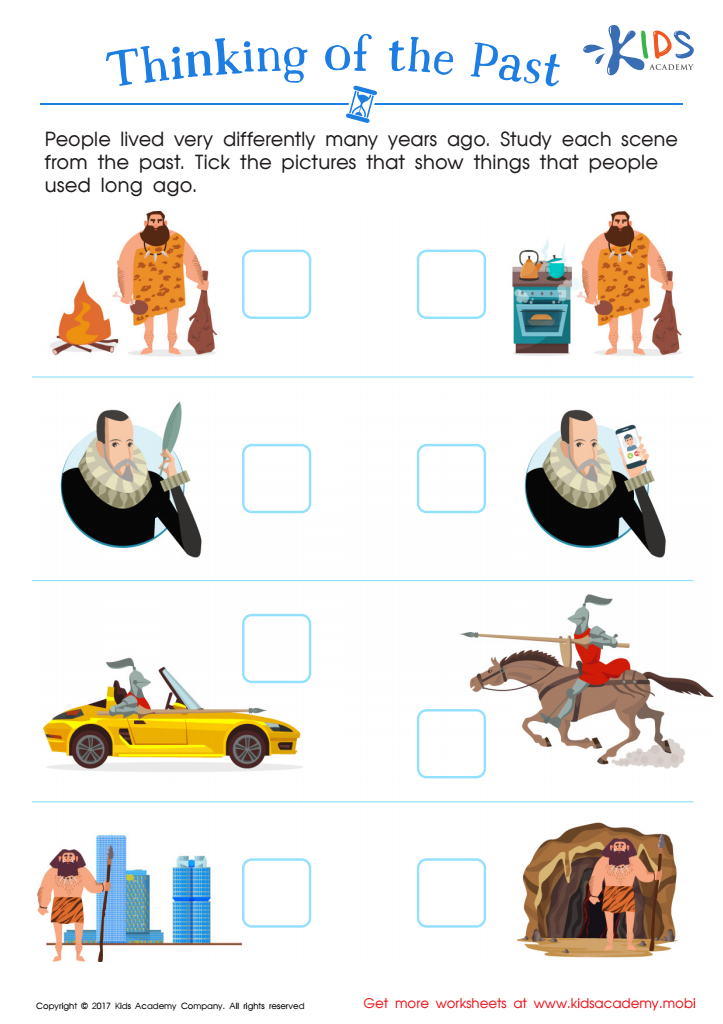
Thinking Past Printable
Bring the past to life for your kid with this fun worksheet! They'll use logic to choose the right answer, learning about different eras and how people lived in them. With a colorful caveman and modern skyscraper side by side, they won't even realize they're building historical knowledge.
Thinking Past Printable
Worksheet
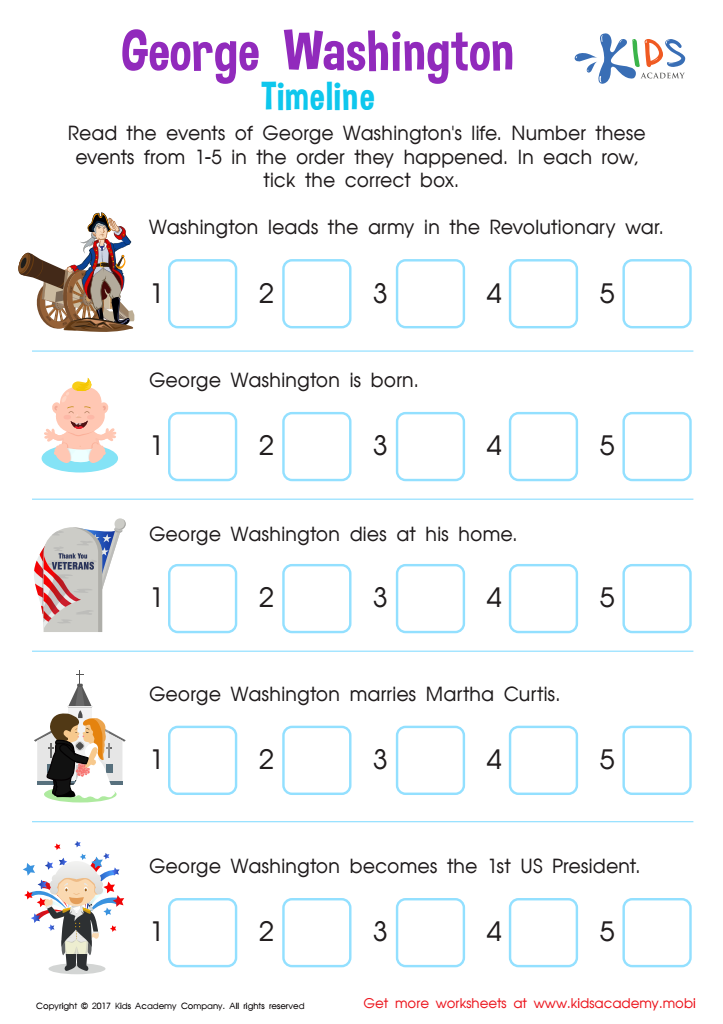
George Washington Timeline Worksheet
Help your child learn about George Washington and practice sequencing events! This printable worksheet will boost their reading and comprehension skills while they review historical facts. It's a great challenge to keep them engaged and learning.
George Washington Timeline Worksheet
Worksheet
Join Kids Academy for Free
Who is primarily going to use this learning content?






.jpg)

Understanding historical knowledge in early childhood education is crucial for several reasons. Firstly, children aged 3-6 are at a formative stage of cognition where they begin to grasp concepts of time, identity, and community. Introducing them to history helps them develop a sense of belonging and an understanding of their place in the world.
Fostering an awareness of history not only enriches their vocabulary but also aids in developing critical thinking skills as they begin to question and connect past events to their current lives. Engaging children with stories of diverse cultures, significant figures, and important events cultivates empathy and an appreciation for diversity, encouraging them to respect others' experiences.
Moreover, early historical knowledge addresses foundational literacy and numeracy skills, through timelines and storytelling, which build comprehension and analytical skills. Parents and teachers play a critical role in providing exposure to historical content through books, discussions, and imaginative play, igniting curiosity about different times and places.
Ultimately, integrating historical knowledge into the curriculum for young children promotes an informed citizenry, fostering active participation and deeper understanding as they grow. This foundation not only shapes their individual identities but can also contribute to a more inclusive and understanding society.








