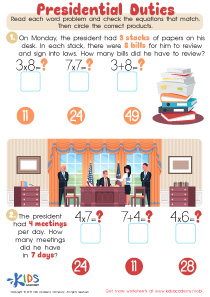
Counting skills Social Studies Worksheets for Ages 3-6
3 filtered results
Difficulty Level
Grade
Age
-
From - To
Subject
Activity
Standards
Enhance your child's learning journey with our engaging Counting Skills Social Studies Worksheets, designed specifically for children ages 3-6. These worksheets incorporate fun activities that blend counting concepts with essential social studies themes. Children will develop numerical skills while exploring topics such as community, culture, and geography through colorful illustrations and relatable scenarios. Our age-appropriate exercises encourage critical thinking and make learning enjoyable! Perfect for home or classroom settings, these worksheets promote early math skills alongside valuable social knowledge, preparing kids for a well-rounded educational experience. Download today and watch your little ones thrive as they explore the world around them through counting!
Favorites
With answer key
Interactive
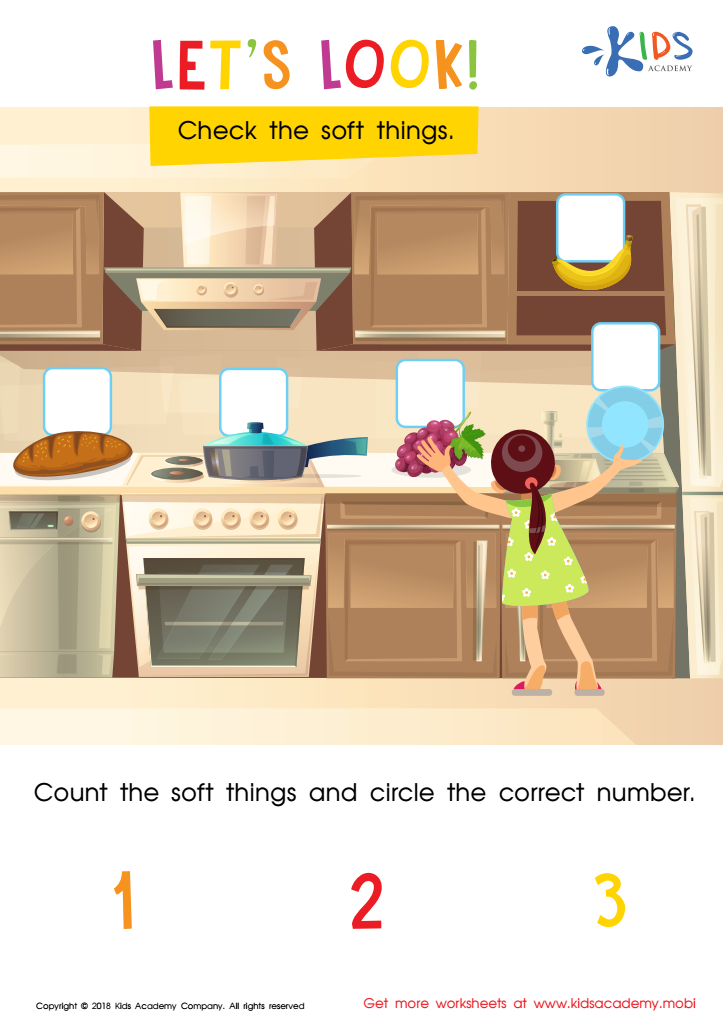
Let's Look! Assessment Worksheet
Have your child look at the picture in the printout and name the objects. Ask which ones are soft and hard and have them count the soft objects and circle the number. This worksheet will engage your child's thinking and teach them about texture.
 Assign to My Students
Let's Look! Assessment Worksheet
Worksheet
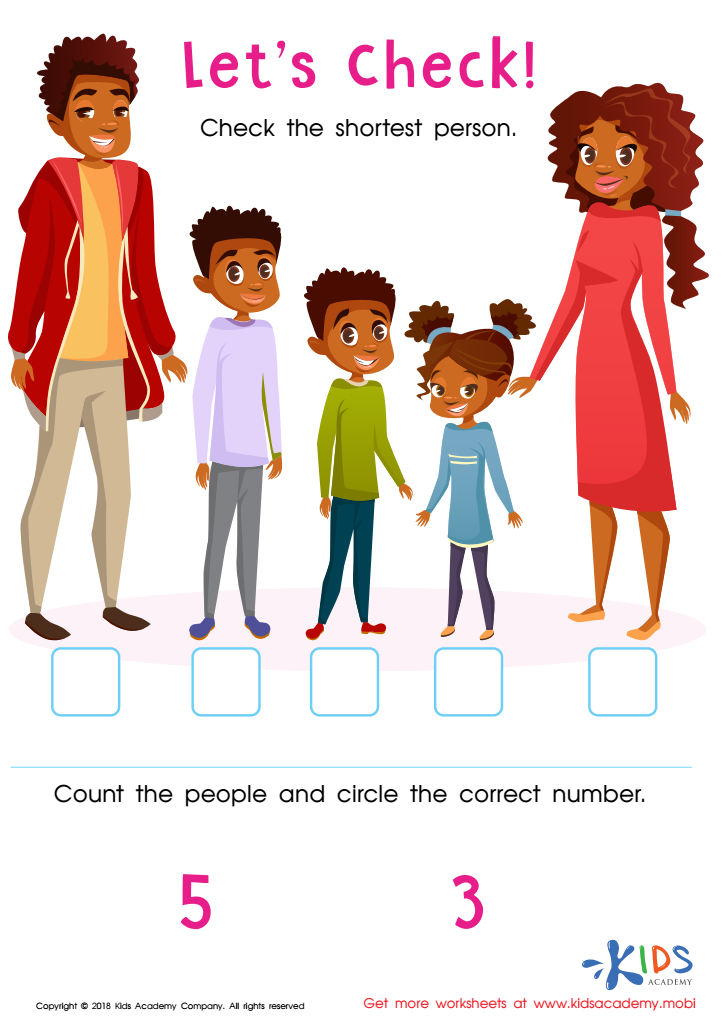
Let's Check! Assessment Worksheet
Check your child's understanding of height with this worksheet. Ask them to sort the objects in order of size and identify the tallest and shortest member of the family in the picture. See if they can correctly arrange the items from tallest to shortest.
Let's Check! Assessment Worksheet
Worksheet
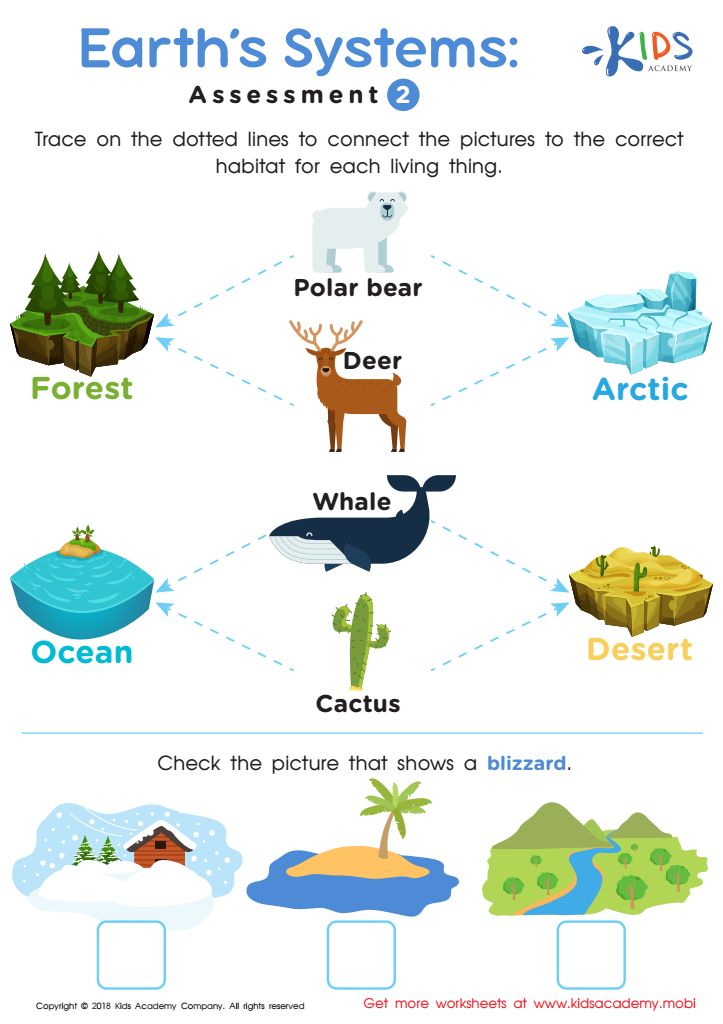
Earth's Systems: Assessment 2
Kids will love this free printable worksheet to assess their knowledge of habitats and the living creatures found in them. They'll trace the dotted lines to connect the pictures of plants and animals to their respective habitat and identify the type of weather depicted. No, polar bears don't live in the ocean, but they do like to swim in icy waters! With this fun activity, your little learner will master earth science basics.
Earth's Systems: Assessment 2
Worksheet
Join Kids Academy for Free
Who is primarily going to use this learning content?



.jpg)



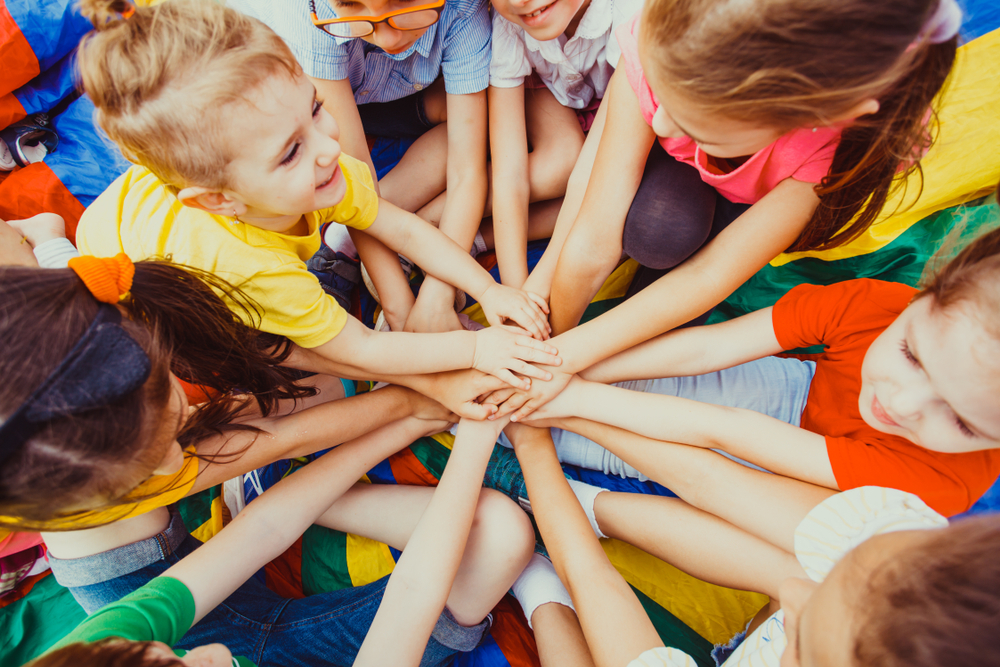
Counting skills are foundational in early childhood development, and integrating them with Social Studies for ages 3-6 is crucial for holistic learning. Firstly, counting lays the groundwork for mathematics, enhancing cognitive abilities that support problem-solving and critical thinking. When children learn to count objects related to their environment, such as exploring local cultural artifacts or counting people in a community, they develop a sense of belonging and appreciation for their surroundings.
Moreover, counting skills foster social interaction. During group activities, children can engage with peers, taking turns to count or categorizing items based on shared social experiences. This collaborative learning approach cultivates teamwork and communication skills, essential for their future academic and social interactions.
Incorporating counting in Social Studies also encourages curiosity and exploration. Children learn to connect numbers to concepts such as community representation, diversity, and history—skills that prepare them to navigate a diverse world. Ultimately, by linking counting with Social Studies, parents and teachers provide a rich educational experience that positions children for success in school and the community, promoting not just academic readiness but also emotional and social growth. Understanding their world through numbers enhances their identity and sense of place within it.